Read the helmet as an assembly
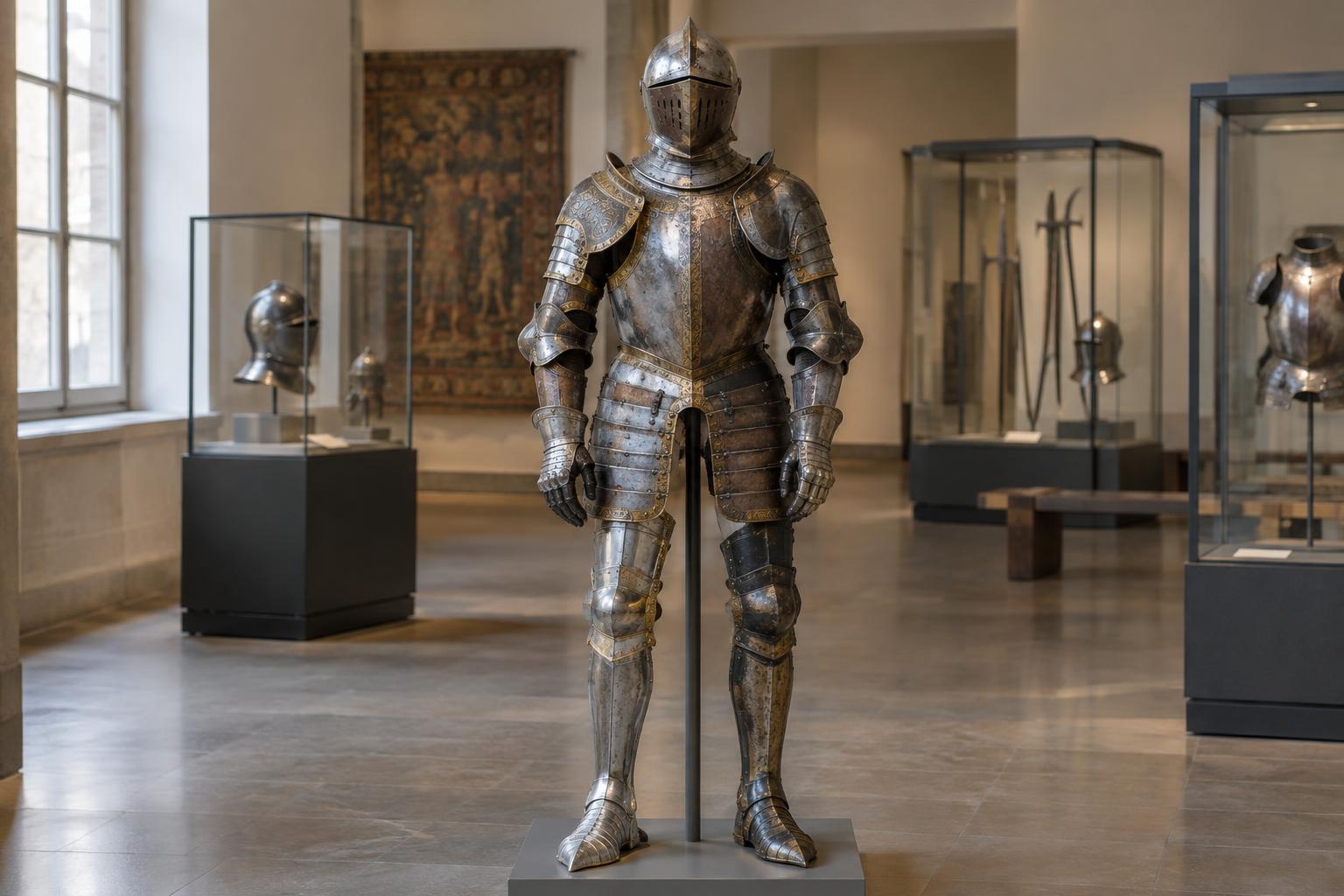
In a display case, a helmet can look like a single, complete object. Historically, it was often an assembly of rigid and flexible parts: a shell, fittings at its edges, an interior that helped it sit on the head, and sometimes elements that covered the cheeks or neck. Those parts might be made and repaired at different times. They could also be removed, replaced, or lost before the helmet entered a collection.
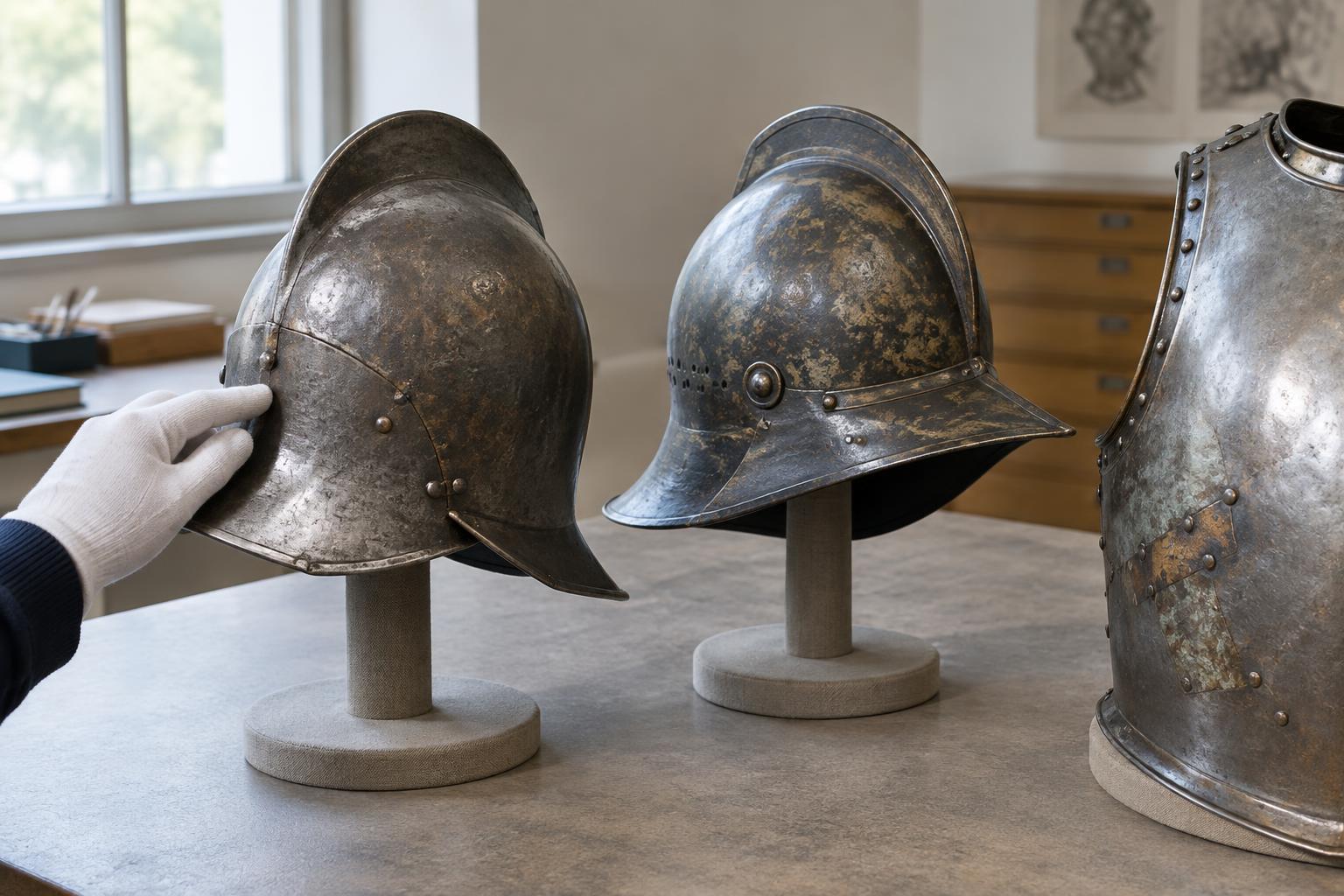
There is no universal helmet pattern. Forms varied across regions, periods, and intended uses, and even examples that look similar from a distance can differ in construction. A useful way to study one is to move from the outside inward, then follow its lower edge. That sequence draws attention not only to what survives, but also to the spaces where a missing component may once have been attached.
The shell: shape, material, and surface
The shell gives a helmet its most recognizable outline. Some shells have a rounded crown; others rise to a point or include a brim, ridge, or projecting brow. Such features contributed to a helmet’s appearance as well as its coverage. Depending on the tradition, a shell might be formed from one piece of metal or assembled from several sections joined by visible fittings. Historic helmets were also made with other materials, so a metal shell should not be treated as the only model.
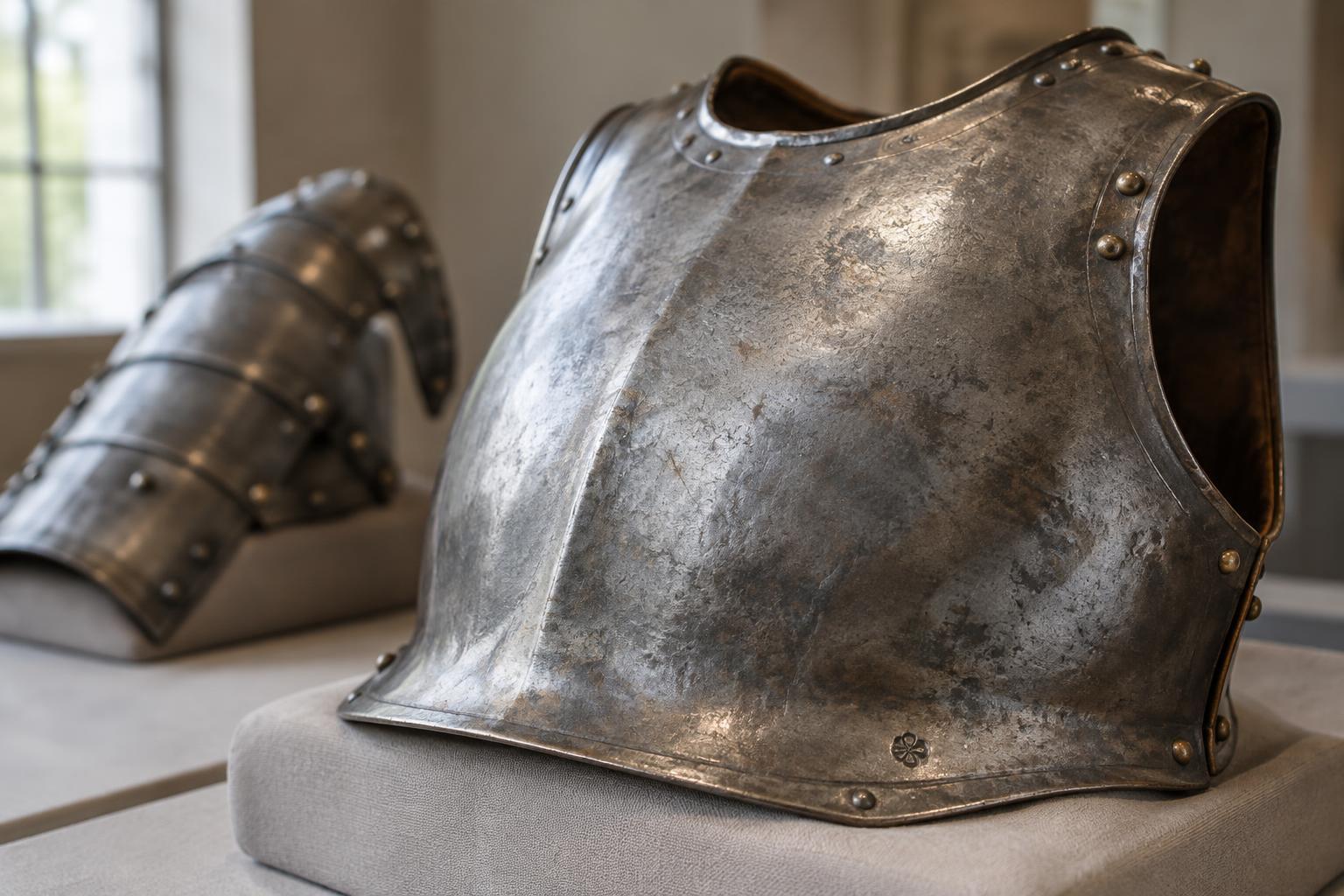
Look closely at transitions: where the crown meets a brim, where a separate plate joins the shell, or where a band reinforces an edge. Rivets and seams may be prominent parts of the design rather than details to overlook. Surfaces can carry decoration, too, from restrained borders to elaborate patterns. Their appearance may reflect patronage, ceremonial setting, or local taste, but decoration alone cannot establish who wore a helmet or on what occasion.
Linings: the often-missing interior
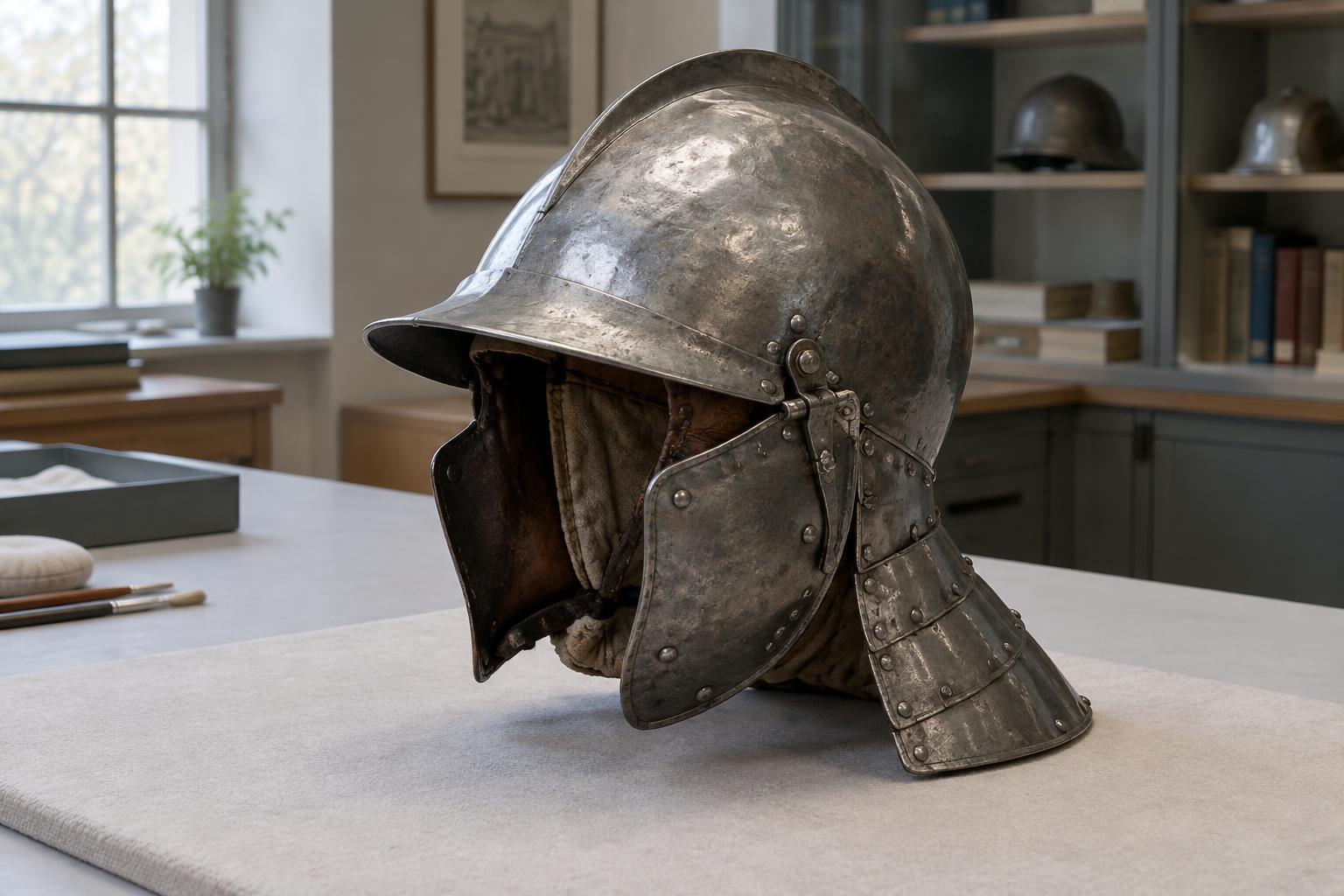
The inside of a shell could include a lining or suspension made from materials such as textile or leather. It helped separate the head from the rigid surface and affected how the helmet sat when worn. An interior might also incorporate ties or other fittings. Because these materials age differently from metal, surviving helmets do not always retain the parts that once made them wearable.
A bare interior is therefore not necessarily an original interior. Small holes, rivets, or traces near the rim may suggest where a lining was attached, although their purpose should not be assumed without closer study. Later repairs and museum restorations can further complicate the picture. For a viewer, the important question is not simply whether a lining remains, but how its presence—or absence—changes the impression of the object. An empty shell can appear more spacious and more self-contained than it did as part of a fitted assembly.
Cheekpieces and the shape of the face
Cheekpieces extend a helmet’s outline toward the sides of the face. On some designs they are rigid plates connected near the temples; on others, softer or differently constructed elements serve a comparable role. Their size and profile could leave more or less of the face visible, making them important to the helmet’s visual character. A helmet with its cheekpieces removed may look strikingly different from the form its wearer knew.
Attachment points deserve attention. Hinges, loops, holes, or surviving fasteners can indicate how a separate piece related to the shell, though not every unexplained fitting belongs to a cheekpiece. Some helmets never had them. When viewing an incomplete example, it is safer to describe the visible evidence than to imagine a full set of missing parts. Museum illustrations and labels may offer a reconstruction, but the surviving object and the proposed reconstruction are not the same thing.
Neck protection and the limits of what survives
At the back of a helmet, protection might take the form of an extended shell, a separate rigid piece, overlapping plates, or a flexible curtain. These approaches produced different silhouettes and allowed different relationships with clothing or other armour. The rear edge can be especially revealing: a row of holes or fittings may mark the former attachment of a component that has since disappeared. As elsewhere on the helmet, however, wear and later alteration can make such clues difficult to interpret.
Together, shell, lining, cheekpieces, and neck protection show why a helmet should be understood as both an object of craftsmanship and a changing historical artifact. Its present condition is part of its story, not a transparent record of its first appearance. The most rewarding close look balances observation with uncertainty: notice the shape, materials, joints, and traces of lost parts, then ask how each may have contributed to the complete form.