What makes a suit a suit?
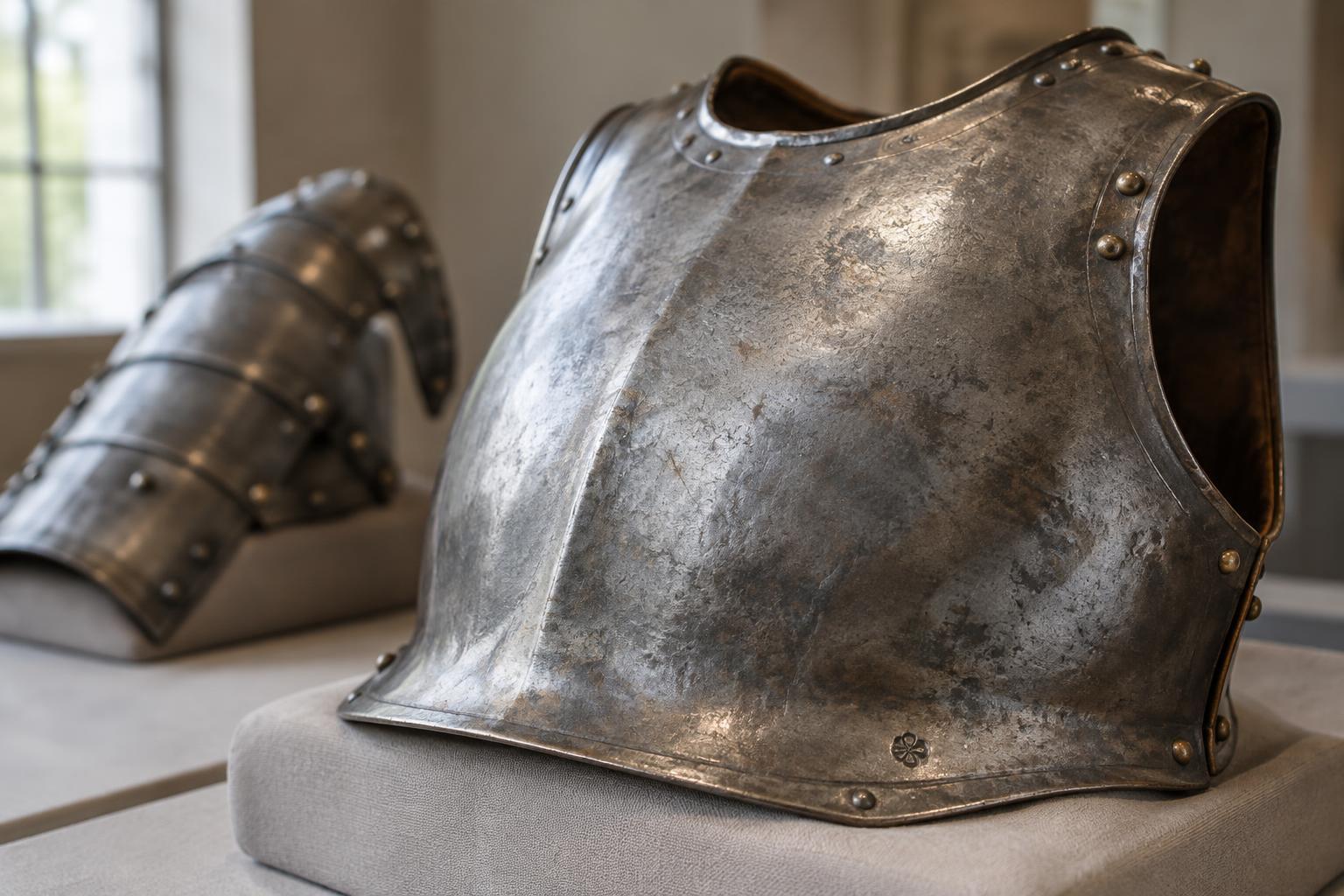
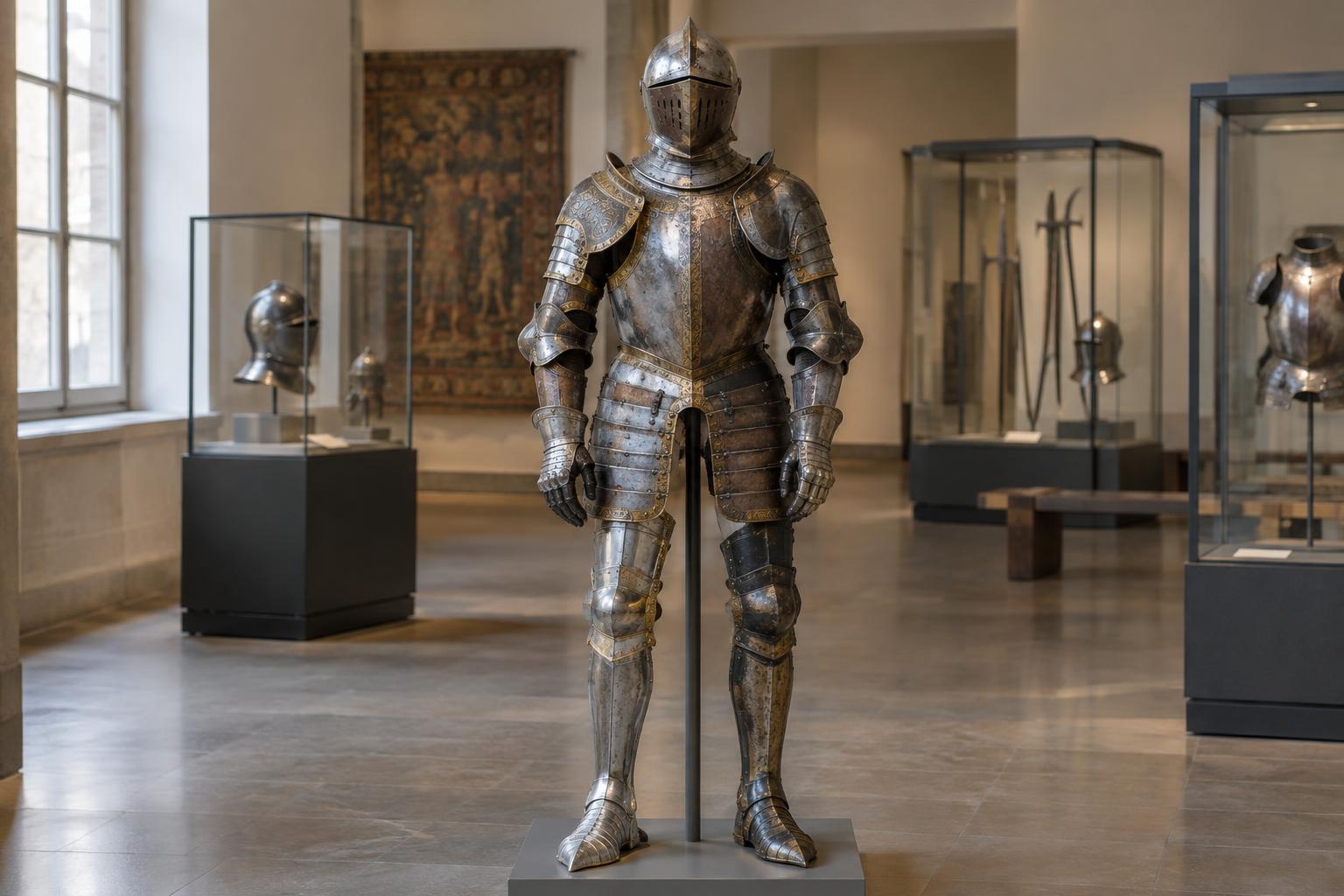
A displayed suit of armour often appears to be a single, carefully planned object. Helmet, breastplate, arm defences and leg defences share a silhouette, and a mount holds them in the position of a wearer. That impression can be misleading. Armour consists of separate components, and a complete-looking display may bring together pieces with different histories.
Some armour was made as a coordinated set, with elements designed to work together and decoration carried across multiple surfaces. Other pieces were acquired separately or changed during their useful lives. Later owners and collectors also assembled suits from surviving parts. A mismatch, therefore, does not by itself reveal when the pieces came together or who made that decision. It is a question to investigate, not necessarily a flaw to conceal.
Change during an armour’s working life
Armour had to fit a body, allow movement and remain serviceable. A damaged part might be repaired or replaced while sound components continued in use. An owner’s changing size, needs or preferences could also lead to alterations. Even a set originally made together might cease to be uniform after years of care and modification.
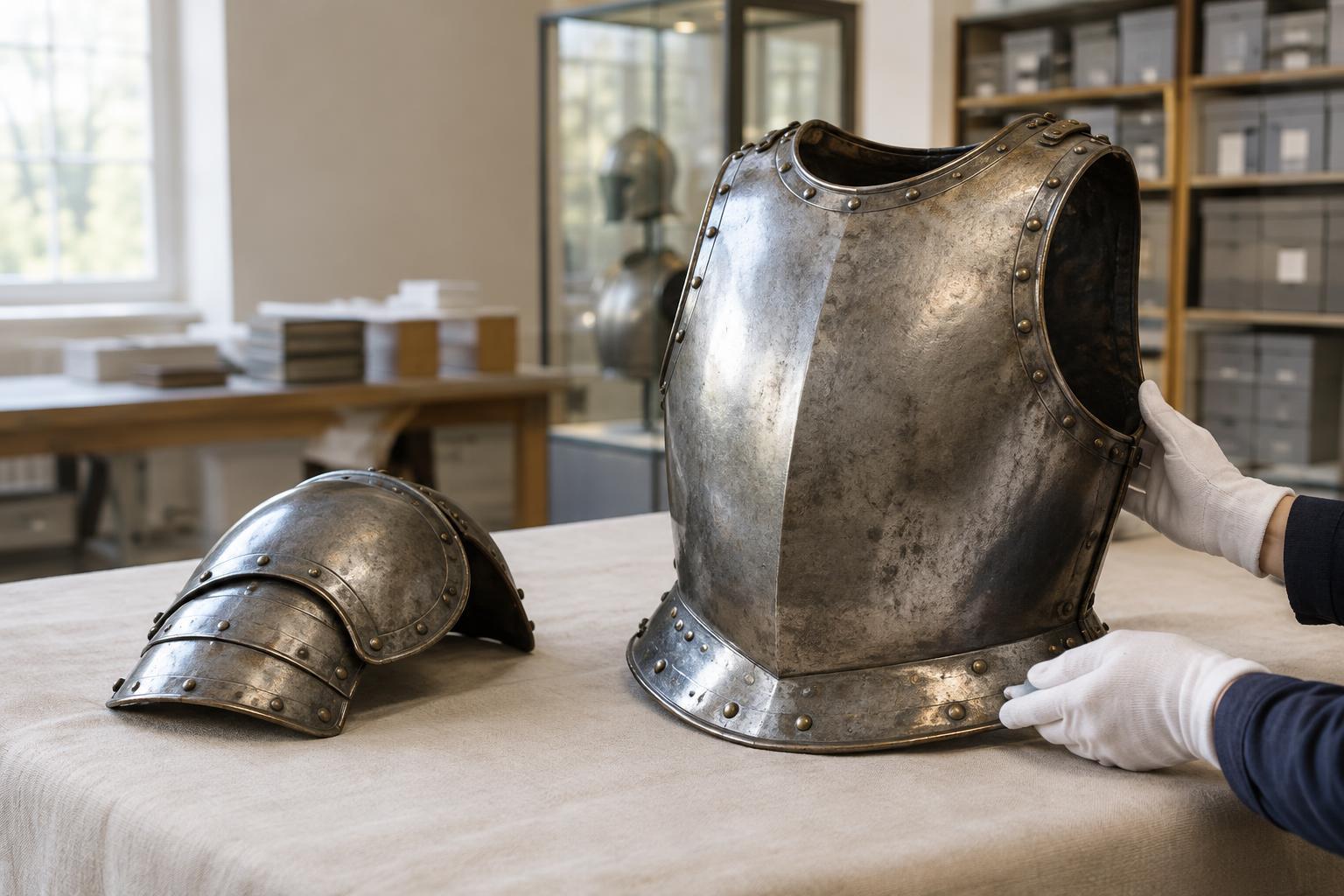
Replacement did not always mean an attempt at an exact visual match. A practical addition might differ in finish, shape or quality of workmanship. Conversely, a skilful repair could be difficult to recognize by sight alone. Marks around a fastening, changes to an edge or differences in surface wear may prompt closer study, but none is conclusive on its own. Repeated cleaning and restoration can further complicate the evidence.
Pieces with different pasts
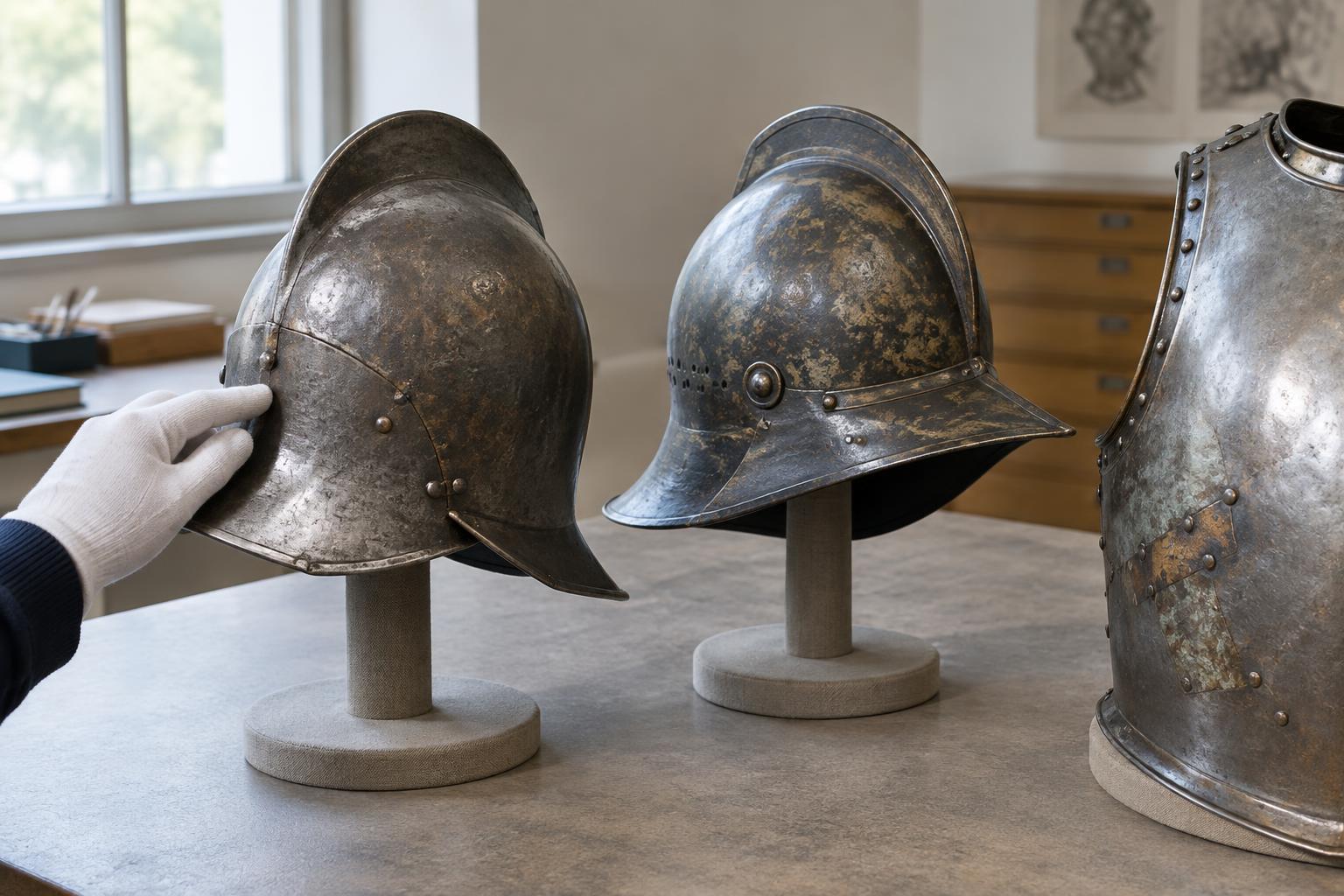
Armour could outlast the circumstances for which it was first made. Components might be retained as possessions, passed on or kept alongside pieces from other sets. Over time, parts that had once belonged to different owners could come to be stored or displayed together. The survival of a helmet and breastplate in the same collection does not necessarily mean they were worn together.
Surviving sets also reflect what was kept and what was lost. Smaller or more vulnerable elements may be missing, leaving gaps that later custodians sought to fill. Sometimes related components remain together but show differences because they were altered at different times. Thinking in terms of an object’s successive owners and uses helps explain why a suit can be historically meaningful without being untouched or perfectly matched.
How assembled suits came to be displayed
Collectors and museums have often valued armour’s ability to convey the appearance of a fully equipped figure. An incomplete group of original components can be hard to understand at a glance, so a missing element may have been supplied from another source or made anew for display. Such choices can make the overall form easier to see while obscuring the separate histories of its parts.
An assembled suit is not automatically deceptive or without value. It may include important historic pieces, and its assembly may tell a story about later collecting and exhibition tastes. The key distinction is between a coordinated set documented as belonging together and a composition made from components of uncertain or separate origin. Clear labels can let visitors appreciate both the visual whole and the evidence behind it.
Reading differences responsibly
To assess whether components belong together, curators may compare their proportions, construction, decoration and patterns of wear. They may also examine maker’s marks where present, records of ownership and earlier photographs or catalogues. A decorative motif repeated across pieces can support a connection, while inconsistent details can raise questions. Yet resemblance can be copied, and difference can result from repair, so interpretation usually rests on several kinds of evidence.
Conservation work adds another layer of care. Old coatings, replacement fastenings and earlier restorations may be part of an object’s history, even when they make its original form harder to read. Documenting these features before changing them helps preserve evidence for future study. For a visitor, the most useful question may be not “Is this suit authentic?” but “Which parts belong together, what has changed, and how do we know?” That approach leaves room for uncertainty while treating every component as a historical object in its own right.