Start with the question, not a verdict
Calling a piece of armour a “reproduction” can mean several things. It might be a recent copy made for display, a carefully researched replica, or a later assembly incorporating older components. Some pieces were made to evoke an earlier style rather than copy a particular object. Before deciding what an item is, ask a narrower question: does its form, construction and documented history fit the period and purpose attributed to it?
A single feature rarely settles that question. A polished surface is not necessarily new: older armour may have been cleaned repeatedly. Rust is not necessarily old: storage conditions can alter metal quickly, and artificial ageing is possible. Even an unfamiliar shape may reflect regional practice, later alteration or incomplete knowledge. Treat initial impressions as reasons to investigate, not as conclusions.
Compare the overall design
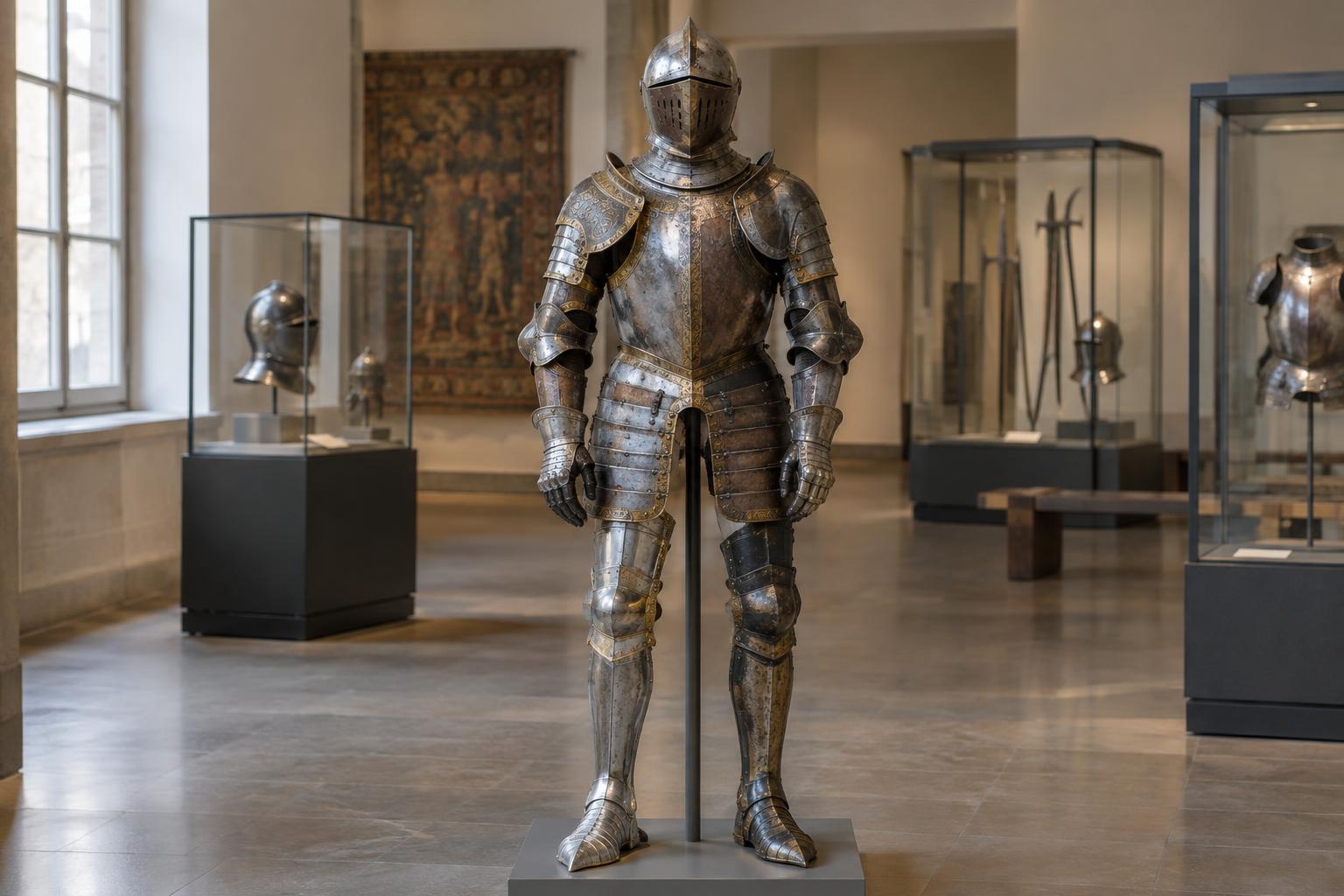
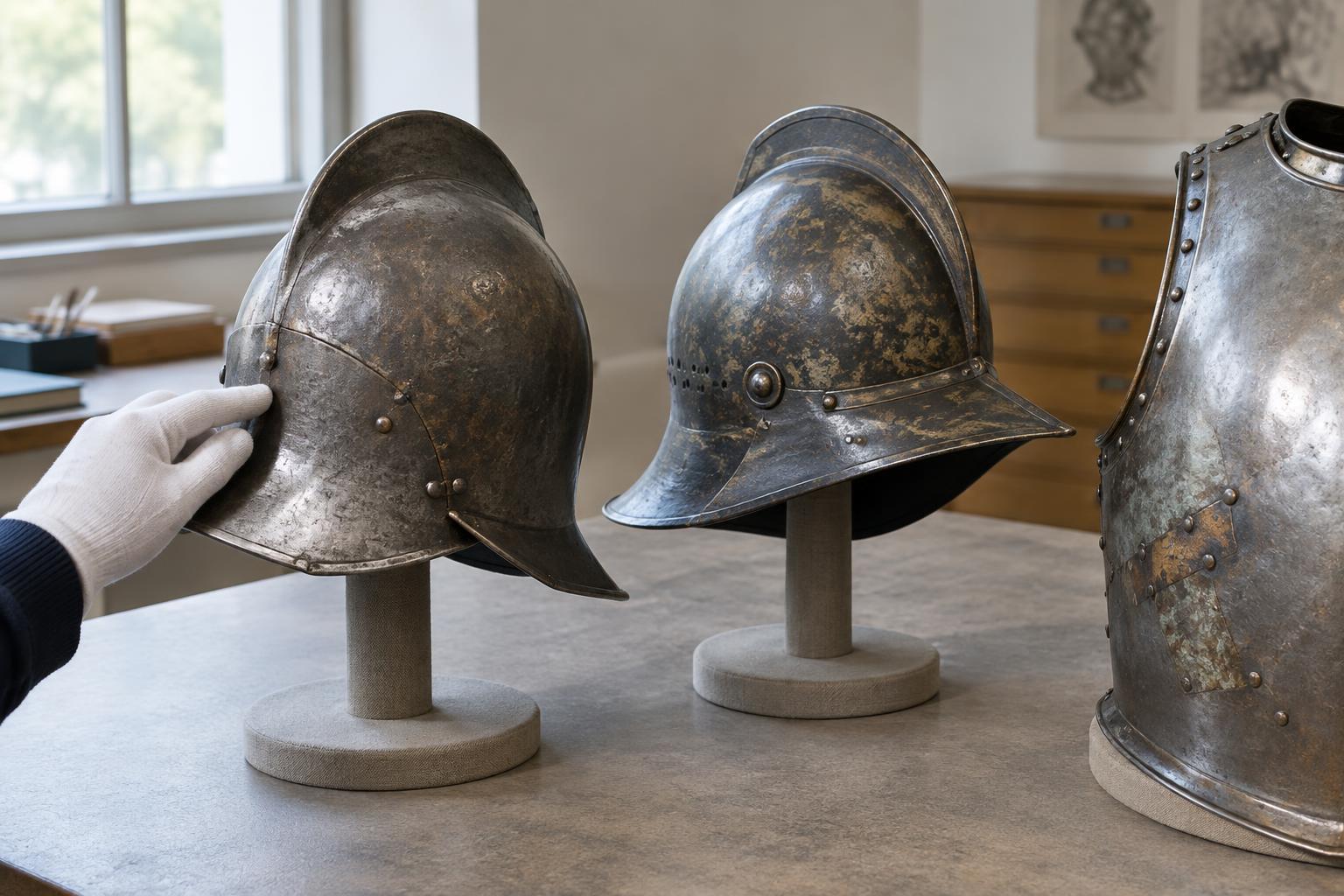
Look first at the piece as a whole. Consider its proportions, the way its parts meet and whether decorative choices belong together. A helmet, for example, can contain details associated with different historical forms; that mixture may be intentional in a modern interpretation, but it deserves closer examination if the piece is presented as an untouched period object. Comparisons are most useful when they involve well-documented examples of a similar type, place and approximate period.
Avoid expecting every historical object to match a textbook illustration. Armour was shaped for particular bodies, tastes and budgets, and surviving examples may have been repaired or reassembled. Instead of asking whether a detail is simply “right” or “wrong,” ask what explanation would account for it. Does a change in shape appear to be an old adjustment, a replacement part or a choice made when the whole object was produced?
Read construction as a connected story
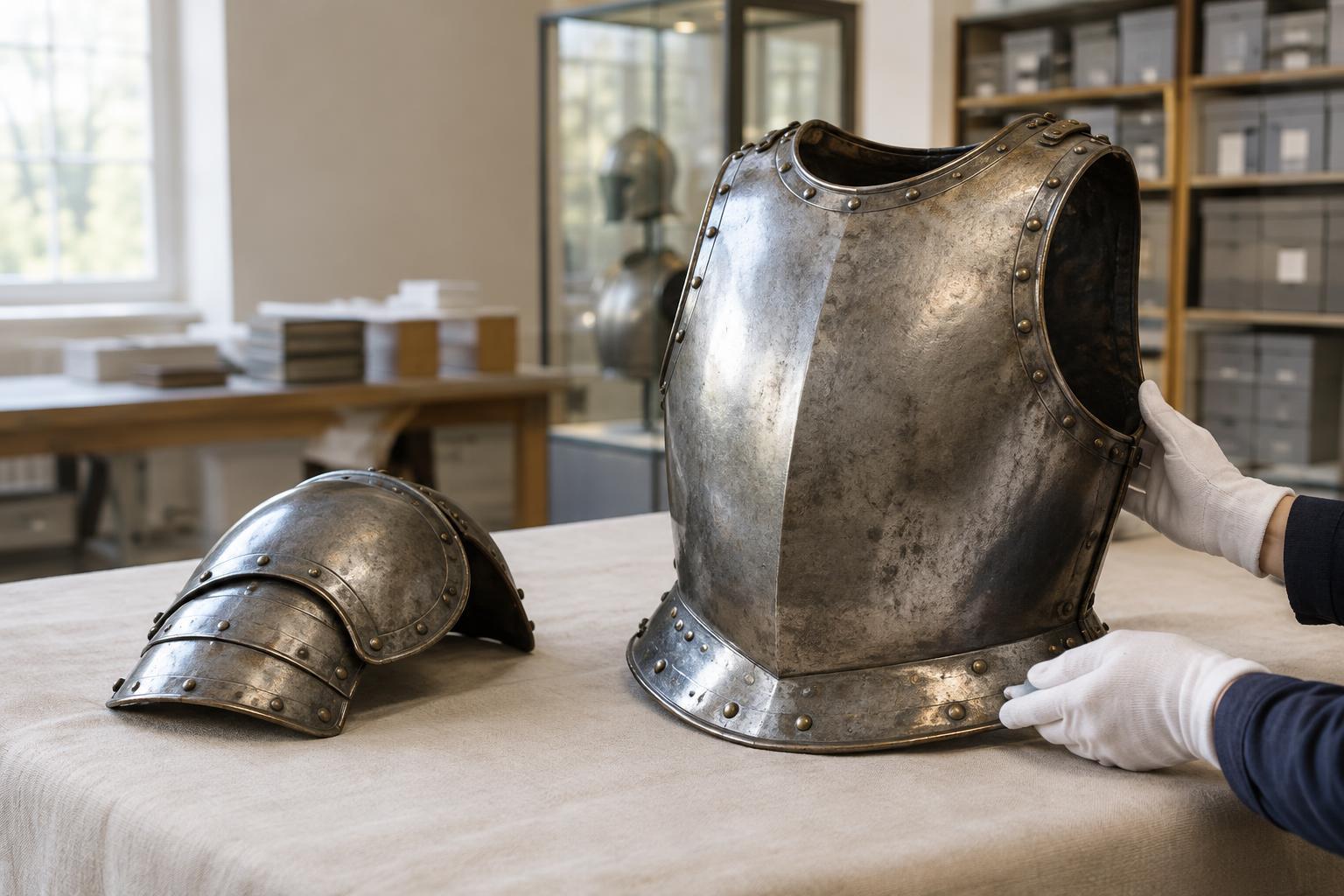
Edges, joints, rivets, hinges and attached fittings can reveal how a piece was made and modified. Examine whether these elements appear consistent with one another. A rivet that differs from its neighbours may indicate a repair, while a repeated pattern of mismatched fittings could suggest a later assembly. Neither observation establishes a date on its own. The question is whether the construction tells a coherent story across the object.
Interior surfaces may be especially informative because they can retain traces of shaping, fastening or earlier attachments that are less apparent outside. Yet interiors are also vulnerable to loss and replacement. Missing straps or lining should not automatically be read as proof of age, and new straps do not necessarily make the metal new. Record which parts appear original to the present assembly and which may have changed over time.
Put surfaces and marks in context
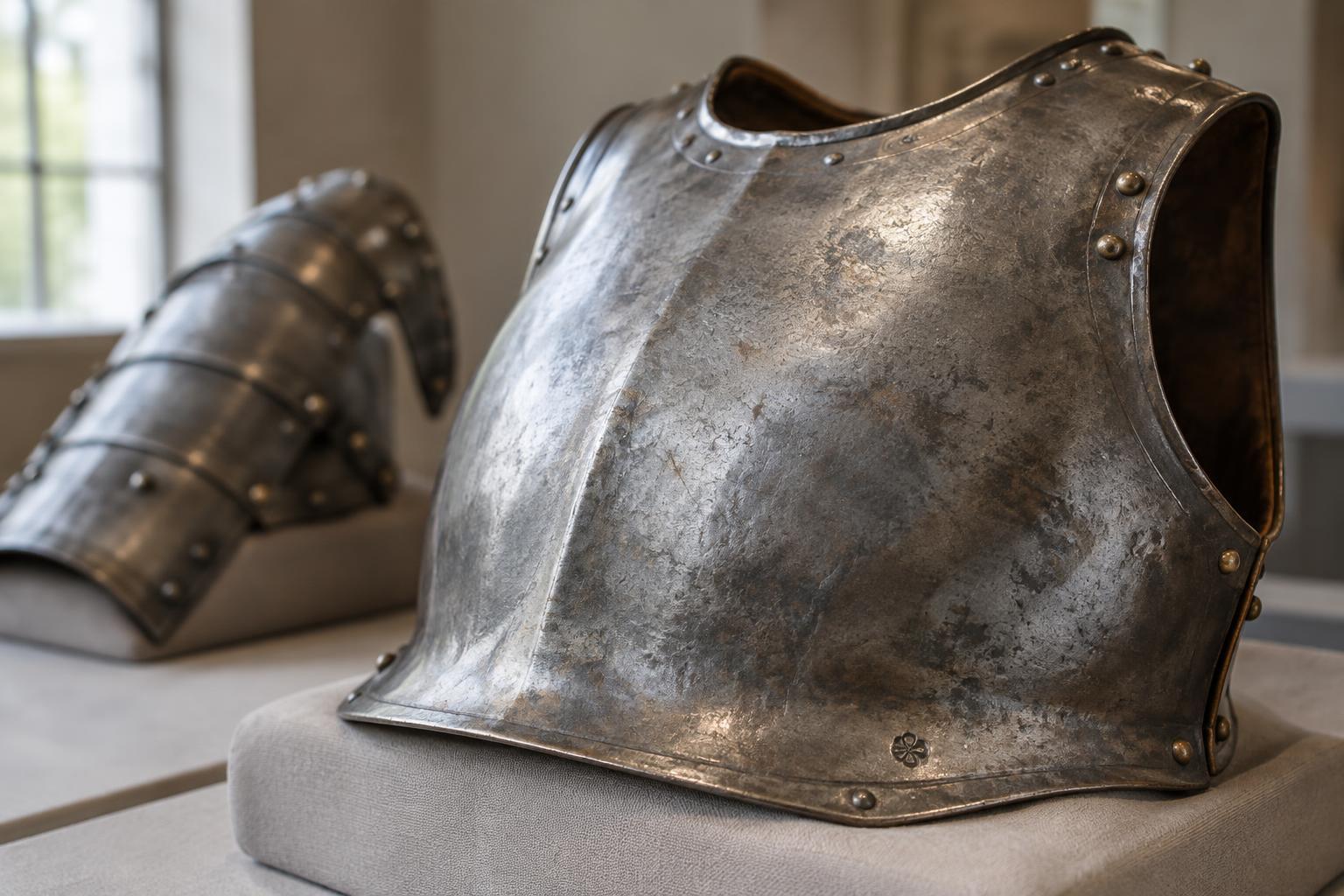
Surface condition is easiest to misread when considered in isolation. Wear may be concentrated where an object was handled, displayed or stored; it need not reflect historical use. Conversely, a uniform patina can look convincing without explaining the construction beneath it. Look for relationships: do scratches cross a later coating, do repaired areas have a different finish, and do recesses and exposed edges show compatible histories?
Marks and decoration also need context. A stamp may be a workshop sign, a later inventory mark, a decorative device or a modern attribution. Its style matters, but so do its placement and its relationship to the surrounding surface. An impressive mark cannot authenticate an otherwise inconsistent piece. Likewise, the absence of a mark proves little, since not every historical component was marked and marks may be obscured or lost.
Build a cautious conclusion
Documentation can clarify what physical examination cannot. Old collection records, photographs, descriptions and records of restoration may establish when an object was present in a particular form. Check whether such material identifies the exact piece rather than a similar one, and distinguish an early recorded attribution from evidence supporting that attribution. A long collecting history is valuable, but it does not make every earlier description correct.
Bring the evidence together before choosing a label. One conclusion might be “modern reproduction”; another might be “older components in a later assembly” or “date uncertain.” Note which observations support the assessment, which conflict with it and what remains unknown. For an object of significant value or historical interest, a qualified armour specialist or museum conservator can help interpret those uncertainties. The aim is not to find a magic tell, but to give the piece a description that the available evidence can bear.