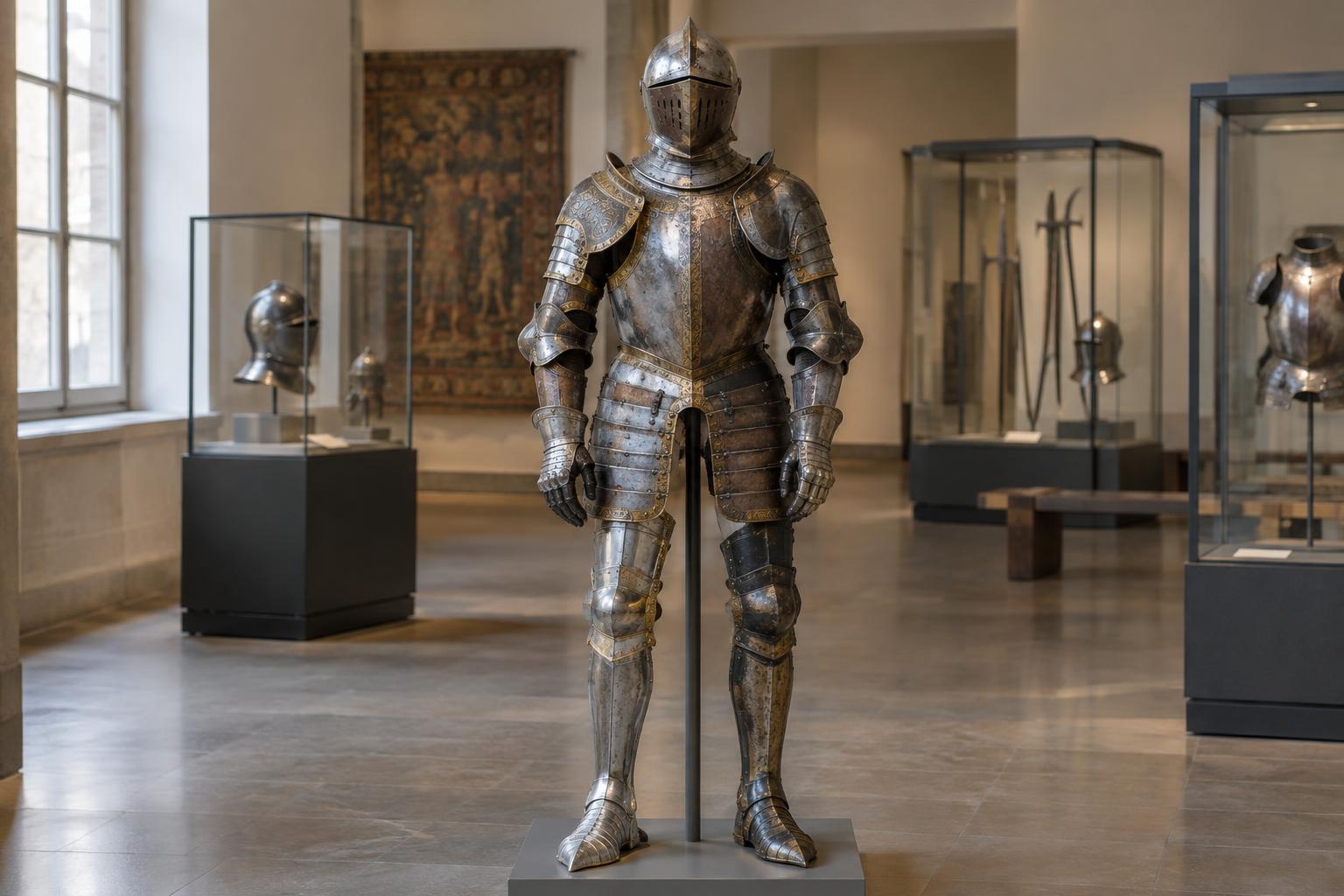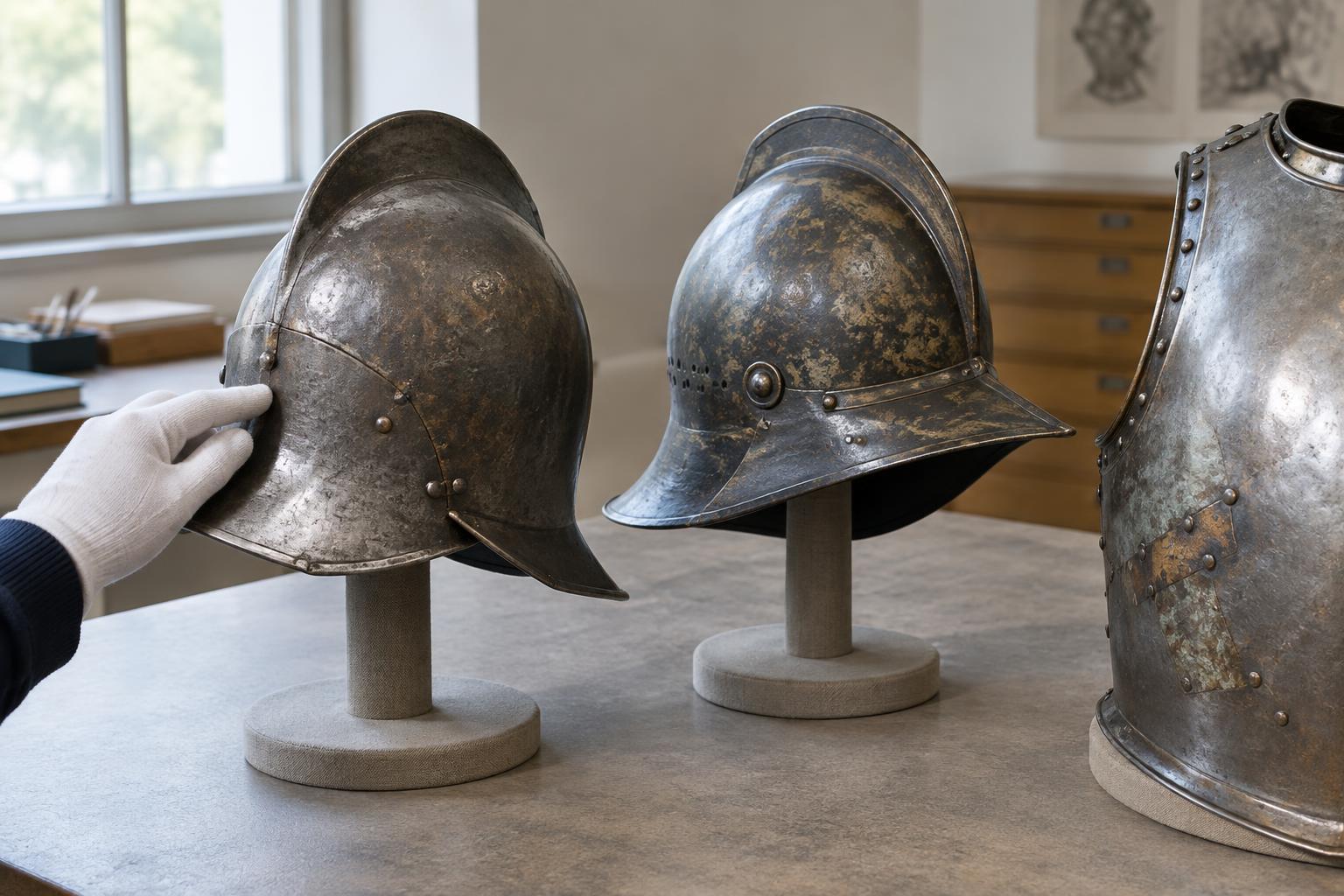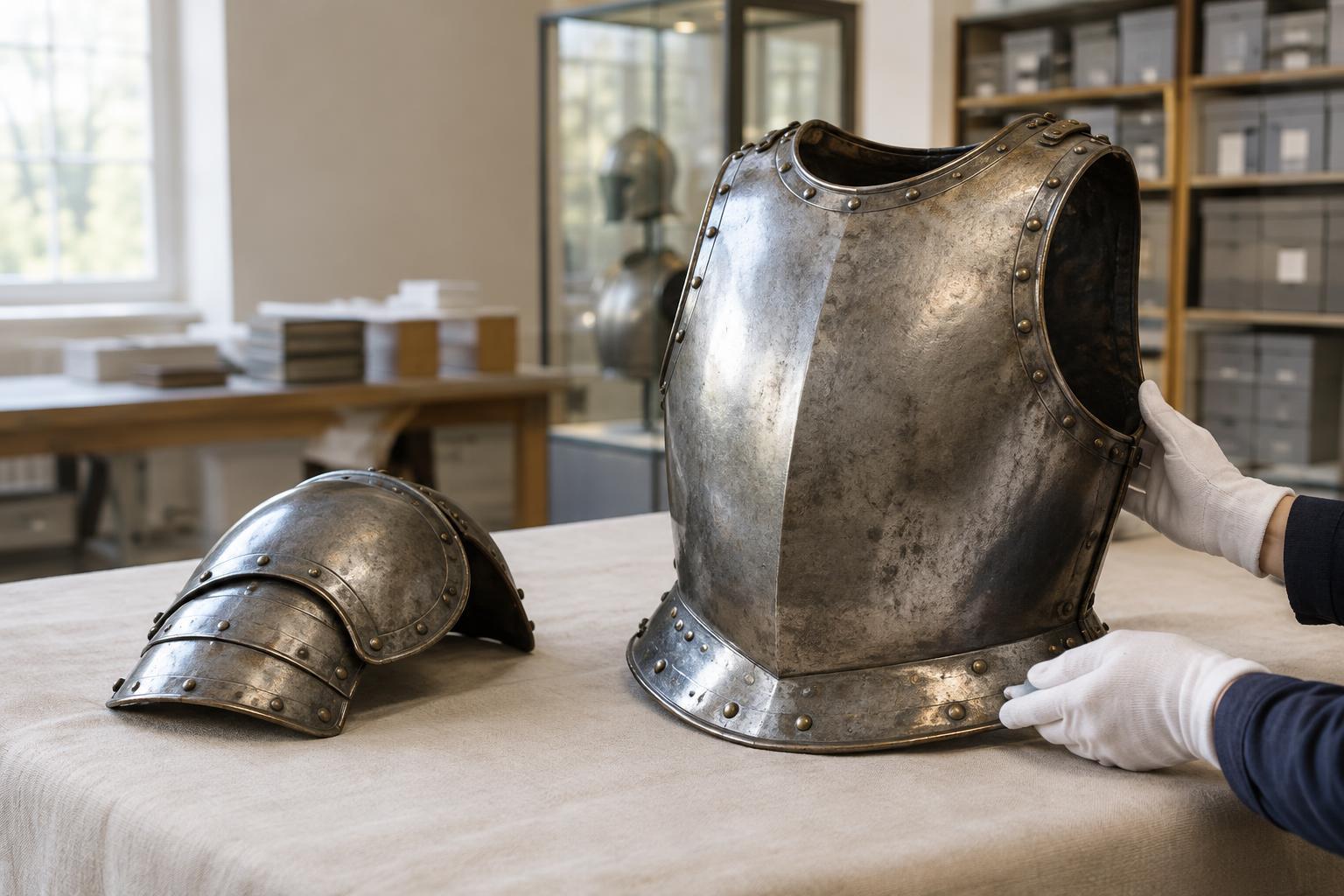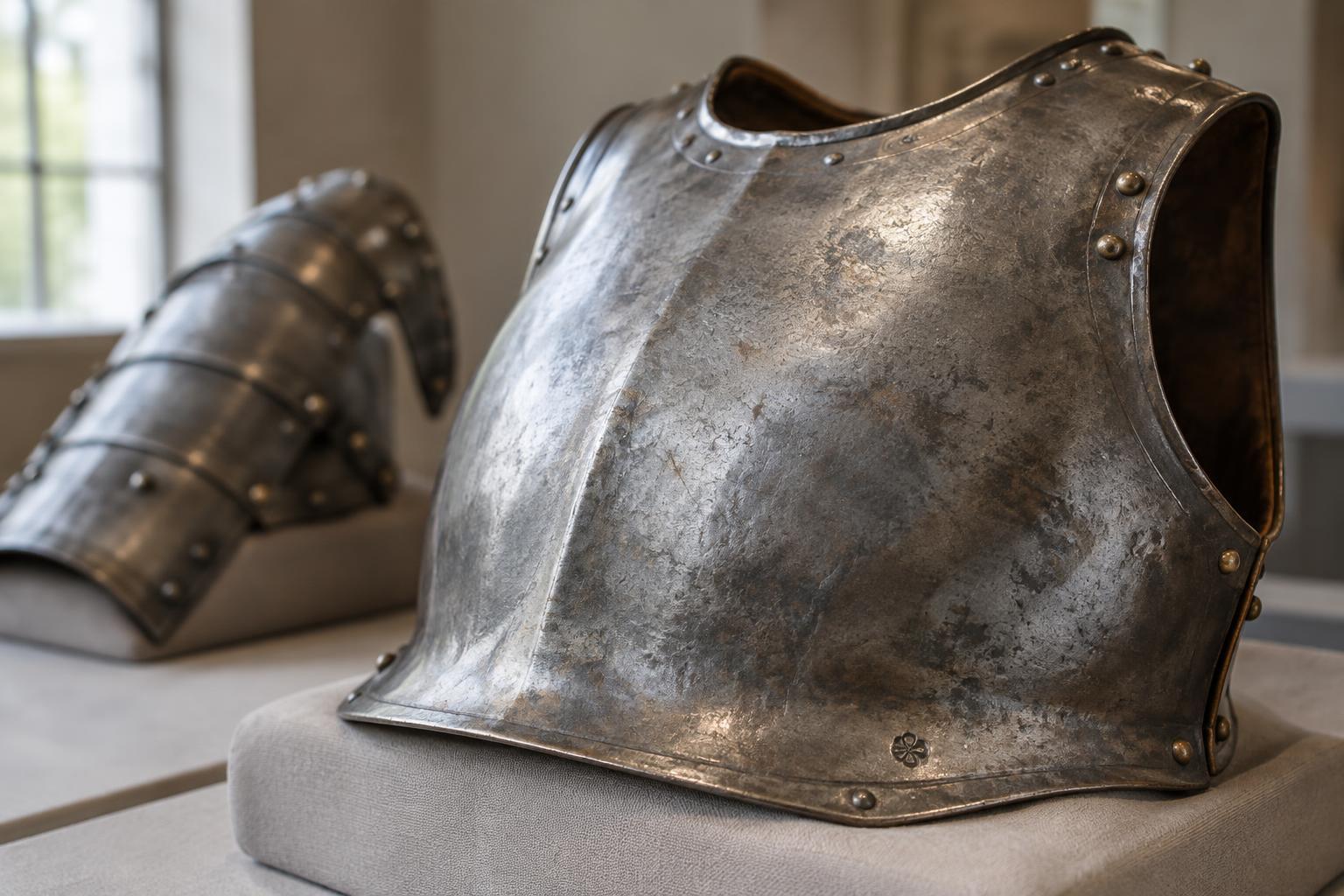
A mark is a clue, not a biography
Historic armour sometimes bears small stamped devices, letters or other signs associated with its making or subsequent history. These details attract attention because they seem to offer a direct link to a craftsperson. Yet a mark does not, by itself, name the person who shaped every plate. Armour could pass through several hands during production, assembly, repair and decoration.
The first useful question is therefore modest: what kind of mark might this be, and when was it added? A device associated with a workshop may support an attribution, especially when it appears on comparable pieces. Its meaning still depends on where it sits, how it was made and whether it belongs to the armour in its present form. Treating it as one piece of evidence leaves room for a more accurate account of the object.
Not every mark belongs to the workshop
Armour may carry marks for different purposes. Alongside devices linked to makers or workshops, an object might bear an ownership sign, an armoury or inventory number, an inspection mark, or a notation connected with later storage. Decorative motifs can also resemble stamps. A letter or symbol may look distinctive to a modern viewer without having served as a maker’s signature.
Placement and repetition can help frame a question, though neither settles it. A mark tucked into a less visible area may invite a different interpretation from one displayed prominently as part of the decoration. Repeated marks across related pieces may suggest an organized marking practice, but the pieces need not all have been made at the same moment. Readers should also distinguish a mark impressed into metal from one engraved, painted or applied by another method: different techniques may point to different stages in an object’s life.
How comparisons strengthen an attribution
The most persuasive reading combines a mark with the armour’s physical characteristics. Plate shapes, edges, hinges, rivets and decorative treatment may be compared with securely documented objects. If these features fit the period and place suggested by the mark, the attribution becomes more plausible. If they conflict, the mark calls for closer study rather than an explanation that dismisses the rest of the armour.
Documentation adds another layer. An old inventory, acquisition record or earlier description may show when a mark was noticed and how the object was understood at that time. Such records are valuable but not infallible: past cataloguers worked with the evidence available to them, and an armour may have changed since it was recorded. Museum labels are most informative when they distinguish an observed mark from a proposed identification, using terms such as “attributed to” where certainty is not justified.
What a mark cannot prove on its own
Even a mark convincingly associated with a particular workshop need not establish a precise date of manufacture. A workshop could operate over many years, and marks might be used by more than one worker or on more than one kind of product. Nor does a mark alone prove that every component was made together. Historic armour was adjusted, reused and sometimes assembled from parts with different histories.
Later intervention complicates the picture further. A damaged plate might have been replaced, an old surface cleaned, or a mark altered by wear and corrosion. In some cases, later additions or misleading marks may have been intended to make an object seem more desirable. That possibility warrants care, not automatic suspicion. The sound approach is to ask whether the mark, metalwork and documented history support the same interpretation—and to state clearly where the evidence stops.
Looking closely without losing the whole object
For a visitor or collector, careful observation begins with context. Note which component carries the mark and whether nearby plates share its finish and construction. Look for signs that the component fits naturally with its neighbours, while remembering that legitimate historic repairs can create differences. Photographs taken under suitable lighting may help reveal a faint stamp, but apparent outlines can change with angle and surface condition.
Marks reward curiosity precisely because they connect minute details to larger stories of skilled labour, trade, ownership and preservation. Their best use is not as a shortcut to a celebrated name. It is as an invitation to compare evidence, recognize uncertainty and understand armour as an object that may have had many makers, custodians and interpretations across its lifetime.