Treating a familiar silhouette as a date stamp
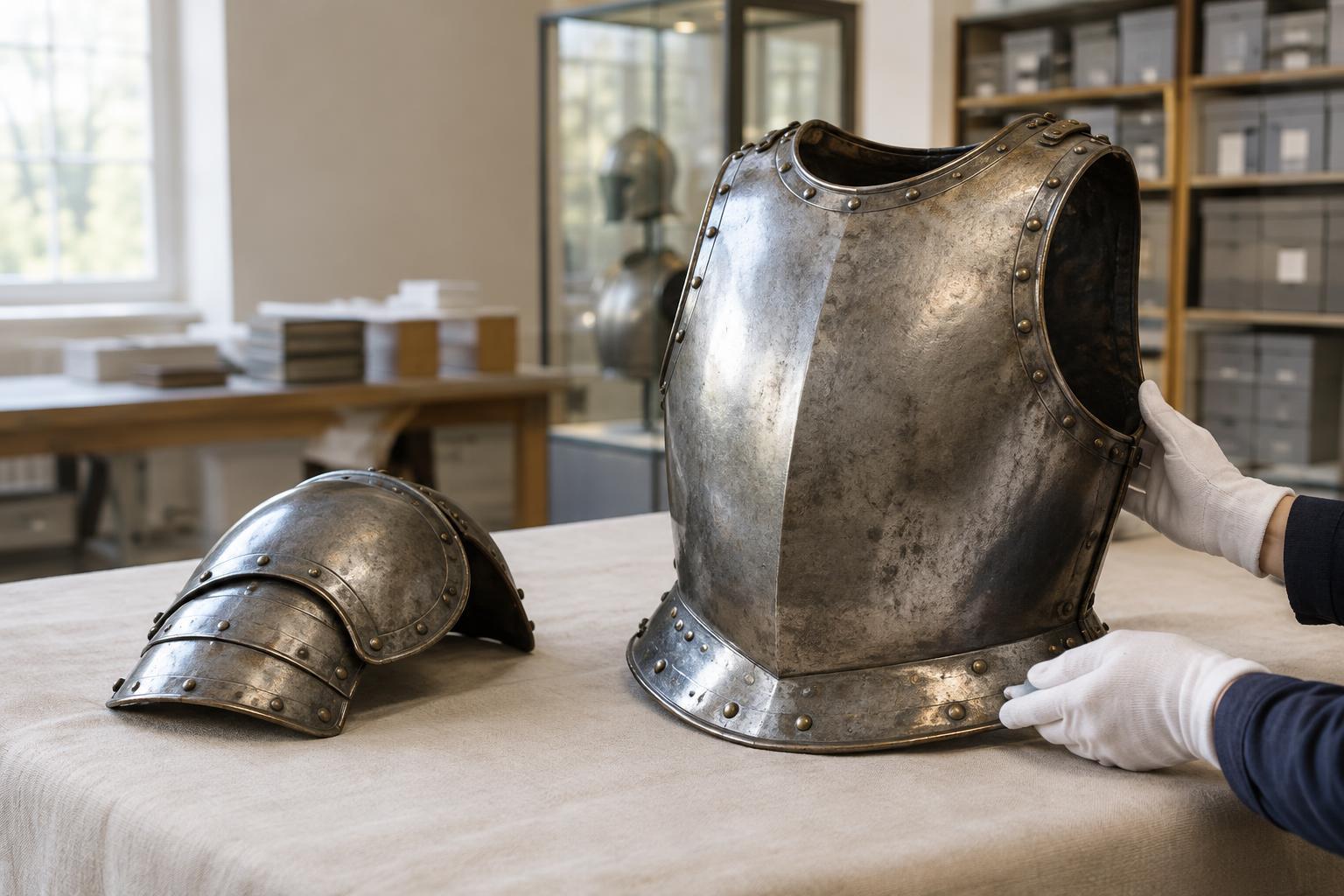
Recognizable forms make useful starting points. The curve of a breastplate, the outline of a helmet and the length of a skirt of plates may place an object within a broad visual tradition. The mistake is turning that first impression into a precise date. Armourers worked within styles that could persist, change gradually or be revived. A shape associated with one period might remain useful or desirable elsewhere after fashions at a major court had moved on.
A more careful description separates observation from interpretation: “This profile resembles examples often associated with a particular period” says less, and more accurately, than “This piece was made in that period.” Even when the outline is distinctive, small construction details may tell a different story. Dating should remain a working assessment until the whole object has been examined.
Assuming every place followed the same fashion
Armour did not develop along a single, uniform timeline. Local preferences, available skills, intended settings and relationships between workshops could influence what was made and worn. An object that appears old-fashioned against one group of examples may fit comfortably within another regional tradition. Shape can therefore mislead when it is compared only with a narrow set of familiar museum pieces.
Purpose matters as well. Armour associated with ceremony, display or a particular social role need not follow the same visual priorities as equipment made for other settings. Decorative features may also echo older forms for their symbolic value. Before assigning a date from style, ask what kind of object it is and which comparable objects are genuinely relevant. Similarity is most useful when the comparison includes function and cultural context, not just outline.
Dating a whole suit from one convincing part
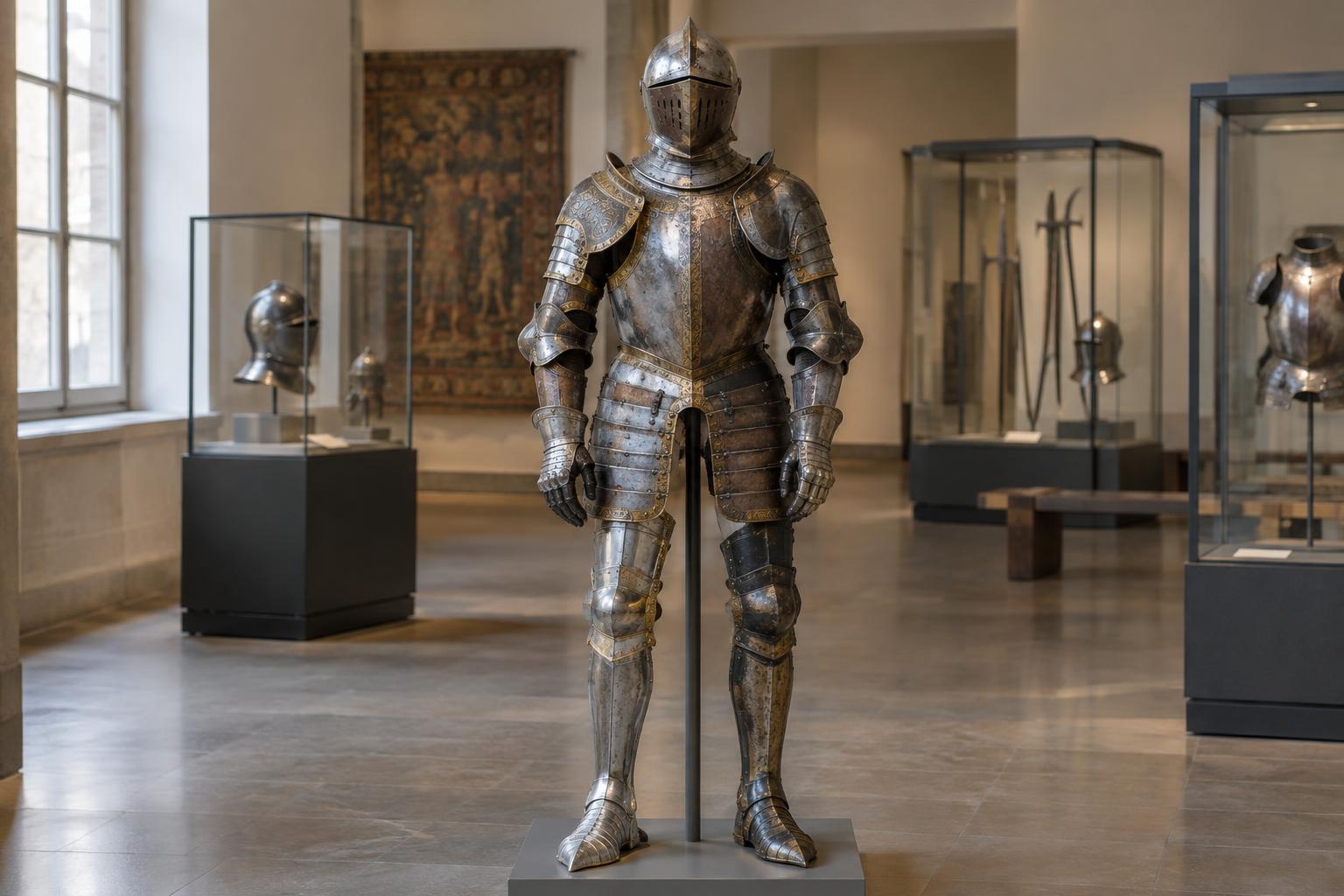
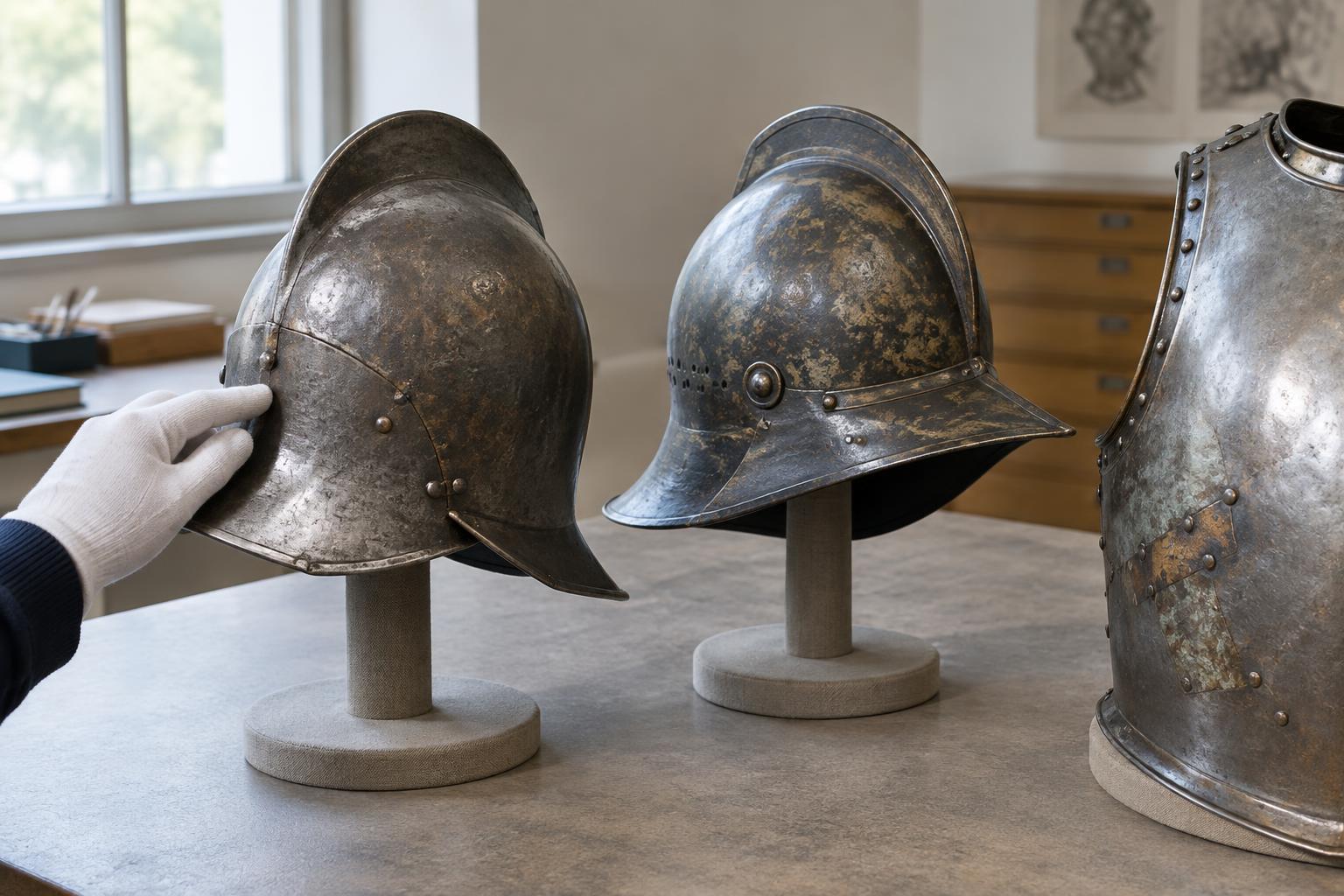
A suit displayed as a complete figure can look remarkably coherent. Yet armour might be repaired, adapted, inherited or assembled from parts with different histories. Later collectors and institutions have also sometimes brought separate pieces together for display. If one helmet strongly suggests a period, it does not automatically date the breastplate beneath it—or establish when the present arrangement was formed.
Look for whether components appear to belong together before treating the suit as a single dated object. Differences in decoration, finish, proportions or methods of joining can raise useful questions, although variation alone does not prove a mismatch. Museum labels may distinguish original associations from later assemblies; where that information is unavailable, date the visible components cautiously and avoid implying a shared origin that has not been established.
Overlooking alterations and restoration
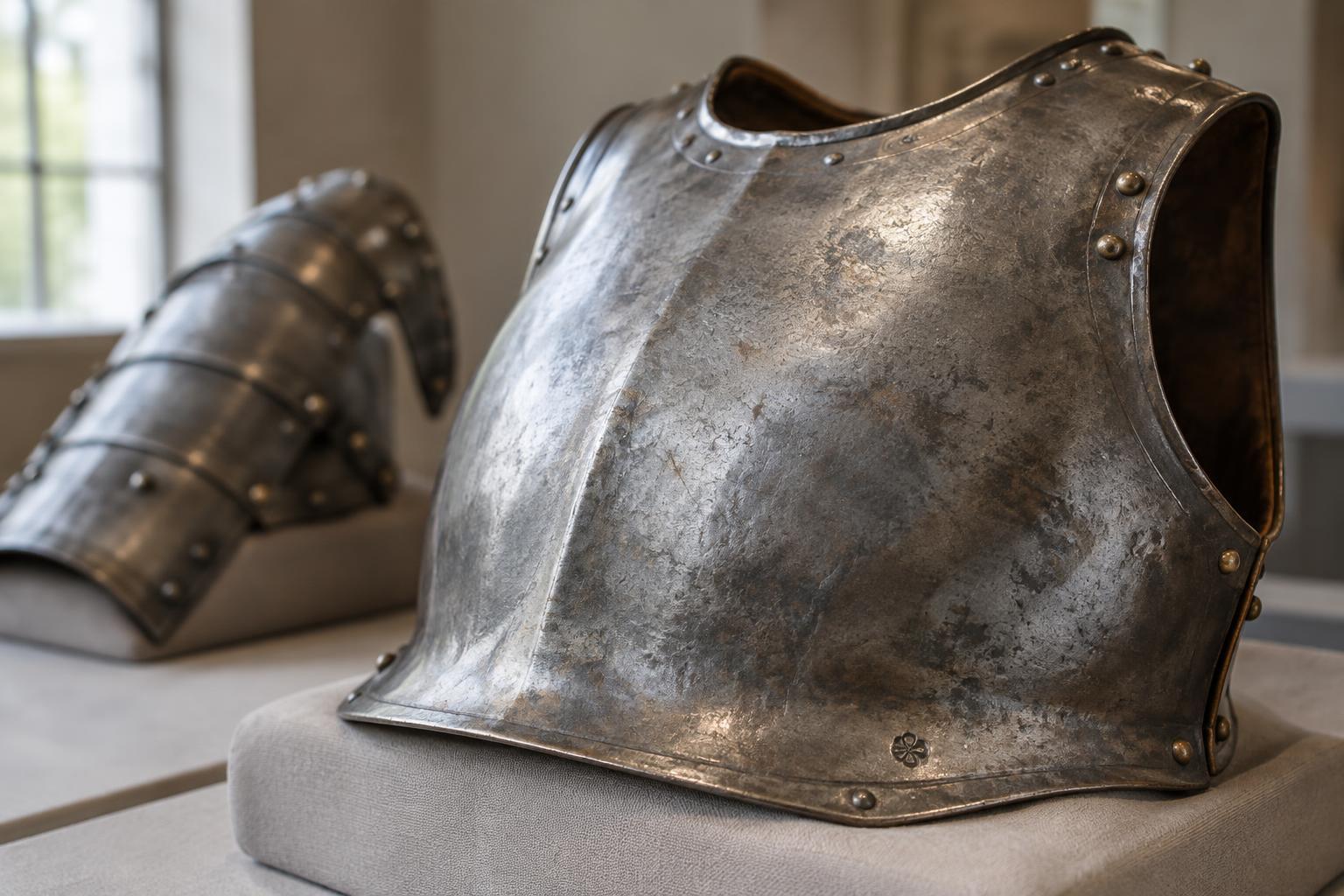
Armour has often outlived the circumstances in which it was made. Changes in fit, repairs after damage and modifications for display can affect its present shape. A plate may have been trimmed or reshaped; missing elements may have been replaced. Cleaning and restoration can also change how surfaces appear, making some evidence easier to see and other evidence harder to interpret.
The visible silhouette is therefore not always the silhouette an object had when new. On an original object, changes around edges, openings, attachments and decoration may help distinguish initial workmanship from later intervention. That judgment can require close examination and specialist experience. For a visitor or collector working from photographs, the sensible response to uncertainty is to record it, not to turn an apparent irregularity into a confident story.
Ignoring evidence beyond the outline
Shape becomes more persuasive when independent clues point in the same direction. Construction, articulation, surface decoration and surviving marks may all help refine an assessment. So can a documented ownership history or a securely recorded archaeological or collection context. Each kind of evidence has limits: marks need interpretation, documents must be linked to the right object, and an old collection label may preserve an earlier opinion rather than a settled identification.
A useful approach is to describe the form first, then list what supports or complicates the proposed date. Is the comparison based on one striking feature or several? Are all parts being assessed separately? Could later work account for anything unusual? Dating armour is often a matter of narrowing possibilities rather than discovering a single decisive clue. Shape opens the inquiry; the object’s construction and history help determine how far that inquiry can responsibly go.