Why joints posed a design challenge
A solid plate can cover a broad part of the body, but a shoulder, elbow or knee changes shape as it moves. Armourers therefore faced a recurring problem: how could they cover a joint without locking it in place? Their answers were rarely a matter of leaving a simple gap. They shaped metal, arranged overlapping pieces and, where appropriate, combined plate with more flexible materials.
The balance depended on the armour’s intended setting. Equipment made for warfare, tournament use or display could place different demands on coverage, freedom of movement, weight and appearance. A surviving suit may also have been altered, repaired or assembled from pieces with different histories. Looking closely at its joints reveals design choices, but not always a single, unchanging original purpose.
Overlapping plates made rigid material move
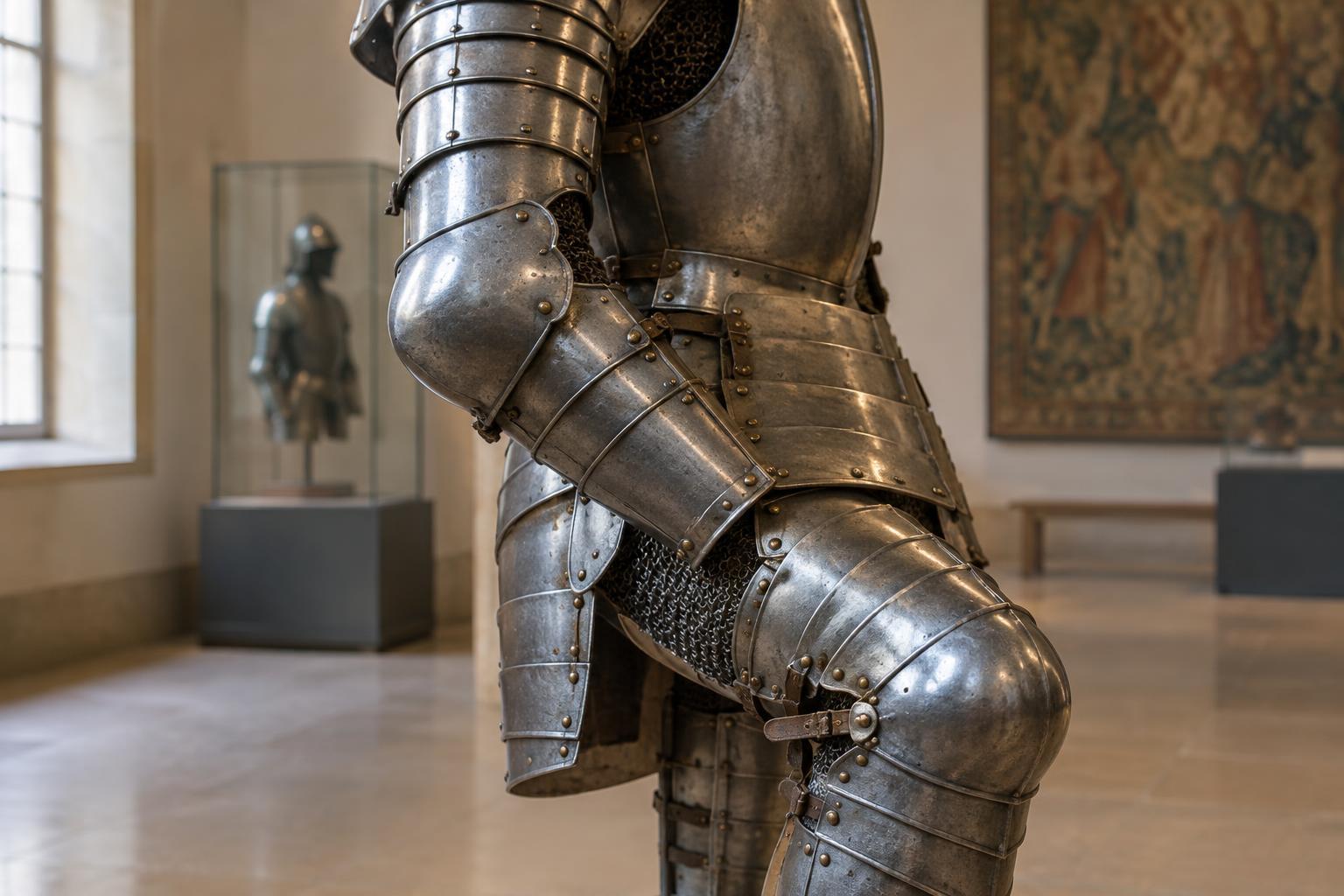
One widely used solution was articulation: linking smaller plates so that they could shift in relation to one another. Narrow overlapping plates, often called lames, appear at places such as the shoulder, waist and knee. As the wearer moved, the plates could slide through a limited range while continuing to cover much of the area beneath them. Their overlap helped prevent an open line from appearing whenever a limb bent.
The shoulder shows why this mattered. It moves in several directions, not just along one hinge. Armour for that area might combine a larger shaped shoulder defence with smaller articulated plates extending toward the upper arm. The arrangement offered a compromise rather than unrestricted motion: the size, shape and connections of the pieces all affected how far they could move.
At the elbow and knee, shaped guards protected prominent parts of the joint, while adjacent plates accommodated bending. These guards could also become visually striking features, with projecting forms or decorative edges. Their appearance reminds us that technical design and craftsmanship were not separate concerns. A maker had to consider the moving body, the form of the metal and the visual unity of the armour.
Flexible materials completed the arrangement
Plate was only one part of many historical armour arrangements. Mail, made of interlinked rings, could cover areas where a rigid plate would be difficult to fit. Textiles and leather could form supporting garments or connections between components. Such materials did not behave like plate, and their presence should not be read as proof that every exposed-looking area was protected in the same way. Instead, they show how makers and wearers combined materials with different strengths and limitations.
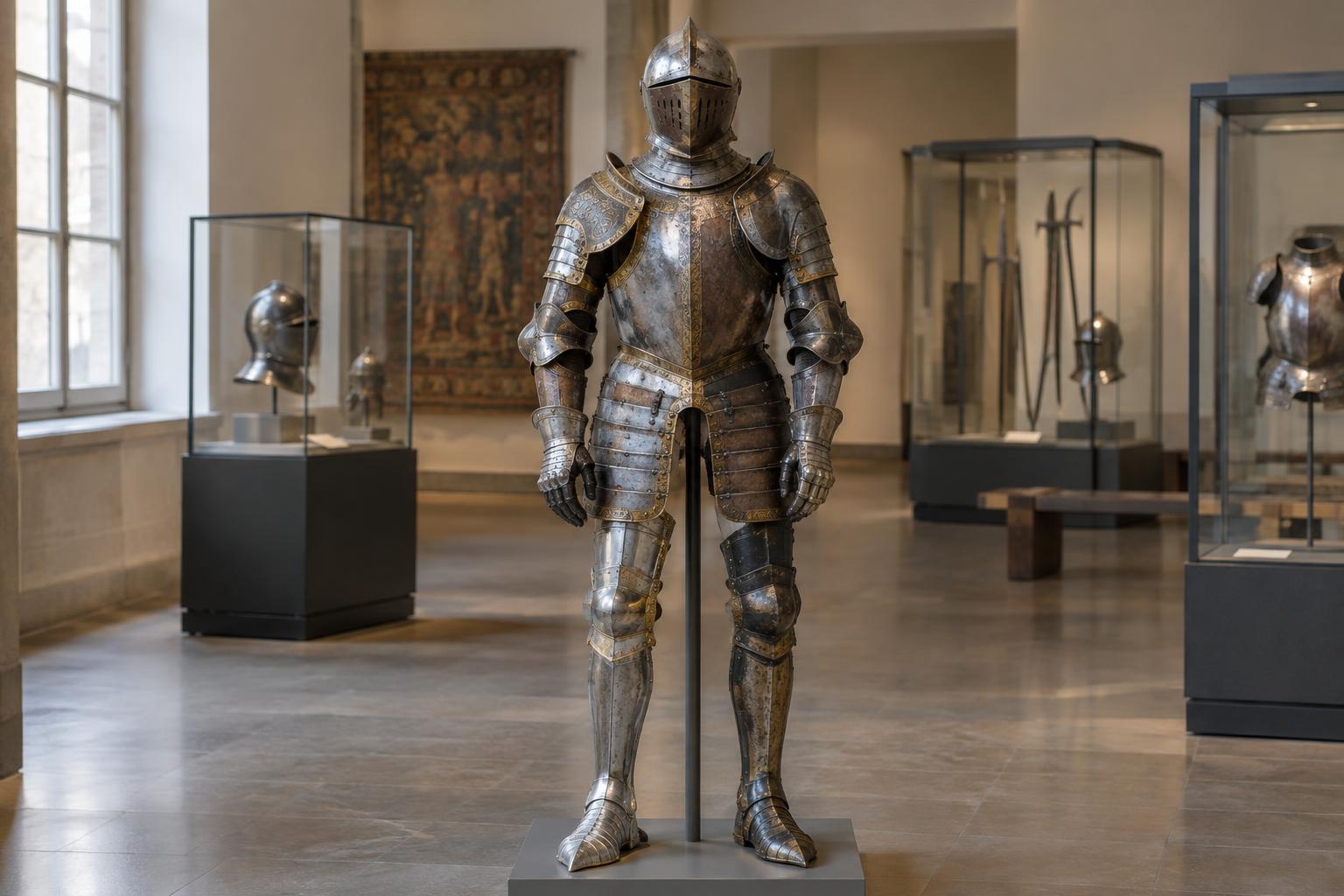
The spaces between plates are particularly easy to misunderstand in a museum display. A suit mounted on a stand may not show the full clothing or flexible protection that once accompanied it. Conversely, a modern mount can make pieces appear to fit more closely together than they did on a moving wearer. A static silhouette is a useful starting point, but it cannot demonstrate the full range of motion or the experience of carrying the armour.
Fit mattered as much as the joints themselves
Articulation worked within the proportions of a body. The position of an elbow guard, the length of an upper-arm plate and the placement of a shoulder defence all influenced whether the parts met comfortably as the arm moved. Some armour was made or adjusted for a particular wearer, while other pieces passed between owners or were modified over time. Fit was therefore part of the object’s history, not merely a detail of its manufacture.
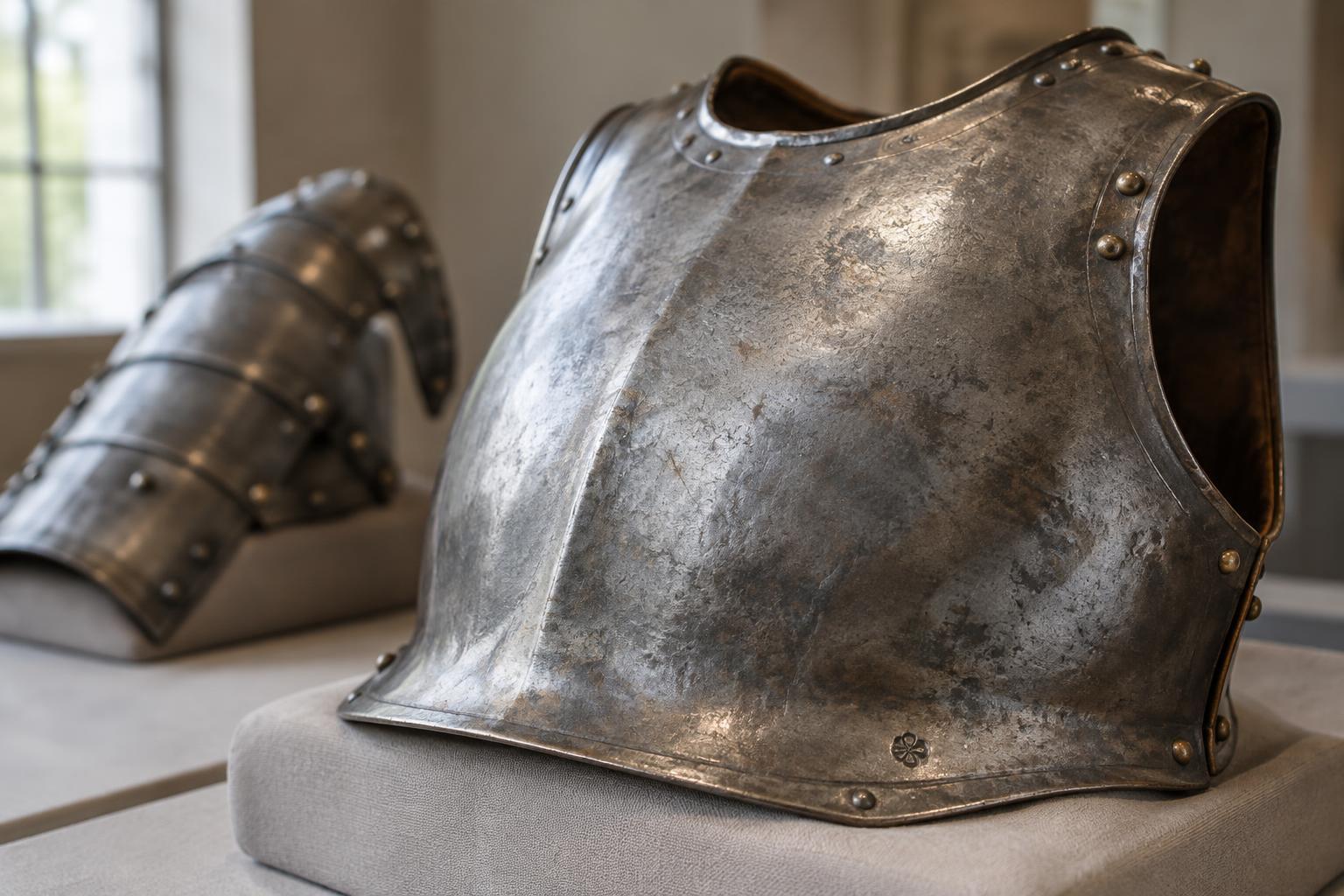
Connections also shaped movement. Surviving rivets, straps and other fittings can help explain how plates were held together or secured, although missing and replacement parts complicate interpretation. Conservation records may be important here: what looks like an original arrangement on display may include later repairs or mounting choices. Rather than treating these details as flaws, we can use them to ask how the object changed during its working life and after it entered a collection.
Reading articulation in a collection
When examining armour in a museum, start by looking for repeated overlaps at the edges of large plates. Trace how a shoulder defence leads into the arm, or how plates above and below a knee guard meet. Notice differences between the two sides: they may reflect design, later alteration, loss or restoration. A label or catalogue entry may clarify which parts belong together, but the visible construction still rewards careful observation.
Armour joints offer a close view of historical problem-solving. They show makers working with the body’s movements while pursuing coverage, durability and an intended appearance. No single joint explains an entire suit, and a motionless display cannot tell us exactly how it felt to wear. Even so, the shaped guards and overlapping plates preserve a clear idea: protecting a moving person required the armour itself to move.