A shaped object, not a rigid shell
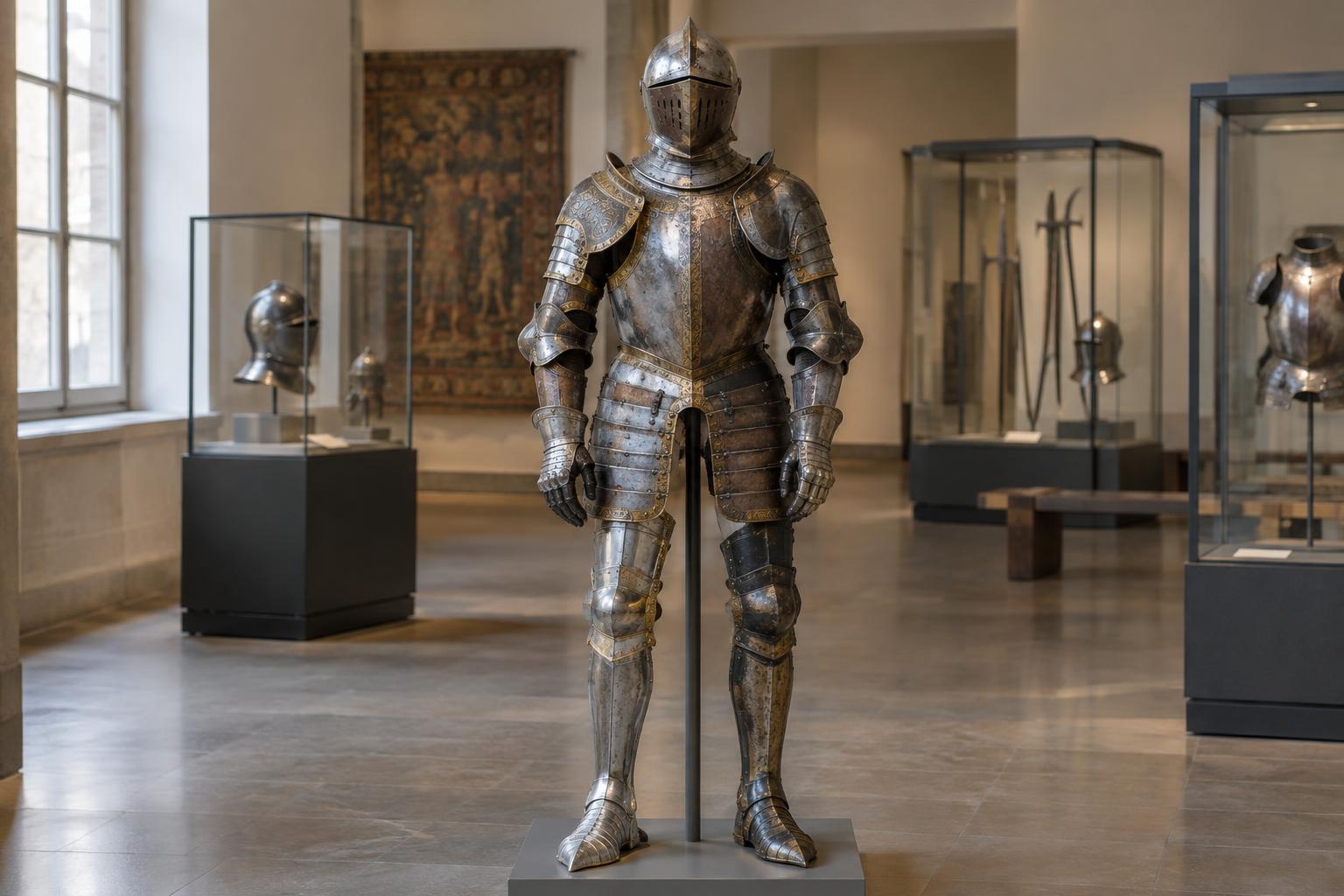
Armour is often pictured as a hard shell placed over the body. In practice, its fit began with the person who would wear it and the clothing beneath it. The shape of a breastplate, the position of a shoulder defence, and the length of an arm piece all affected how the parts sat together. A well-fitted ensemble could follow the body’s movement while maintaining the protective overlap between its components.
Not every suit was made for a single named owner. Some high-status armour was closely tailored, while other pieces were produced in standard sizes or adapted for successive wearers. Surviving collections also contain composite suits assembled long after their parts were made. These differences matter: a piece that looks awkward on a modern display figure may reflect a different body shape, a missing layer of clothing, or a later pairing rather than poor original craftsmanship.
The clothing beneath the metal
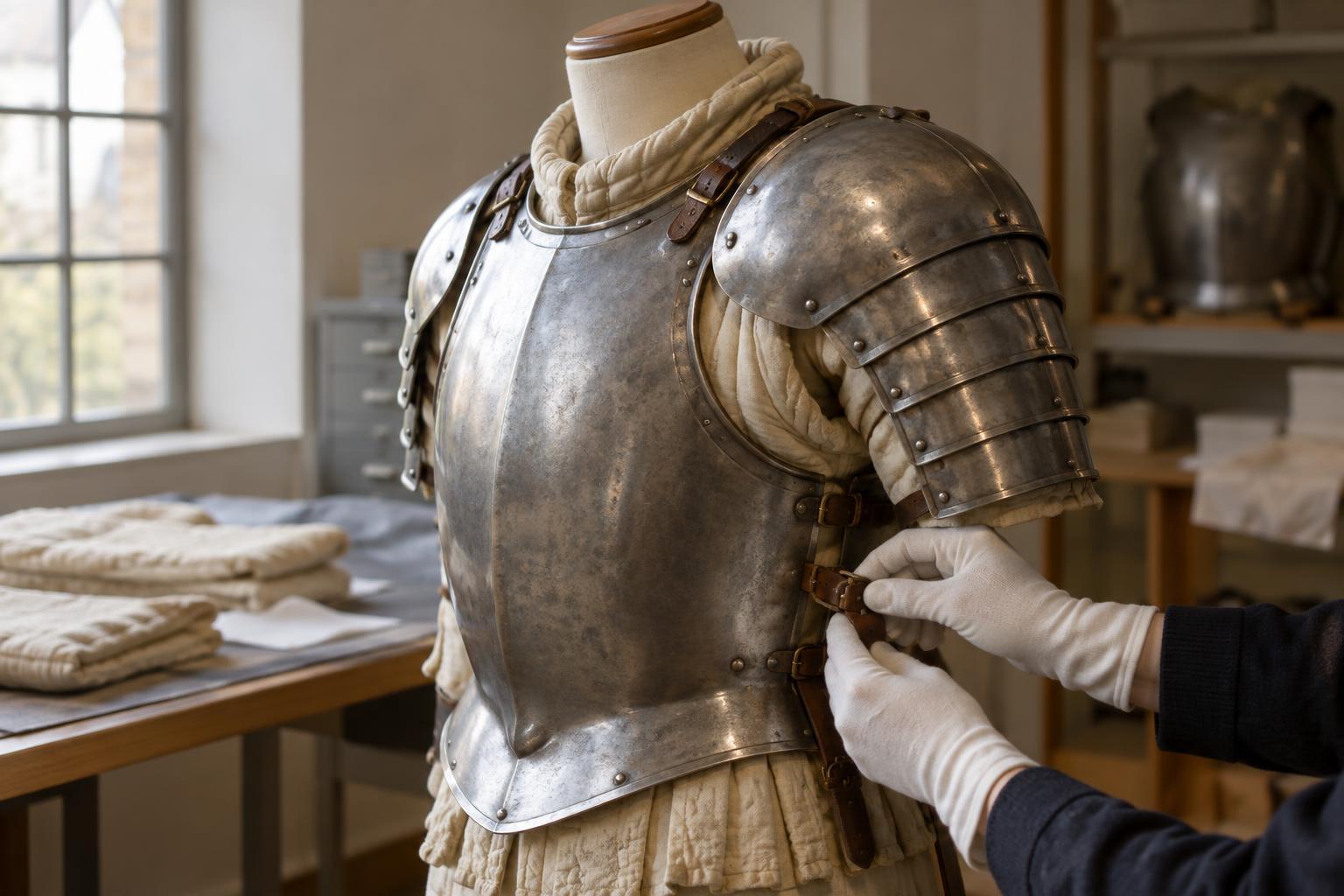
Textile layers helped determine how armour fitted. Depending on the period and type of equipment, a wearer might have used a fitted garment with areas of padding or an arming doublet designed to support particular pieces. Such clothing could soften contact with hard edges, fill small gaps, and provide places to attach armour. It was part of the ensemble, not merely an undergarment hidden from view.
Padding was not necessarily thick or uniform. Excess bulk could change the position of a plate and interfere with the relationship between neighbouring pieces. Historic clothing also changed shape through wear, repair, and laundering. Because textiles survive less often than metal, a museum may have the plates but not the garment that once helped them sit correctly. That absence limits how confidently we can reconstruct the original fit.
Shaping plates for a moving body
Armourers shaped metal to accommodate more than the wearer’s measurements at rest. Plates around the shoulders, elbows, hips, and knees had to work in relation to adjacent parts. Articulated sections, overlaps, and carefully placed openings allowed movement without treating the whole body as one fixed form. The result could look smooth from a distance, even though it consisted of many separately shaped elements.
The intended use of an ensemble also influenced its shape. Armour for different forms of fighting, ceremonial display, or tournament activity could place different demands on coverage and movement. It is therefore misleading to judge every surviving suit by one modern expectation of comfort or flexibility. The most useful question is how its design served the activities and social setting for which it was made.
Fastenings and the scope for adjustment
Straps, buckles, hinges, and textile ties helped keep armour in place. Some fittings allowed modest changes as clothing varied or as an ensemble was worn by another person. Others mainly secured a part in its intended position. Adjustment had limits: moving a strap could not fully compensate for a breastplate of the wrong length or an arm defence shaped for a substantially different wearer.
These less imposing components are easy to overlook, especially when leather and textiles have been replaced or lost. Yet their placement can reveal how an armourer expected weight to be supported and pieces to meet. A polished plate displayed without its original fastening system shows only part of the craftsmanship involved in making a wearable object.
Reading fit in a museum collection
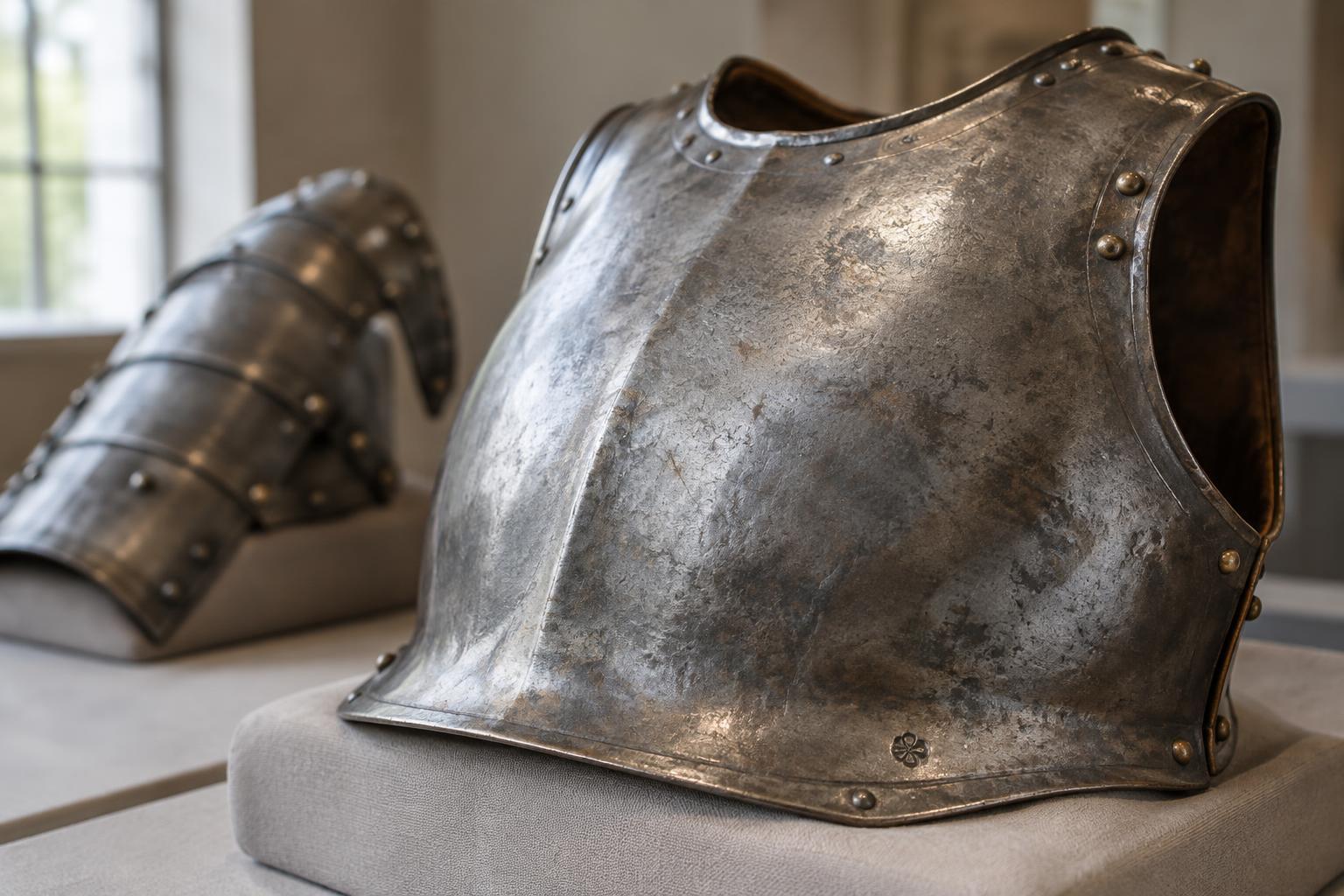
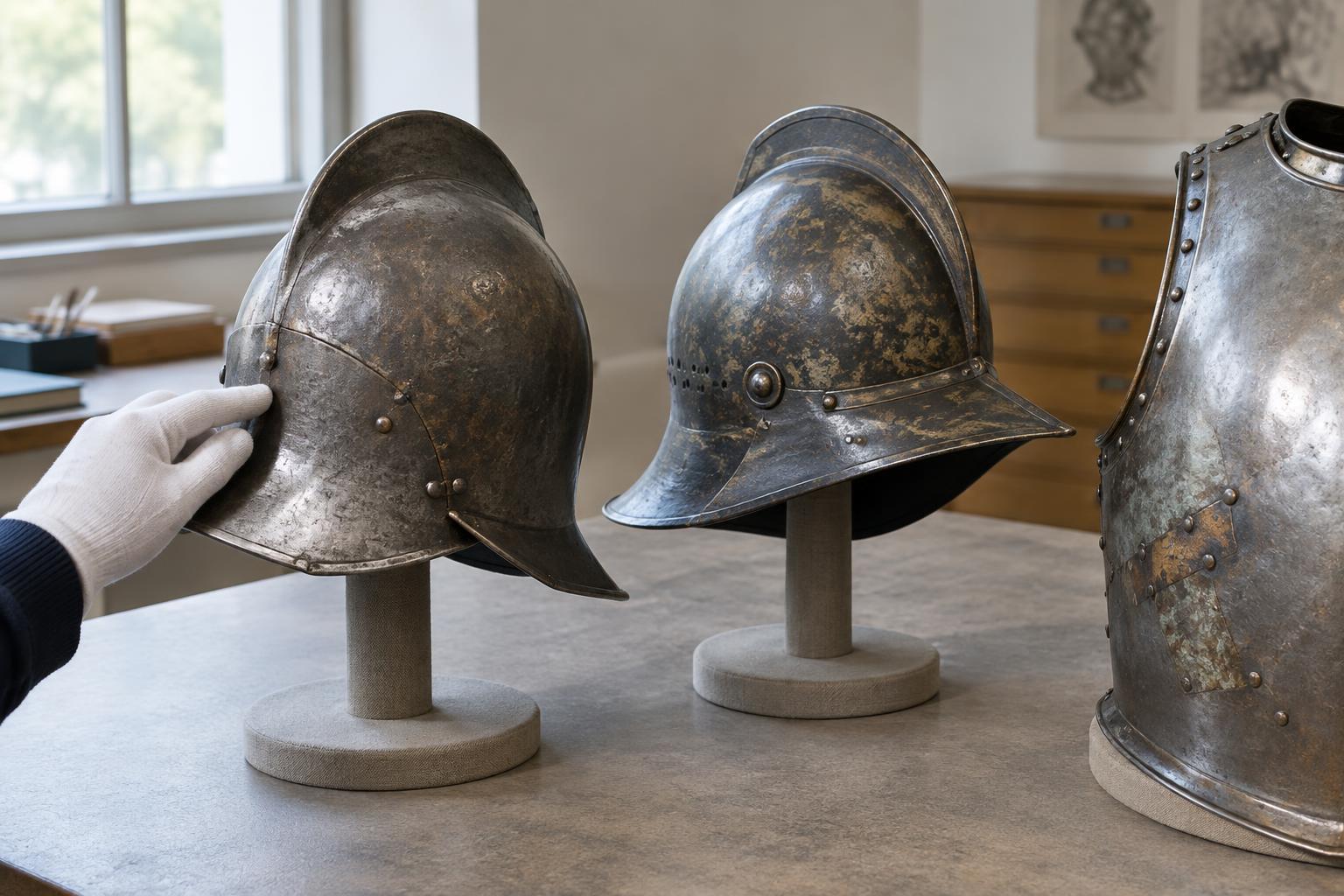
Fit can offer clues about an armour’s history, but it rarely provides a complete biography. Altered edges, added holes, replacement straps, or mismatched decoration may suggest repair, reuse, or later assembly. They do not automatically identify who made a change or when. Conservators and curators assess such evidence alongside construction details and surviving records, while remaining alert to changes made after an object entered a collection.
For visitors, a useful way to look at armour is to follow the connections: where one plate overlaps another, where a strap might have passed, and where a missing textile layer would have sat. These details shift attention from the idea of an isolated metal shell to an ensemble shaped by a body, a craft tradition, and a history of use.