Start with the object, not the box
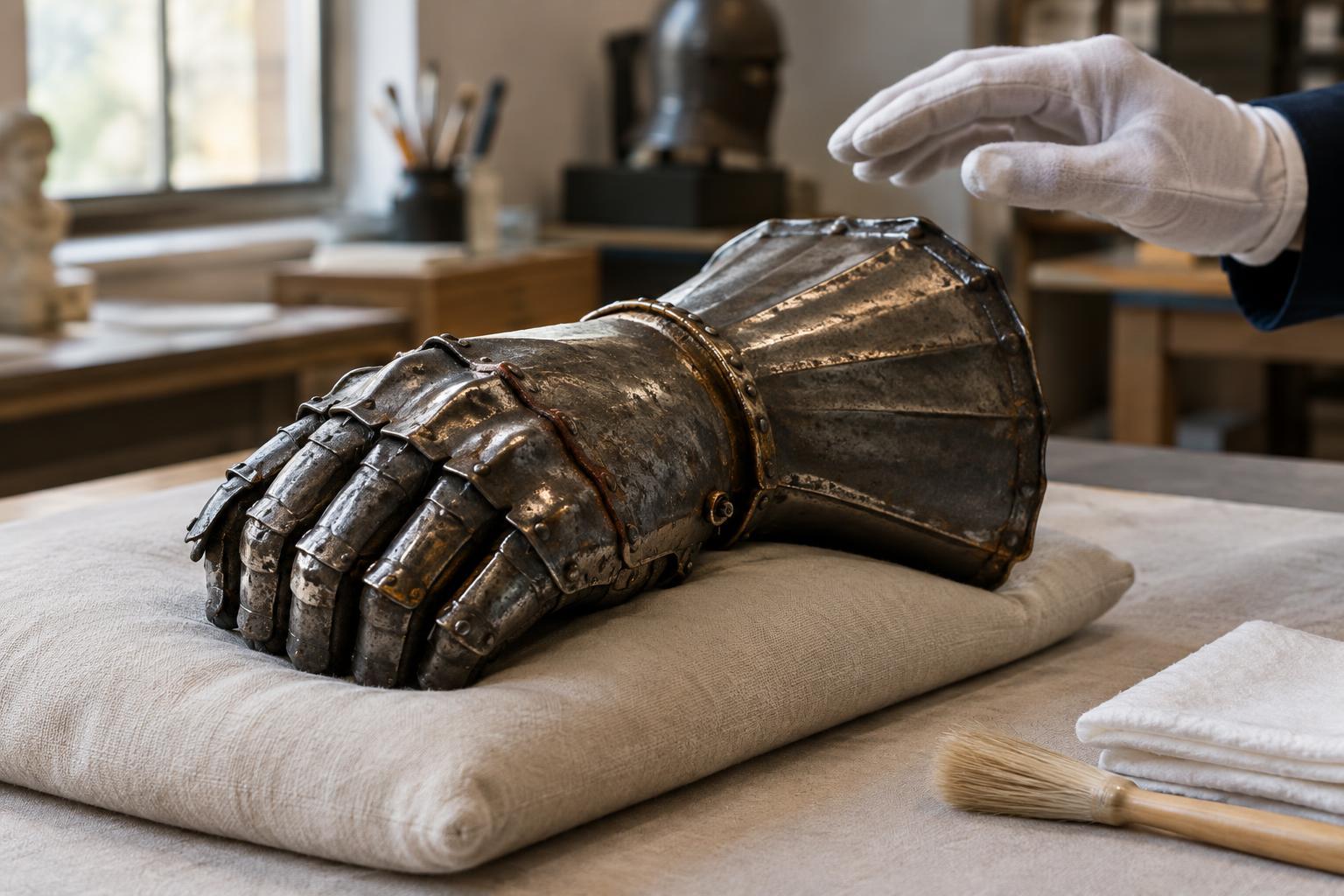
A historic arm is more than its most visible metal part. Wood, leather, textile, horn, adhesives, coatings and old repairs may all respond differently to pressure, vibration and changes in temperature or humidity. An object that appears sturdy on display may have a loose fitting, fragile surface or weakened attachment. Before choosing a container, identify which parts can safely bear weight and which must remain untouched by packing material.
Make a condition record before anything is moved. Photographs of the whole object and vulnerable details can help distinguish pre-existing wear from changes noticed after arrival. Note loose elements, flaking finishes, corrosion, cracks and previous repairs in plain language. If an object seems unstable, pause rather than trying to secure it with tape, polish, oil or a quick repair. A conservator familiar with the relevant materials can advise on whether it should travel and what support it needs.
Ask what needs to stay together—and what should not
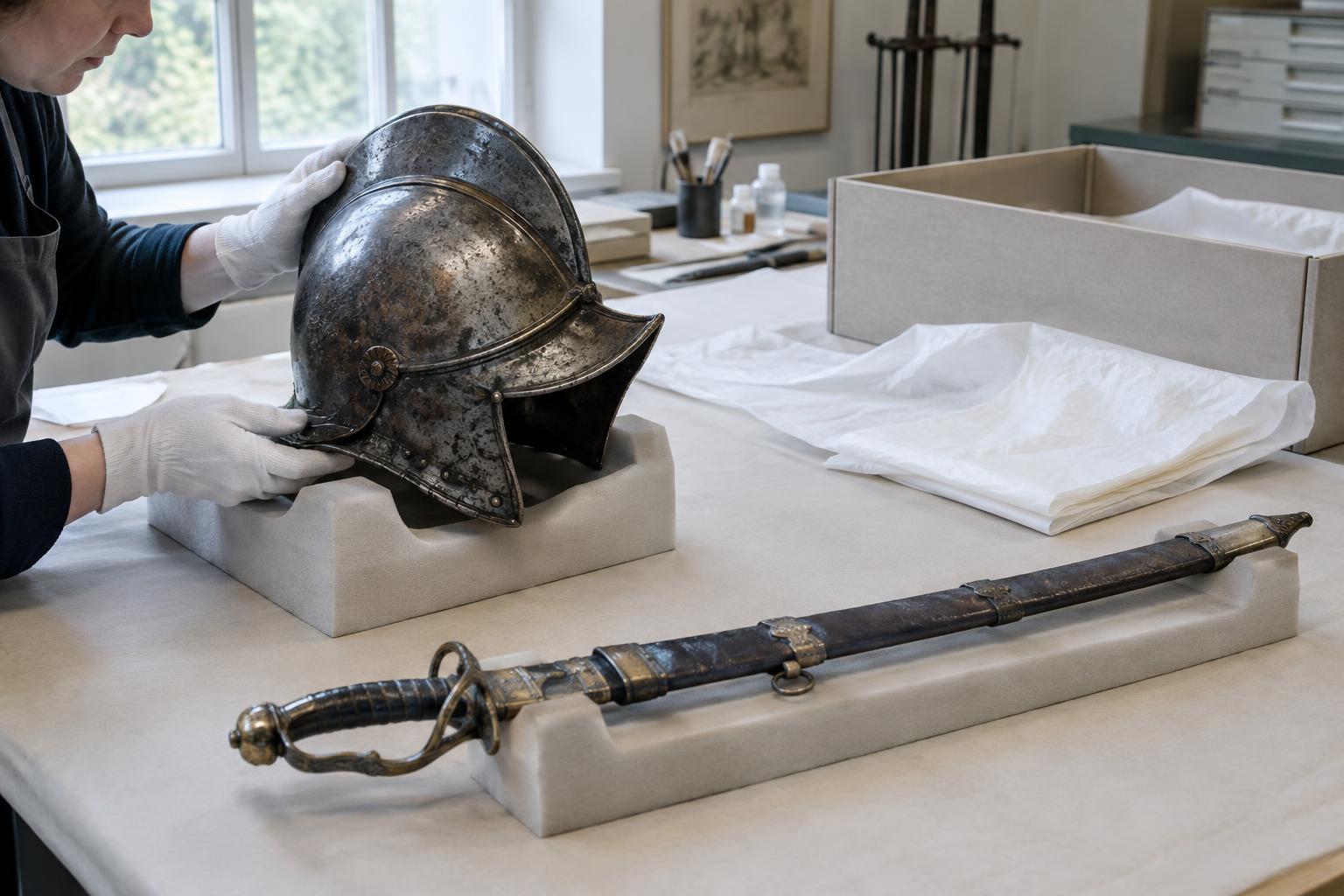
Historic arms often carry information in their relationships: a blade and its scabbard, a firearm and its case, or a helmet and its surviving lining. Record those associations before packing. Labels and inventories should make it possible to reunite related pieces without relying on memory. At the same time, an attached or closely fitted component should not be forced into place merely to keep a set together. Friction during travel can damage decoration and worn surfaces.
Small detached elements need particular attention because they are easily overlooked. Give them clear identifiers and protective spaces of their own, while recording which object they belong to. Keep descriptive labels off historic surfaces. If an item’s status or safe condition is uncertain, seek appropriate specialist guidance before handling or transport; a conservation packing plan is not a substitute for a safety assessment or applicable transport requirements.
Choose supports that protect surfaces and shape
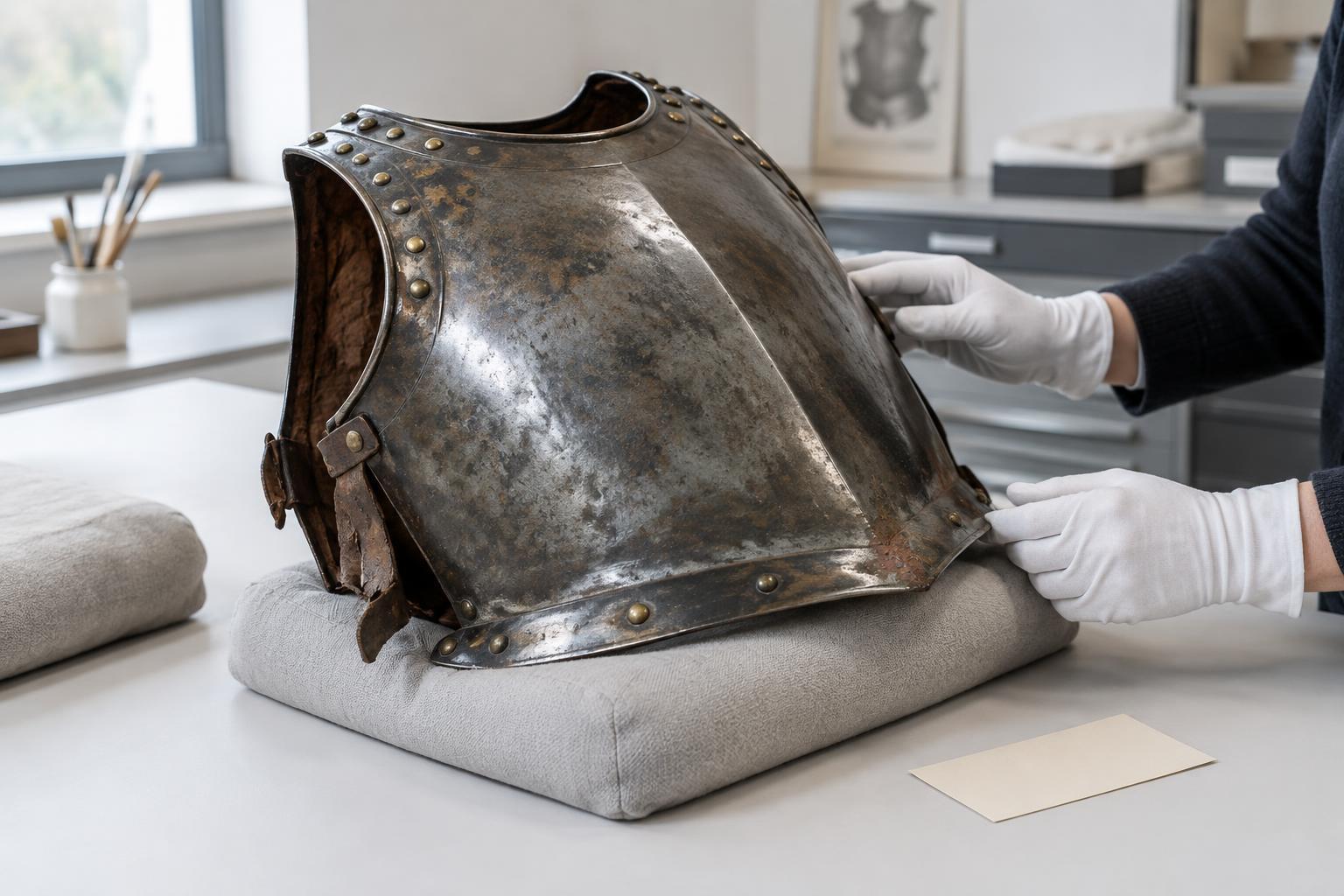
The central packing question is not simply how much cushioning to add, but where the object will rest. Pressure on a thin guard, projecting fitting, leather strap or raised ornament can cause damage even inside a well-padded box. A suitable support holds the object steady at sound points and leaves vulnerable areas clear. For complex armour, supporting the overall form may matter more than filling every opening.
Materials that touch an object should be clean, stable and appropriate for its surfaces. Avoid direct contact with materials likely to snag, shed fibres, trap moisture or transfer colour. Do not wrap an object so tightly that packing presses loose parts against it. Where the safest contact materials or support points are unclear, especially for mixed-material objects or delicate finishes, ask a trained conservator to review the proposed arrangement.
Plan for the whole journey
Packing must account for more than the time spent in a vehicle. Consider how an object will be lifted, carried through doorways, loaded, unloaded and held before unpacking. A box that protects its contents but is awkward to handle may create a different risk. Agree on who will move each item, where it will rest at each stage and how handlers will recognize its correct orientation without opening it.
Changes in the surrounding environment also deserve attention. Damp storage, direct heat and prolonged time in an uncontrolled vehicle may be hard on composite objects. The appropriate precautions depend on the materials, their condition and the length of the journey. If the move involves a museum loan or a particularly fragile piece, transport and environmental expectations should be settled with the responsible collection staff or conservator well before moving day.
Make unpacking part of the plan
A packing record should tell the receiver what is inside each container, how its contents are supported and which areas are fragile. Keep an inventory and condition photographs accessible separately from the objects. Mark containers so they can be identified and kept in the intended orientation, without placing labels or fasteners on historic material.
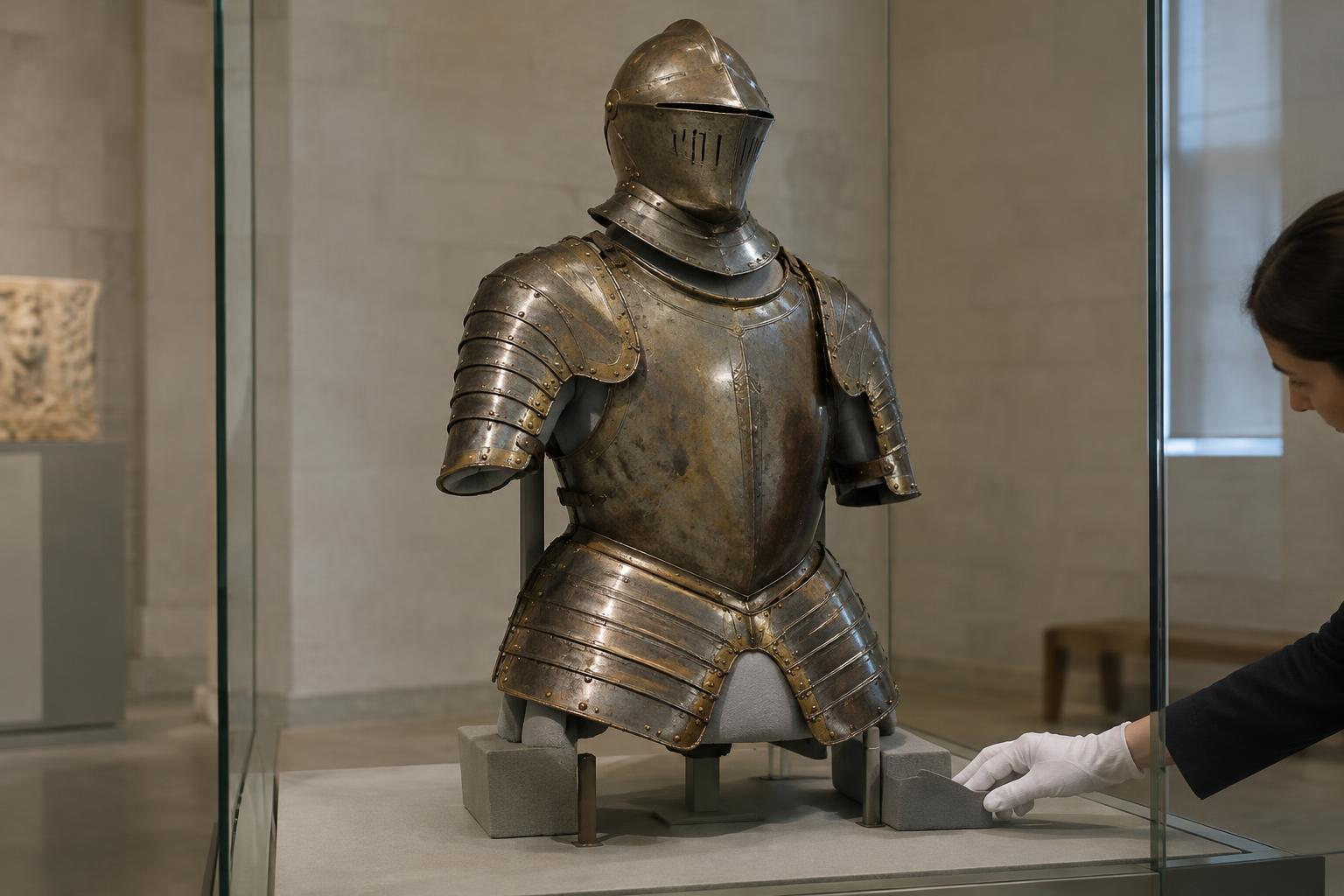
On arrival, allow time for careful unpacking and a comparison with the pre-move condition record. Retain supports until the object has a safe place to rest or be displayed. If a change is found, document it before attempting to adjust or clean anything. Thinking through that final step before departure makes the move less a hurried transfer of possessions and more a controlled continuation of their care.