Begin with the object, not the display case
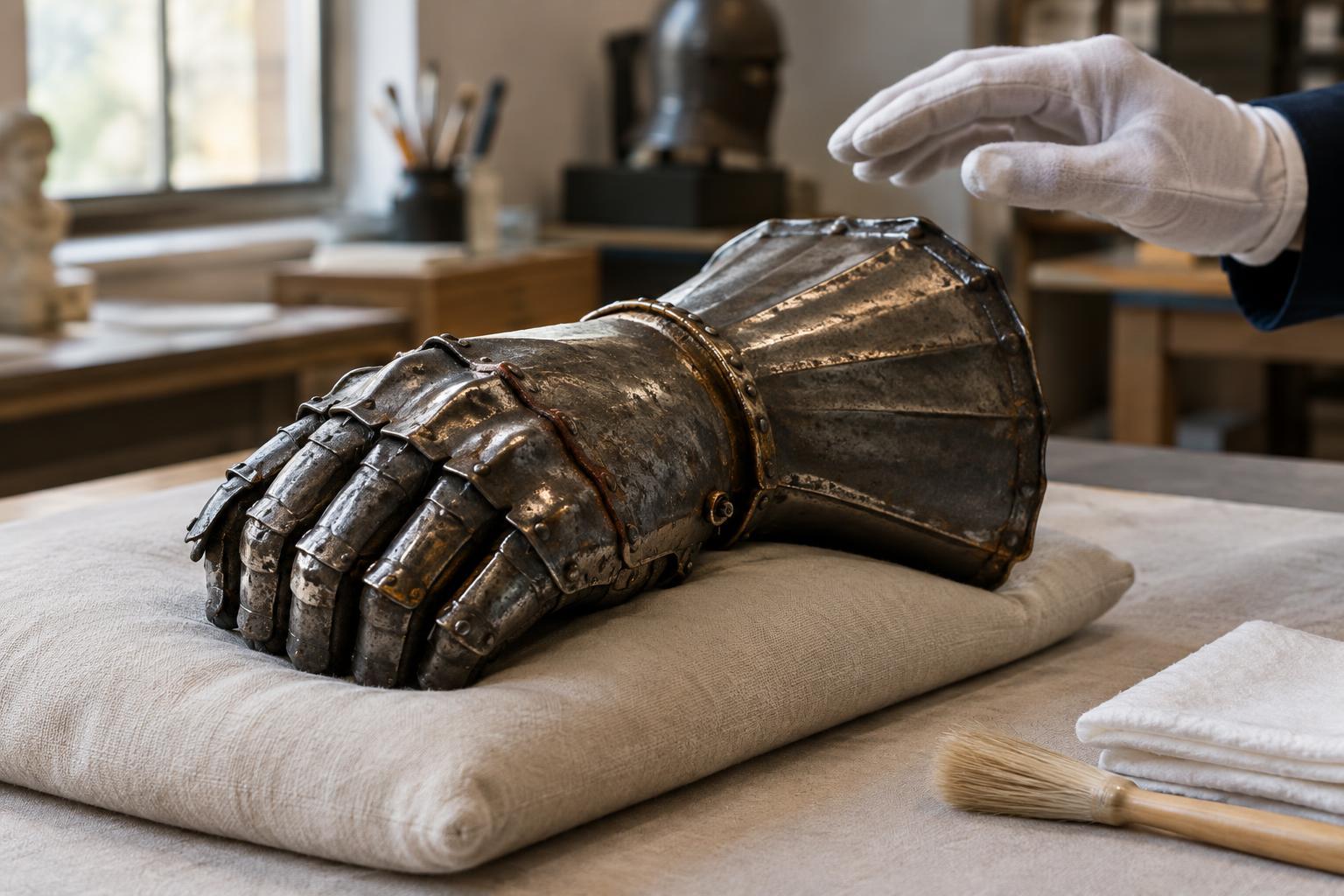
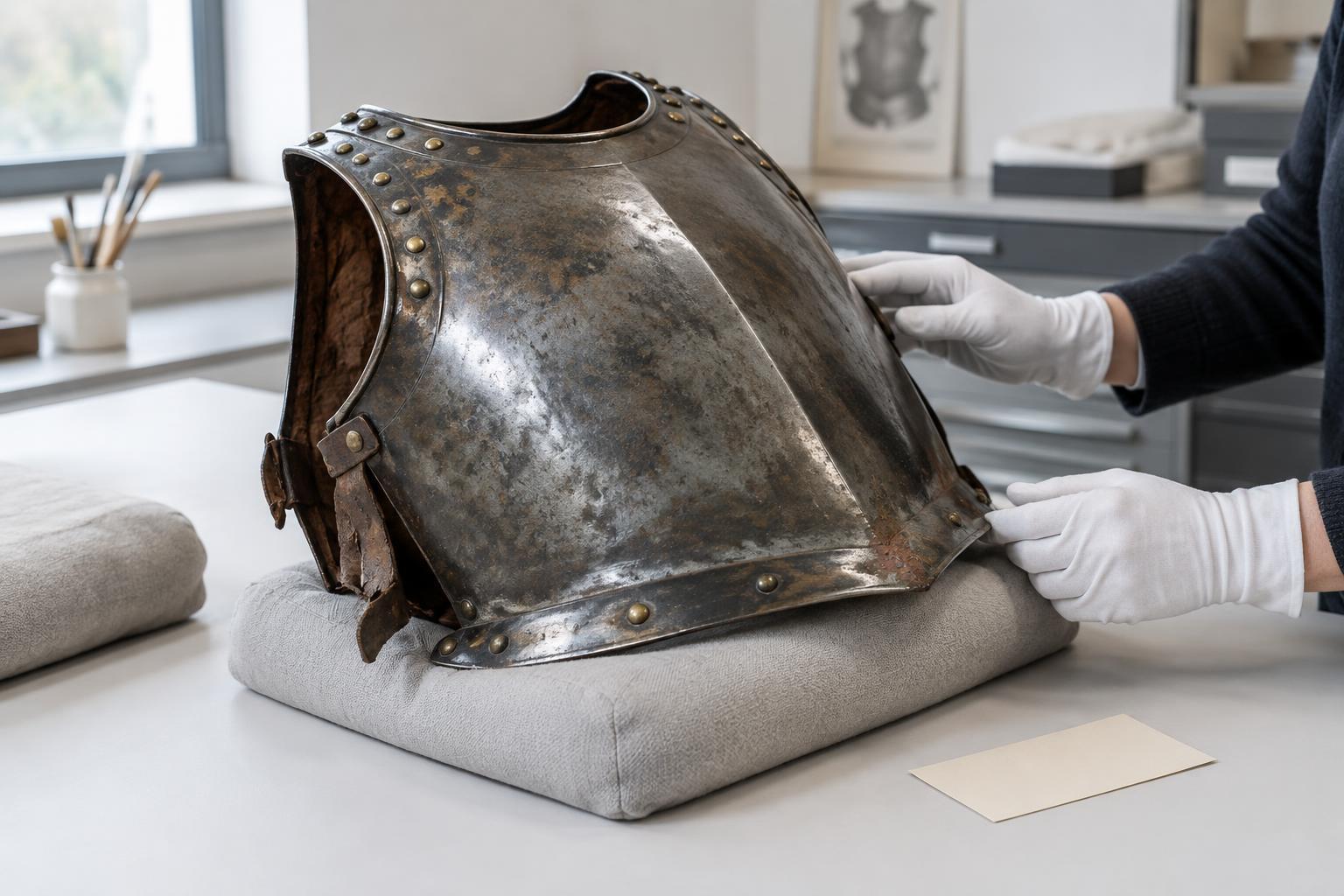
Historic armour was made to fit a body, serve a purpose, or communicate status, but its present condition should determine how it is displayed. A breastplate, helmet, or gauntlet may include old repairs, fragile finishes, missing fastenings, or later alterations. Before choosing a pose or mount, record what is present and look for cracks, loose components, flaking surfaces, and areas that already bear weight. If an object has a collection record, keep its parts and identifying information together.
The goal is not to recreate every aspect of wear. A dramatic stance can place tension on joints, straps, and rivets that no longer tolerate it. Decide which features visitors or household viewers need to see, then seek the least demanding arrangement that shows them. For a vulnerable piece, a simple, stable presentation may communicate more than a complete-looking assembly.
Use light for viewing, not spectacle
Light makes engraved lines, shaping, and surface texture legible, but exposure should be limited to what viewing requires. Keep armour out of direct sunlight and away from fixtures that noticeably warm the object or its case. Light can also affect associated materials such as leather, textiles, painted details, labels, and historic coatings, even when the metal itself appears unchanged.
Consider how the display looks at a moderate, even level of illumination before adding bright accent lights. Glare on polished surfaces can obscure details rather than reveal them. Adjustable lighting, shorter display hours, and switching lights off when no one is viewing are straightforward ways to reduce unnecessary exposure. When armour includes particularly sensitive decorative or organic elements, a conservator can help assess appropriate lighting.
Let supports carry the weight
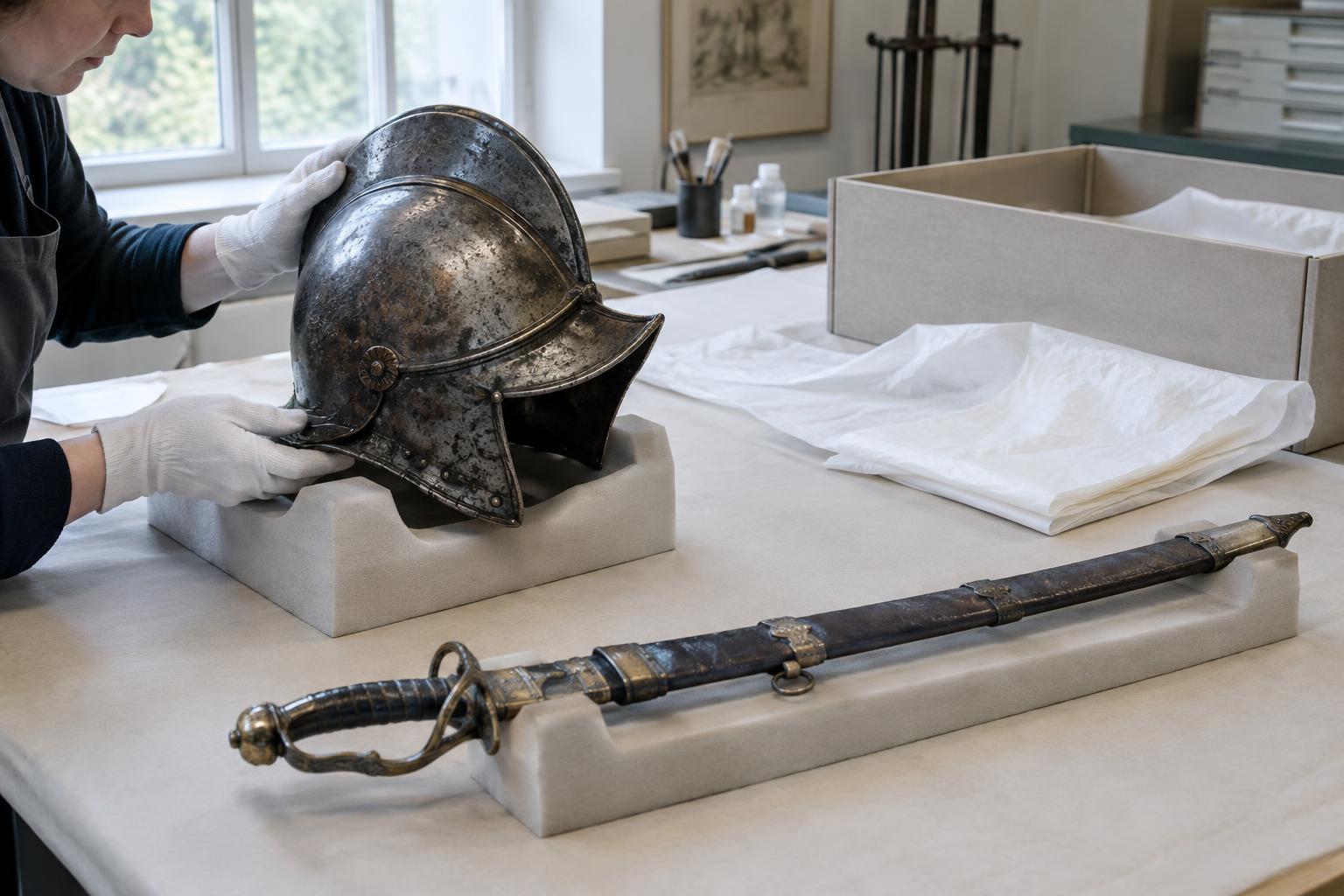
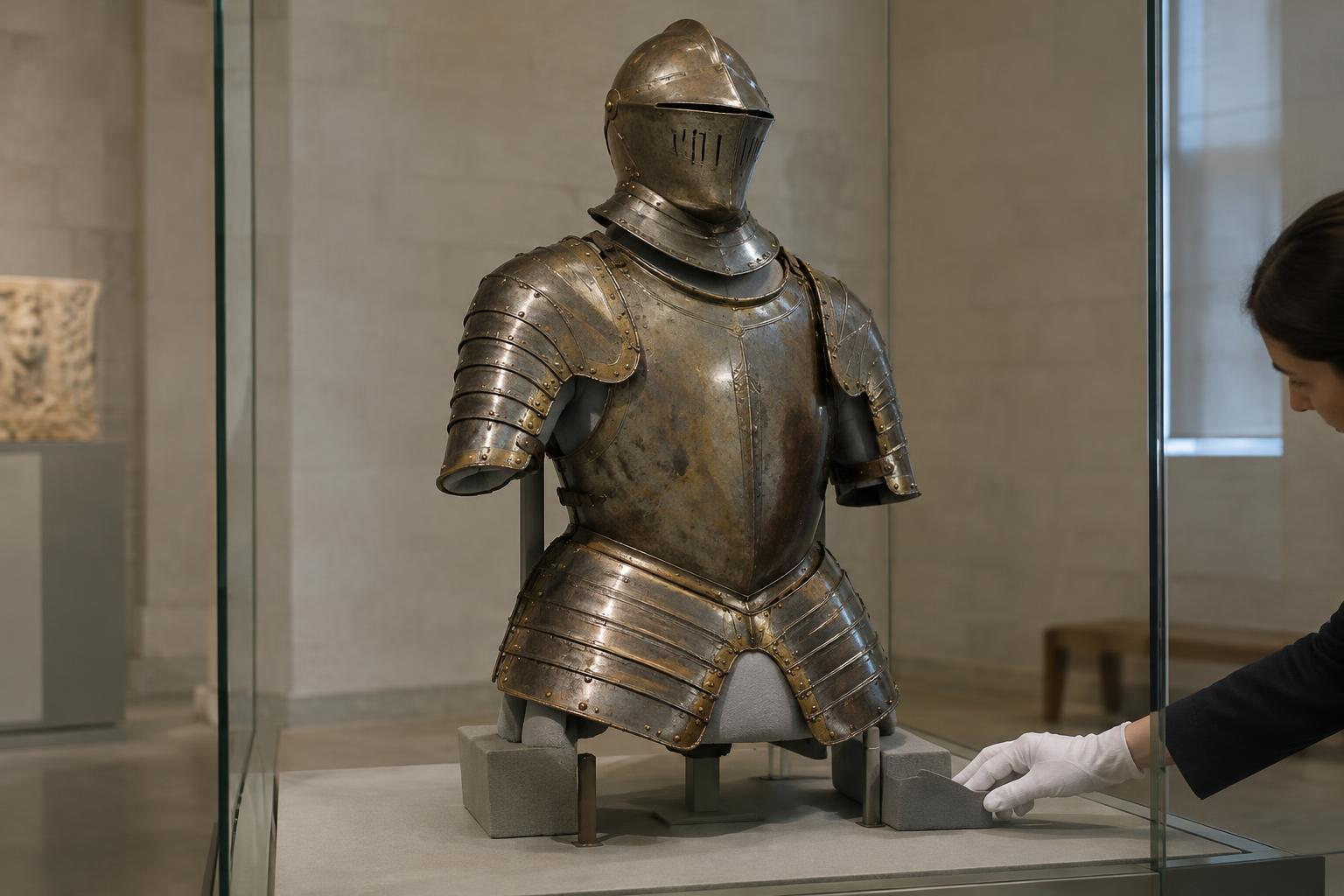
A sound mount supports an object without forcing it into a shape or relying on weakened historical parts as structural anchors. Weight should be distributed across suitable areas rather than concentrated on a thin edge, a single rivet, or an old leather strap. Helmets, for example, need steady support that does not press against delicate linings; articulated pieces need positions that do not pull their joints to an extreme.
Materials that touch the armour should be chosen for stability and compatibility, with contact surfaces shaped and padded as appropriate. Avoid improvised hooks, adhesive attachments, or tight clamps. A mount should also allow safe removal for inspection without requiring parts to be pried apart. If a proposed display depends on bending, fastening, or drilling an original component, reconsider the design and seek specialist help.
Manage the surrounding environment
Environmental stability matters because an armour display is rarely made of metal alone. Changes in moisture can encourage corrosion on iron and steel while affecting leather, wood, textiles, and other attached materials differently. Avoid locations prone to condensation, leaks, damp walls, or sharp swings in temperature and humidity. A sealed-looking case is not automatically protective: materials placed inside it and the conditions when it is closed also matter.
Keep the display away from sources of dust, cooking residues, and frequent handling. When access is necessary, plan how the object will be approached and moved before opening the case. Barriers and clear labels can help viewers understand that touching a surface is not required to appreciate its craftsmanship.
Make inspection part of the display plan
A responsible display remains easy to check. Take dated photographs when the armour is installed, including details of existing marks and the points where the mount touches it. Periodically compare the object with those records, looking for new discoloration, deposits, shifting parts, or changes in straps and padding. Also check that the mount, case, and lighting remain secure and that cleaning around the exhibit does not put it at risk.
Do not treat every change as a reason to polish or apply a coating. Surface features may be historically meaningful, and an unsuitable treatment can be difficult to reverse. If corrosion appears active, a finish begins to lift, or a component no longer sits securely, reduce handling and consult a qualified conservator. Good display practice is not a one-time installation; it is a continuing commitment to making the object visible without asking it to endure more than necessary.