Why a dull surface may be worth preserving
A historic metal object rarely reaches the present looking as it did when new. Its surface may hold an original finish, later alterations, wear from handling, old repairs and deposits acquired during storage or burial. These layers can help a curator or conservator understand how the object was made and used. Cleaning changes that record, sometimes permanently. A polished result may look appealing while revealing less about the object’s history.
That does not mean every stain or patch of corrosion should remain untouched. Some conditions may threaten an object, while others are comparatively stable. The difficulty is telling them apart without examining the metal, its coatings and its environment. For a collector, the safest starting point is to treat an unfamiliar surface as potential evidence rather than as dirt waiting to be removed.
Mistaking patina for a problem
One common mistake is polishing away darkening because it makes the object look old. On copper alloys, silver and other metals, changes in surface colour may be part of the object’s long history. A finish may also have been applied deliberately by its maker or a later owner. Removing it can flatten details, expose a different-looking surface and make it harder to distinguish original workmanship from subsequent intervention.
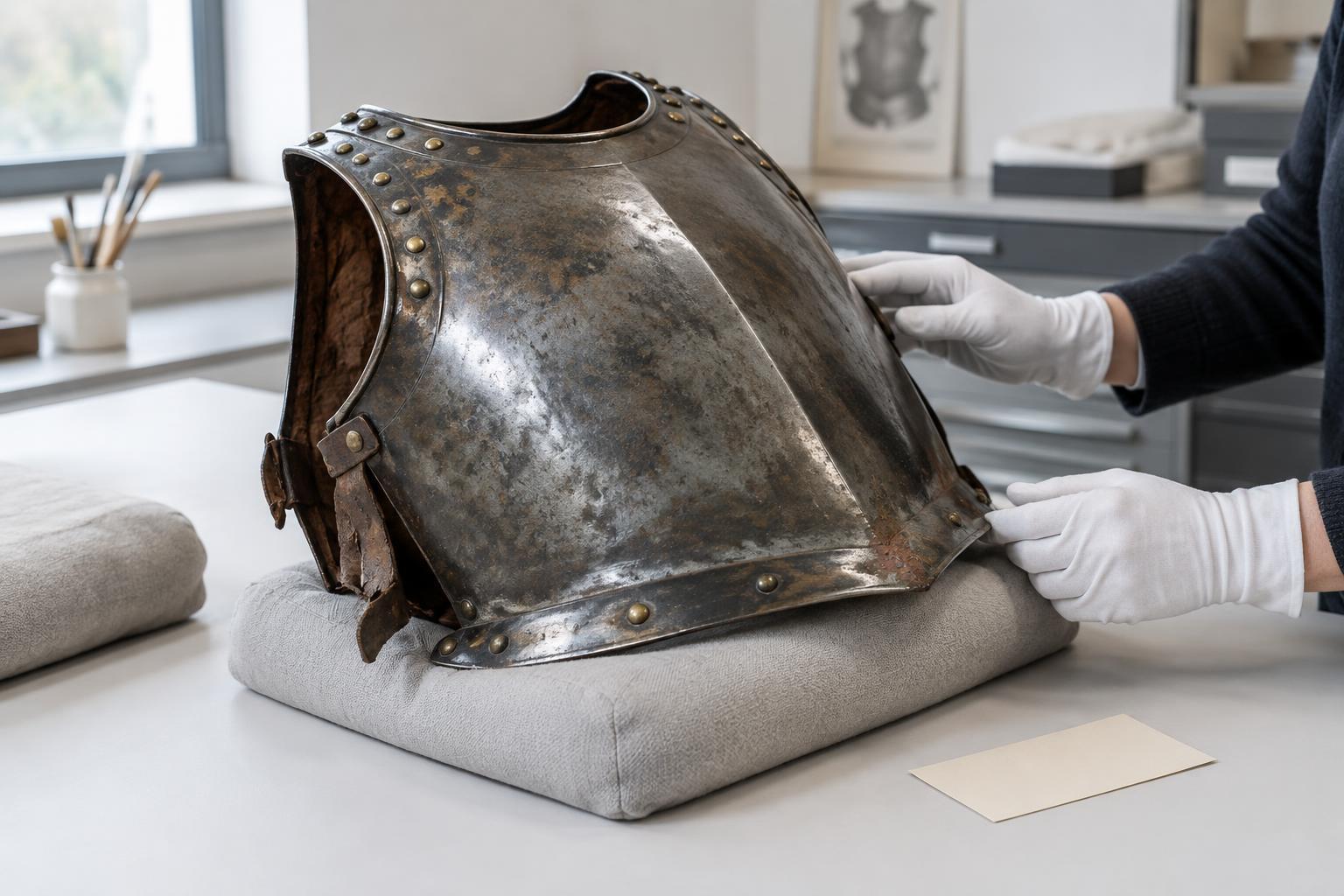
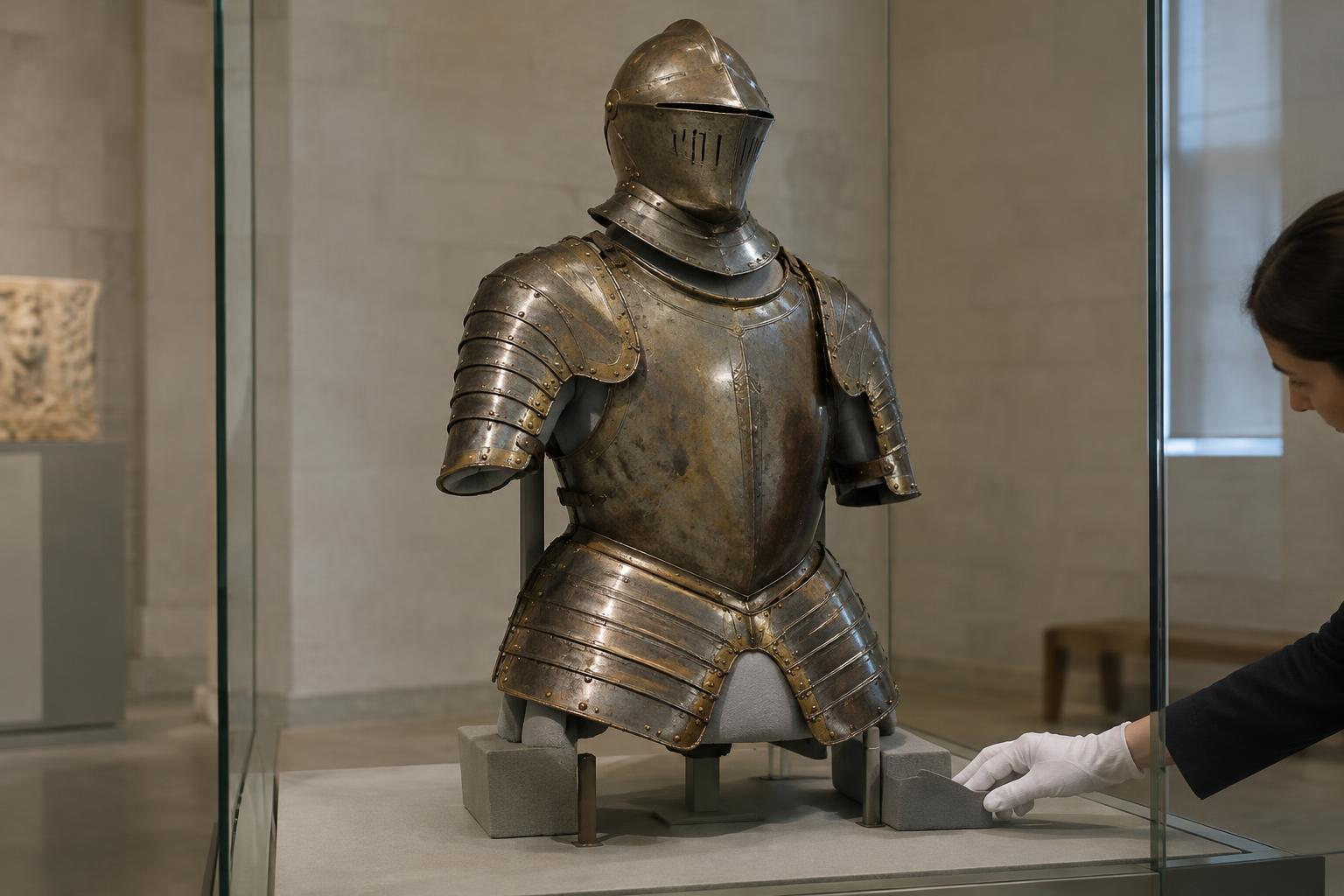
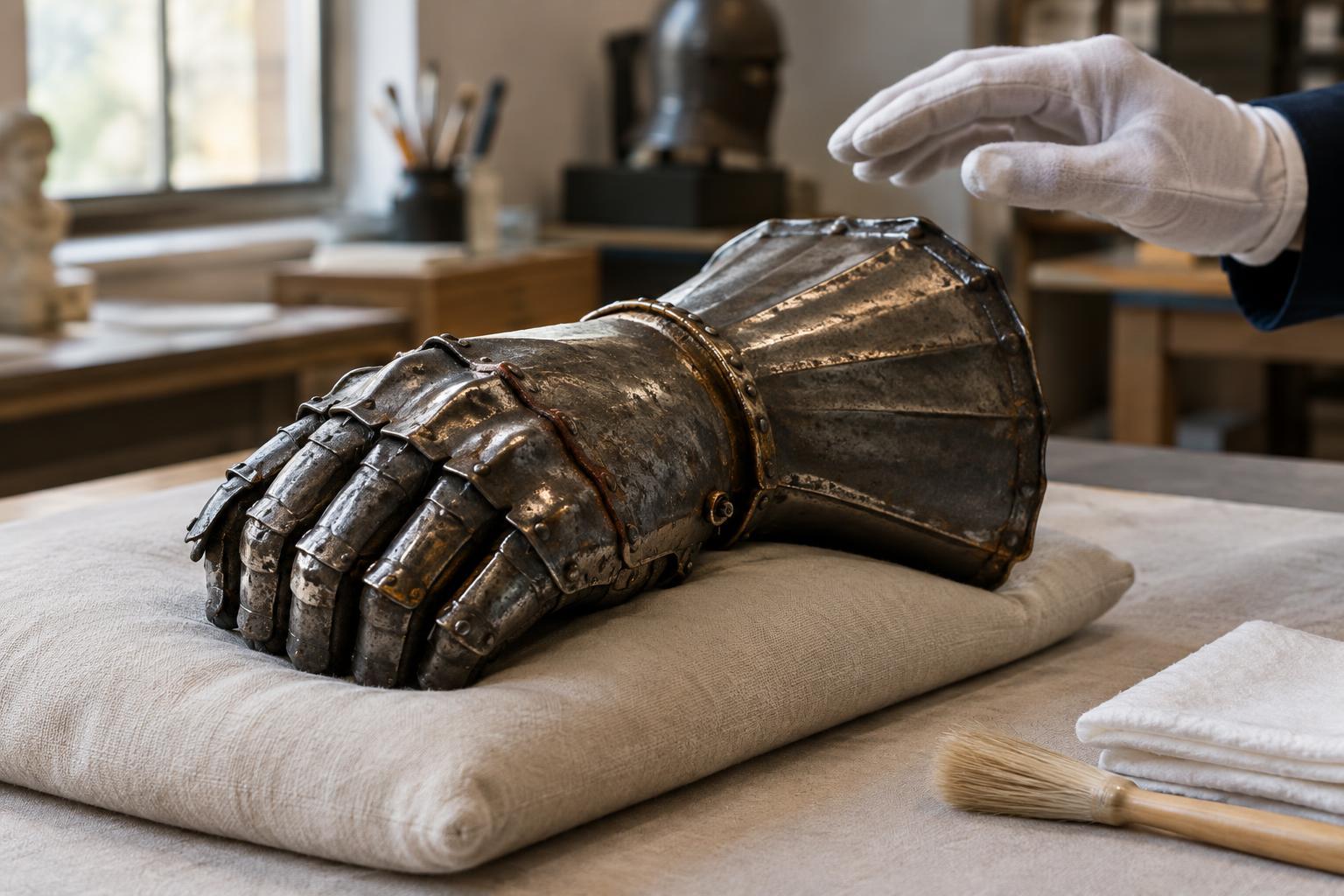
The same caution applies to historic arms and armour. Colour in a recess might be an old protective finish, a trace of decoration or material left by a previous treatment. From a photograph alone, these possibilities can be difficult to separate. An even, newly bright surface is not necessarily closer to the object’s original appearance, and trying to achieve one may remove the very clues needed to interpret it.
Losing marks, coatings and traces of use
Aggressive rubbing, scraping or abrasive cleaning can wear down details that are already shallow. Maker’s marks, inspection stamps, engraved lines and tool marks may survive only at the surface. Their edges can matter as much as their overall shapes: they may help someone judge how and when a mark was made. Fine scratches added during cleaning can also obscure older patterns of manufacture and use.
Less obvious evidence may sit alongside these marks. Paint, lacquer, gilding, textile fibres or residues around a fitting can connect separate parts of an object’s story. Old repairs and replacement components are informative too, even when they make the object look less uniform. Cleaning with the aim of making every area match can erase differences that would otherwise prompt useful questions about ownership, maintenance and display.
Forgetting that objects are made of more than metal
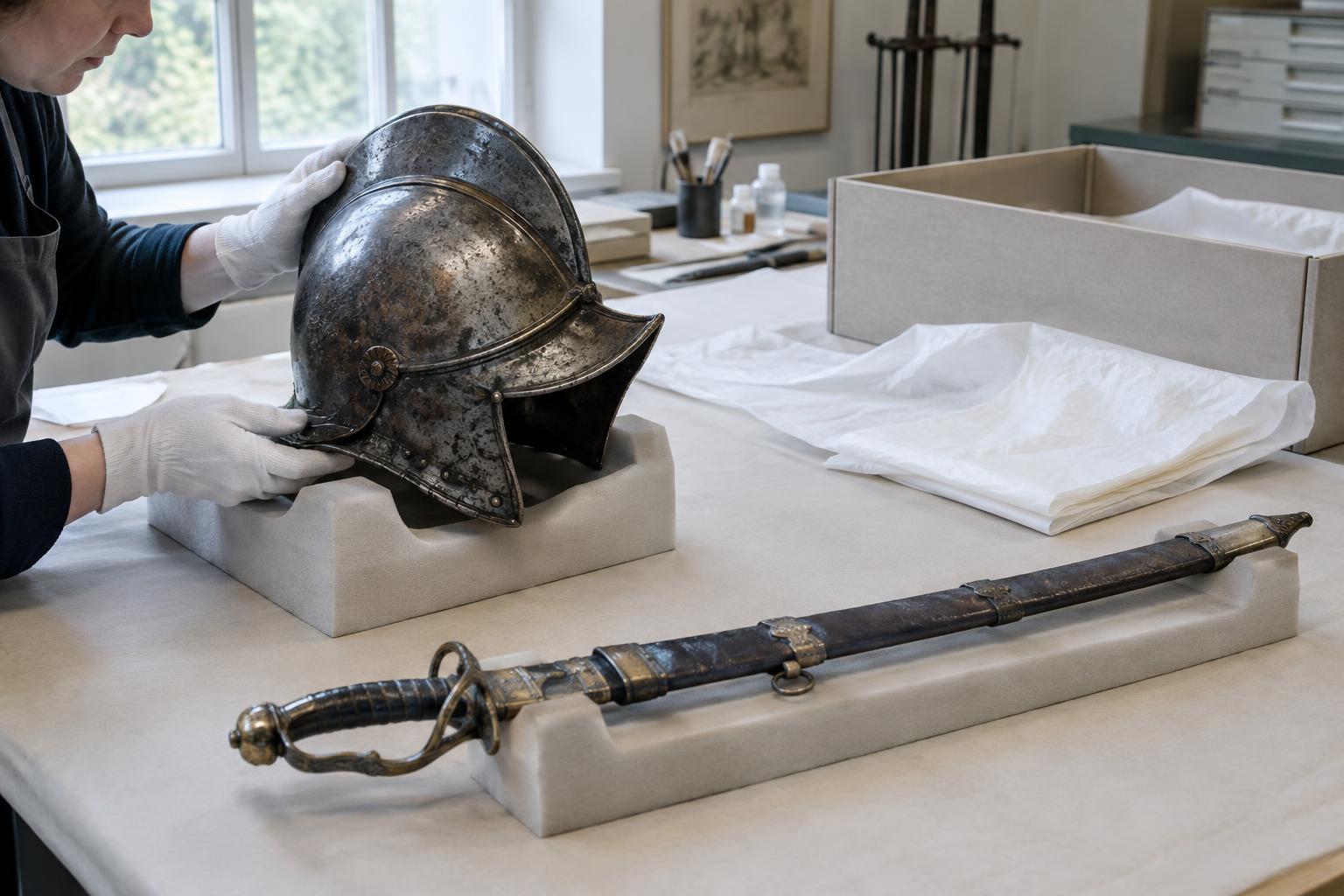
Many historic metal objects combine several materials. An armoured piece may include leather, fabric, adhesives and later mounts; a decorated fitting may carry fragile inlay or enamel. A cleaning method that seems harmless on one metal surface may affect an adjacent material differently. Moisture can collect at joins, and pressure applied to one component can strain another. Treating the whole object as if it were a single, solid piece overlooks those risks.
Past treatments add another complication. A coating that looks like ordinary grime might have been applied to protect a surface, even if it is no longer ideal. Attempting to remove an unknown coating without understanding what lies beneath can disturb original finishes or decoration. If material is flaking, joints are loose or the surface appears to be changing, it is better to pause than to test another household product.
A more careful approach to ownership
Before considering any treatment, record what is there. Clear photographs of all sides, close views of marks and notes on loose parts or areas of concern create a useful baseline. Keep labels, cases and information about earlier ownership with the object, while distinguishing documented facts from family stories or seller descriptions. A record made before cleaning may preserve observations that cannot be recovered afterward.
For routine care, prevention is usually a better goal than transformation. Support objects securely, limit unnecessary handling and pay attention to the conditions in which they are stored or displayed. If corrosion appears to be active, a coating is failing or cleaning would involve an uncertain surface, consult a qualified objects conservator. The question is not simply how to make historic metalwork cleaner, but how to keep its evidence available for future study.