Assessment begins with a question, not a treatment
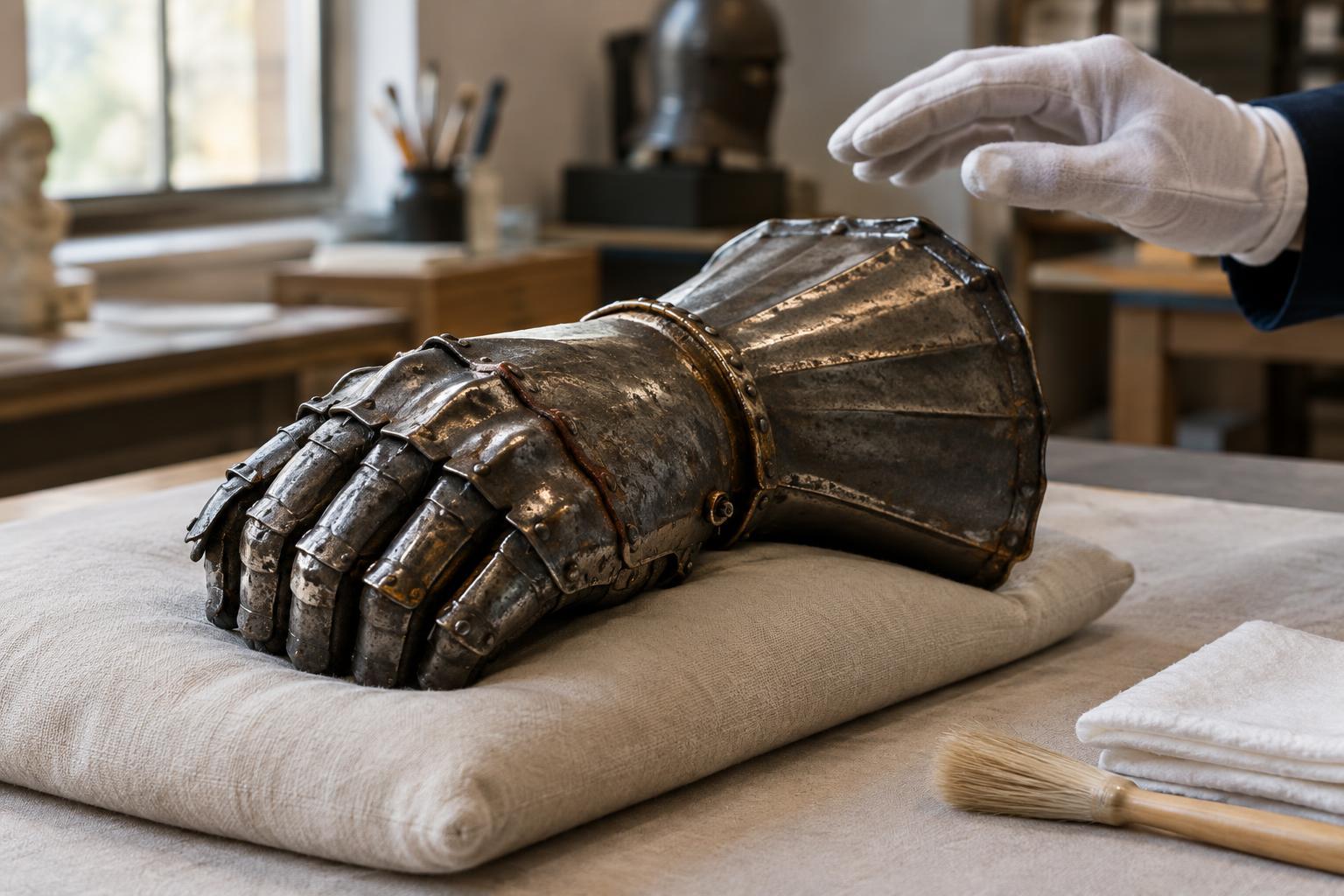
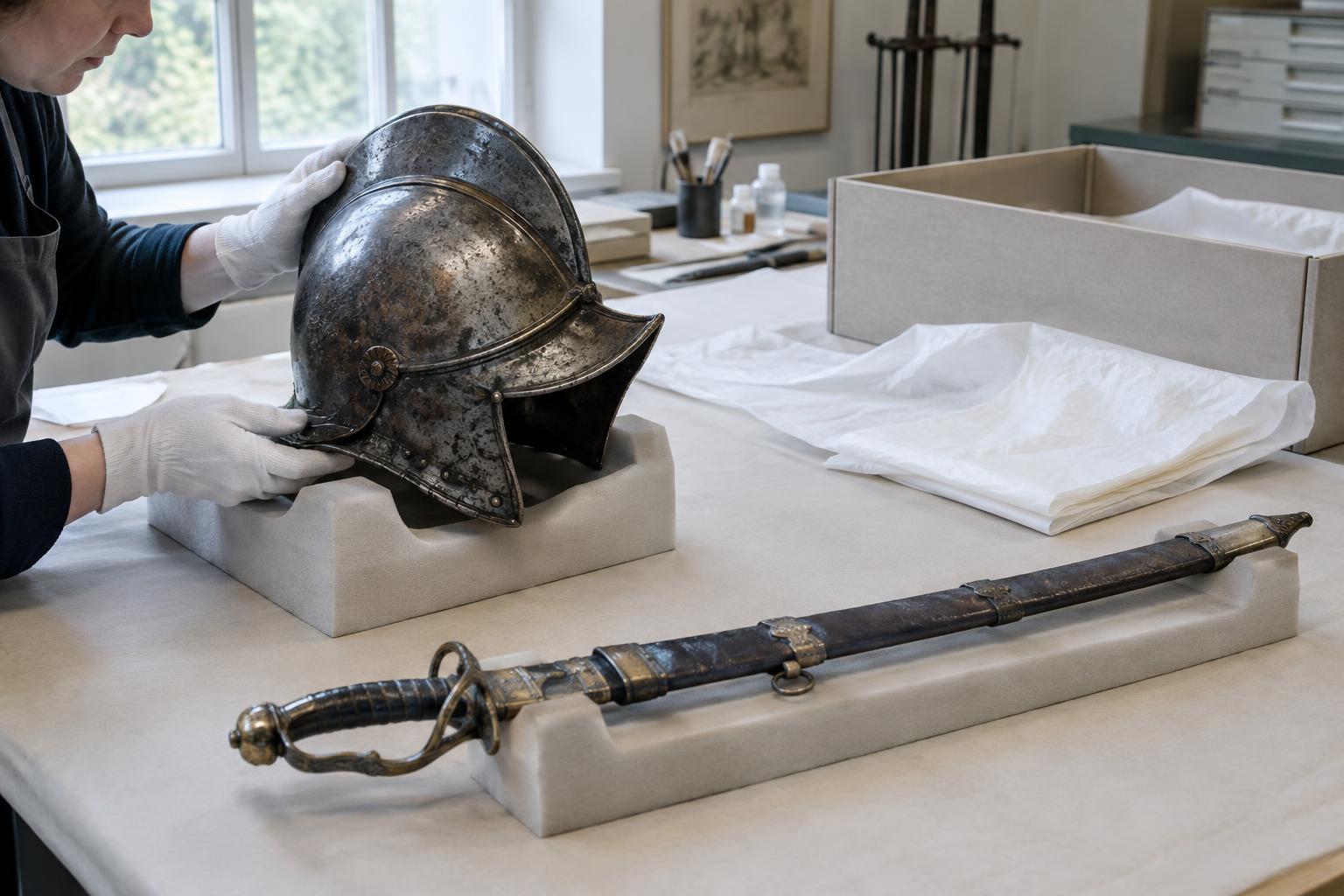
Historic arms and armour often combine metal, wood, leather, textile, horn and decorative finishes. Each material can change differently, and a feature that looks like damage may be evidence of manufacture, use or an earlier repair. A conservator’s first task is not necessarily to make an object look cleaner. It is to examine its condition, identify what may be at risk and recommend a proportionate course of action.
Consider seeking an assessment when you notice a change, cannot tell whether a feature is stable, or are planning a move, display or sale that will involve additional handling. You do not need to diagnose the problem first. A clear account of what you have observed is more useful than an attempted fix.
Changes to surfaces and materials
New powdery deposits, spreading spots of corrosion, lifting decoration or flakes appearing beneath an object are reasons to ask for advice. So are fresh cracks in wood or horn, brittle leather, separating layers of textile and areas that seem to be shedding material. Not every darkened or uneven surface is a problem: patina and old tool marks can be important historical evidence. The question is whether something appears to be changing or becoming detached.
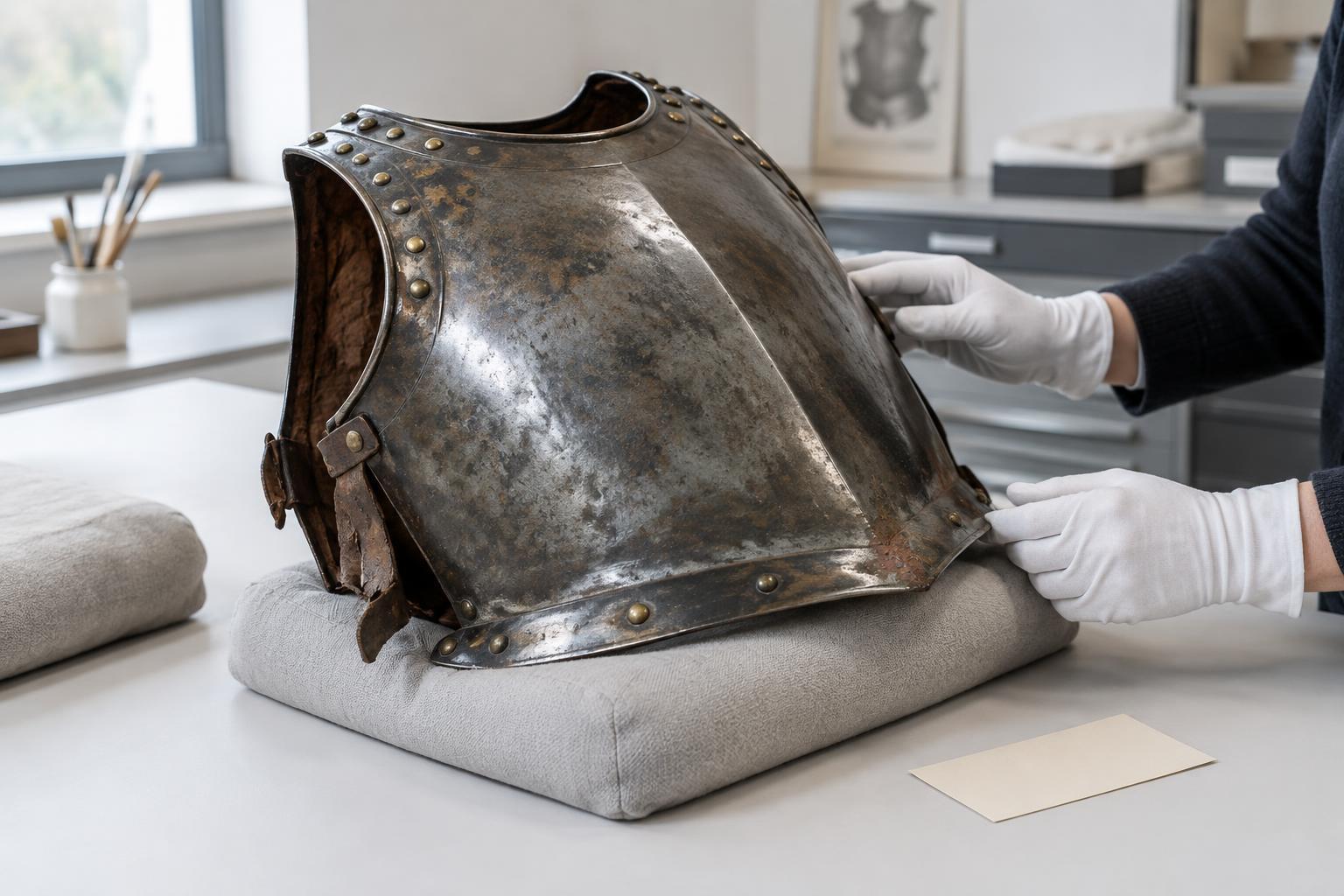
Look beyond the most visible metalwork. Linings, straps, grips, scabbards and mounting materials may be less conspicuous but especially vulnerable to handling and unsuitable storage. If a surface feels sticky, produces an unfamiliar residue or has an unexplained coating, avoid testing it with water, polish or a household cleaner. Such products can alter original finishes or make later examination more difficult.
Loose parts, old repairs and uncertain construction
A shifting plate, detached rivet, loose fitting or failing seam warrants attention before the object is lifted or displayed again. Even a small part may carry evidence about how an object was assembled or altered. Keep any detached pieces together with their identifying information, but do not force them back into place. If movement seems likely to cause further loss, minimise handling while you arrange advice.
Earlier restorations also deserve careful assessment. Replacement straps, repainted details and repaired joins may be part of an object’s collecting history, even when they are not original. A conservator can help distinguish between a stable historic intervention and one that is now placing strain on surrounding material. That distinction matters before deciding whether anything should be removed, reinforced or simply documented.
Storage and display can change the level of concern
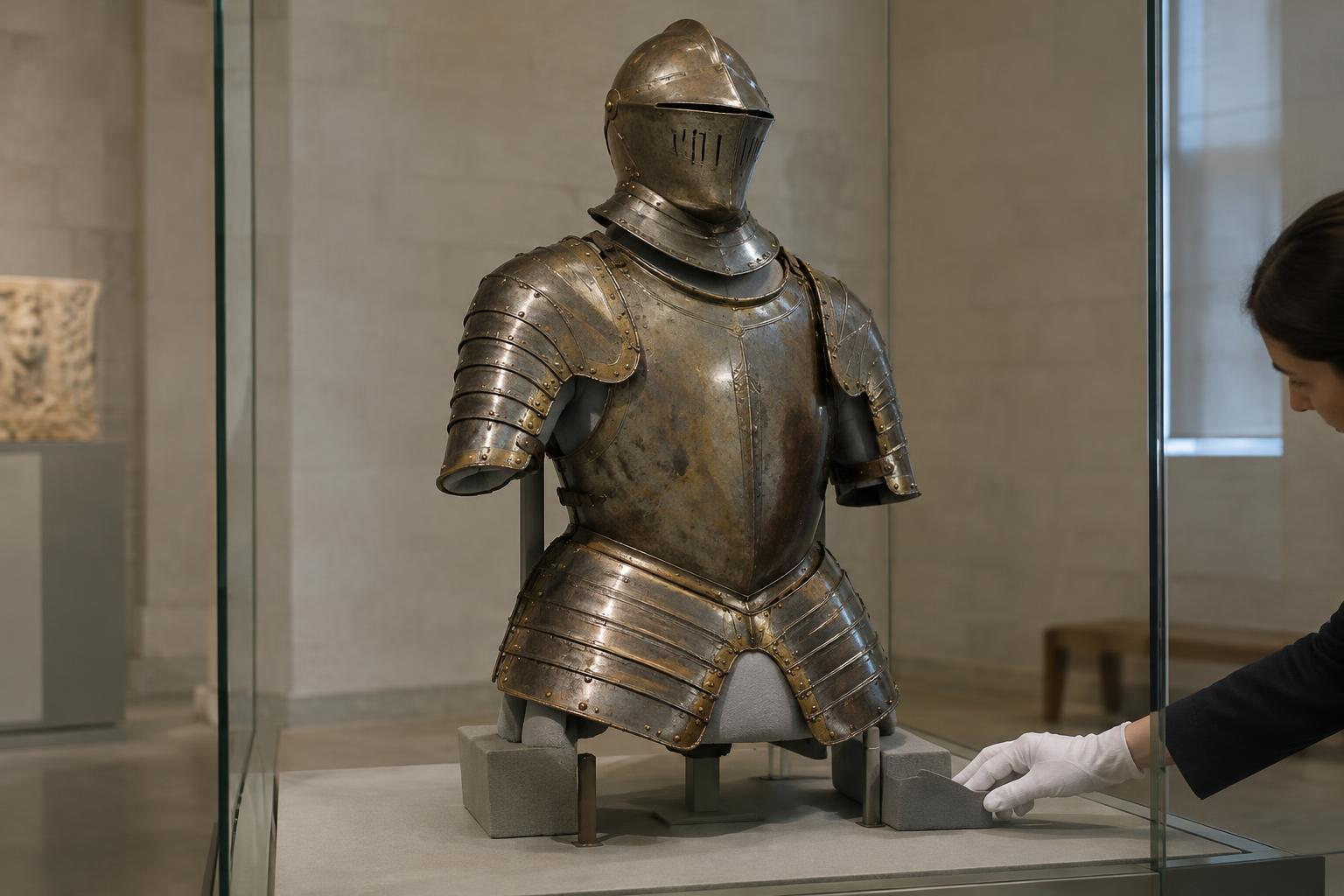
An object may appear sound yet be poorly supported. Weight resting on a fragile edge, pressure from a tight mount or repeated contact with an abrasive surface can cause gradual damage. Changes in the storage environment may also coincide with new corrosion, warping or movement at joins. If several objects show similar changes, assessment may need to include their shared surroundings as well as the individual pieces.
Consult a conservator before an ambitious display or a significant relocation, especially for composite or unusually heavy objects. Planning can address supports, access for inspection and safe handling without requiring cosmetic treatment. If there is a sudden leak or other incident, prioritise keeping people safe, document what happened and seek appropriate professional guidance promptly rather than experimenting with rapid drying or cleaning.
How to prepare for a useful consultation
Record where the object is kept, when you first noticed the concern and whether it has changed. Take clear photographs of the whole object and the affected area without repeatedly moving it. Gather any available collection records, earlier photographs and notes about past repairs. These details can help a conservator compare conditions over time and understand which features may be historically significant.
Choose a conservator with experience relevant to the object’s materials, and describe the concern when making contact. Some cases may call for monitoring and improved support; others may require closer examination or treatment. Until you have advice, the safest contribution is often restraint: limit handling, retain detached material and avoid changes that cannot easily be reversed. Professional assessment protects not only an object’s physical condition, but also the evidence it holds for future study.