Who was a camp follower?
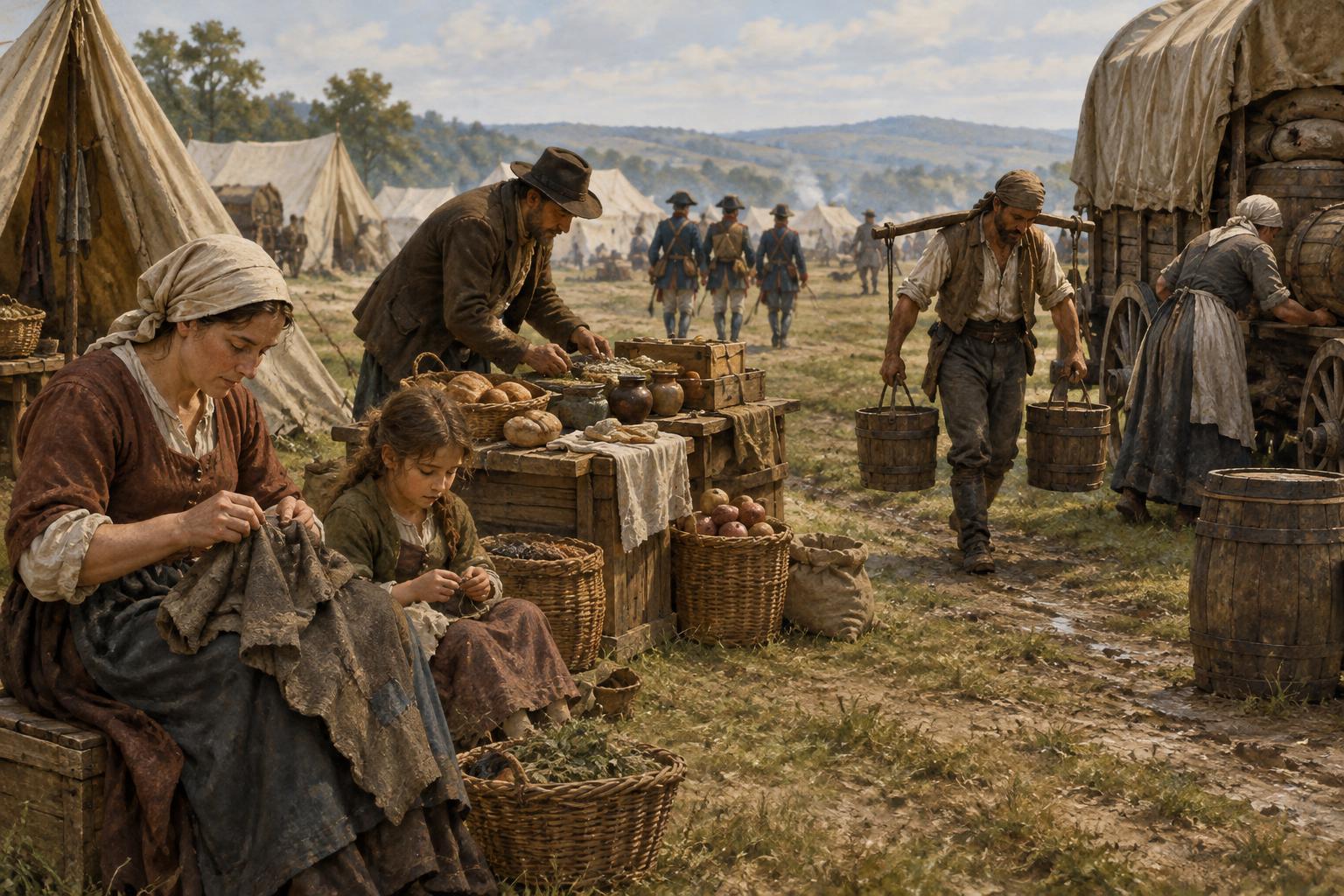
The phrase “camp follower” suggests someone trailing an army, but it covers people with very different relationships to military life. Spouses and children might live near serving relatives. Merchants might bring food or everyday goods to places where soldiers had few other ways to obtain them. Cooks, launderers, drivers, and other workers might be hired, attached to a household, or expected to labour under pressure. Not everyone described by the term chose to be there.
Those relationships differed from one army and period to another. Rules about who could accompany troops could depend on rank, resources, local practice, and a commander’s decisions. Nor was the camp a neatly bounded place: markets, temporary homes, workshops, and supply routes could all form part of its wider community. Treating camp followers as a single group hides the variety of work and experience that kept an army going.
The work behind a marching army
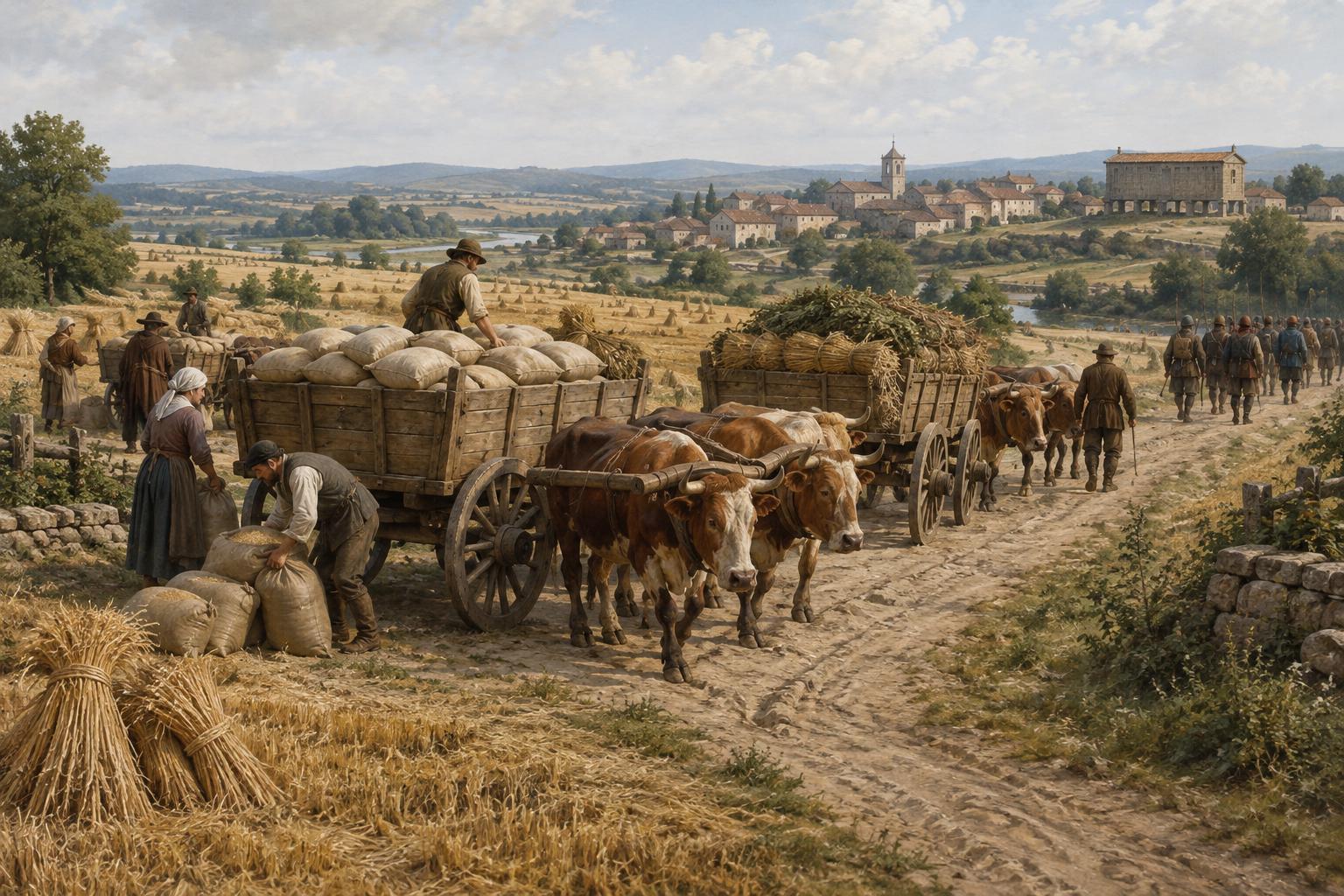
A soldier needed more than a weapon and a ration. Clothing wore out, meals had to be prepared, belongings carried, and shelter maintained. Some of that work fell to soldiers; some fell to civilians living and working alongside them. Washing and mending could help make clothing usable for longer, while traders supplied goods that formal provisions did not cover. Transport workers moved equipment and supplies through difficult conditions.
This labour could be skilled and demanding, even when military records treated it as incidental. A travelling seller had to manage stock and risk. A worker caring for children or preparing food had to fit daily needs around the camp’s movements. Work also varied with access to pay, supplies, and protection. The presence of civilians did not mean their needs were reliably met, particularly when an army was short of food or on the move.
Families, livelihoods, and unequal choices
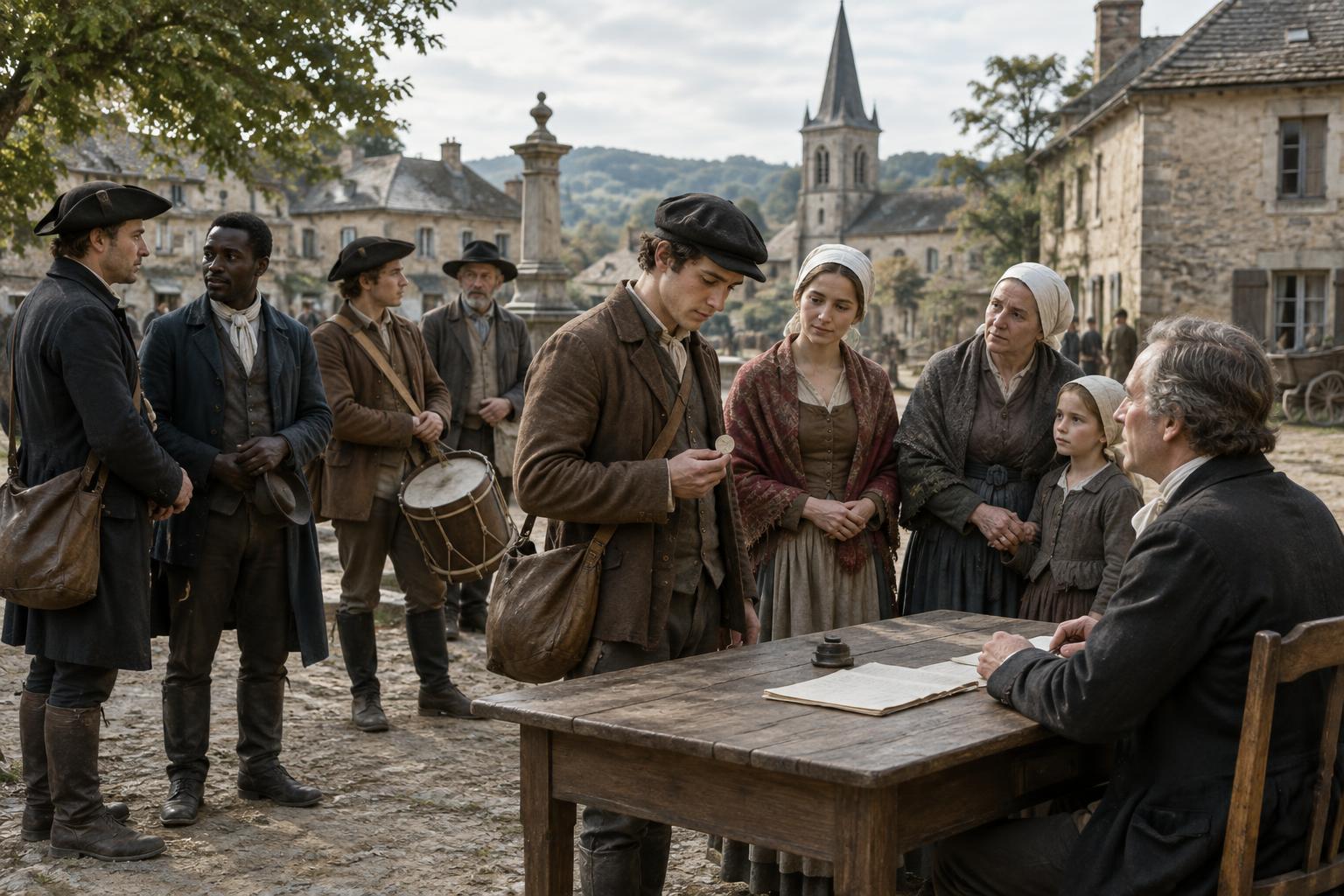
For some families, accompanying an army offered a way to remain together or earn a living. A spouse might combine paid work with care for relatives, while children grew up amid frequent moves and uncertainty. Other people reached a camp because war had disrupted their homes or local economy. An army could create customers and jobs, but it could also impose demands on nearby communities.
It is important not to turn this history into a simple story of resourcefulness. People attached to an army did not share the same freedom to leave, bargain, or refuse work. Gender, age, wealth, and social standing could shape who was recognised, paid, or protected. Some labour was coerced, and civilians could face hunger, illness, displacement, or violence. The circumstances of a particular group matter more than any comforting general picture of camp life.
What the surviving evidence can—and cannot—show
Camp followers often enter the historical record through someone else’s concerns. A regulation may count how many people an army permitted to travel, without describing their daily lives. An account book may record a payment but say little about the worker who received it. Images of camps can reveal how artists represented sellers or families, yet they may rely on familiar scenes rather than close observation.
Objects offer another route into this history. Cooking vessels, clothing repairs, storage containers, and trade goods can prompt questions about routine work, though an object rarely identifies its user on its own. Reading written records and material evidence together helps avoid assuming that every item found near an army belonged to a soldier. Gaps remain: people whose work was informal, unpaid, or forced may be especially difficult to trace.
Making room for civilians in military history
Military history is often organised around battles, commanders, and equipment. The people around an army widen that view. They show how campaigning depended on food, care, transport, trade, and the maintenance of ordinary possessions. Their presence also raises questions about who benefited from an army’s movement and who bore its costs.
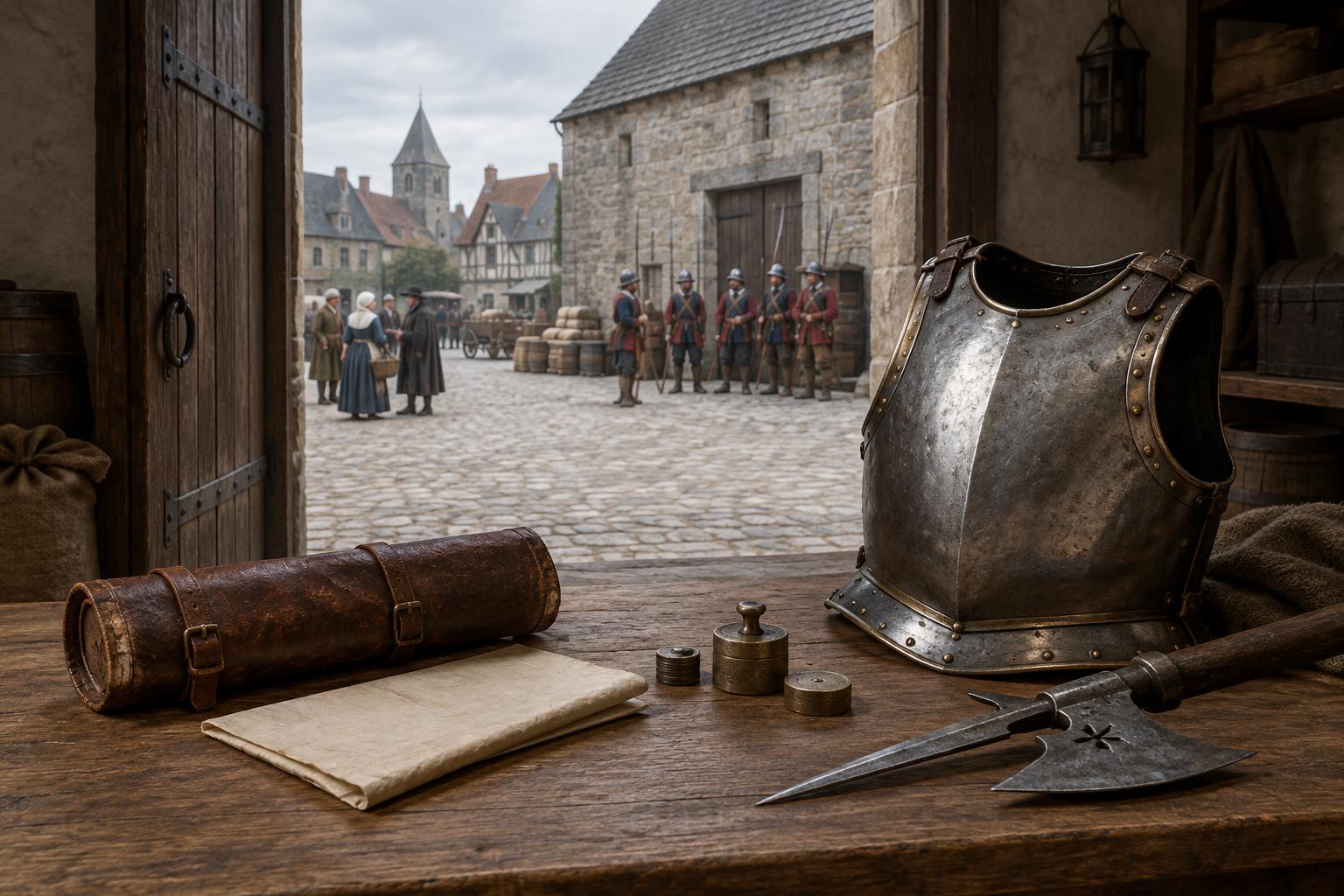
In a museum, a uniform, weapon, or piece of armour can be displayed alongside objects and records of everyday work. Interpretation need not claim that a surviving pot or garment has a known personal story when it does not. Instead, it can explain what the object helps us ask: who carried supplies, who repaired clothing, who could earn a wage, and who had little choice? Such questions make military collections more human without losing sight of the unequal conditions behind them.