A trophy is a description, not a neutral identity
In a museum catalogue, the word “trophy” may describe an object taken during or after a conflict and kept as evidence of victory. It also carries the viewpoint of the people who took and displayed it. A banner once carried in a ceremony, for example, may have become a trophy in one collection while retaining a different meaning for the community from which it came. Neither history disappears when the object enters a museum.
The first interpretive task is therefore to distinguish the object from the labels attached to it over time. What was it made for? How was it used before the conflict? Who called it a trophy, and when? Visitors should be able to see that “captured,” “presented” and “collected” describe different possible routes into a collection. Where the route is uncertain, the label should say so rather than turn an old catalogue entry into an established fact.
Trace the object’s journey, including the gaps
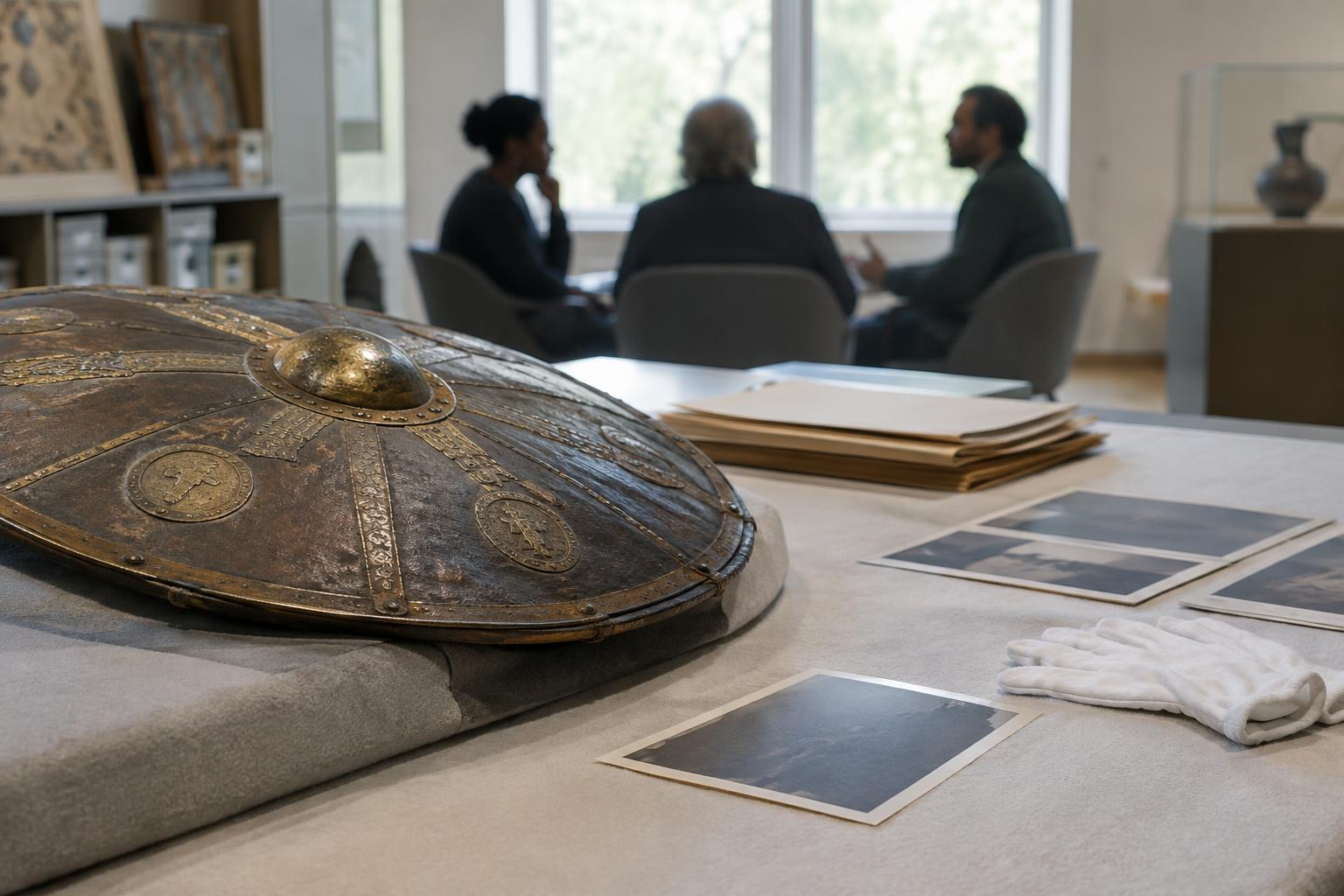
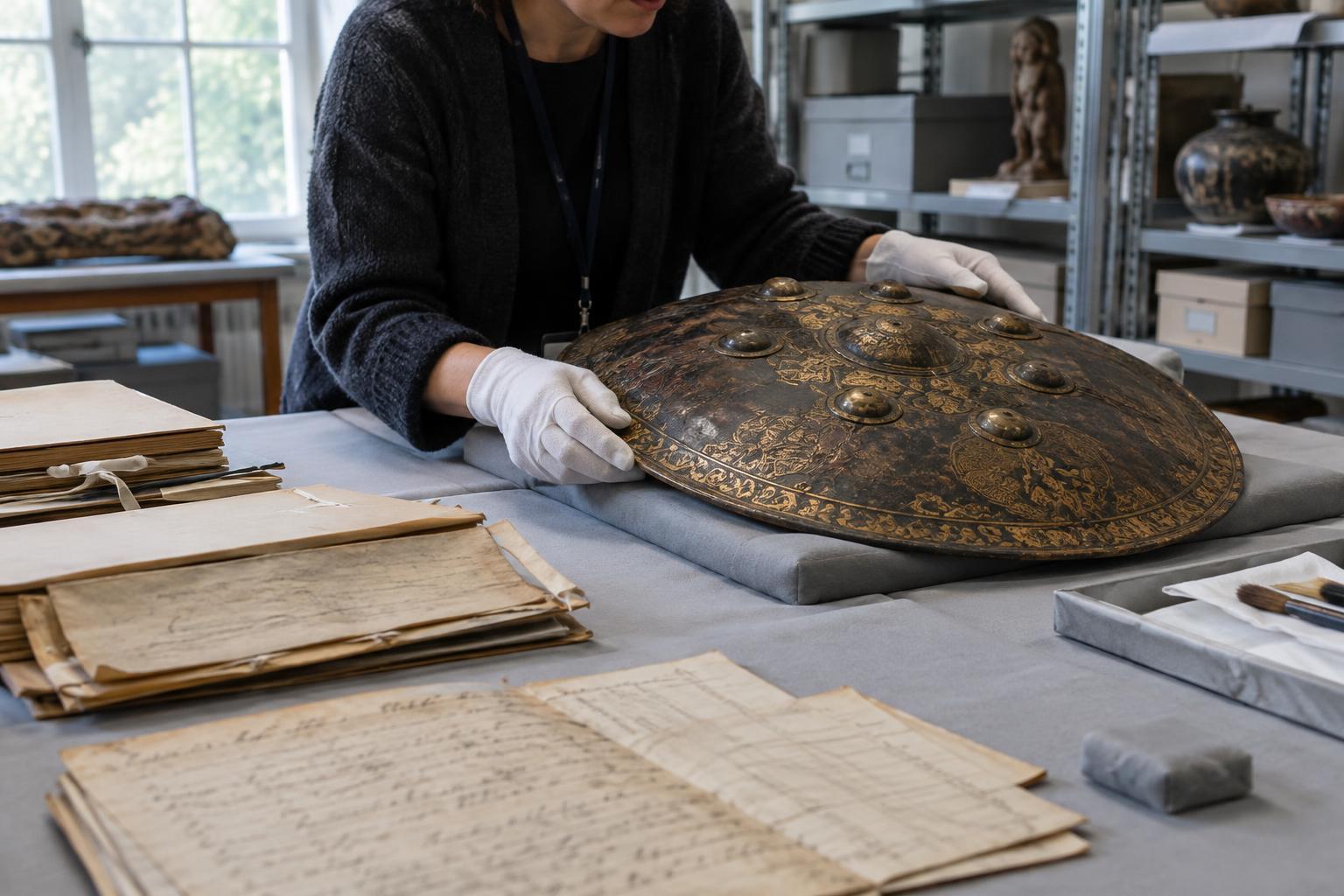
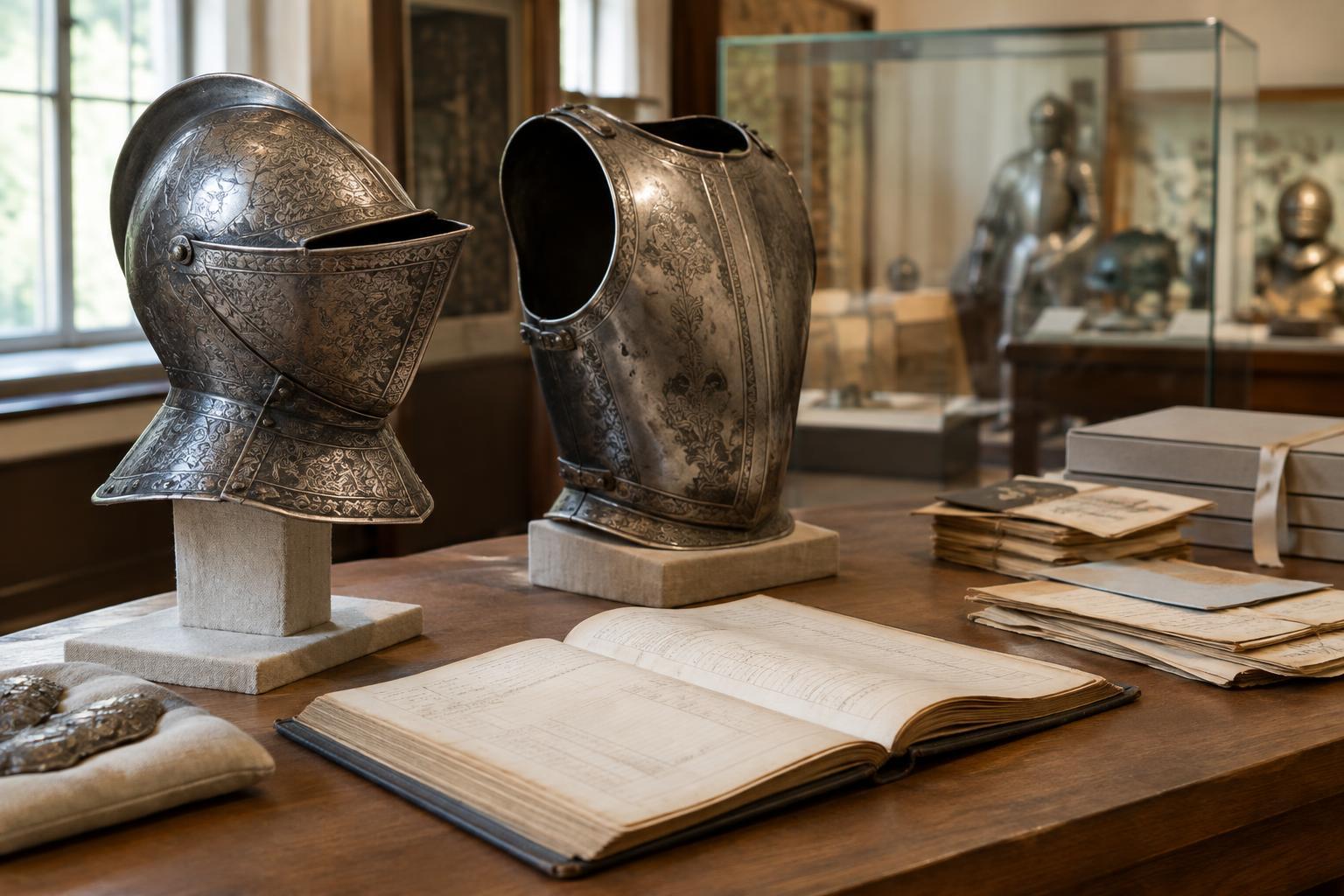
Provenance research follows an object through ownership, custody and display. For a military trophy, this might involve examining accession records, earlier inventories, inscriptions, photographs and accounts written by people on different sides of a conflict. Each record has limits. An official inventory may document when an object reached a storehouse without establishing where it was taken or whether its transfer was voluntary.
A useful gallery label gives visitors a clear sequence: what can be established about the object’s earlier life, what is known about its removal, and how it later entered the museum. It also identifies consequential gaps. “The museum acquired this object in the nineteenth century; records do not establish the circumstances of its earlier removal” is more informative than a confident story built on an unverified tradition. Uncertainty is not a failure of interpretation when it is explained precisely.
Make room for meanings beyond victory
Victors often displayed captured objects to demonstrate power, sacrifice or national achievement. Those histories are worth studying, but a display need not adopt their message. An object may also speak to the people who made it, wore it, carried it or lost it. Its materials and craftsmanship can reveal skilled work; its emblems may express belonging, authority or remembrance. These meanings may have changed across generations and may not be shared by everyone associated with the object.
Museums can broaden interpretation by consulting relevant communities and specialists, then making clear whose knowledge appears in the display. Consultation should not be treated as a search for a single alternative voice. People may differ about an object’s significance or whether it should be shown at all. Presenting those differences carefully helps visitors understand that a trophy’s meaning is contested rather than merely incomplete.
Let display choices support the interpretation
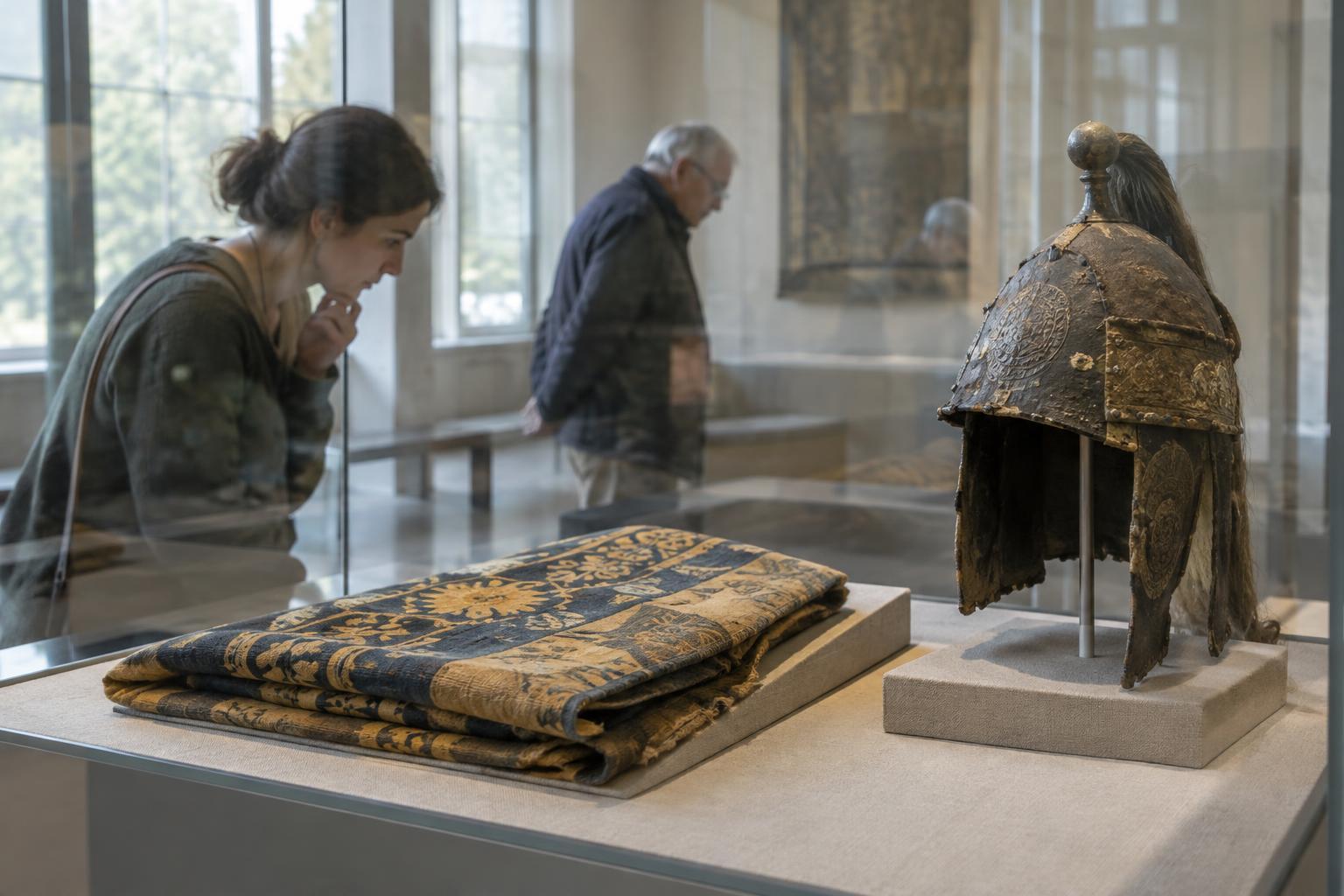
Placement, lighting and captions shape what visitors notice. A captured standard mounted high above other objects can reproduce the theatrical effect of a victory display, even if the accompanying text takes a more critical approach. Showing it alongside evidence of its earlier function, its removal and its later exhibition history can shift attention from triumph to biography. Where appropriate, a historical photograph of a past display can show how the museum itself helped construct the trophy’s meaning.
Care is needed with objects connected to violence or loss. Labels can be direct without relying on spectacle, and images can be chosen for what they explain rather than their emotional force. Conservation choices matter too: repair, mounting and storage affect what remains visible and what can safely be displayed. Explaining a significant alteration or fragile condition reminds visitors that the object has continued to change after its capture.
Keep the account open to revision
A strong interpretation does not replace one definitive story with another. It shows the evidence for its claims, separates documented events from later tradition and makes space for questions the collection cannot yet answer. Digital records and gallery text can be updated when new documentation or perspectives emerge, while retaining a record of how earlier descriptions were formed.
Interpreted this way, a military trophy becomes more than proof that one side prevailed. It can help visitors examine craftsmanship, conflict, collecting practices and the power of museums to shape public memory. The goal is not to erase the victor’s account, but to place it among the histories needed to understand the object.