Why bless a weapon?
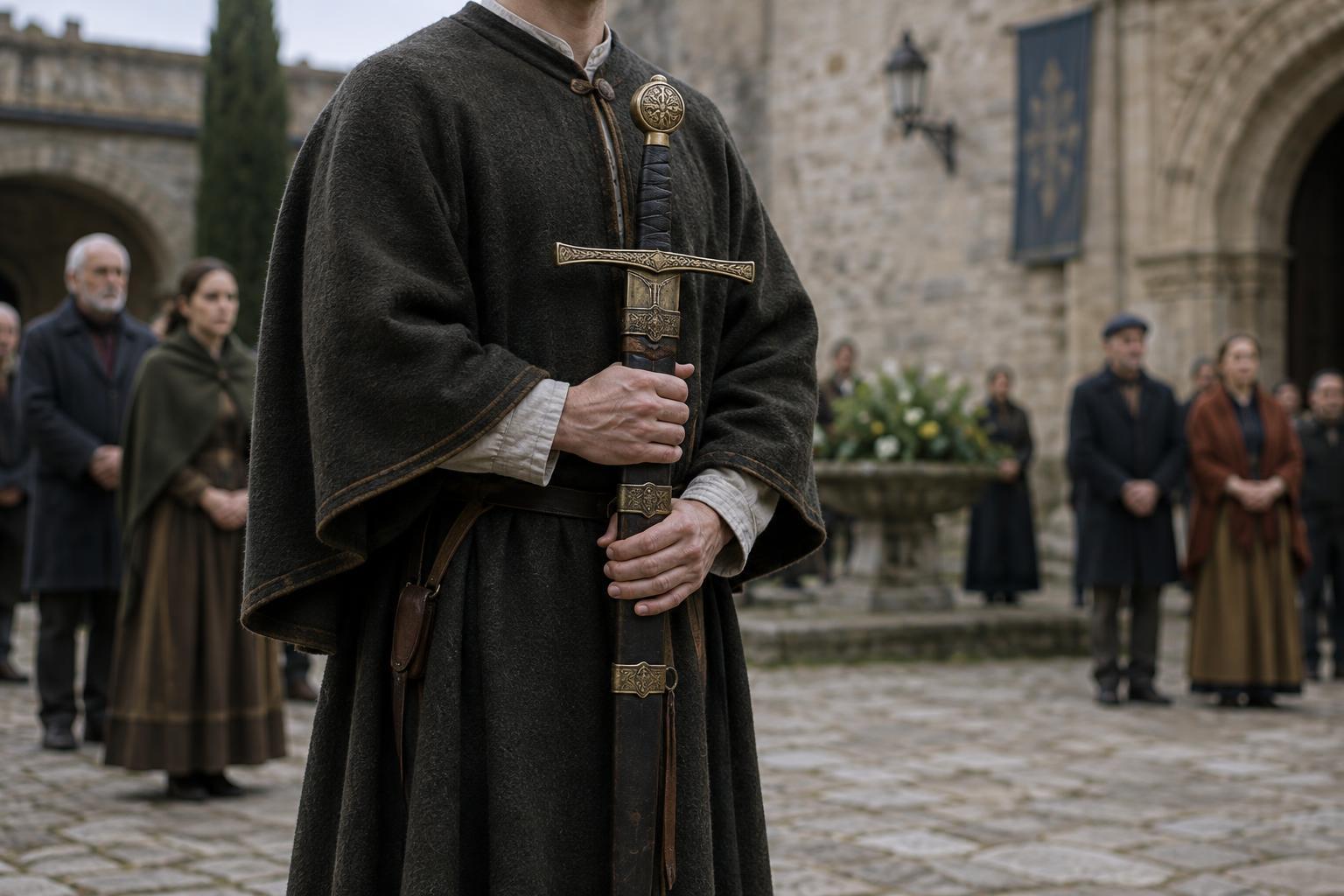
A historic weapon could be more than a means of violence. Depending on its setting, it might also represent office, inherited status, collective identity or a duty that its bearer was expected to uphold. A blessing could place that object within a religious ceremony and express hopes or obligations for the person carrying it. Its meaning depended on who performed the rite, who witnessed it and the occasion on which it took place.
The word “blessing” can make these practices sound uniform, but rituals varied across places, periods and traditions. Some accounts concern a weapon presented to an individual; others involve arms or banners associated with a group. The ceremony might be remembered as a public event or appear only as a few lines in a written order of service. Treating every such reference as evidence of the same custom obscures the differences that make it historically useful.
What written records actually record
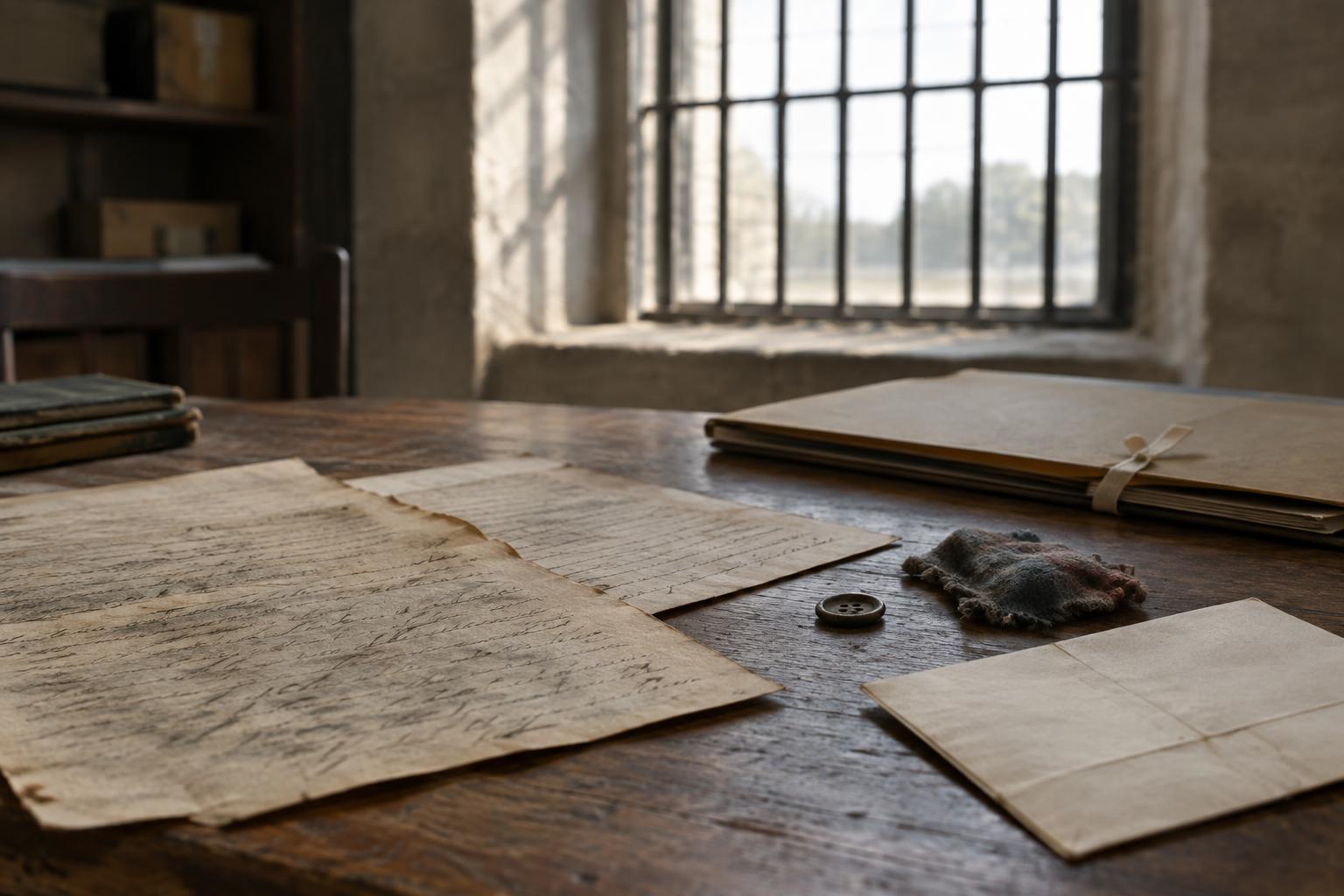
A prayer or ceremonial instruction tells us what its writer thought should be said or done. It does not, by itself, prove that a particular rite took place, that everyone followed the text closely or that participants understood it in the same way. A surviving manuscript may have been copied for study, kept as a model or adapted for use. Its wording is evidence of an available ritual language, not a transcript of every ceremony.
Other records can bring a practice closer to a specific occasion. An inventory might place a weapon in a ceremonial setting; an account might describe a presentation; an image might show the arrangement of people and objects. Each source has its own limits. Inventories usually describe possessions rather than beliefs, while images may simplify or idealize an event. Reading several kinds of evidence together can make an interpretation stronger, but agreement between sources does not remove every uncertainty.
The object is not a complete record
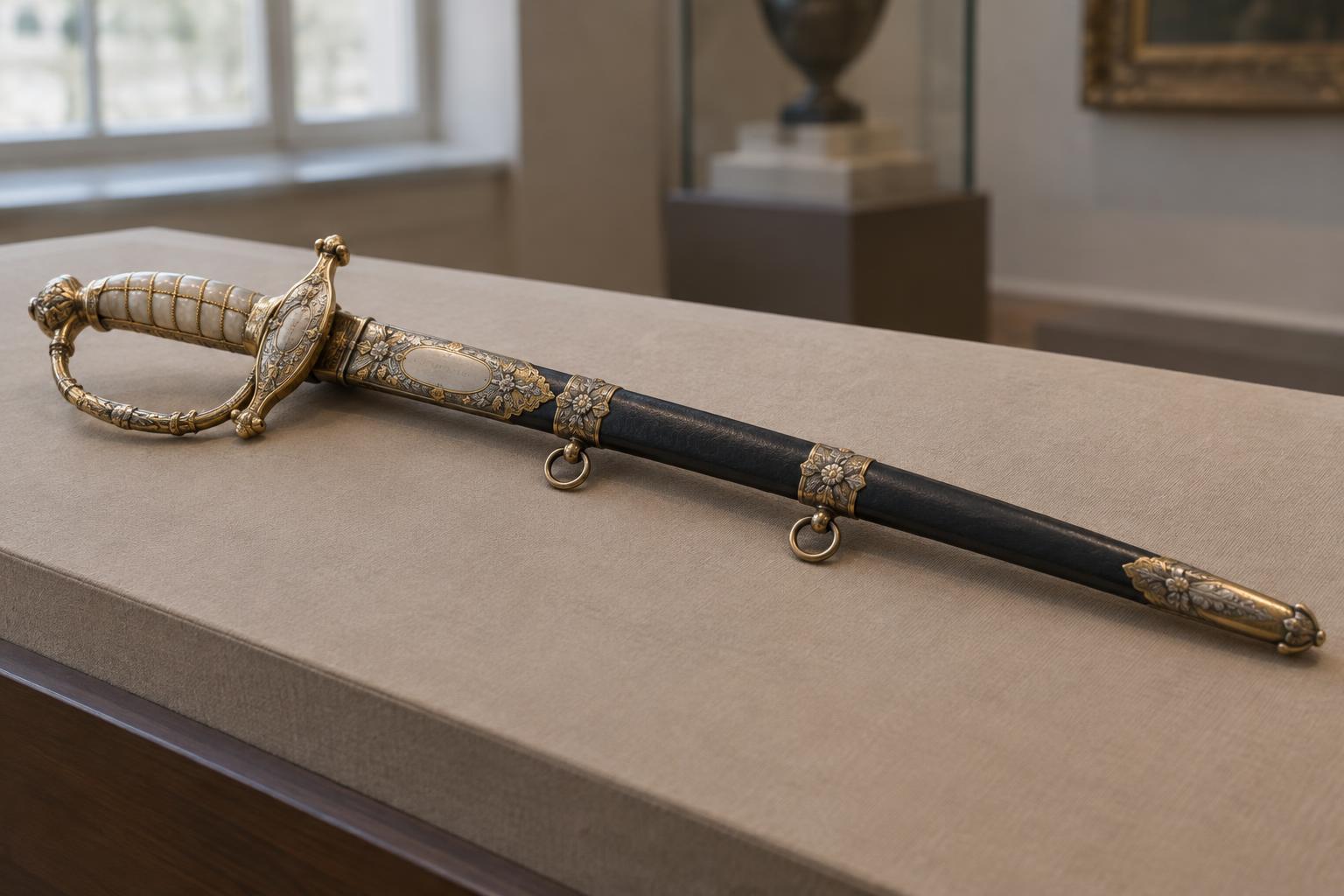
A sword, helmet or other surviving object may carry religious words, signs or figures. Those features can show that such imagery mattered to a maker, patron or later owner. They cannot automatically establish that the object received a formal blessing. Decoration, personal devotion, a protective hope and participation in a ceremony are related possibilities, not interchangeable conclusions.
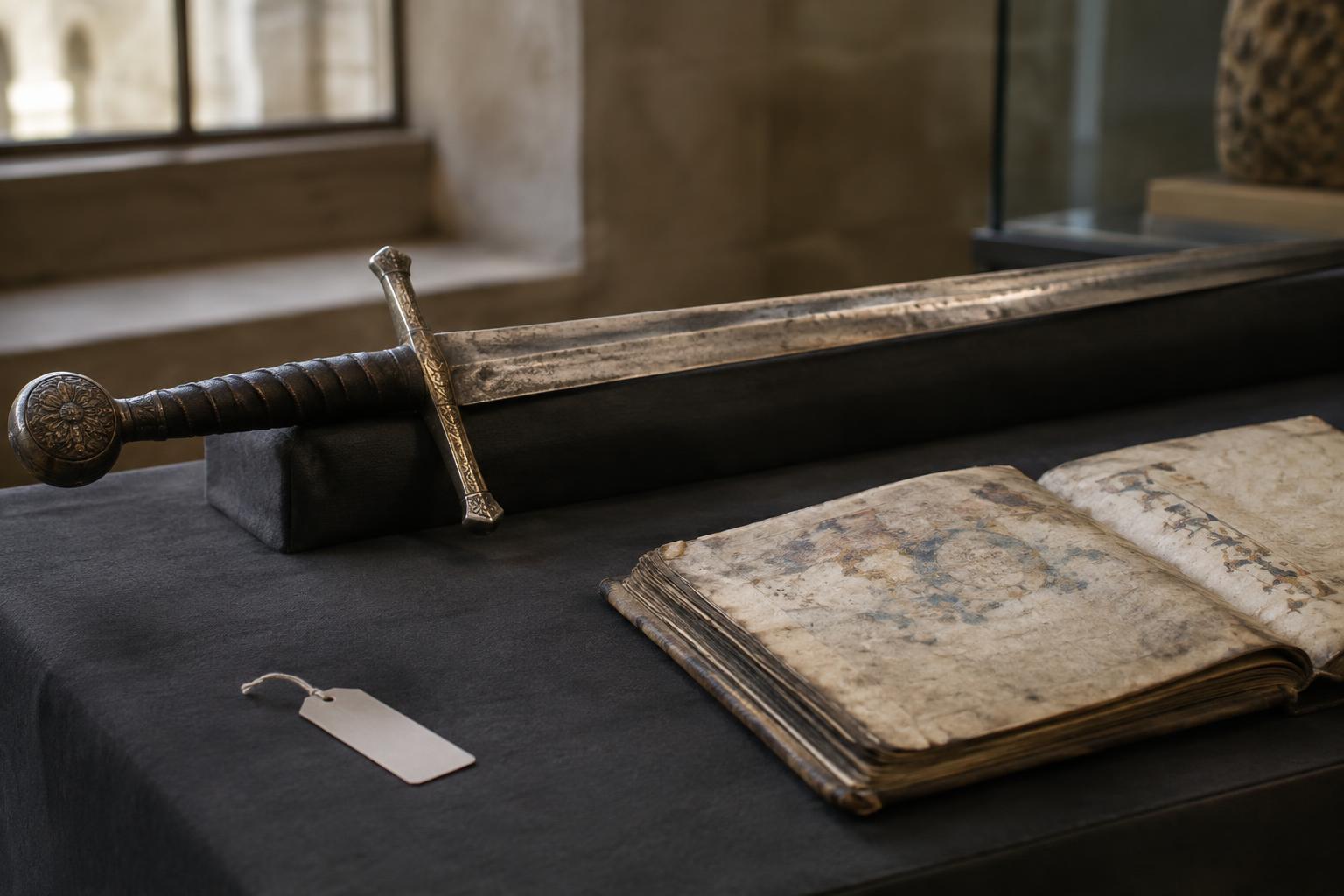
An object’s history may also be layered. Fittings can be replaced, surfaces altered and meanings assigned anew when an item passes between owners or enters a collection. Even when an inscription appears original, the setting in which the object was displayed or used may be unknown. Museums can help visitors see these layers by distinguishing what can be observed on the object from what documents suggest and what remains an interpretation.
Ritual ideals and lived experience
Blessing a weapon could associate it with duty, restraint or legitimate authority. Such associations tell us about ideals people chose to express; they do not prove that bearers acted according to them. A ceremony might affirm one group’s view of rightful power while excluding or threatening others. Asking whose voices survive—and whose do not—keeps the discussion from turning ritual language into an uncomplicated account of social reality.
It also matters whether a source describes a repeated practice or an exceptional event. A memorable ceremony may have attracted a written account precisely because it was unusual. Conversely, an ordinary practice might leave little trace. The absence of a record is therefore not firm evidence that no blessing occurred, just as the survival of a ritual text does not establish how common its use was.
A careful way to read a display
When encountering a weapon described as “blessed,” start with the basis for that description. Is there a record linking the rite to this particular object, or does the label refer to a broader custom? Is the evidence a contemporary account, a later tradition, an inscription or an inference from appearance? These questions need not diminish the object’s significance. They show which part of its story can be supported and which part is still open.
The most revealing interpretation may leave room for both ceremony and uncertainty. Surviving texts show how people articulated hopes, duties and authority around arms. Objects show what they made, kept, altered and valued. Together they offer a richer view of historic beliefs—but rarely a complete reconstruction of what every participant said, saw or felt.