A sword made to be seen and remembered
A presentation sword is more than a blade bearing a name. Given to mark service, achievement or departure, it could serve as a visible statement of esteem. Its inscription might identify an individual, a group of donors, an occasion and the virtues the donors wished to celebrate. The object itself carried that message into homes, ceremonies and, sometimes, museum collections.
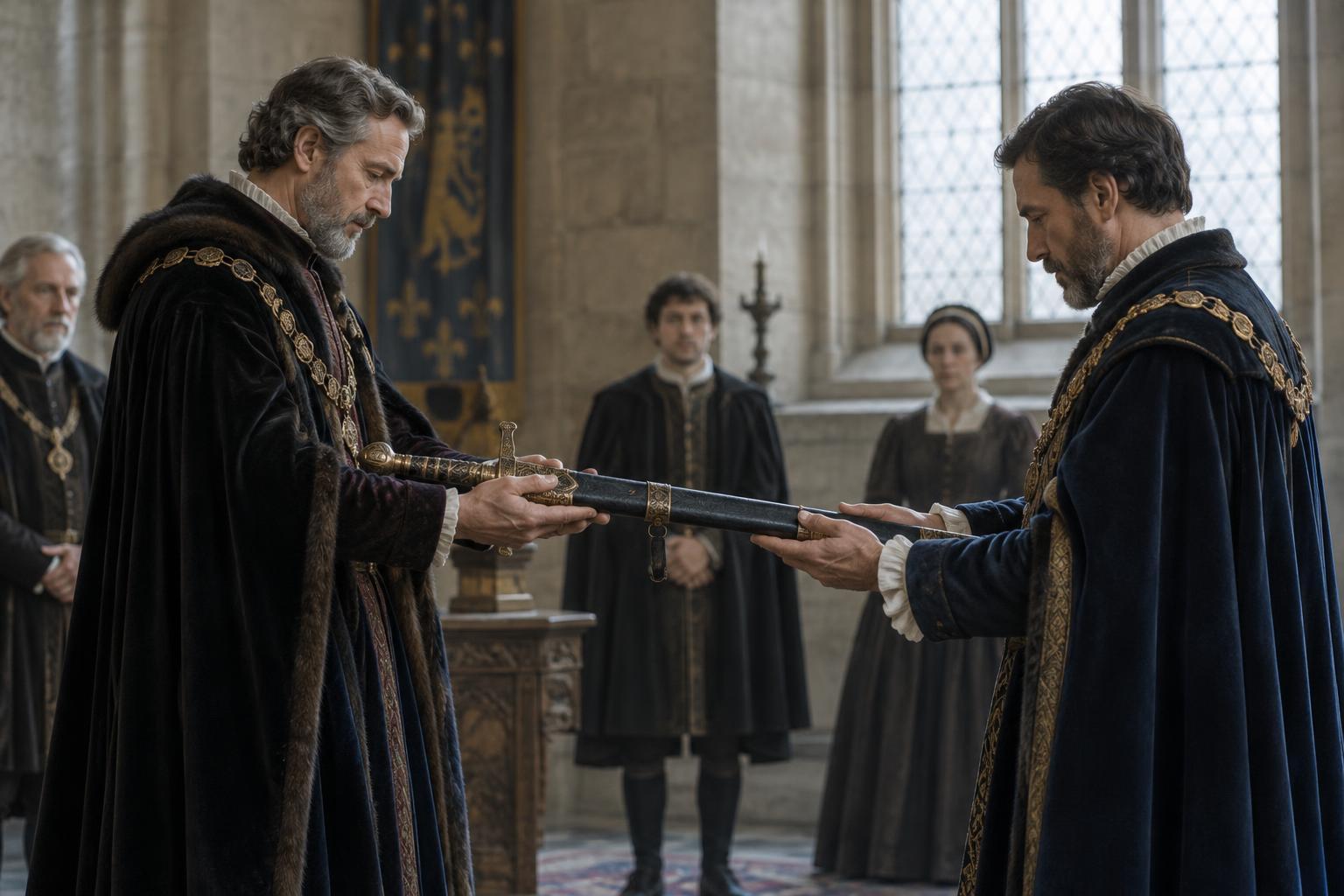
Not every presentation sword had the same meaning. Some gifts came from fellow officers or members of a unit; others were offered by civic bodies, employers or communities. The setting matters because the choice of giver shapes the story. A sword presented by colleagues may stress shared experience, while one offered by a town may emphasize a recipient’s public standing. Neither message tells the whole story of the service it commemorates.
Who speaks in a dedication?
The wording of a dedication often makes the donor’s identity its starting point: “presented by” a named group to a named person. This familiar formula establishes a relationship, but it is worth asking who that group represented. Was it a formal organization, a circle of subscribers or a smaller committee acting in a larger community’s name? An inscription may sound collective even when the decisions behind the gift were made by relatively few people.
Titles, ranks and honorifics can show how patrons wanted a recipient to be recognized at the time of presentation. Descriptions such as “faithful service” or “gallant conduct” likewise reveal a preferred public interpretation of events. They are evidence of praise, not independent proof of every action implied by that praise. Reading the words as a statement made by the givers preserves their value without asking them to function as a complete biography.
Occasion, language and the limits of the inscription
A date or named occasion can anchor a sword to a particular moment, such as retirement, promotion or the end of a period of service. Yet an inscription may leave out the circumstances that mattered most to the people involved. It might mention a campaign but not the debates surrounding it, or celebrate long service without describing the everyday work it entailed. Those silences are part of the object’s history too.
The language of dedication is often ceremonial rather than conversational. Phrases about duty, gratitude and loyalty were suited to public presentation, where the gift honored both its recipient and the values claimed by its patrons. If a family later treasured the sword for personal reasons, that later meaning may not appear on the blade at all. A museum label or collector’s record can help distinguish the original presentation from subsequent ownership and interpretation.
How craftsmanship reinforces the message
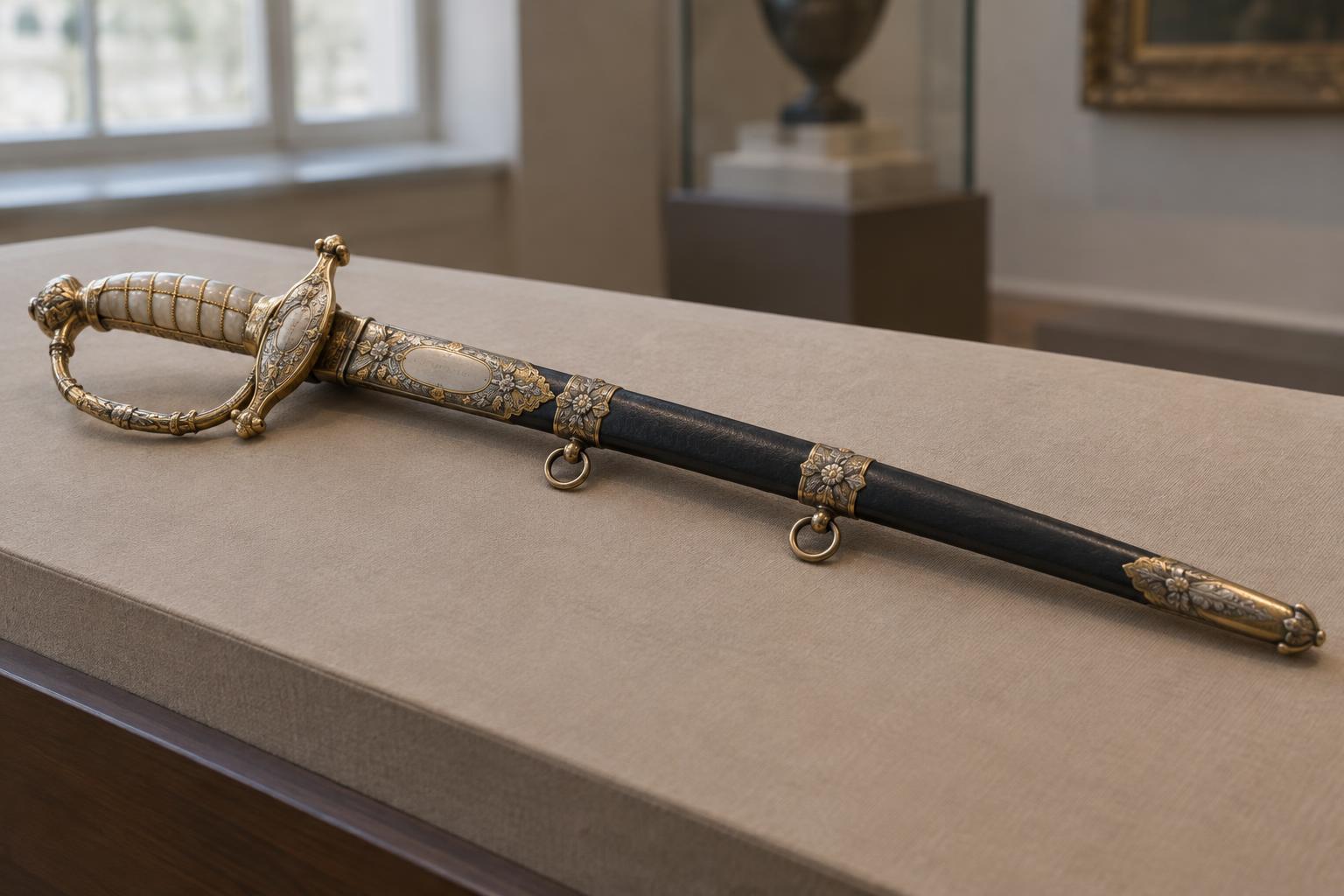
A dedication rarely stands alone. Engraved decoration, a decorated hilt, a fitted scabbard or a presentation case may make the gift feel exceptional. Symbols can connect the recipient to a regiment, institution, place or ideal. Their placement matters: a name set among emblems frames the individual within a larger identity, while a prominent donor inscription can keep the act of giving in view.
These details should be read with care. Decorative motifs may have been selected from established patterns rather than designed uniquely for one recipient. Expensive materials may suggest a substantial gift, but they do not, by themselves, reveal how many people contributed or what the recipient felt about it. Comparing the inscription with the object’s design can raise useful questions; neither should be treated as a transparent account of motive.
Reading the object beyond its first presentation
For collectors and museums, the most informative record brings the dedication together with evidence such as presentation accounts, correspondence, photographs or a documented chain of ownership, when these survive. Such material can clarify who commissioned the sword, how it was presented and whether later alterations changed its appearance. Missing records should remain missing in the account, rather than be replaced with a confident story inferred from decoration alone.
Careful handling also protects the evidence. Wear, repairs, a surviving case and even an older label can help explain an object’s life after its ceremonial debut. Cleaning or restoration that obscures those traces may make the sword look more complete while making its history harder to read. A presentation sword is therefore both a crafted object and a record of how people chose to honor service. Its dedication opens that conversation, but rarely ends it.