Why a sword could stand for more than its owner
A sword carried by an officer, ruler or other figure of rank could be more than a personal possession. In some settings it formed part of a recognizable public identity: an object worn during duties, represented in portraits or presented on formal occasions. Its surrender could therefore make a change in status visible. Rather than relying on words alone, a ceremony gave witnesses something to see and remember.
That symbolism was never automatic. A sword might indicate rank, command, privilege, service or simply the conventions of dress, depending on its time and place. Giving it up did not always mean that every right held by its owner passed to someone else. The gesture could mark defeat, the end of a command, submission to a new authority or the conclusion of a negotiated arrangement. To understand a particular exchange, the surrounding events matter as much as the object.
The ceremony made a political change visible
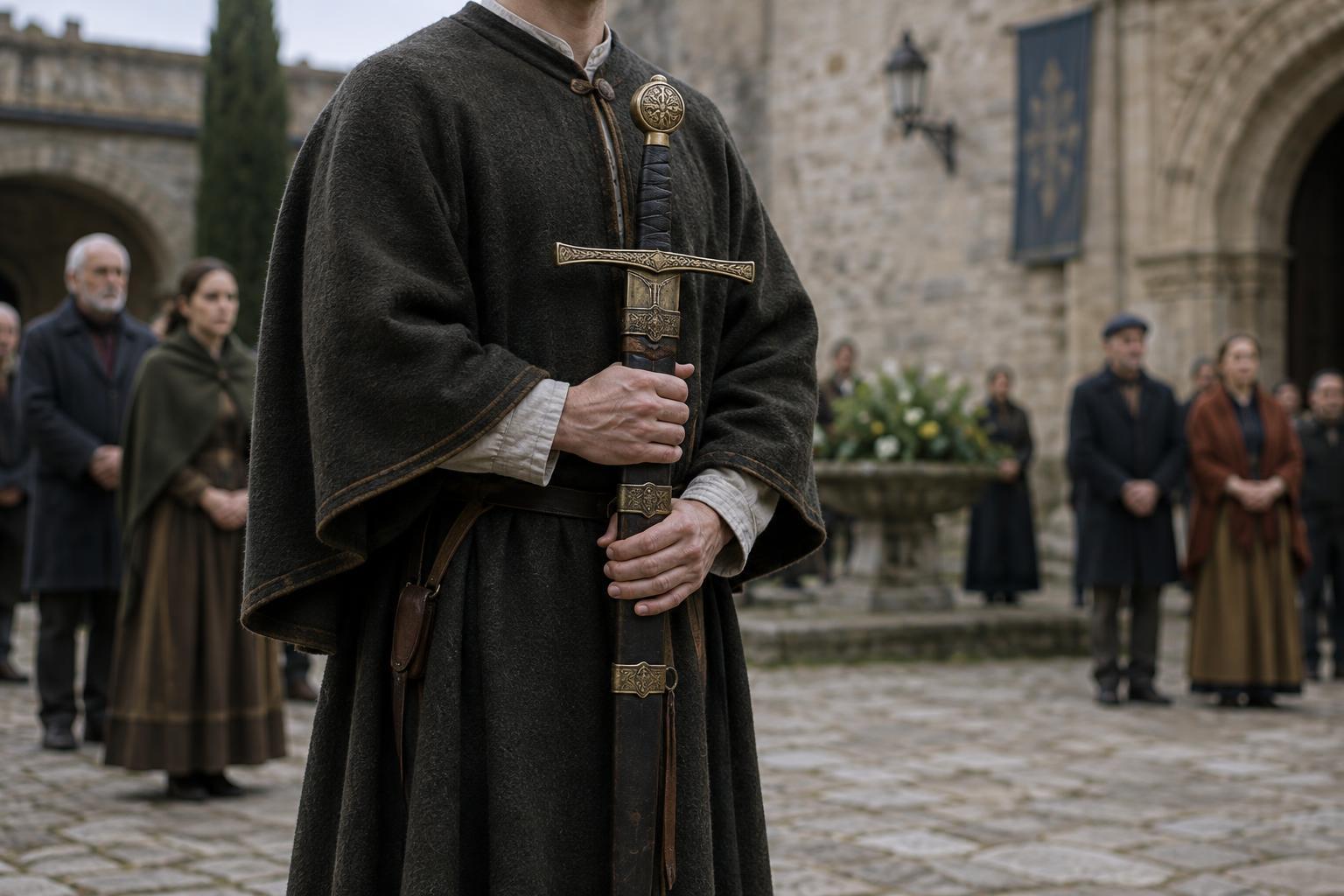
A formal surrender turned an abstract shift in power into a sequence of actions. One person offered or relinquished a sword; another accepted it, set it aside or returned it. The identities and positions of those people shaped the message. An exchange before assembled witnesses could acknowledge that one side no longer exercised command while the other had the power to receive its surrender.
The handling of the sword could also communicate restraint. If the recipient returned it, observers might read the act as a courtesy toward the defeated person, especially where the sword was associated with rank or honour. Keeping it could emphasize custody or the finality of the transfer. Neither action had a fixed meaning across all societies and periods. Accounts of ceremonies may also present a polished public version of events, so the gesture should not be mistaken for a complete record of the terms agreed.
Authority, honour and the limits of a gesture
The power of the surrendered sword lay partly in its ability to connect two ideas that were not identical: authority and honour. A commander might cease to command yet still be treated with courtesy. A recipient could assert control without claiming that the former holder had lost all dignity. These distinctions help explain why a sword might be handed back even when the surrender itself remained in force.
Ceremonial acts could also conceal disagreement. Onlookers might understand an exchange as the transfer of a city, office or military responsibility, while participants disagreed about its scope. Written terms, orders and subsequent conduct were often needed to establish what had actually changed. The sword offered a memorable image of authority changing hands, but it did not settle every question raised by that change.
From ceremonial object to collected object
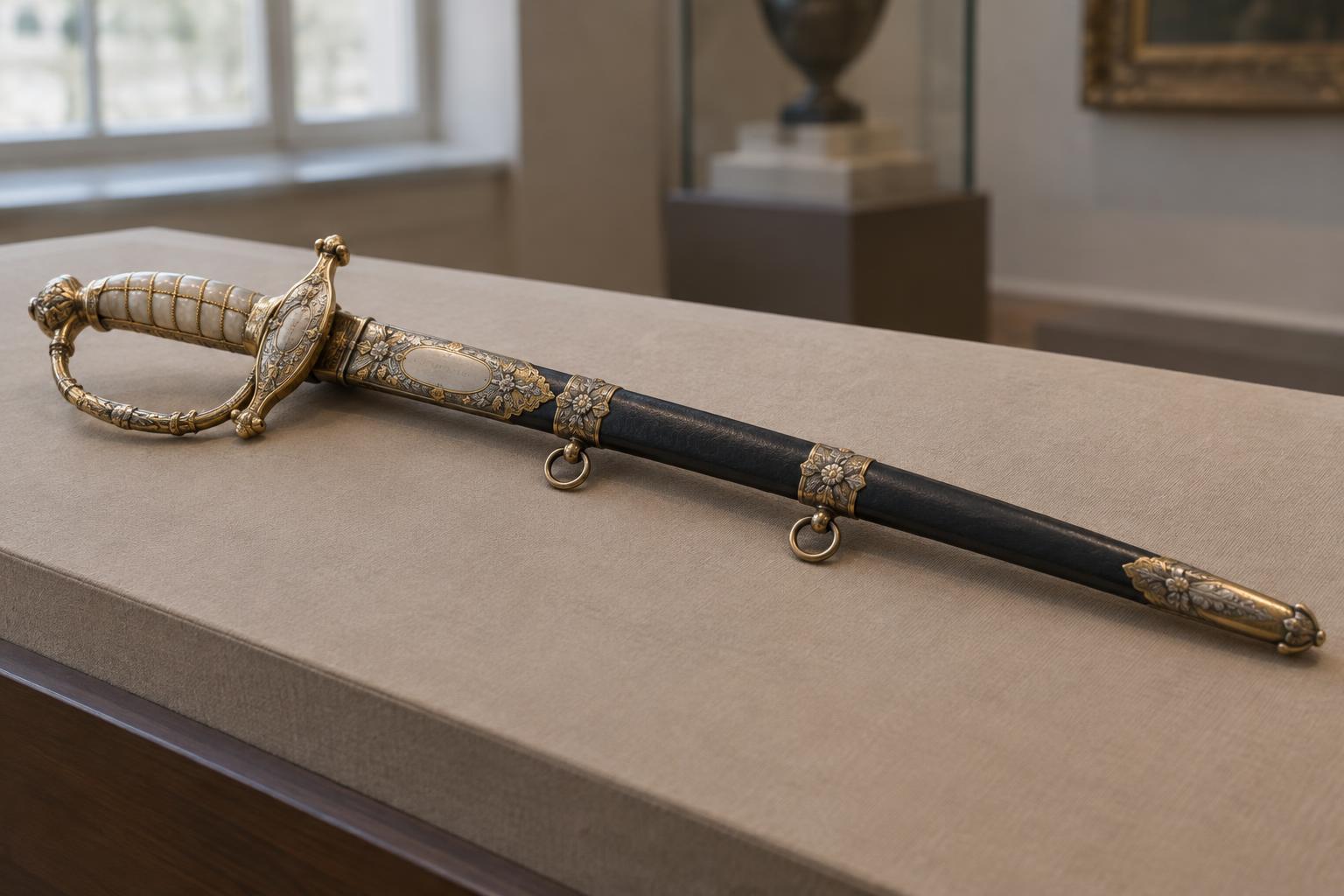
Once removed from the ceremony, a surrendered sword could acquire another role: keepsake, trophy, family possession or museum object. Each new setting might emphasize a different part of its story. A display focused on victory might celebrate the recipient; a family account might foreground the person who gave the sword up. Neither perspective necessarily captures the full experience of those present.
The object itself may offer clues, such as an inscription, decoration, repairs or signs of later alteration. Such details can help establish a history of ownership or display, but they rarely prove the circumstances of a ceremonial handover on their own. A sword said to have been surrendered needs a traceable connection to the event. Otherwise, a compelling label may give more certainty than the surviving evidence permits.
Reading the symbol in a museum
A useful museum interpretation begins by separating what is known from what is inferred. Who owned the sword? Is the exchange documented, or known mainly through later retellings? Was the object retained or returned, and how did it enter the collection? Answers to those questions can reveal whether the sword witnessed a surrender, commemorated one or became associated with it afterward.
The most revealing question may be what the ceremony allowed people to say without speaking. A sword passed between hands could announce that command had ended, that a new authority was being recognized or that courtesy would survive a change in power. Its significance came not from the blade alone, but from the people, conventions and audiences that gave the gesture meaning.