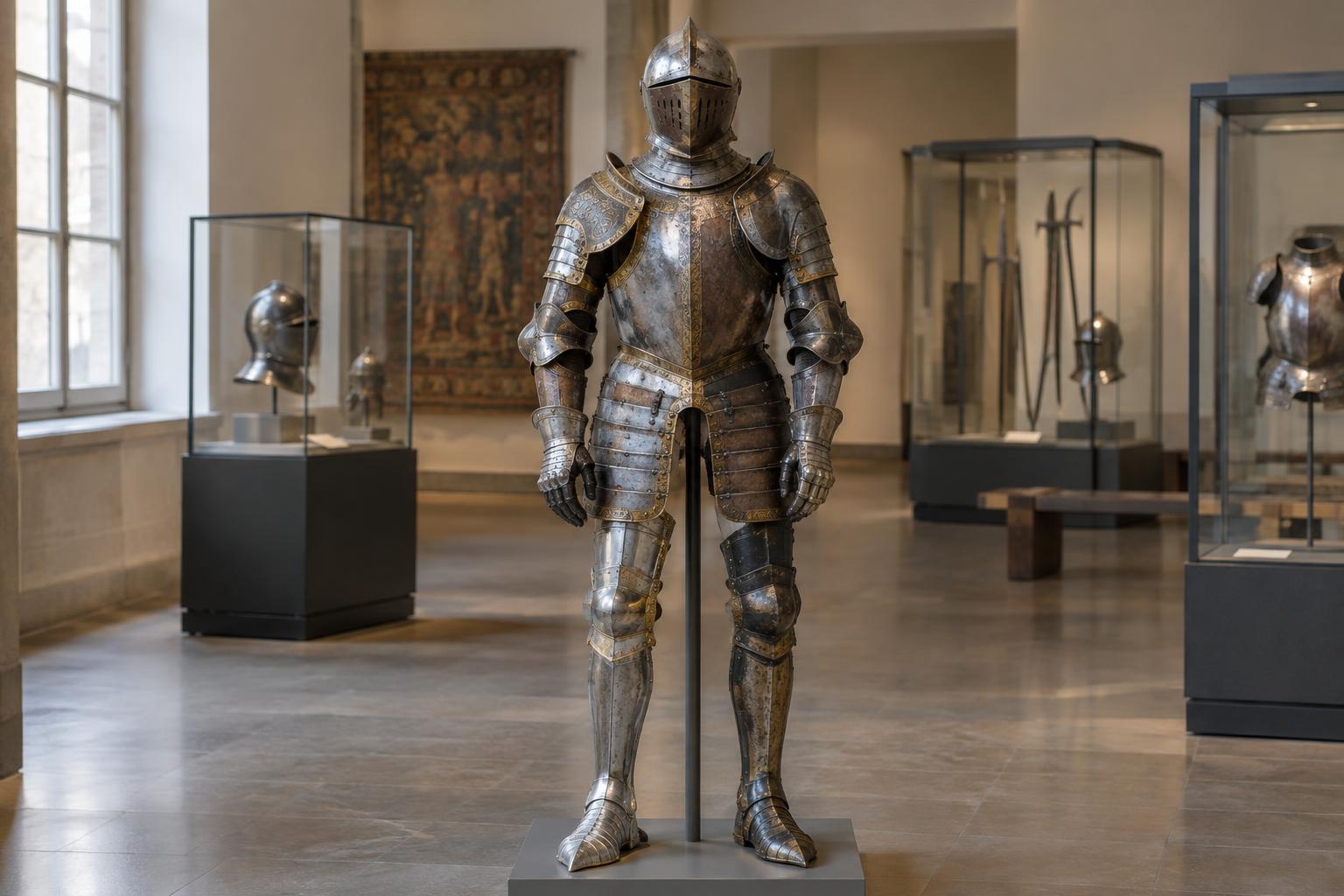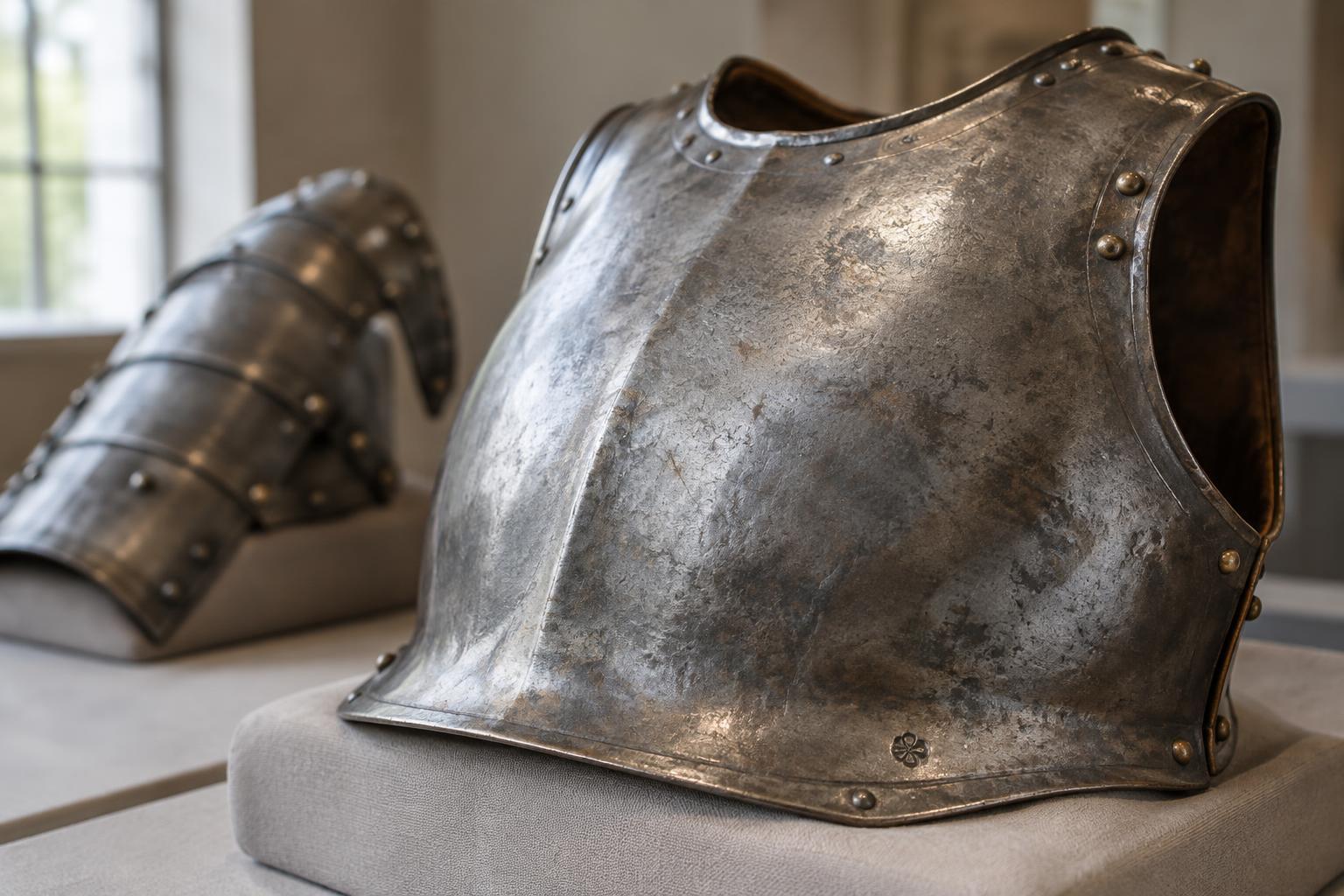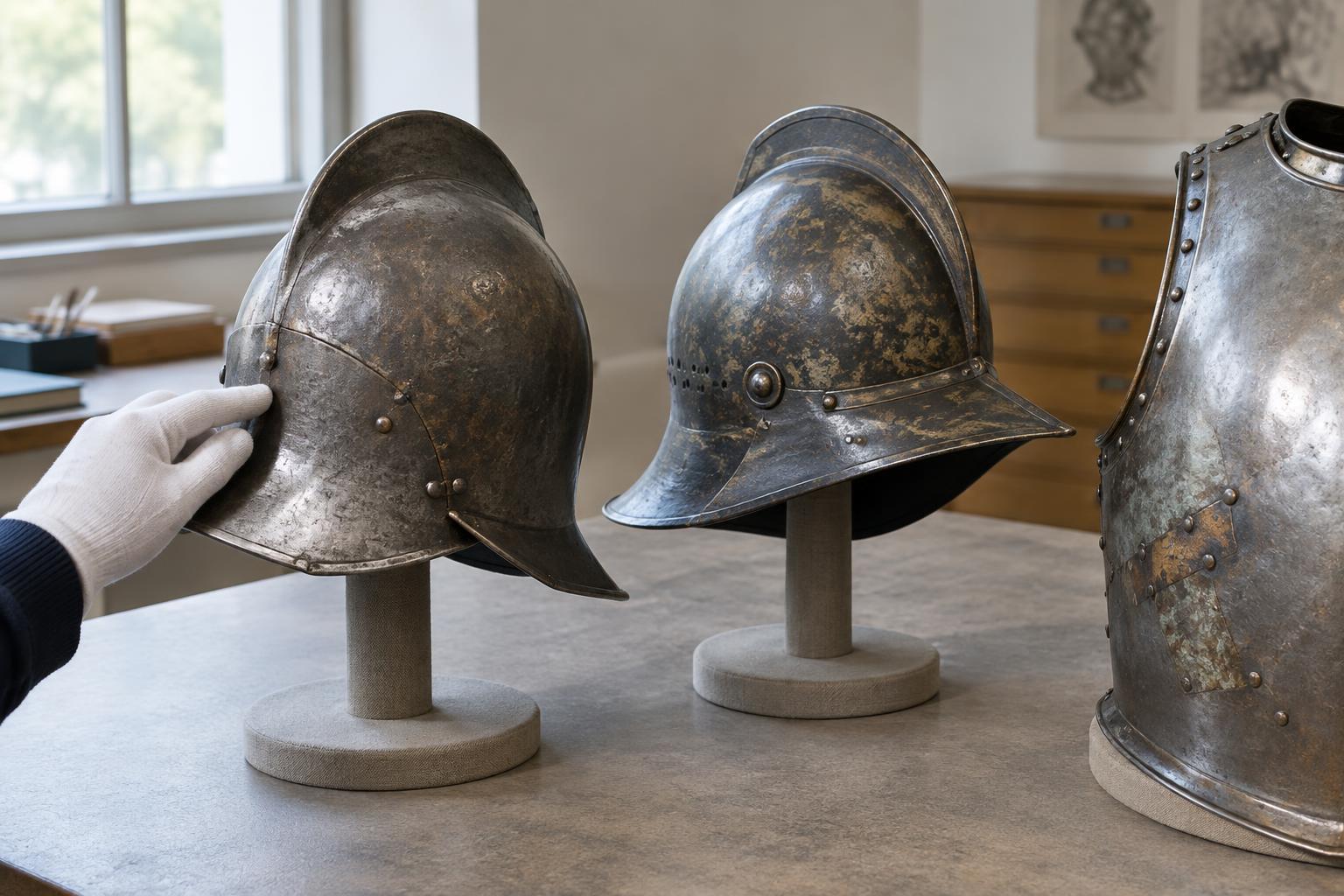
A garment with a metal interior
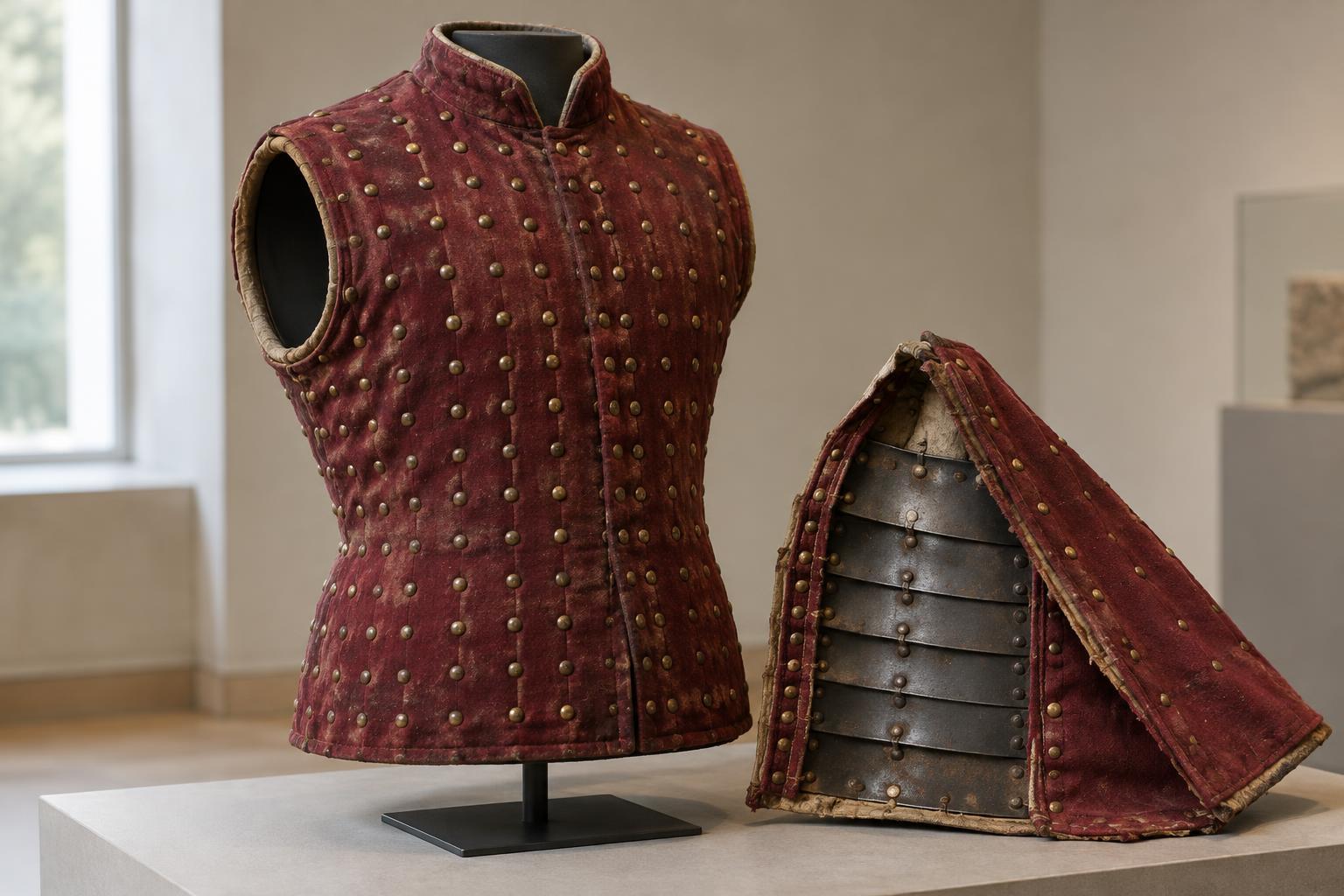
At first glance, a brigandine or coat of plates may resemble a fitted vest or short coat decorated with rows of rivets. The metal is largely hidden: plates are secured to the inside of a fabric or leather covering, while their fasteners often remain visible outside. This combination makes the armour distinctive. Its surface belongs as much to the history of clothing and display as to the history of metalwork.
The concealed plates did not make the outer layer incidental. The covering held the assembly together, shaped its appearance and offered a place for colour, pattern or costly material. Rivet heads could form orderly lines across it, turning a construction detail into a visual rhythm. A surviving object may have lost much of its original covering, however, so its present appearance should not be mistaken for the way it looked when worn.
What separates a coat of plates from a brigandine?
In broad terms, a coat of plates uses a relatively small number of larger metal plates attached inside a supporting garment. A brigandine generally uses more numerous, smaller plates, often arranged to overlap beneath its covering. These descriptions help a visitor picture two approaches to the same broad idea, but they are not a universal sorting rule. Plate sizes, layouts and garment shapes varied, and historical names were not always used with modern precision.
Rather than treating one form as a simple replacement for the other, it is useful to ask what each surviving piece actually shows. Where are the rivets? How many plates remain, and how do they meet? Is the body covering closely tailored, or is much of its original shape missing? Such questions describe the evidence without forcing an uncertain object into a tidy label. Museum catalogues may use a conventional name while acknowledging that its boundaries are flexible.
Construction beneath the surface
These garments brought several crafts together. Metalworkers shaped plates to follow parts of the torso; makers of the covering cut and joined its sections; and rivets connected the layers. The resulting object could accommodate movement through its arrangement of plates and the form of the garment around them. Its design was not simply a metal shell disguised by cloth: the metal, fasteners and covering depended on one another.
The outer material could also affect what a viewer notices. On an intact or carefully reconstructed surface, a neat field of rivet heads may be more prominent than the plates themselves. From the inside, a different pattern emerges: plate edges, overlaps and attachment points tell the story of assembly. Corrosion, missing plates, later repairs and replacement coverings can complicate that reading. Even two garments with similar exteriors may have quite different structures beneath them.
Armour as dress and display
Concealed-plate armour sits at an interesting meeting point between protection and presentation. A decorated covering could make the wearer appear fashionably dressed even while the garment carried substantial metalwork. Choice of materials and finish might communicate resources, taste or a particular setting, though the meaning of any one example depends on its evidence. It is safer to describe what is visible than to assign a precise rank or identity from decoration alone.
Images of historical dress can add context, but they cannot always reveal what lies underneath a depicted garment. Likewise, a row of dots in an image might suggest rivets without proving a specific internal construction. Comparing images with surviving armour can be illuminating when the differences are kept in view: artists represented appearances, while objects preserve fragments of manufacture and use.
Reading a surviving example in a museum
When viewing one of these objects, start with both sides if the display allows it. The exterior may show the intended pattern of fasteners and covering; the interior may show plate shape and arrangement. A label or diagram can help identify which parts are original and which have been restored or added for display. Those distinctions matter because textiles and leather can deteriorate, leaving the metal better represented than the garment that once carried it.
Conservation also shapes what can responsibly be shown. Exposing an interior, separating layers or repositioning a fragile garment may risk damage, so photographs, diagrams and carefully qualified reconstructions often do important interpretive work. The most revealing question is not simply how many plates survive. It is how metal, covering and fastening worked together to create an object that was both armour and an item of dress.