Store the evidence alongside the object, not on it
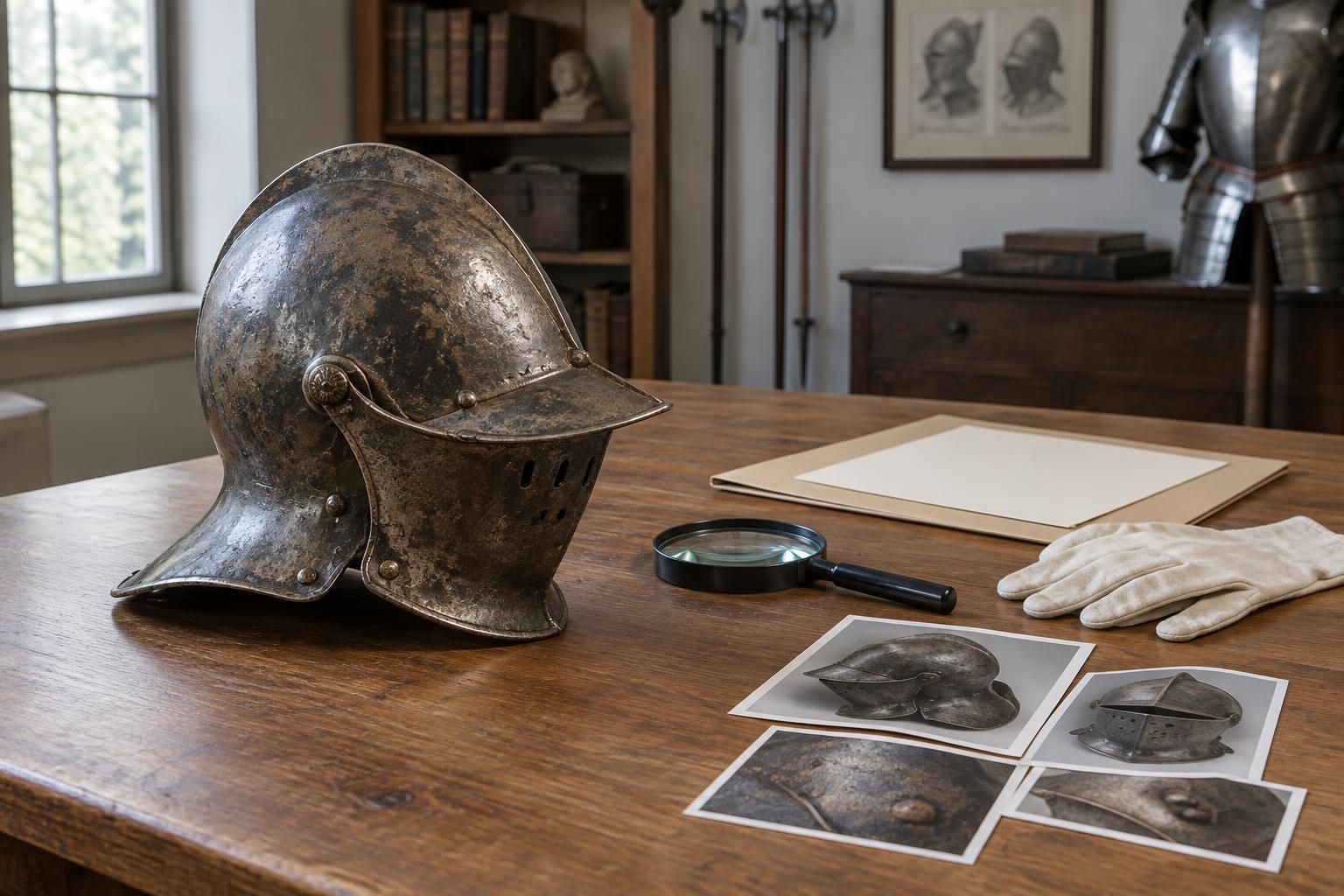
An old label, a photograph or a detached fitting can explain as much about an object’s history as the object itself. A loose component may preserve evidence of a former repair, while a handwritten note may record an earlier attribution. Storage should protect these materials and make their relationship to the parent object easy to understand. It should not require a future reader to guess which fragment belongs with which record.
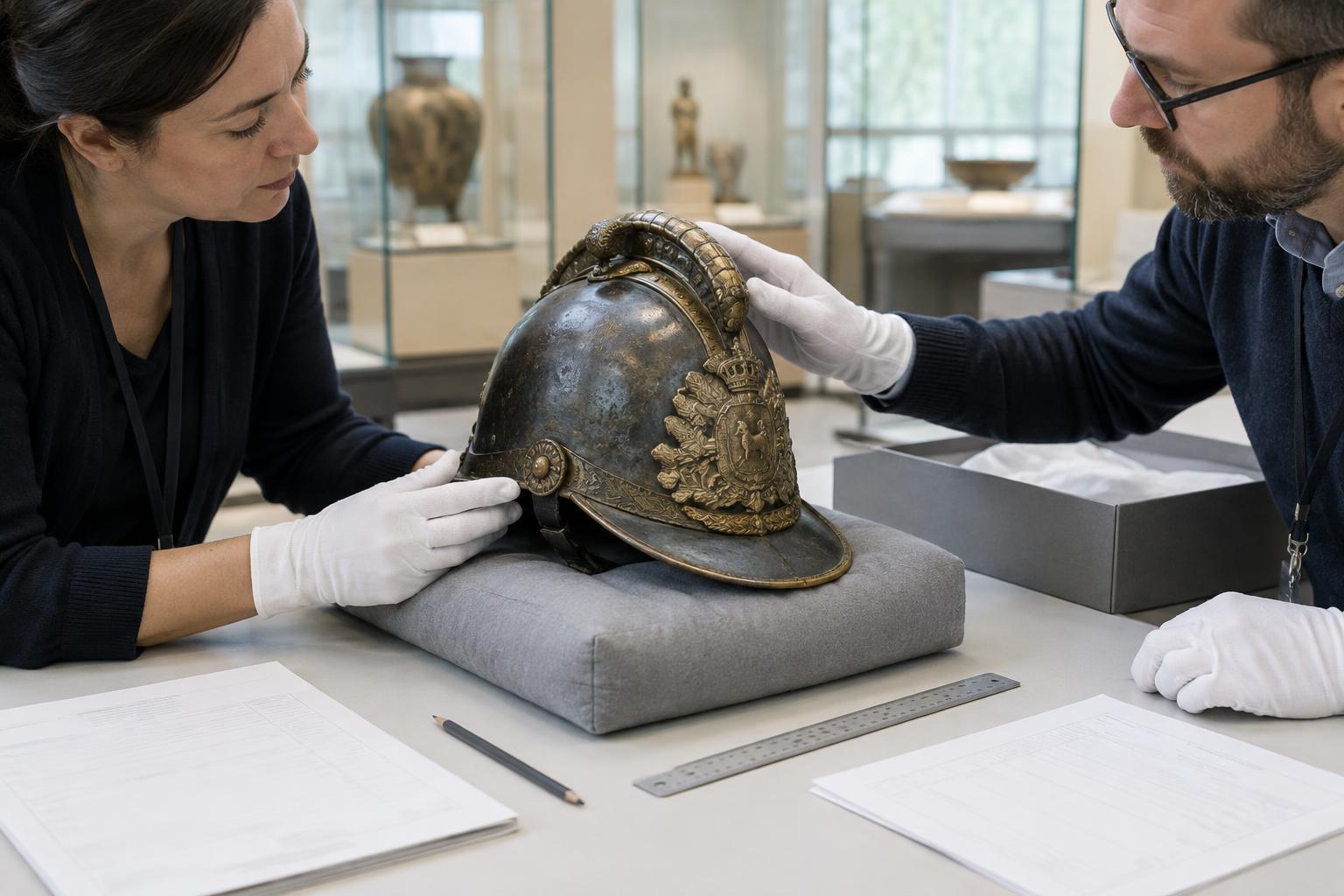
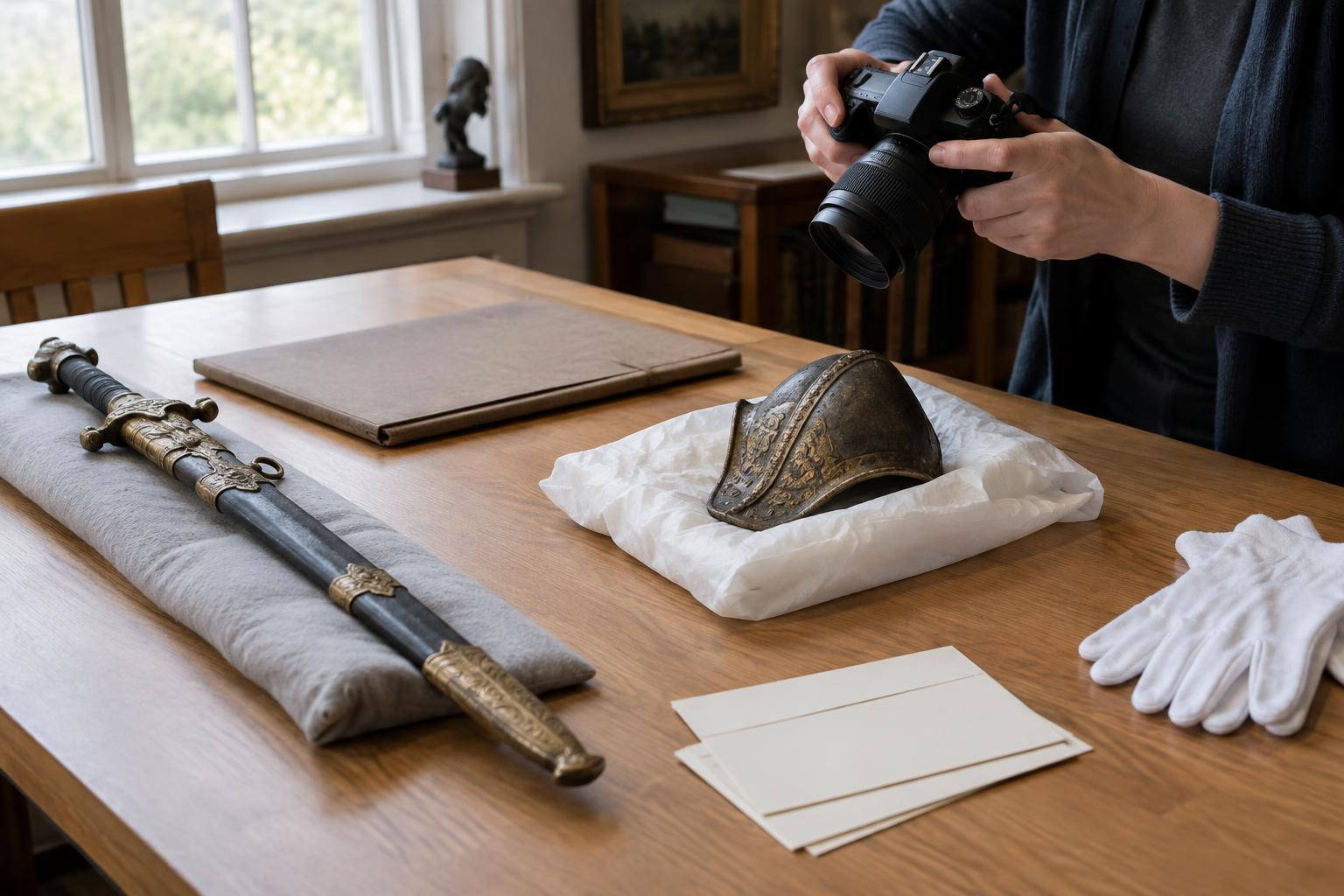
Begin with a stable collection identifier and a simple inventory. Record what is present, where each part is stored, and any inscriptions or earlier labels before moving items into new enclosures. Photograph components and record labels separately, including their fronts and backs where relevant. Keep original documentation even when its conclusions seem doubtful: an outdated description can still reveal how an object was understood at a particular point in its collecting history.
Choose enclosures for the material inside
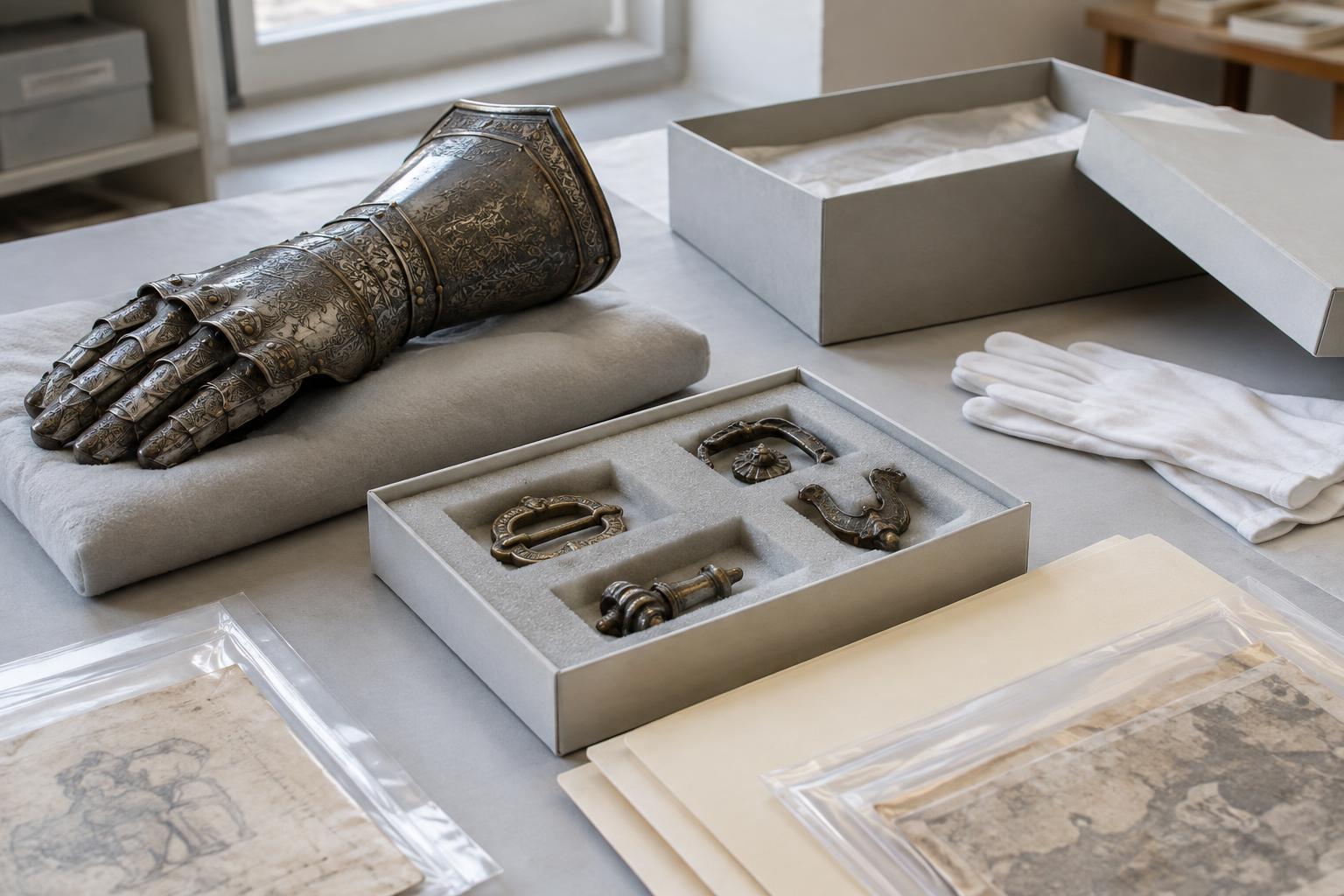
For paper records, sturdy archival-quality folders and boxes provide a useful first layer of protection against handling, dust and light. Look for products described in terms of their composition, such as lignin-free paper or board, rather than relying on the word “archival” alone. Folders should fit their contents without tight folds, and boxes should support folders upright or flat without crowding them. A large sheet may be safer in a suitably sized flat enclosure than folded to fit a convenient box.
Buffered paper is commonly used for many ordinary paper documents, but it is not a universal choice. Some photographs, sensitive color media and other mixed materials may call for different enclosures. Sleeves intended for photographs should be selected for that purpose; a supplier’s stated suitability and, where applicable, a photographic activity test designation are more informative than a generic promise of safety. When a record combines paper, photographs, adhesives and fragile annotations, separate supportive enclosures may be preferable to forcing everything into one sleeve.
Clear sleeves can reduce direct handling when viewing is frequent. Stable polyester, polypropylene and polyethylene products are often used for collection storage, provided they are appropriate for the item and do not trap it against a damaged surface. Avoid unidentified soft plastics and PVC sleeves, which may age poorly. If ink, pencil or a flaking surface could be disturbed as a sheet slides into plastic, a paper folder may be the gentler choice.
Support detached components without erasing clues
Detached rivets, plates, straps and other small parts are easy to misplace and easy to misidentify. Give each component its own supported position inside a labeled box or tray, rather than allowing unlike materials to knock against one another. Acid-free tissue or suitable inert foam can help prevent movement, but padding should not press on decoration, loose corrosion products or fragile edges. A fitted recess should hold the component securely without requiring force to remove it.
Materials that touch a component deserve particular care. Bare metal, leather, wood, textile and painted surfaces can respond differently to contact materials and surrounding conditions. Do not assume that a paper envelope suitable for a document is suitable for every metal fragment, especially if it could retain moisture against the surface. Avoid adhesive tape, rubber bands and foam of unknown composition in direct contact with historic material. Keep earlier fasteners, packing and labels when they may carry evidence, enclosing them separately and noting their association.
Place identifiers on the enclosure or on a separate tag held with it, not directly on a fragile component. If a part has a secure attribution to an object, record the basis for that connection. If the connection is uncertain, say so. Clear uncertainty is more useful to future researchers than a confident label that cannot be checked.
Make retrieval simple and handling brief
Good packaging also serves the person who must find an item years later. Use consistent identifiers on folders, boxes and inventory entries, and distinguish the location of records from the location of components. A box-level contents list can prevent repeated searching. Keep a record of changes when material is moved or re-enclosed so that a missing part is not mistaken for a lost one.
Arrange enclosures so they can be lifted without pulling on an object or its old label. Heavier boxes belong where they can be handled safely; small components should not disappear beneath loose tissue. Stable storage conditions and protection from leaks, excess moisture and direct light matter as much as the enclosure itself. A sealed plastic bag is not automatically protective: if moisture is enclosed with an object, the bag can make conditions worse.
Review choices as the collection changes
An enclosure is a considered choice, not a permanent verdict. Check periodically for torn folders, crowded boxes, deteriorating padding and labels that have become detached or hard to read. When replacing packaging, retain useful information from the old enclosure, including handwritten notes and evidence of earlier groupings. Record what was changed so that improved storage does not interrupt the object’s documented history.
If a component is actively deteriorating, has an unstable surface or cannot be supported without pressure, routine repackaging may not be enough. Set it aside in a clearly identified, protective enclosure and seek advice from a qualified conservator. For most collection records and detached parts, the soundest approach is straightforward: choose materials with known properties, minimize unnecessary contact, and make every association traceable.