Start with the claims, not the asking price
A seller’s description may combine several different propositions: an object is old, it belongs to a particular region or period, it served a specific purpose, and it has an unusually important history. These propositions do not all rest on the same evidence. Begin by writing down the claims separately. “Iron helmet” describes a visible feature; “made for a named commander” requires a much stronger chain of evidence.
An asking price tells you what a seller hopes to receive, not whether the description is correct. Likewise, “rare” can mean seldom offered for sale, seldom preserved, or simply unfamiliar to the seller. Ask what comparison supports the word. If the answer is unclear, treat rarity as an unverified description rather than an established property of the object.
Separate what you can see from what you are told
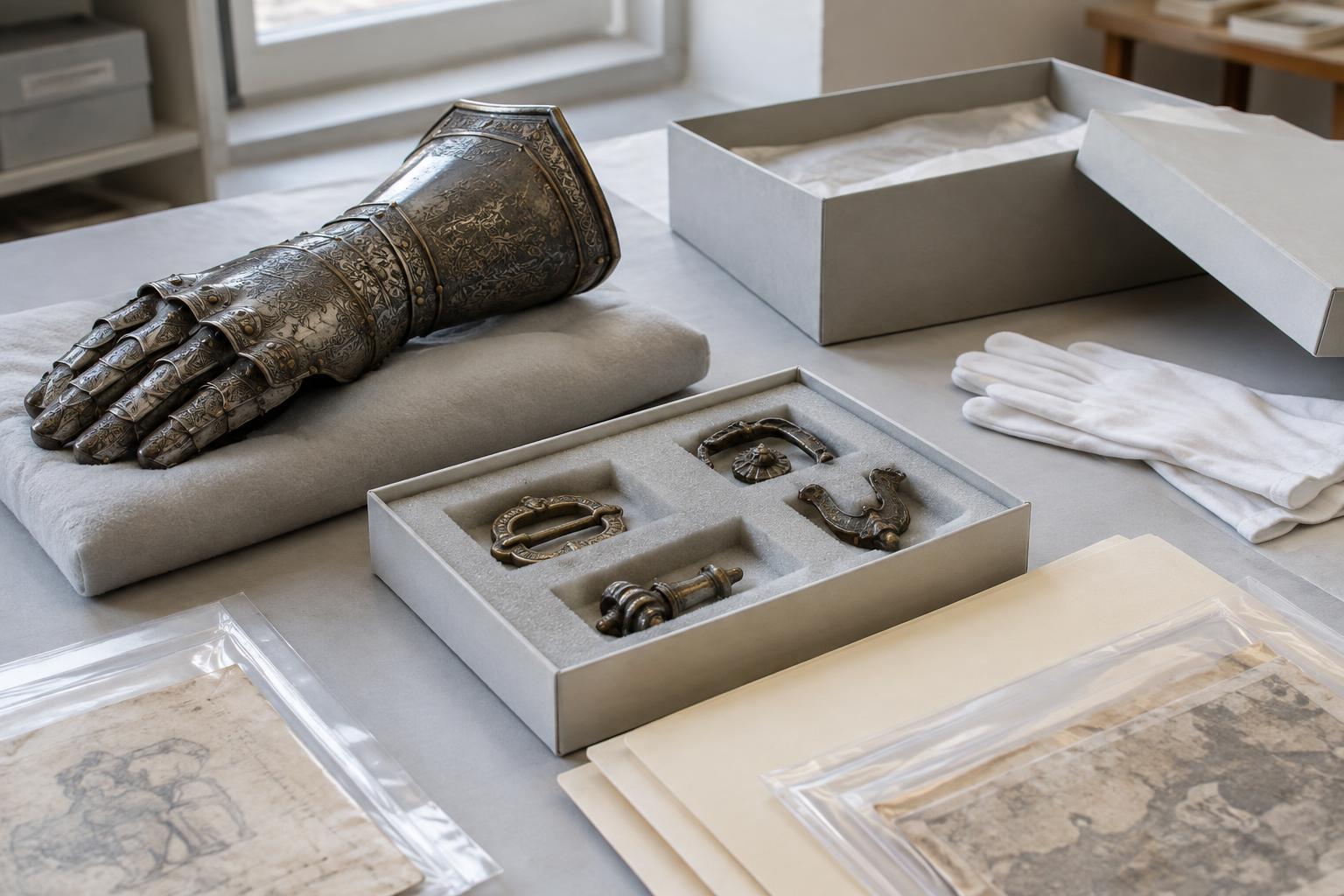
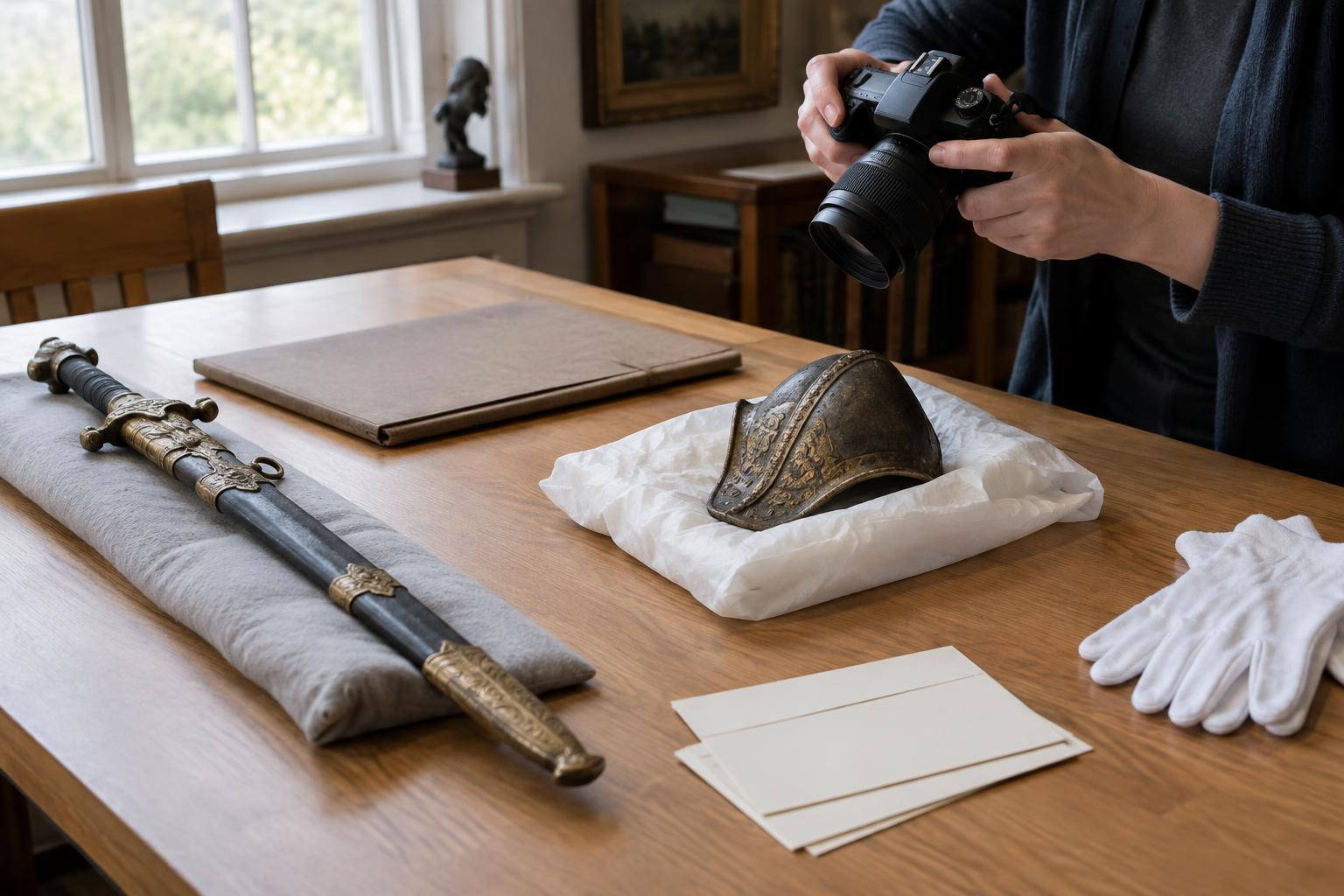
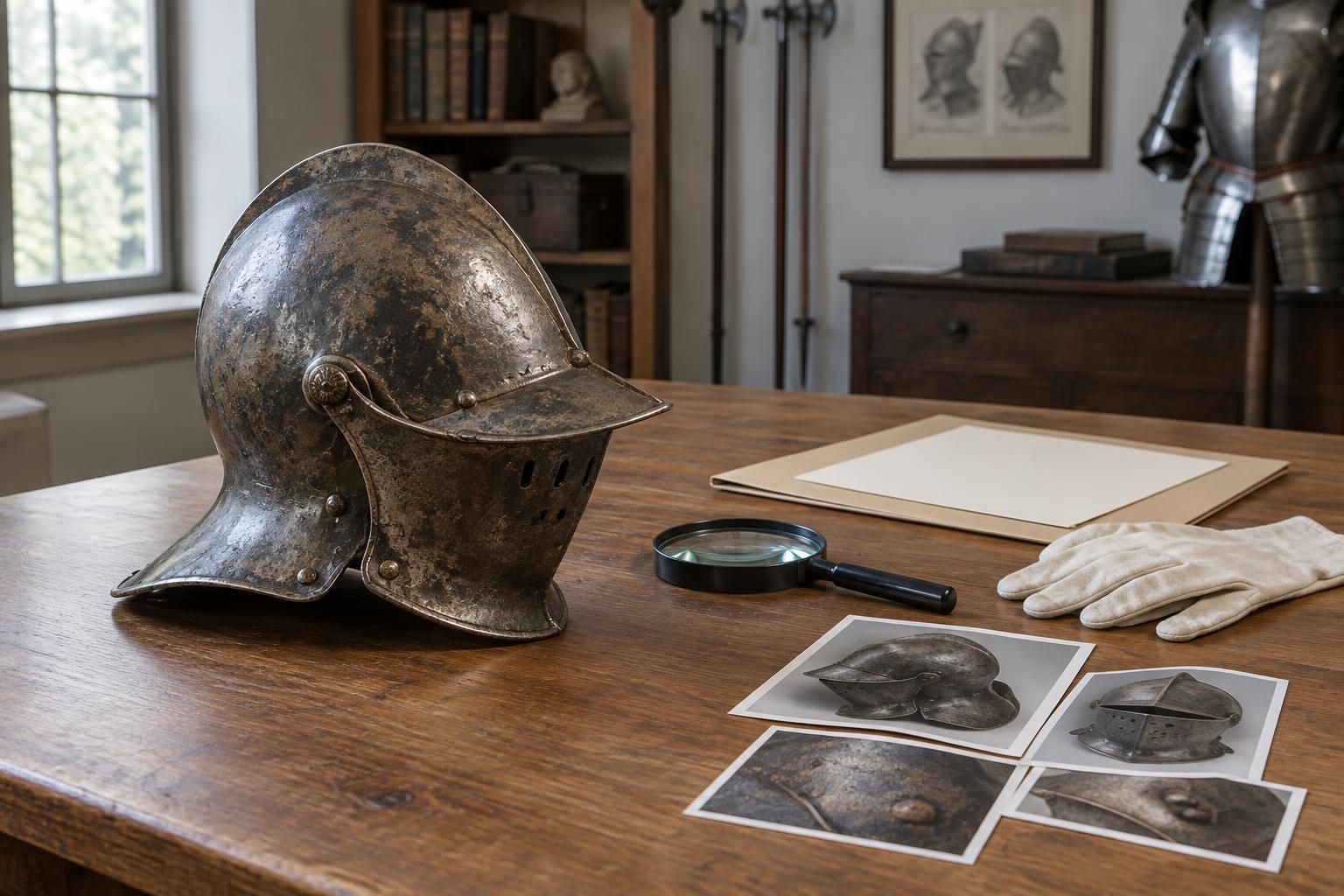
Good photographs can help you assess shape, materials, decoration and condition, but they may not establish age or origin on their own. Request clear views of the whole object and of details relevant to the claim, such as inscriptions, repairs, joins, linings or mounting points. Measurements and a description of materials can make comparisons more meaningful. A seller willing to explain which features support an attribution gives you more to evaluate than one who repeats a label without explanation.
Look for wording that marks degrees of certainty. “In the style of,” “attributed to” and “possibly” signal different levels of confidence from a documented identification. That caution is not necessarily a weakness; it may reflect the limits of the available evidence. By contrast, a precise maker, owner or date presented without a supporting record deserves careful scrutiny.
Ask what the history of ownership actually establishes
Provenance is the documented history of an object’s ownership or whereabouts. Old collection labels, inventory entries, photographs and receipts may help connect an object to an earlier collection. Their value depends on whether they can be matched convincingly to the object being offered. A receipt for a similar piece, or an account passed down without records, may be useful context but should not be treated as proof of every part of a seller’s story.
Even genuine documentation has limits. A decades-old catalogue entry may repeat an attribution that later study would question. An object might also have been repaired, combined with other parts or reidentified over time. Ask whether the seller can explain gaps and changes in the record. If the history remains uncertain, describe that uncertainty rather than filling it with an appealing narrative.
Compare carefully and examine condition
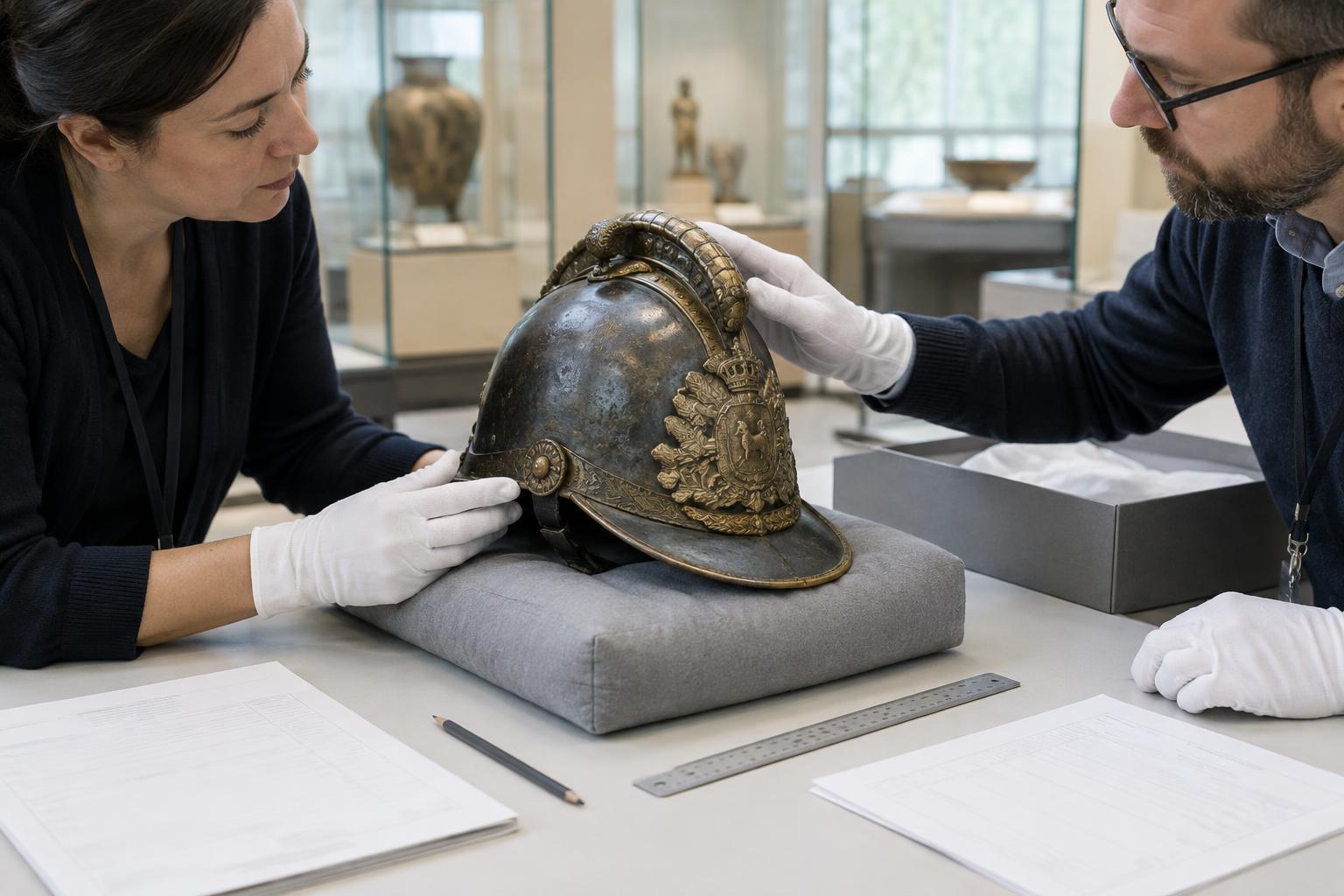
Comparisons with securely identified museum objects and well-documented collection catalogues can help test a proposed date or origin. Compare specific features, not just an overall resemblance: construction, proportions, decorative motifs and signs of alteration may each matter. A close visual match can support a line of inquiry, but it does not by itself prove that two objects were made in the same place or period.
Condition should be considered separately from identity. Wear can be consistent with age, but it is not a reliable certificate of age; a clean surface is not automatically evidence of recent manufacture. Later restoration, replacement parts and old repairs may affect how an object is interpreted and displayed. Ask for a clear account of known interventions, and avoid cleaning or taking anything apart merely to settle a question. Such actions can remove evidence that a conservator could otherwise examine.
Make a decision that can accommodate uncertainty
Before committing to a purchase, decide which claims matter to you and what evidence you would need for each one. A decorative object of uncertain date may still be of interest, but it should not be evaluated as though a specific historical association were established. Where a claim carries substantial weight, consider seeking an independent assessment from someone experienced with that type of object. Keep the seller’s description, photographs and correspondence so you can distinguish what was asserted from what you later learned.
The most useful conclusion is not always a firm yes or no. You may find that an object is plausibly from a broad period while its maker, original use or ownership remains unknown. A responsible collection record can preserve those distinctions. Rarity and price may influence a buying decision, but evidence should determine how confidently the object’s story is told.