Objects that make authority visible
A civic sword or mace can transform an abstract idea—municipal authority—into something an audience can see. Carried in a procession, placed near a presiding official or displayed in a council chamber, such objects mark a public occasion as more than an ordinary gathering. Their significance lies less in their practical form than in the roles communities have assigned to them.
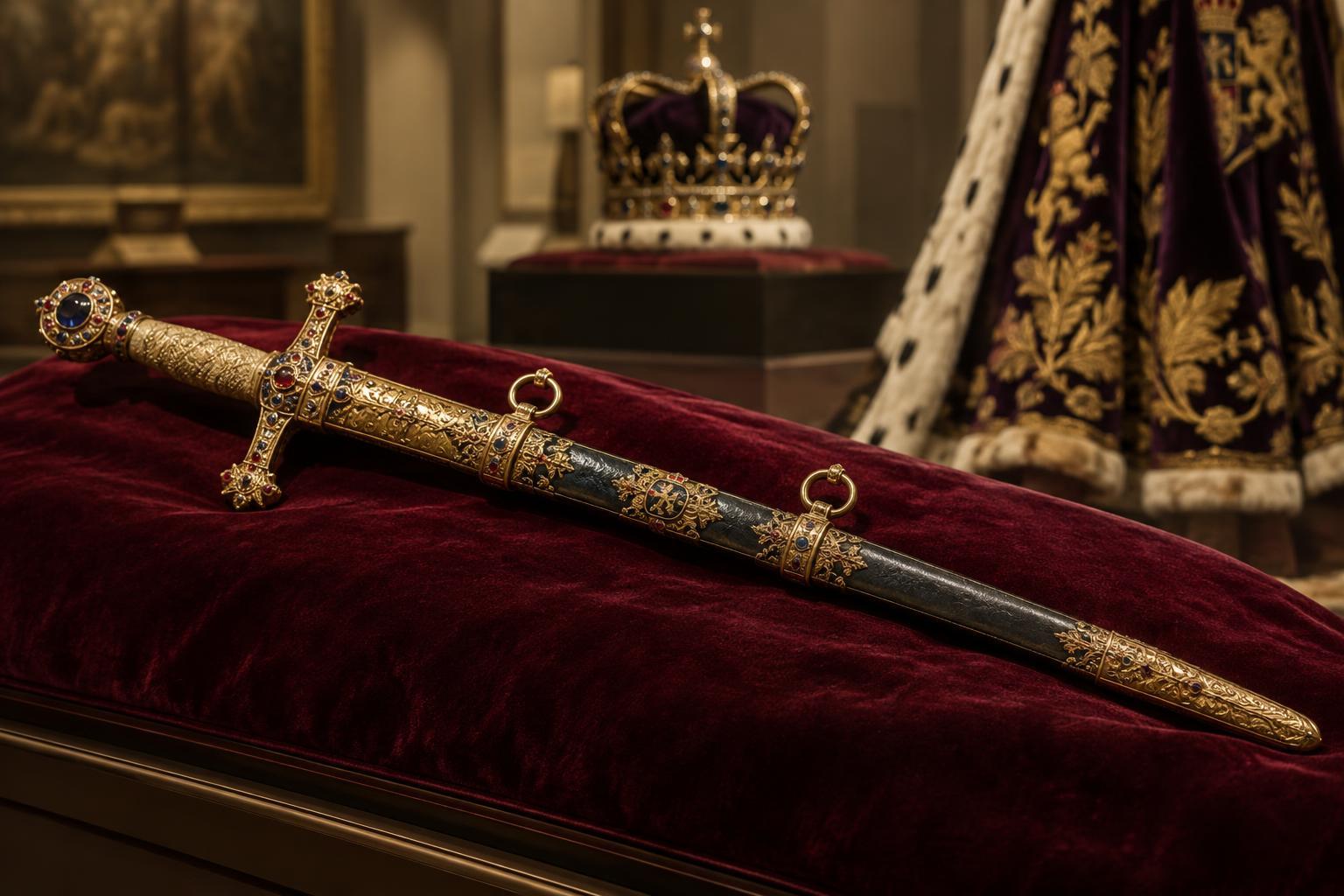
Those roles have varied across places and periods. A sword might evoke jurisdiction, privilege or the dignity of an office; a mace might identify an official body and the authority under which it meets. Neither has a single meaning that applies to every town. To understand one, it helps to ask who commissioned it, who carried it, where it appeared and which symbols were added to its surface.
The civic sword: an emblem of privilege and office
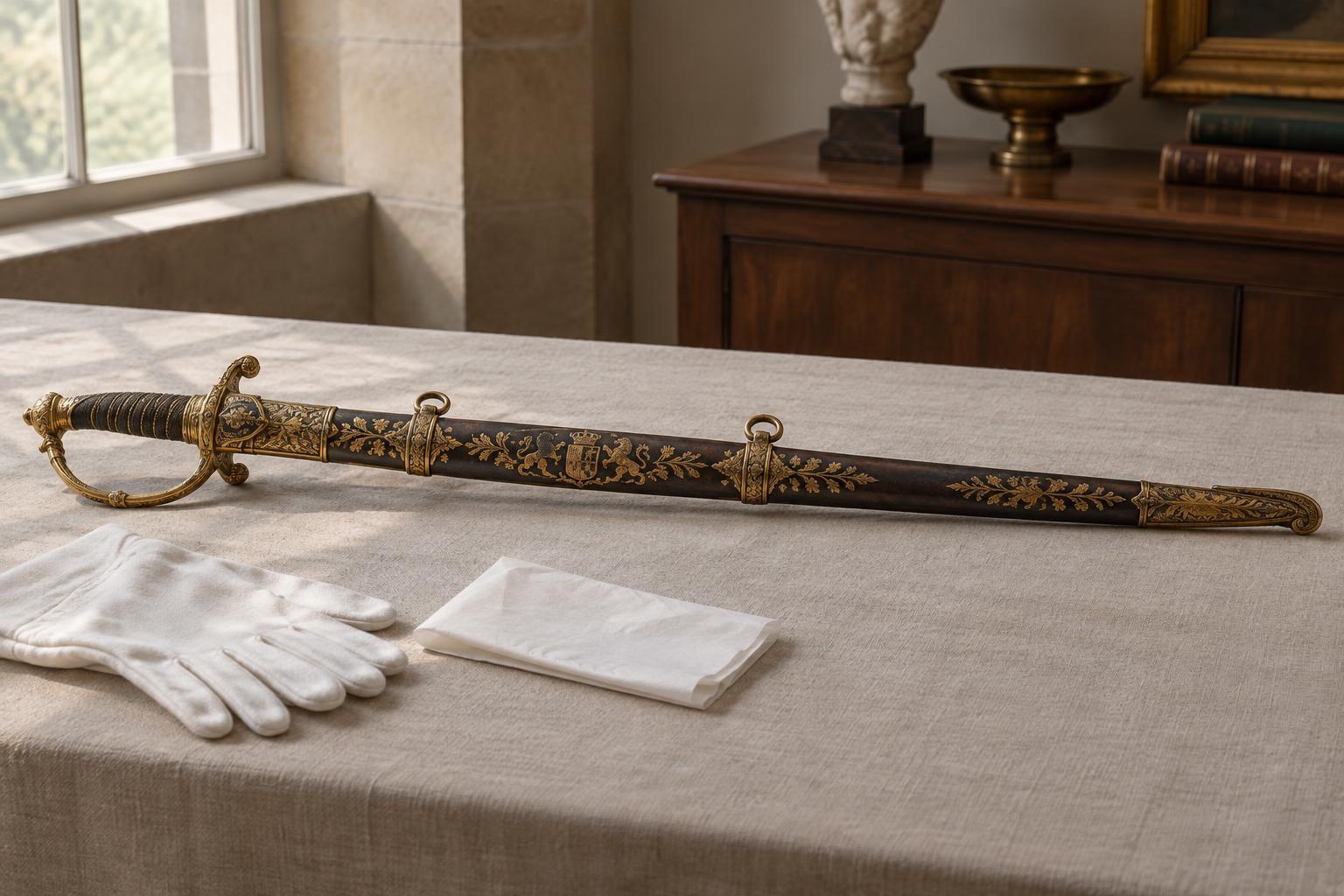
A civic sword retains the recognizable form of a weapon, yet its ceremonial purpose shifts attention from use to representation. An elaborate hilt, decorated scabbard or carefully finished blade could make it suitable for formal display. When carried before an official or assembly, it could signal that the occasion was conducted in the name of a recognized civic authority.
The sword’s apparent directness can also be misleading. It may suggest power, but that does not tell us exactly which powers a municipality held or how they changed over time. Its imagery may connect the town to a ruler, a patron saint or its own coat of arms; later alterations may reflect a new political relationship. A museum label should distinguish what the object visibly depicts from what surviving records establish about its ceremonial role.
The mace: authority shaped for ceremony
The civic mace often has a long staff and a prominent head, giving it a silhouette that can be recognized across a room or along a procession route. In a municipal setting, this visibility matters. A mace can announce the presence of a council or office-holder and help give a meeting a formal beginning and setting.
Its surfaces offer room for civic storytelling. Heraldic devices, crowns, inscriptions or other emblems may name the body that owned it, commemorate a donor or express a connection to a wider governing authority. Such features need careful reading: decoration added at one time need not describe the mace’s original meaning. Unlike a sword, whose familiar outline may call up ideas of force, a mace can draw attention more readily to the institution it represents. Both, however, depend on ceremony and shared recognition to convey authority.
What a comparison can reveal
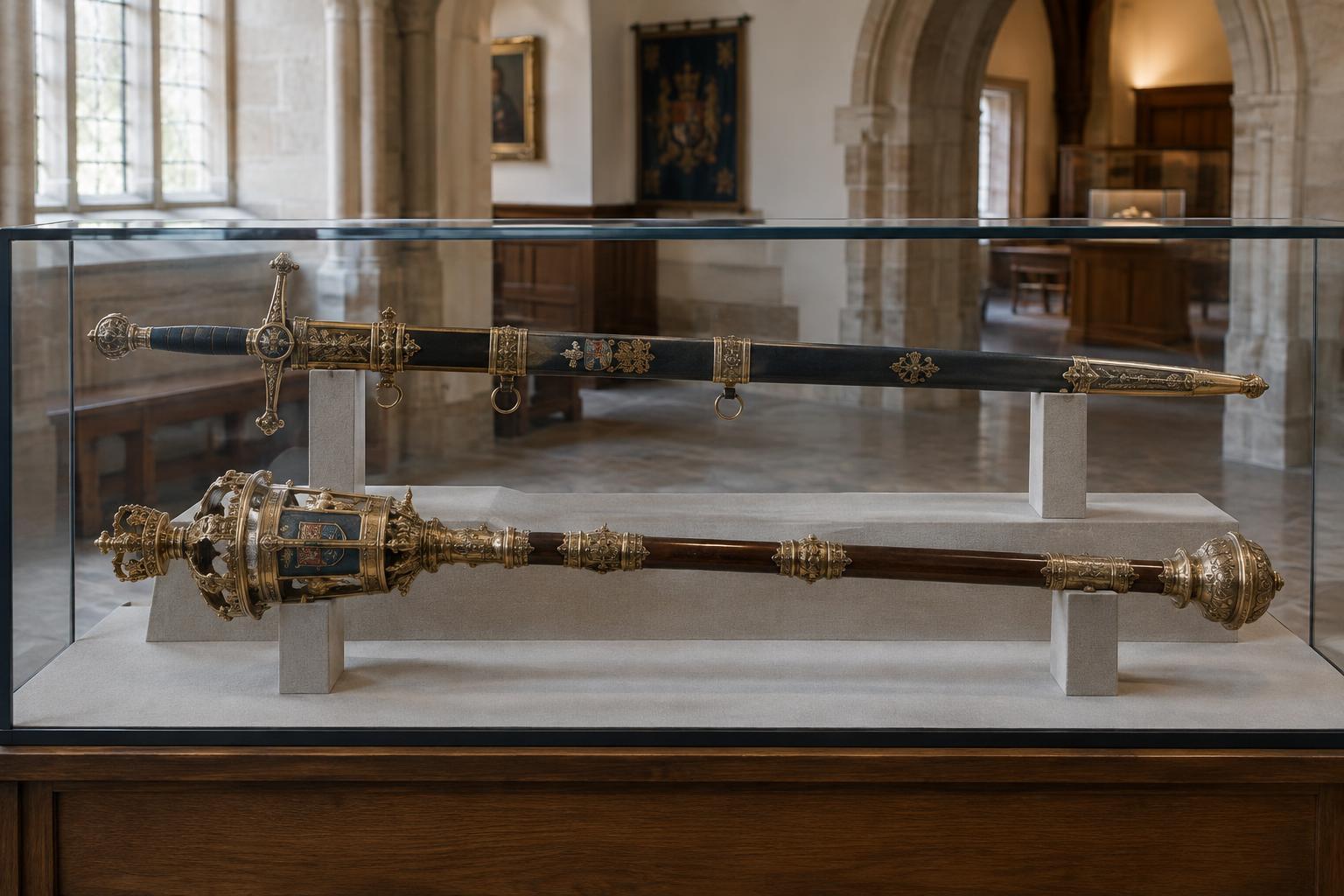
Looking at swords and maces side by side makes differences in civic self-presentation easier to notice. A sword may emphasize the standing or privileges of an office; a mace may foreground the continuity of a council or the order of its proceedings. These are useful starting points, not rigid rules. A town could use both objects, give one greater prominence, or change how it displayed them as its institutions evolved.
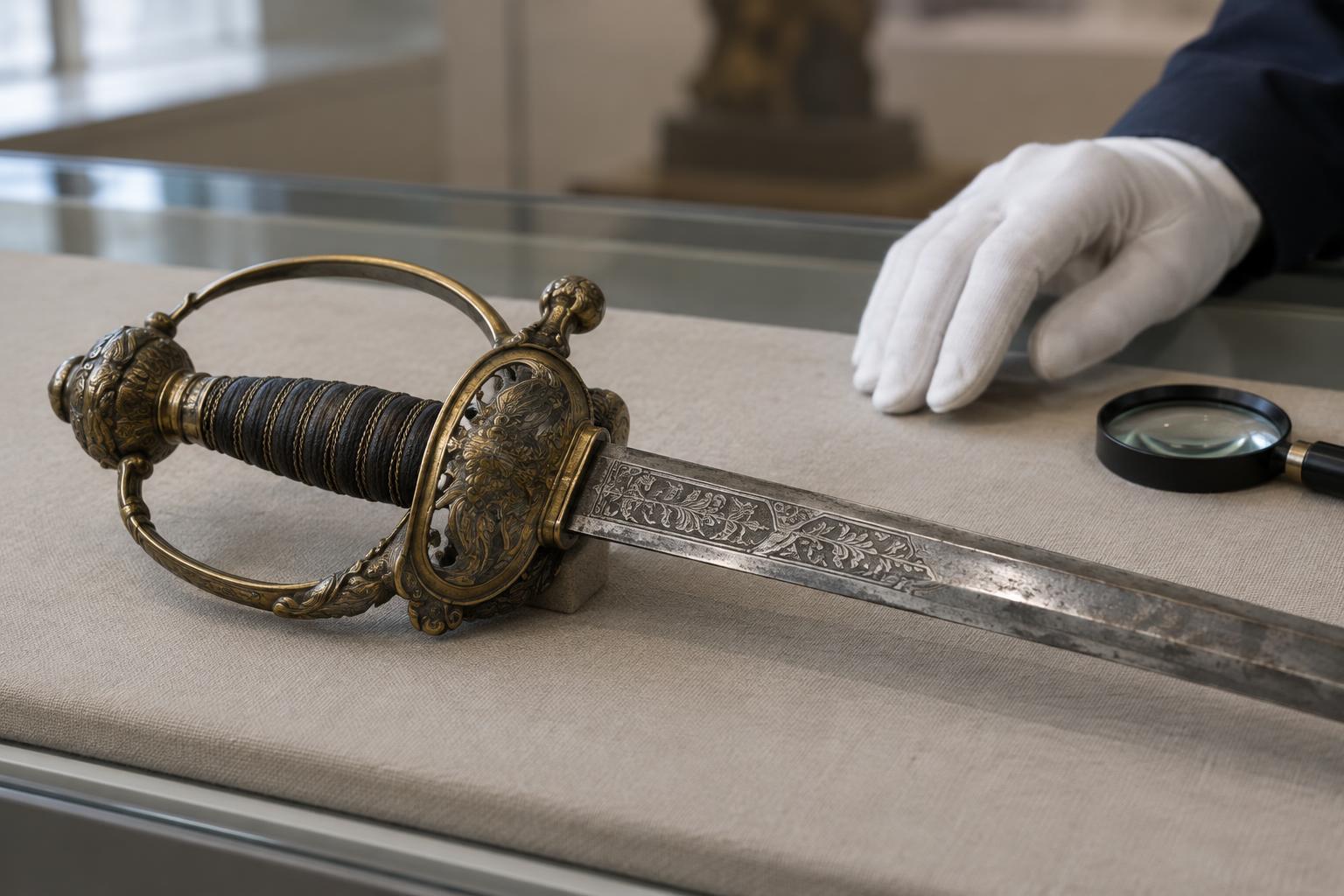
Scale, materials and craftsmanship add another layer. A finely worked object records decisions about expense, skill and visual impact, but richness alone does not prove political importance. A simpler piece may have played a central ceremonial role. Comparing wear, repairs and replacement parts with written records can help separate an object’s initial design from its longer life in municipal service.
Reading and caring for civic regalia today
In a museum, a sword or mace is often seen without the procession, voices and people that once gave it context. Interpretation can restore some of that setting by explaining who held the object, how it was presented and what viewers would have recognized in its emblems. Where the evidence is incomplete, an honest question can be more useful than a confident but unsupported story.
Civic regalia also presents a conservation challenge because it may be both a historic object and a continuing ceremonial symbol. Metal, wood, textiles, leather and applied decoration can respond differently to handling, light and environmental change. Careful documentation of condition, past repairs and any present use helps custodians make informed decisions. Preserving a sword or mace is not simply preserving its finish: it is protecting the evidence of how a community made authority visible over time.