A sword becomes regalia through use
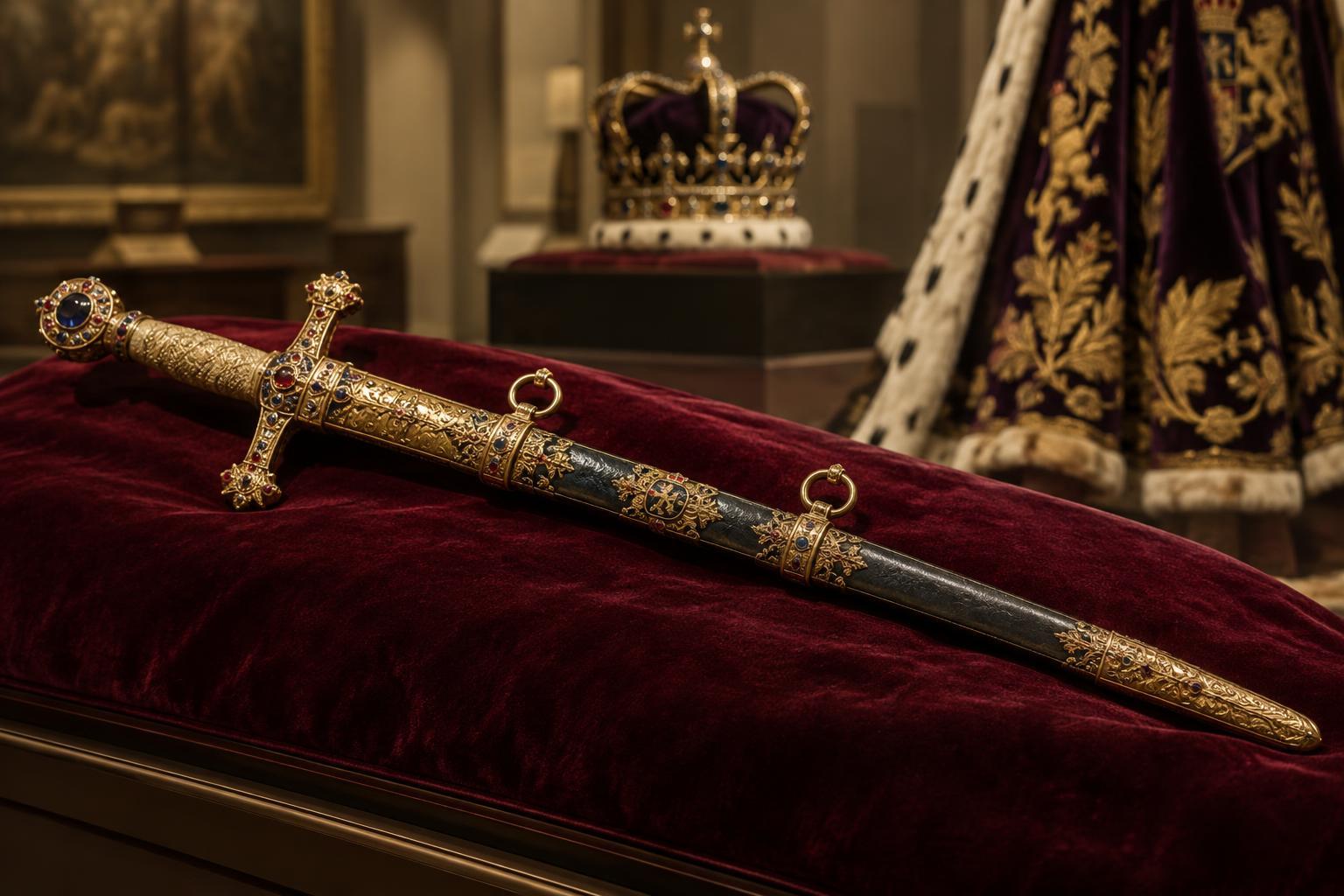
A sword can be admired for its materials and workmanship without ever serving a ceremonial purpose. A coronation sword is different: it belongs to a sequence of public actions that gives the object a role. It may be carried in procession, presented to a ruler or placed near other regalia. Each action asks an audience to see the sword not simply as a possession, but as a sign of authority.
That meaning does not reside in the blade alone. An object might be made expressly for ceremony, inherited from an earlier reign or adapted for a new occasion. Its identity as a coronation sword depends on records, tradition and repeated use as much as on its appearance. Looking at the object without its ritual setting can therefore leave out the very feature that made it politically important.
What the ceremony asks the sword to say
In a coronation, a sword can stand for a ruler’s duty to govern, protect or uphold justice. Those ideals are not neutral descriptions of political power. They are claims made through ceremony about how power should be understood. The moment a sword is presented, carried or returned can matter as much as its decoration: the action links an individual ruler to an office and its stated responsibilities.
Ceremonies also distribute roles among participants. The person who carries a sword, the person who receives it and the audience permitted to witness the exchange all help shape its message. Court officials, religious figures and representatives of political institutions may appear alongside the ruler, though their roles vary by place and period. A sword’s symbolism is therefore best read within a particular ceremony, rather than treated as a universal code.
Craftsmanship makes authority visible
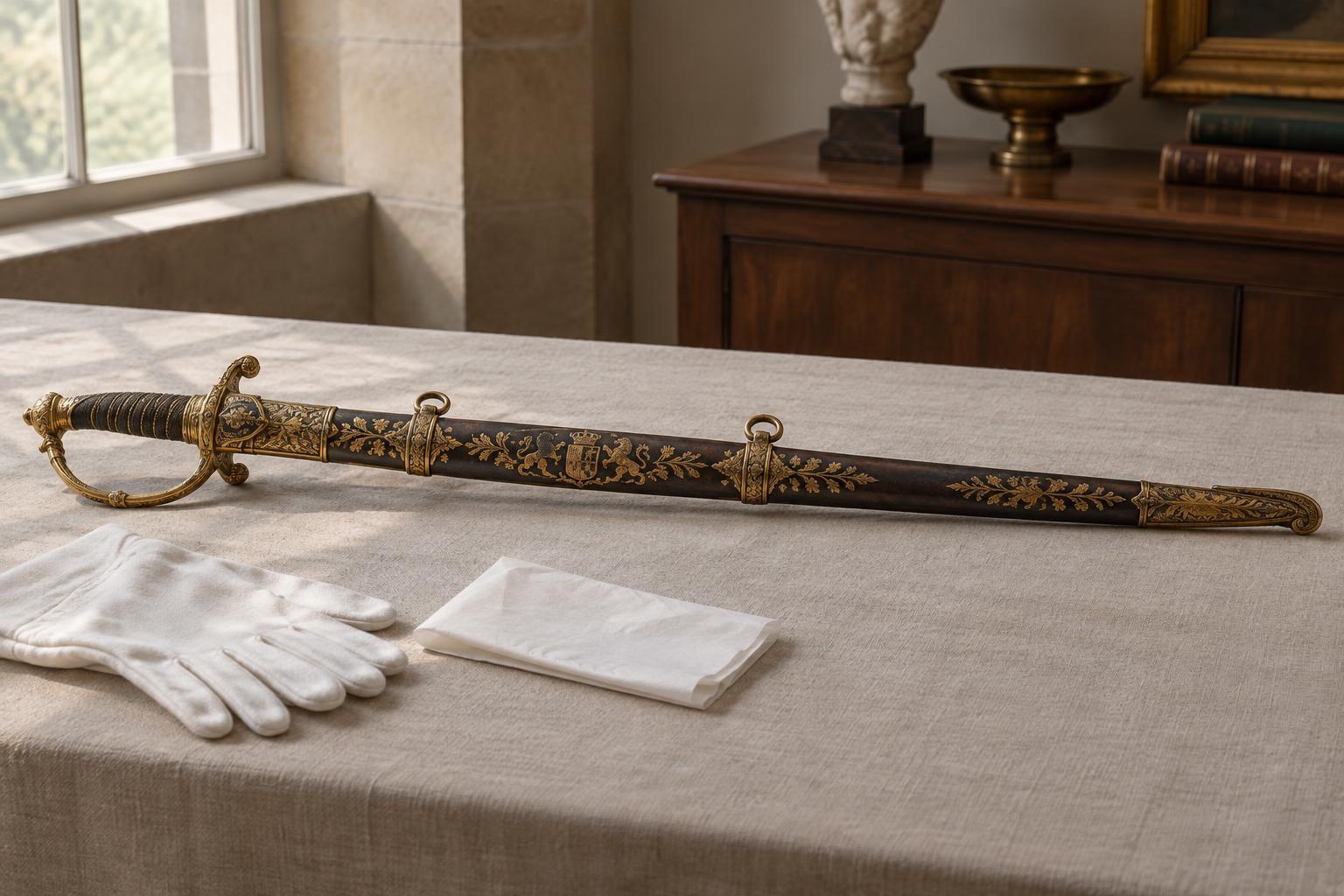
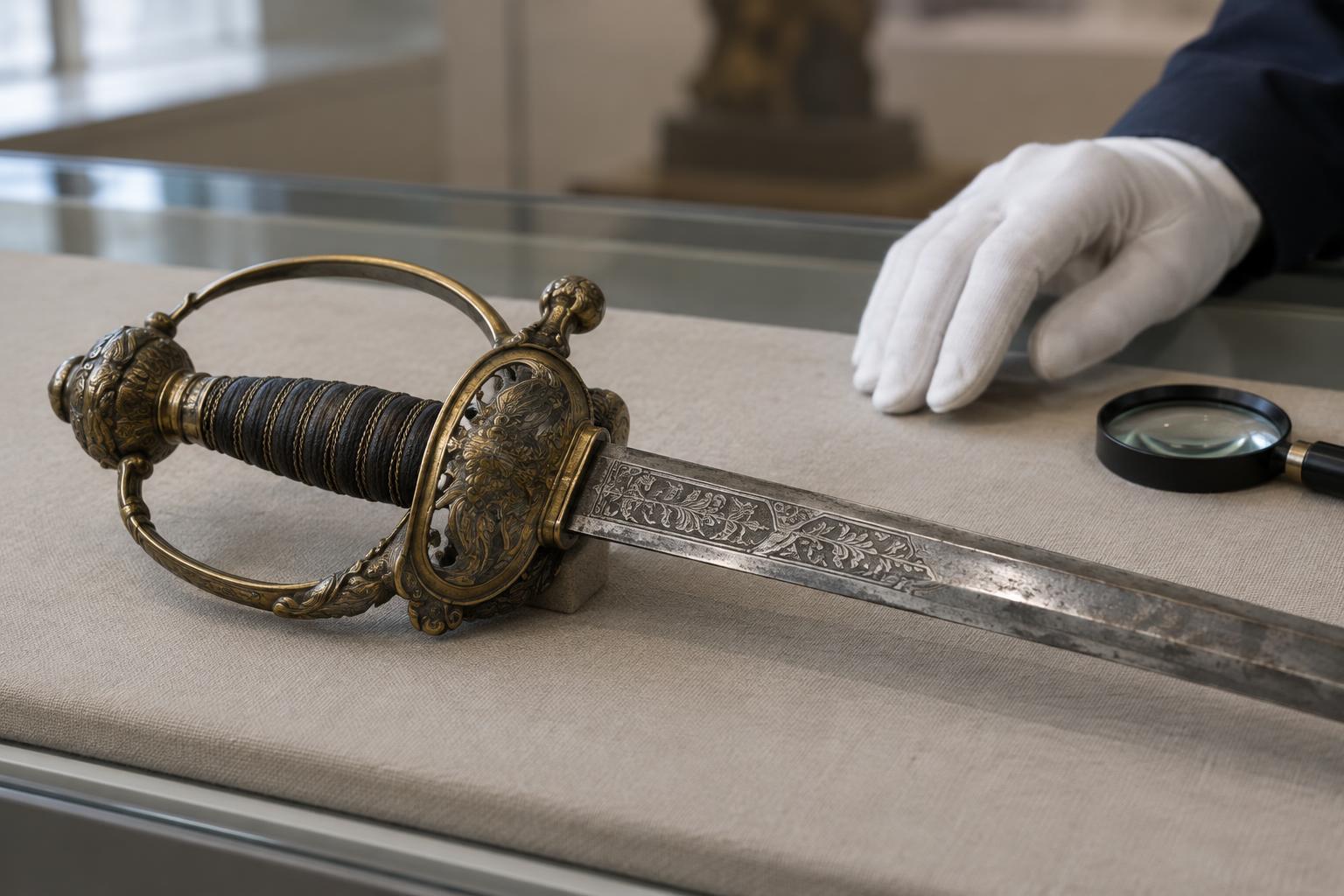
Ceremonial swords often reward close attention to details that would be easy to miss in a distant view: a decorated hilt, an inscribed blade, a carefully worked scabbard or materials selected for visual effect. Such choices can connect the object to a dynasty, a religious tradition or the aesthetic language of its time. They can also signal the resources devoted to making political authority visible.
Yet fine craftsmanship should not be mistaken for proof of an object’s original purpose. A richly decorated sword might have had several uses across its history, while a relatively restrained object might have acquired great ceremonial importance. Alterations complicate the picture further. A repaired fitting or later scabbard may show that custodians worked to keep the sword suitable for display and ritual, not that its history is less authentic.
Political meanings can outlive the ceremony
A coronation fixes an object in public memory, but it does not fix its meaning forever. Later rulers may retain a sword to emphasize continuity; they may change how it is used to suit a different understanding of monarchy or state. Political change can also make an older ceremony seem remote or contested. The same object may be viewed as a treasured work of craft, evidence of an institution’s past or a reminder of power that was unevenly shared.
This is why it helps to separate the claims a ceremony made from the conclusions a modern viewer might draw. A sword could be intended to represent justice without proving that justice was consistently delivered. Reading ritual critically does not require dismissing its artistry. It means asking whose authority the object affirmed, who took part in the ceremony and whose perspectives were absent from its formal account.
Reading a coronation sword in a museum
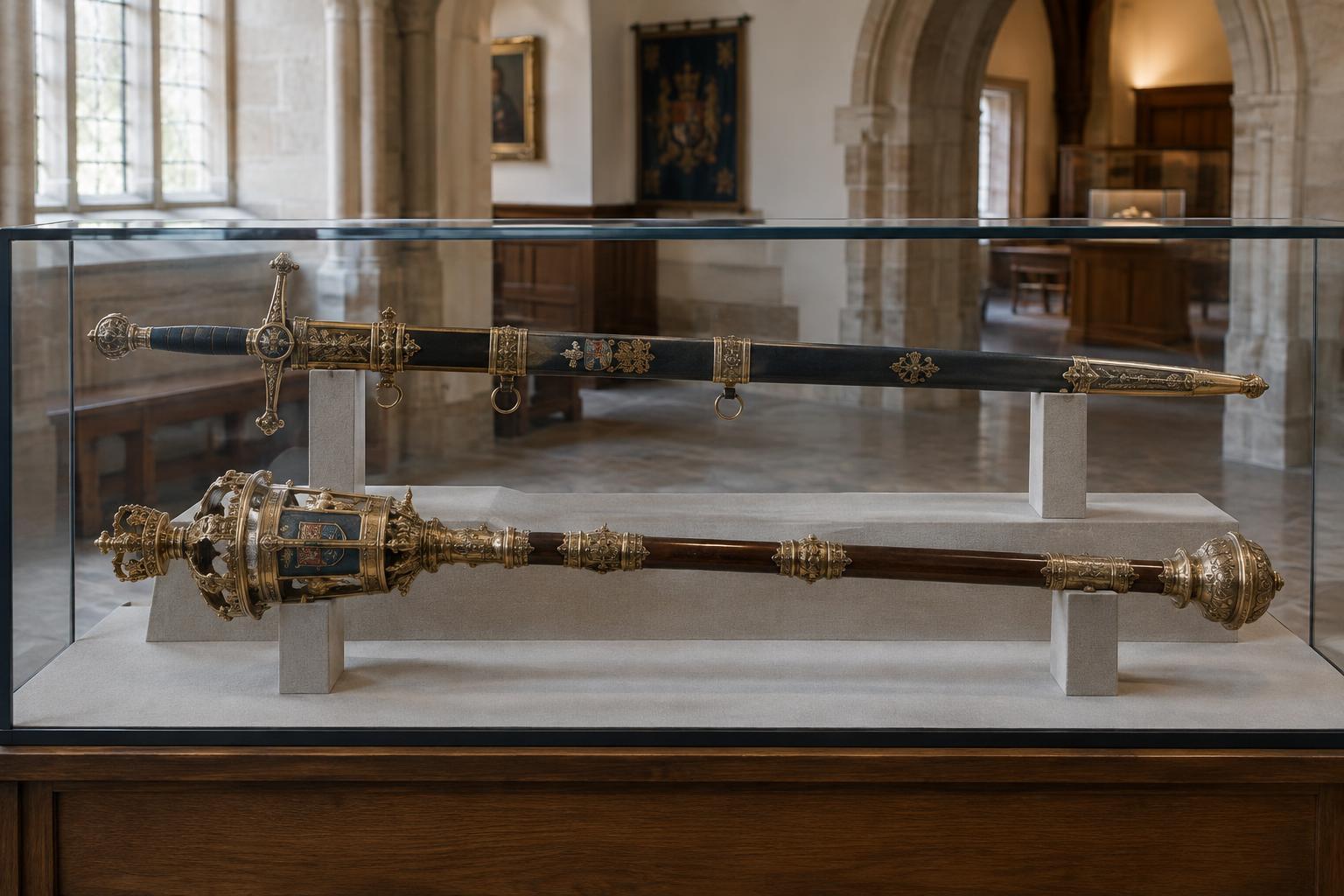
A museum case removes a sword from the movement, sound and human relationships of ceremony. Good interpretation can restore some of that context by identifying when the object entered ceremonial use, explaining its place in a procession or presentation, and distinguishing original components from later additions where the evidence allows. Images or descriptions of the wider regalia can help visitors understand why a sword appeared alongside crowns, robes and other objects.
Physical care is part of that interpretation. Stable display conditions and careful handling help preserve surfaces that carry evidence of manufacture, alteration and use. But conservation cannot answer every historical question. Where records are incomplete, an honest label can say so. The most useful question for a visitor is not only “Who owned this sword?” but “What did people ask this sword to mean, and how has that answer changed?”