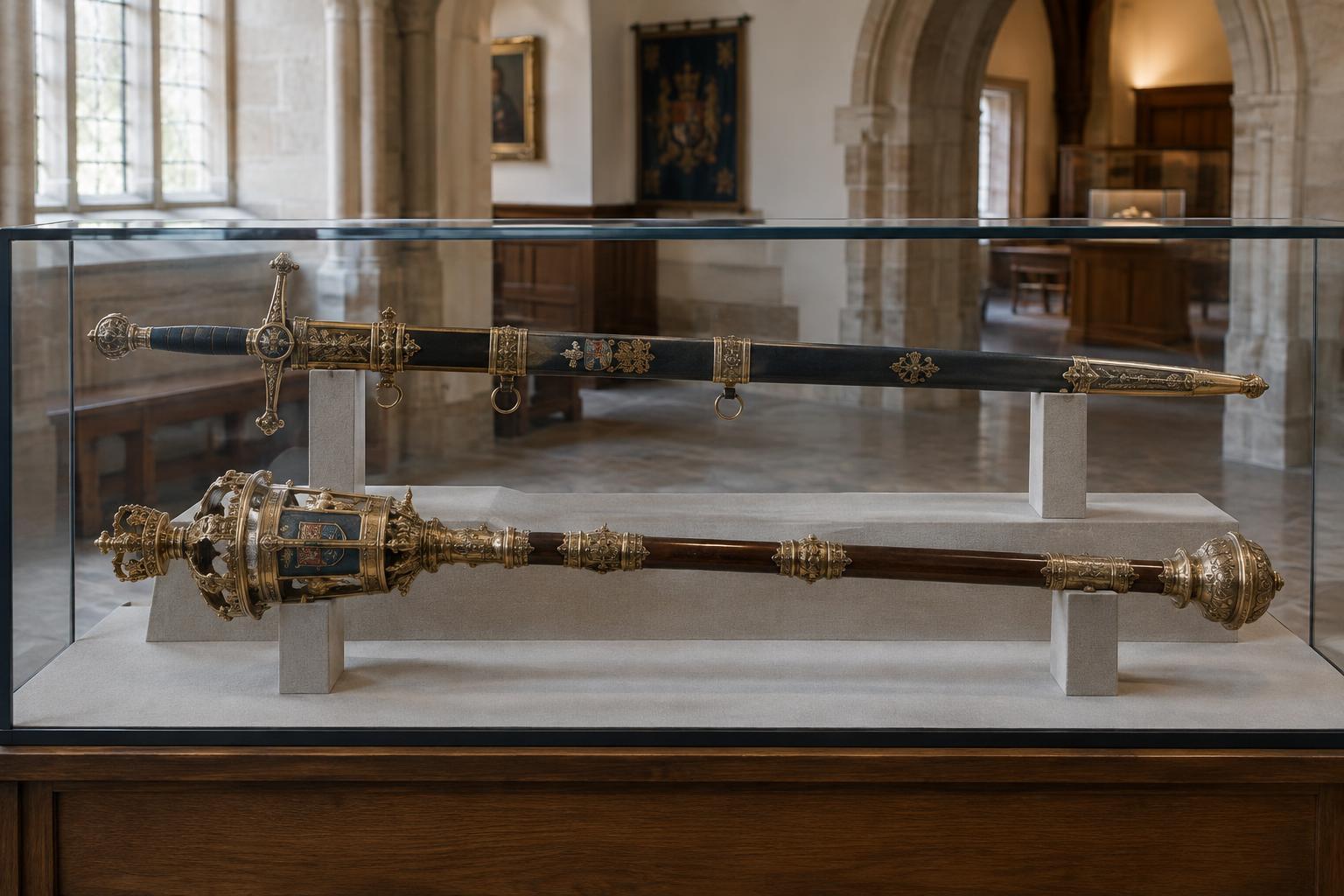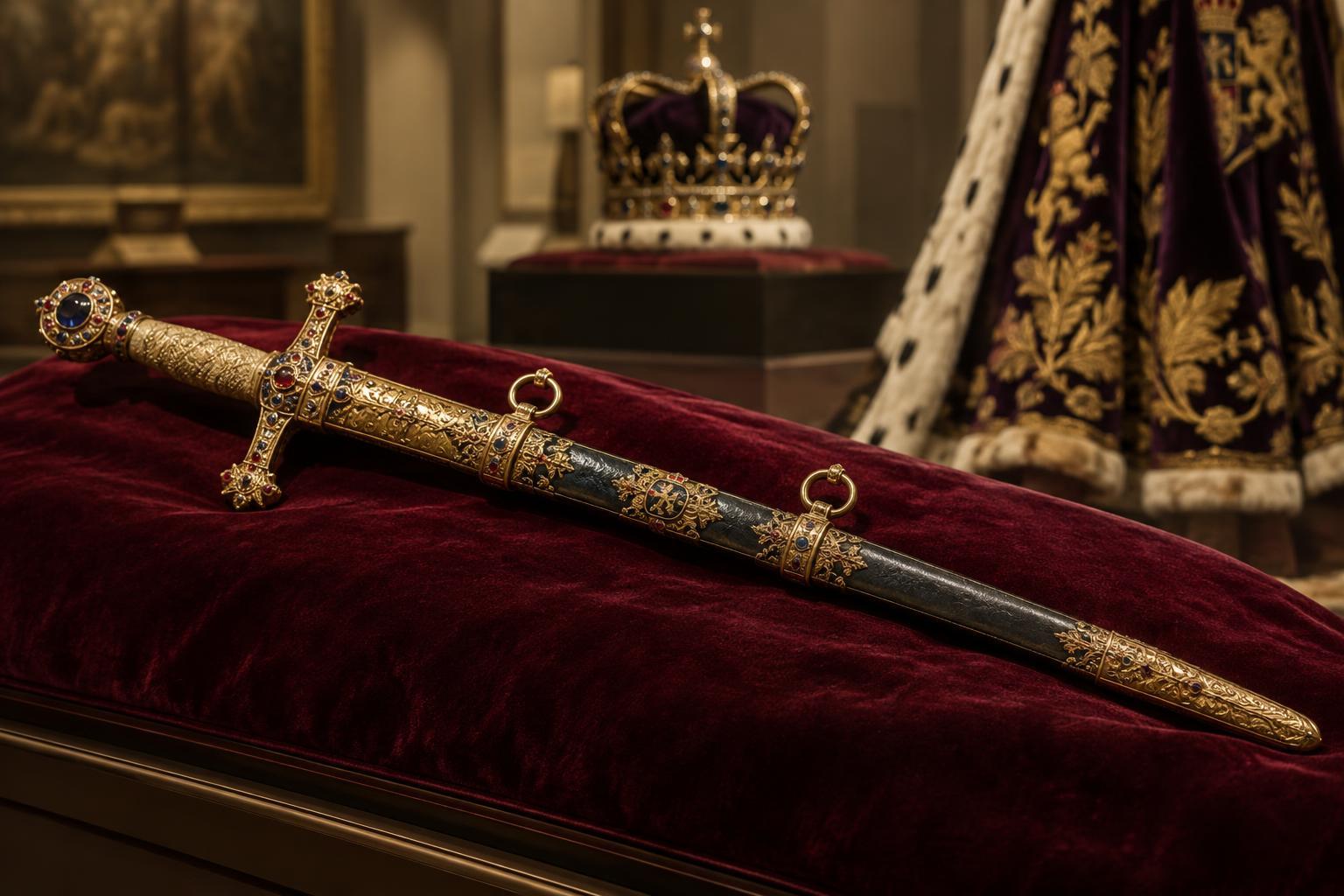
A gift with more than one purpose
Historic arms and armour could carry meanings beyond their practical form. A finely finished sword or suit of armour presented to a ruler, envoy or military leader might honour its recipient, demonstrate a workshop’s skill or mark a relationship between courts. Its value lay not only in costly materials but also in the ceremony of giving and the possibility that the object would be seen again.
A gift did not necessarily express uncomplicated friendship. It might acknowledge rank, seek goodwill, commemorate an agreement or make a claim about the giver’s status. Nor does the presence of an inscription prove that an object was made for a diplomatic exchange. Reading it as a gift requires supporting evidence, such as an inventory, a presentation account or a well-documented history of ownership.
Begin with the words—but read their placement too
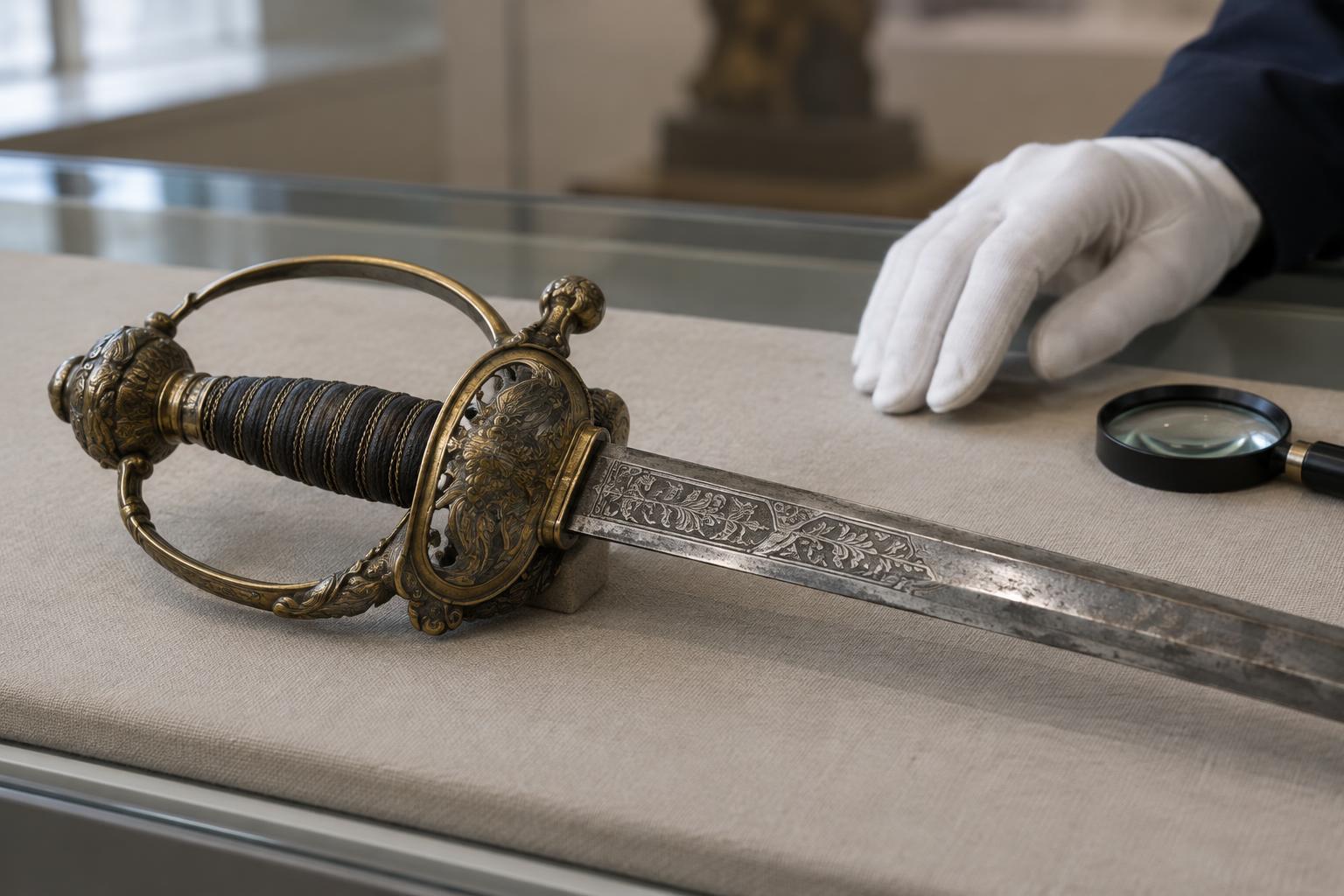
Inscriptions can name a giver or recipient, offer a blessing, state a title or record a date. They may also consist of a maker’s name, an emblematic phrase or a later owner’s mark. Before treating any text as the key to a diplomatic message, it helps to ask where it appears. Words prominently placed on a blade, hilt, scabbard or armour plate could have been intended for viewers, while marks in less visible areas may have served identification or workshop purposes.
The language and script matter, but translation alone is not enough. Titles can carry meanings that do not transfer neatly into modern English, and a familiar-looking phrase may belong to a broader tradition of praise or devotion. Letter forms, spelling and the technique used to apply the text can also help distinguish an original inscription from a later addition. Where a reading is uncertain, a museum label or catalogue should say so rather than silently turning a possibility into a fact.
Images could speak to several audiences
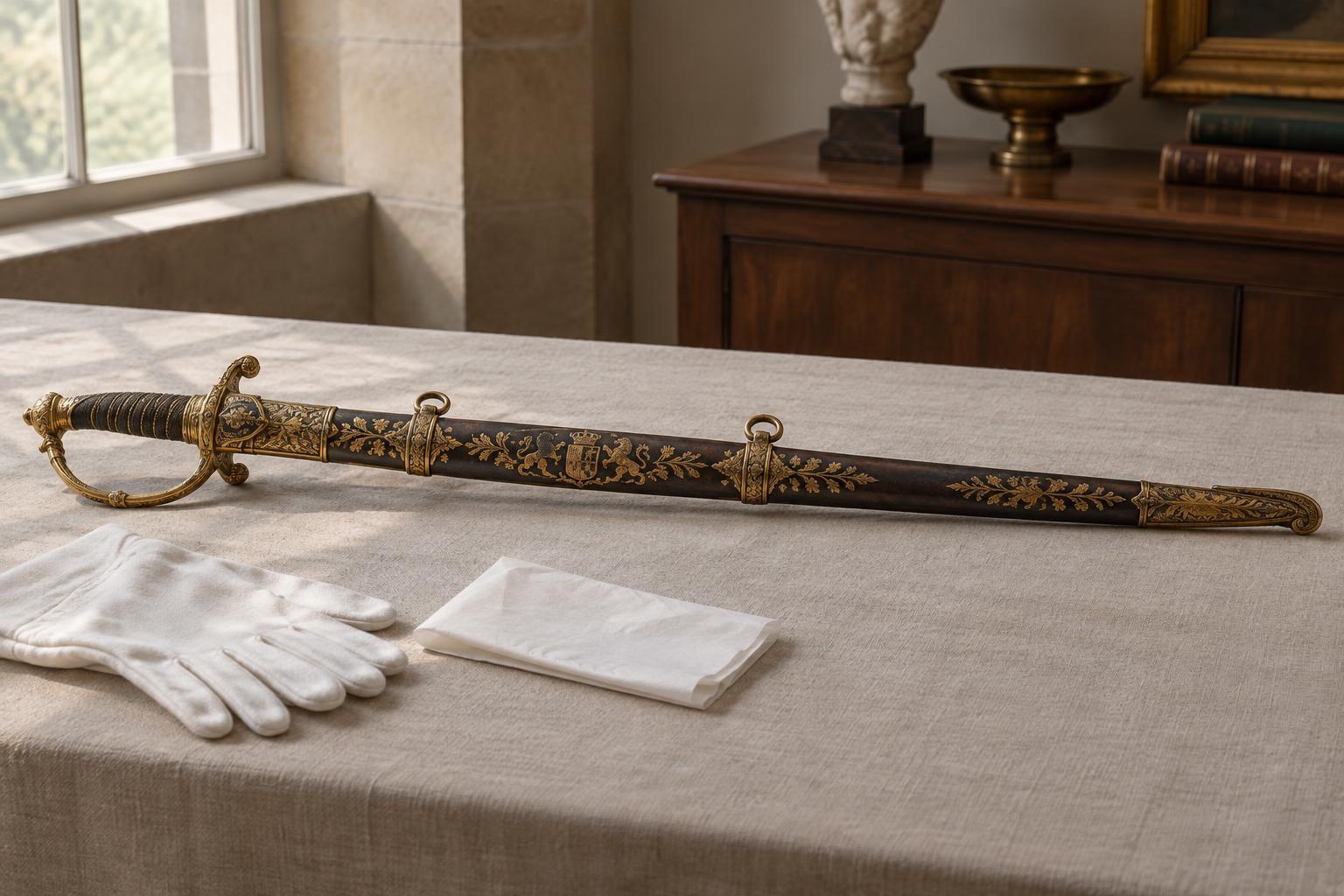
Coats of arms, dynastic signs, religious imagery, animals and floral designs could all contribute to a gift’s message. A recipient’s emblem might signal that the object was made with that person in mind. A giver’s emblem might identify the source of the honour. When the two appear together, their arrangement may suggest a relationship, though it cannot by itself tell us exactly how either party understood that relationship.
Decoration could also invite different readings across cultures. A motif admired by one audience for its sacred or political associations might be valued by another chiefly for its beauty or craftsmanship. Materials and techniques carried messages of their own: elaborate metalwork, fine textiles or carefully fitted components could make a workshop’s capabilities visible. Interpreters should resist assigning every ornament a fixed symbolic meaning. Sometimes a design reflects established artistic practice rather than a message devised for one occasion.
Look beyond the object to the exchange
The circumstances of presentation help explain what inscriptions and imagery were meant to do. Who arranged the gift, who delivered it and who was present to witness its reception? Was the object exchanged alongside other goods or documents? Answers to these questions can shift an interpretation. An object made to be carried in a public procession had a different audience from one stored among a ruler’s treasured possessions.
Survival can obscure that original setting. Scabbards, cases, textiles and accompanying papers may have been lost or separated from the principal object. A blade and hilt may have been paired at a later time, while armour could have been altered to suit a subsequent owner. Even a reliable record of presentation may describe a gift in terms too general to identify a surviving piece with certainty. These gaps are part of its history, not obstacles to be filled with confident guesses.
A careful way to read a museum object
A useful first step is to separate observation from interpretation. Record what can be seen: the location of inscriptions, the forms of emblems, the materials and any signs of alteration. Then ask what documentary evidence connects the object to a person or event. Finally, consider several plausible meanings in the social setting of the gift. This approach gives craftsmanship and symbolism their due without asking the decoration to prove more than it can.
Diplomatic gifts remind us that an object’s message was not complete when it left the workshop. It took shape through presentation, reception, display and later collecting. Reading historic arms and armour in this way does not reduce them to symbols or treat them merely as equipment. It allows them to be understood as carefully made objects through which people expressed honour, identity and relationships—sometimes clearly, and sometimes with questions that remain open.