Words on an object are not the whole story
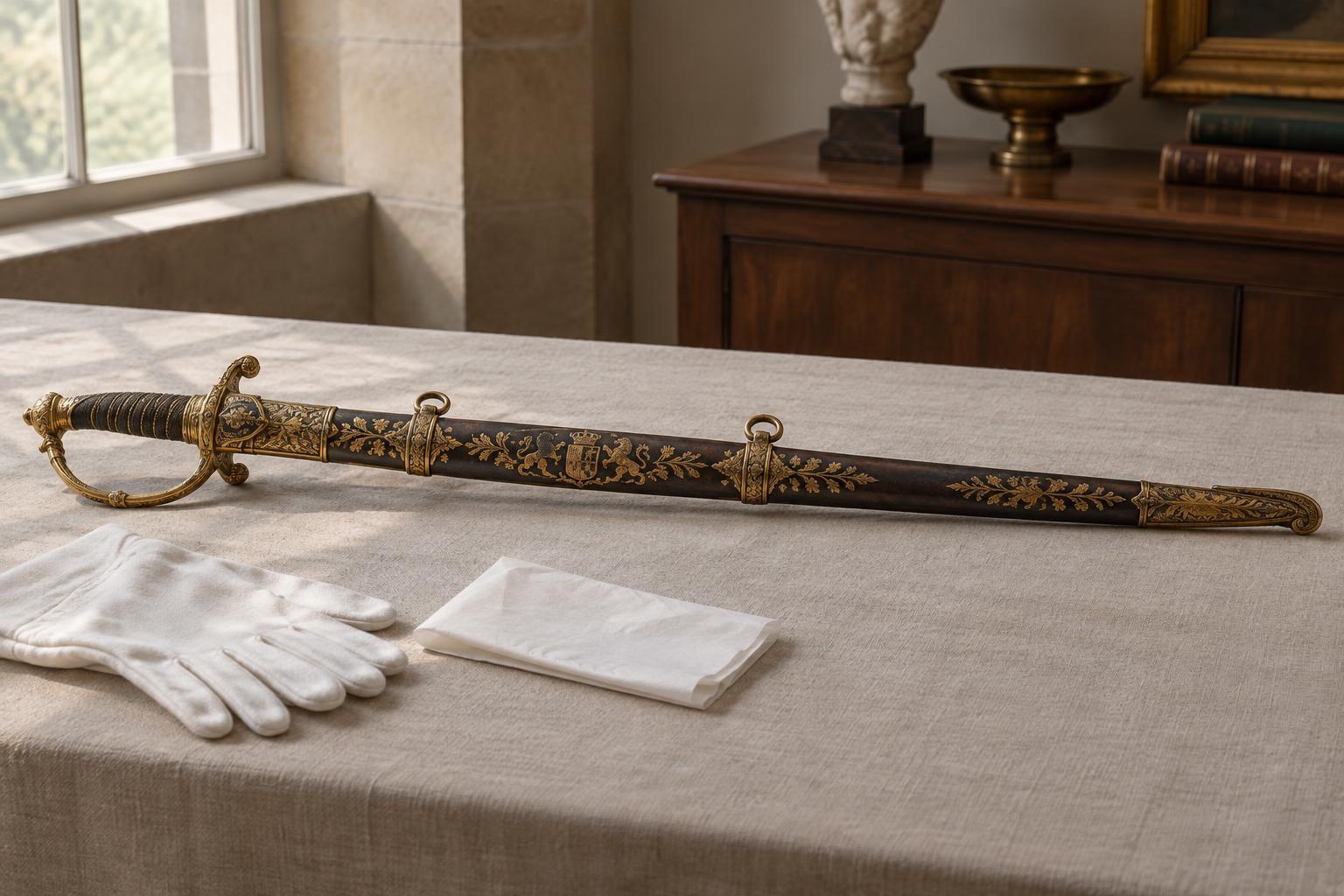
A motto can turn a weapon into a bearer of identity as well as a crafted object. A short phrase might express loyalty, invoke protection, proclaim a virtue or associate its owner with a group or tradition. Yet an inscription rarely explains itself. The same words can carry different implications depending on who commissioned them, where they appear and how the object was used or displayed.
It helps to distinguish a motto from other writing. A maker’s name, ownership mark, inventory number or later commemorative inscription may occupy similar space but serve a different purpose. Some objects also carry several kinds of text added at different times. Before interpreting a phrase as a statement by an original owner, a reader should ask whether the inscription belongs to the object’s first design, a subsequent alteration or a later history of collecting.
Language signals affiliation, but does not prove it
The choice of language can shape a motto’s tone. A phrase in a learned, religious or courtly language may lend formality, while wording in a local language may speak more directly to a familiar audience. Such choices can reflect fashion and convention as well as personal conviction. Language alone is not reliable proof of an owner’s birthplace, literacy, faith or political allegiance.
Translation needs equal care. A brief phrase may omit the context that would clarify its meaning, and older spellings or abbreviated words can leave room for more than one reading. Letter forms may be difficult to distinguish where engraving is worn or decorative. A responsible interpretation identifies uncertain letters, separates a literal translation from a broader interpretation and resists turning an ambiguous phrase into a confident biography.
Placement affects who could read the message
Where a motto sits can be as revealing as what it says. Text placed prominently along a blade or on a decorated hilt may form part of the object’s public appearance. Words tucked into a small fitting or an area normally obscured by a hand or scabbard may have been more intimate, or simply constrained by the available surface. Placement suggests possible audiences; it does not establish exactly when or by whom the words were read.
Orientation matters too. A phrase may face the person holding the object, someone looking at it from across a room or a viewer examining it while it rests in a case. The size of the letters, contrast with their background and relationship to nearby ornament all affect legibility. On paired surfaces, words and images may work together, inviting a viewer to connect a motto with an emblem rather than read it in isolation.
Craftsmanship is part of the message
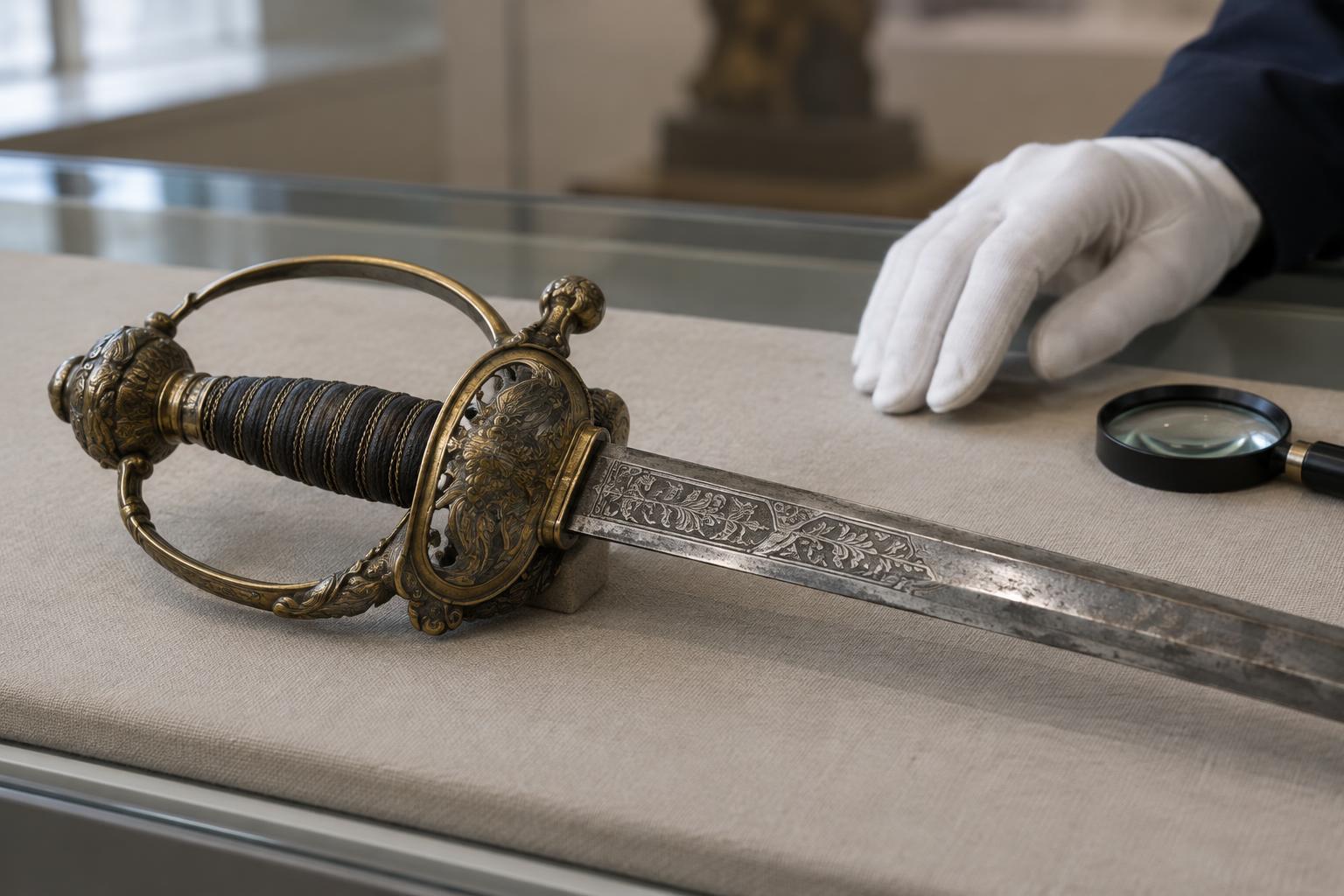
An inscription is a material feature, not just a transcript. Letters might be cut, inlaid, etched, painted or otherwise incorporated into a surface. Their execution can contribute to an object’s visual rhythm: formal lettering can reinforce symmetry, while text following a curve may draw attention to a particular fitting. The quality and complexity of this work may speak to the care invested in presentation, though they cannot by themselves establish an object’s status or original cost.
Materials also change what survives. Polishing, corrosion, repairs and replacement parts can interrupt words or alter the relationship between text and decoration. An apparently complete motto might be clearer today because a later hand renewed it; a fragmentary one may once have been easy to read. Close examination of the lettering alongside the surrounding surface helps distinguish what can still be observed from what must be inferred.
Reading mottoes in a museum or collection
A useful interpretation begins with the whole object. Note the wording as visible, its location, the technique used to form it and any associated images or marks. Then consider what is known about the object’s date, place, ownership and later changes. If that context is missing, the motto can still be discussed, but possibilities should remain possibilities. Similar phrases on other objects may offer context without proving that every instance had the same meaning.
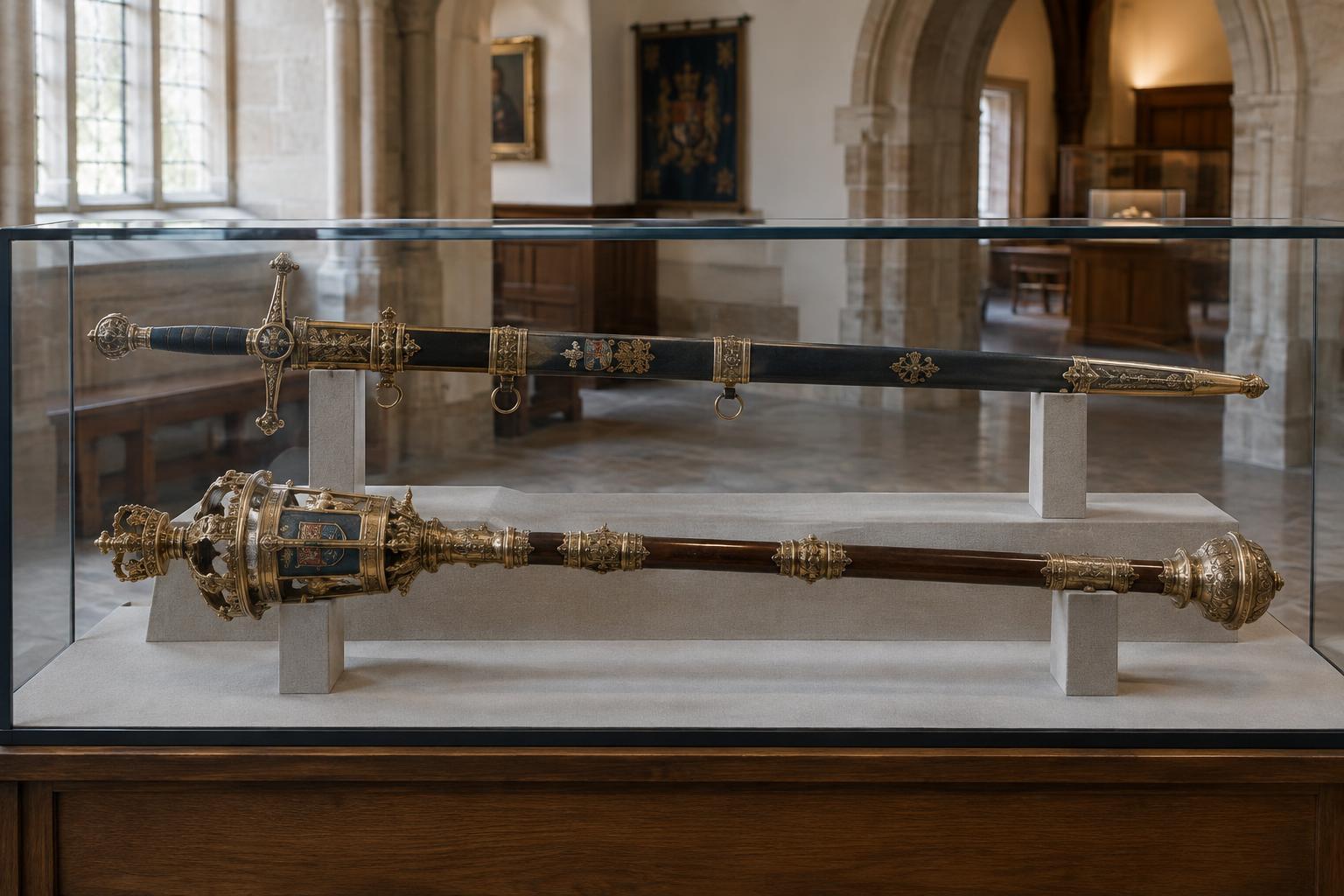
Good exhibition labels and collection records make those limits clear. They can present an original-language transcription alongside a cautious translation, explain where the inscription appears and state when its maker or intended audience is unknown. This approach does not diminish the motto’s appeal. It lets visitors see how language, placement and craftsmanship combine to make a historic object meaningful—and why its message may remain open to more than one reading.