More than decoration
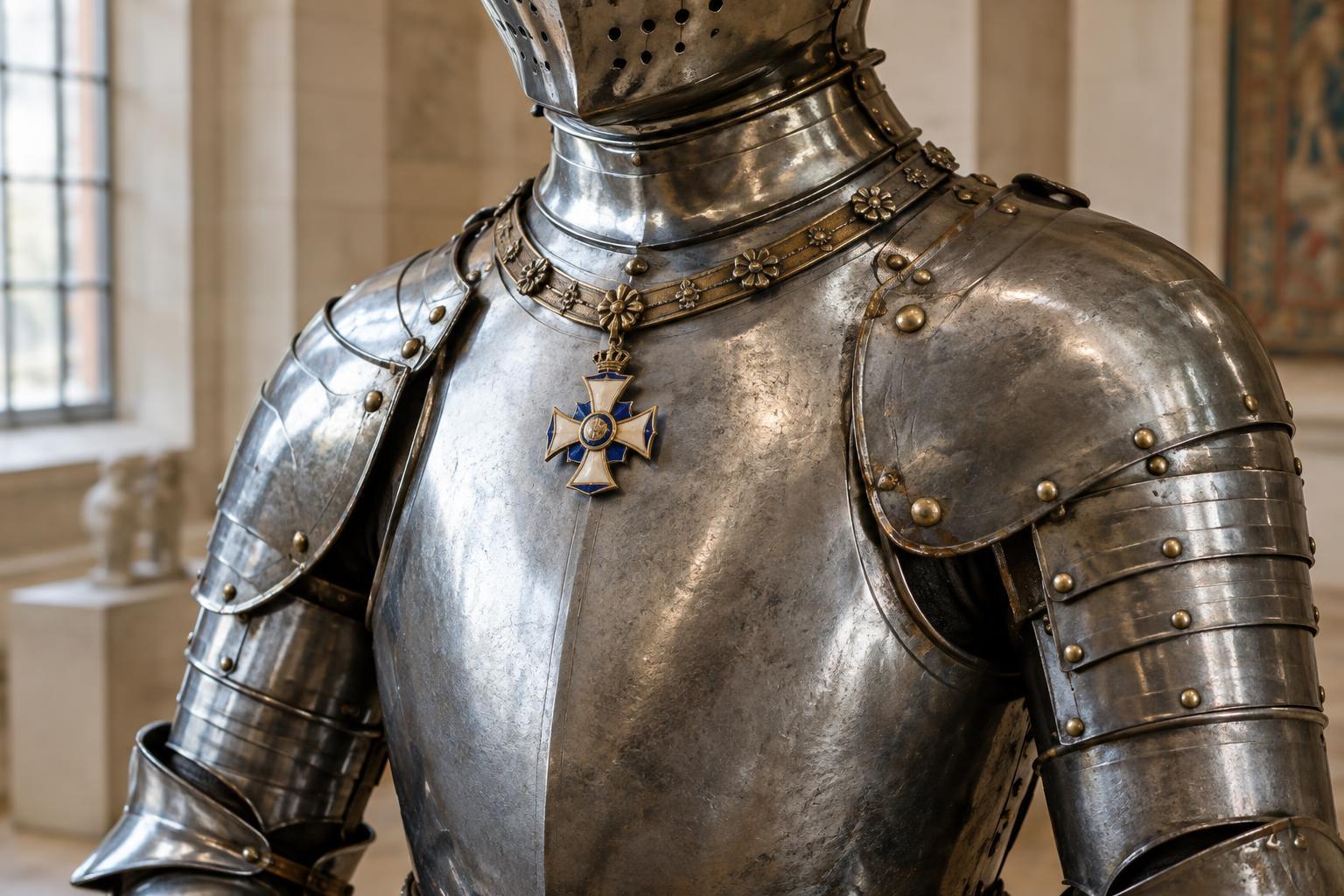
An emblem on armour may be small, yet it can change how a viewer understands the entire object. Crosses, collars, mottoes and badges associated with knightly orders conveyed ideas about affiliation, honour and service. They could also connect a wearer to a ruler, a religious tradition or a ceremonial community. On armour intended for display, such devices helped make status visible to an audience.
The emblem must still be read in context. A badge resembling that of an order does not, by itself, establish who wore the armour or prove that its owner held membership. It may refer to a patron, appear as part of a broader decorative scheme or have been added after the armour’s first use. Identifying the design is therefore a starting point, not the end of the interpretation.
How orders made identity visible
Knightly orders developed different insignia and rules for displaying them. Some used distinctive badges or collars; others were closely associated with particular crosses or mottoes. The Garter of the English Order of the Garter and the collar of the Order of the Golden Fleece are familiar examples of insignia that could communicate membership and prestige. Their meaning depended on setting: an emblem shown on a portrait, a garment and a piece of armour might serve related but not identical purposes.
On armour, an order’s device could form part of a carefully planned image of the wearer. It might appear beside heraldic arms, initials or other symbols, each contributing a different claim about identity. Heraldry commonly points toward a family or individual, while an order’s insignia points toward an institutional bond or honour. These distinctions help explain why a decorated suit can be both a crafted object and a statement about social position.
Placement, materials and intended audience
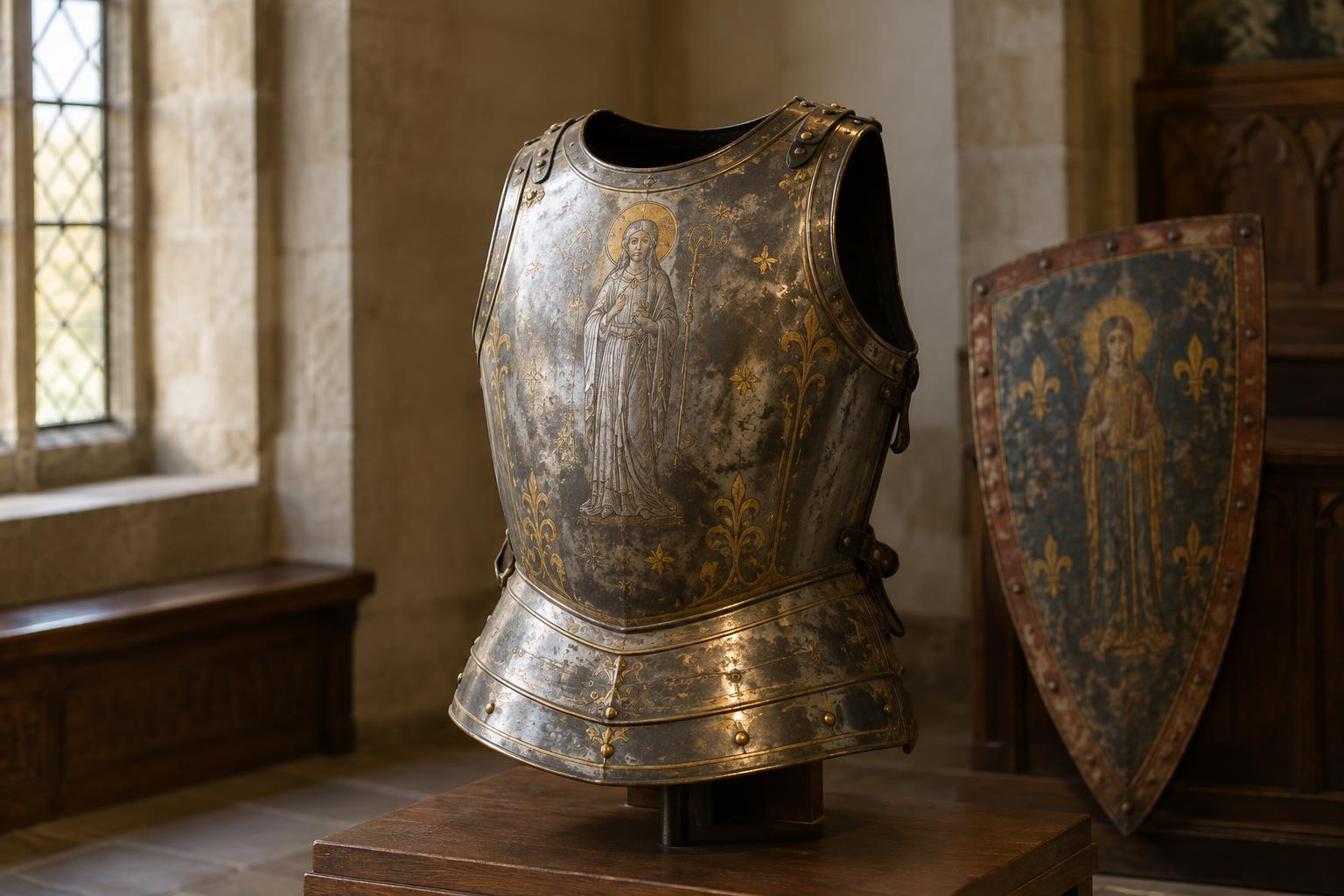
Where an emblem appears affects how it may have been seen. A device placed prominently on a breastplate invites a different reading from one worked into a border or repeated among ornamental motifs. Scale matters too. A bold, easily recognized insignia may have suited public display, while a smaller detail could reward close viewing. Neither placement alone nor elaborate workmanship proves a particular occasion or owner.
Craft techniques add another layer of meaning. An emblem might be etched into steel, formed in relief or emphasized with contrasting surface decoration. Its relationship to nearby ornament can indicate whether the armour was conceived as a coherent ensemble. For instance, a device that follows the same design, wear and finish as surrounding work may fit the original decorative plan. Even then, appearances need to be considered alongside documents and the object’s construction.
Why an emblem may be a later addition
Armour can have a long life after its first owner. Pieces may be repaired, brought together from different suits, adapted for display or altered to reflect a later understanding of their history. An order emblem could have been introduced during one of these stages. A later addition is not necessarily meaningless: it may reveal how subsequent owners or collectors wanted the armour to be seen. It does, however, change what the emblem can tell us about the armour’s original wearer.
Signs worth examining include differences in finish, wear or workmanship between the device and the surrounding surface. Its position might interrupt an earlier pattern, or records might describe the armour before the emblem appeared. Such clues require caution. Surfaces can be cleaned or restored, and surviving inventories may be incomplete. An interpretation is stronger when physical evidence and documented history support each other.
Reading the whole object
A useful museum label or collecting record separates observation from inference. It can identify the visible emblem, explain its association with an order and state whether that association establishes membership or remains uncertain. It can also note when the device appears to belong to a later phase of the object’s history. Clear distinctions preserve the interest of the symbol without asking it to prove more than it can.
Seen this way, an emblem is part of a continuing story rather than a simple name tag. Its design speaks to ideals of honour and belonging; its craftsmanship shows how those ideals were made visible; and its placement or alteration may reveal changing uses of the armour. Looking closely at all three gives the viewer a richer account of both the object and the people who valued it.