Decoration was part of armour’s identity
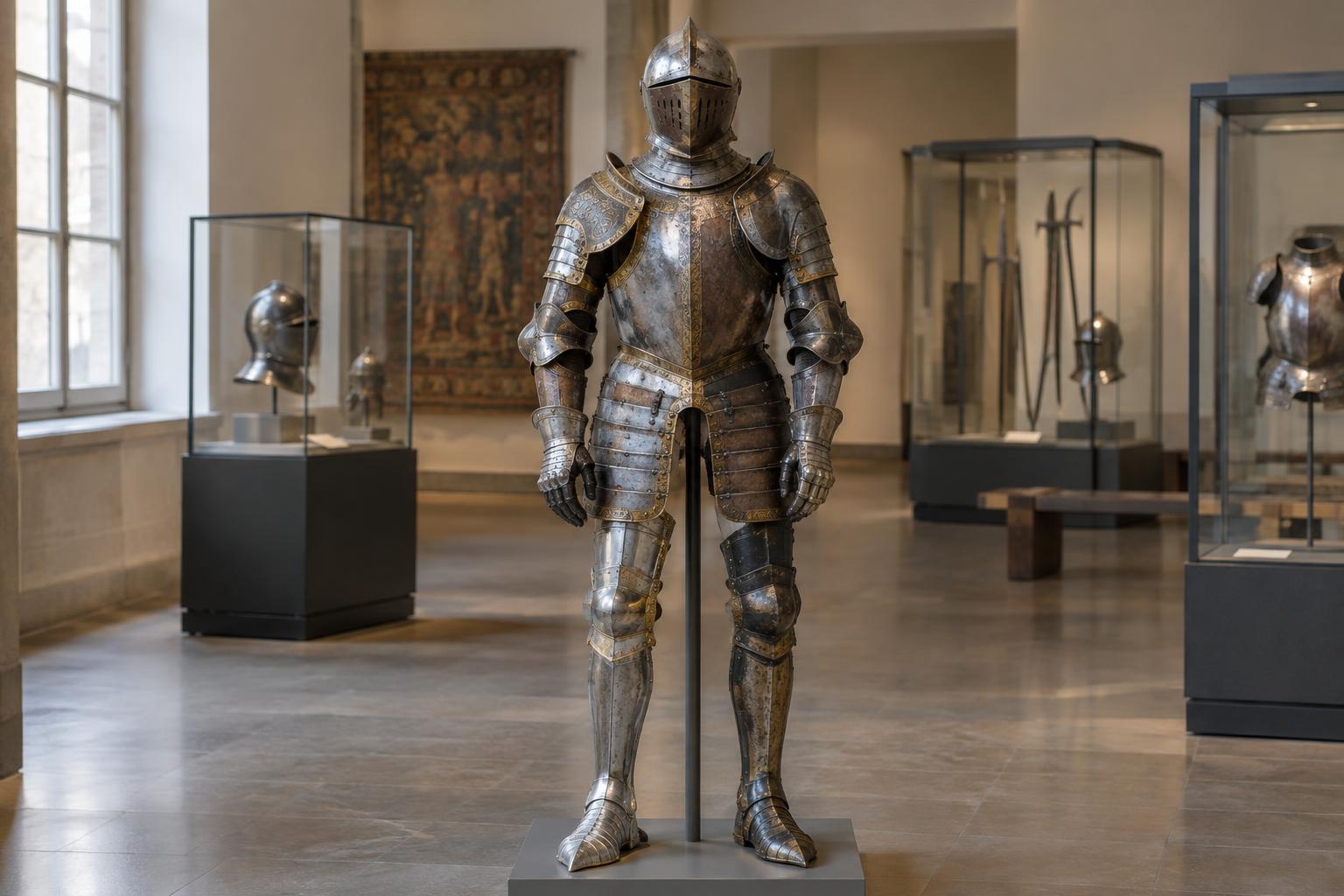
Historic armour was not always left as plain metal. On pieces made for display, ceremony, or high-status wear, decoration could turn a protective object into a statement of taste, wealth, and allegiance. Borders, figures, foliage, and heraldic devices might relate to the wearer or to the setting in which the armour would be seen. These designs also drew attention to a maker’s skill and to the shaped surfaces of the armour itself.
Etching, engraving, and gilding are often mentioned together, but they describe different effects and processes. Etching and engraving create marks in a surface; gilding adds a layer or accent of gold. A single piece may use all three. Recognising the distinction helps a visitor or collector describe what is visible without assuming that every bright line was engraved or every dark pattern was painted.
Etching: designs formed in the metal’s surface
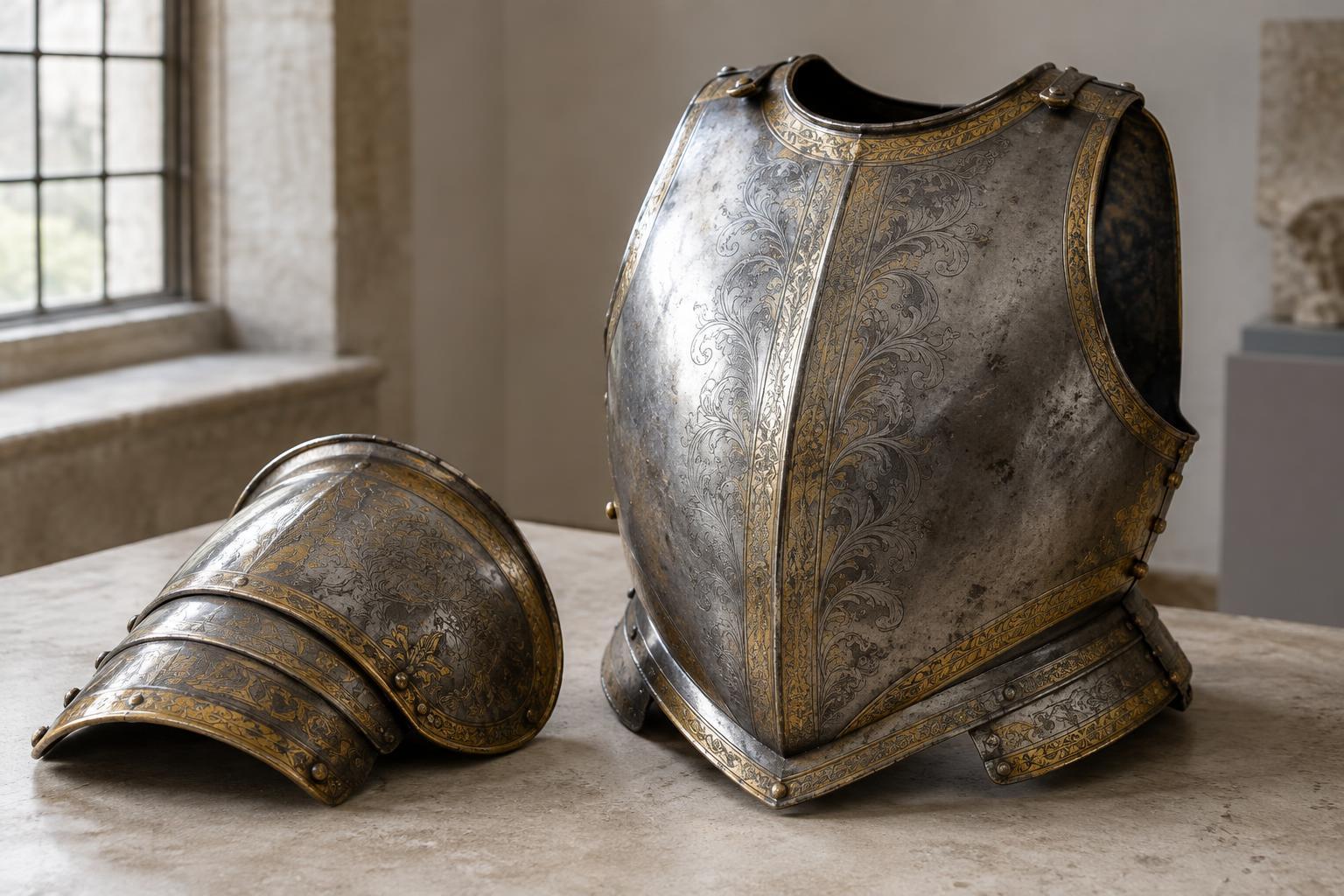
On metal armour, etching generally means that selected areas of a surface were exposed to a corrosive substance while the surrounding metal was protected. The exposed areas were bitten into the metal, leaving a design with a different texture or level from the protected surface. Armourers could use this approach for broad decorative fields as well as intricate outlines. Repeating patterns, shaded figures, and contrasting bands could be incorporated into the overall design of a plate.
Etched decoration may appear dark against polished metal, especially where its recessed or textured areas hold a dark finish. It can also be difficult to read under uneven lighting or beneath later coatings. A dark line alone does not prove that a design is etched: dirt, applied colour, engraving, and later alteration can produce similar impressions. The most useful visual question is whether the pattern seems to belong to a deliberately textured or lowered area of the metal, rather than merely sitting on top of it.
Engraving: lines cut by a tool
Engraving creates a design by cutting into the surface with a sharp tool. On armour, it could provide lettering, fine outlines, small motifs, or details within a larger composition. An engraved line may have a crisp, controlled character, although its appearance depends on the metal, the tool, the maker’s hand, and centuries of wear. Engraving could stand alone or sharpen features within etched decoration.
The distinction between an engraved and an etched line is not always obvious in a photograph or a display case. Both can leave recessed marks, and polishing may soften their edges. Light falling across a surface can help reveal changes in depth and texture, but confident identification may require close examination by a specialist. For interpretation, it is often better to say that a motif is incised or appears cut than to assign a technique on the strength of one visual clue.
Gilding: gold as colour, contrast, and emphasis
Gilding is the application of gold to a surface. On decorated armour, it could make borders glow, pick out figures, or distinguish a coat of arms from the metal around it. Gold was valued not only for its colour but also for the associations of expense and prestige it brought to an object. Different historic methods could produce gilt effects, so the word gilded describes an appearance more readily than it identifies one precise method.
Gilding was frequently paired with recessed decoration. Gold within an etched pattern, for example, could stand out against darker areas and polished steel. Its distribution matters: a few gilded details may guide the eye toward an emblem, while extensive gilding can make the armour read as a unified ceremonial ensemble. Surviving gold may be patchy, however. Abrasion, cleaning, corrosion, and later treatment can all change the balance of colour that a maker intended.
Reading a decorated surface with care
Begin with the whole object before studying individual marks. Does decoration follow the edges and contours of the armour, frame a central image, or link several plates through a repeated scheme? Then look for differences between cut lines, textured fields, darkened recesses, and areas of gold. These observations describe how the design works even when its exact technique remains uncertain.
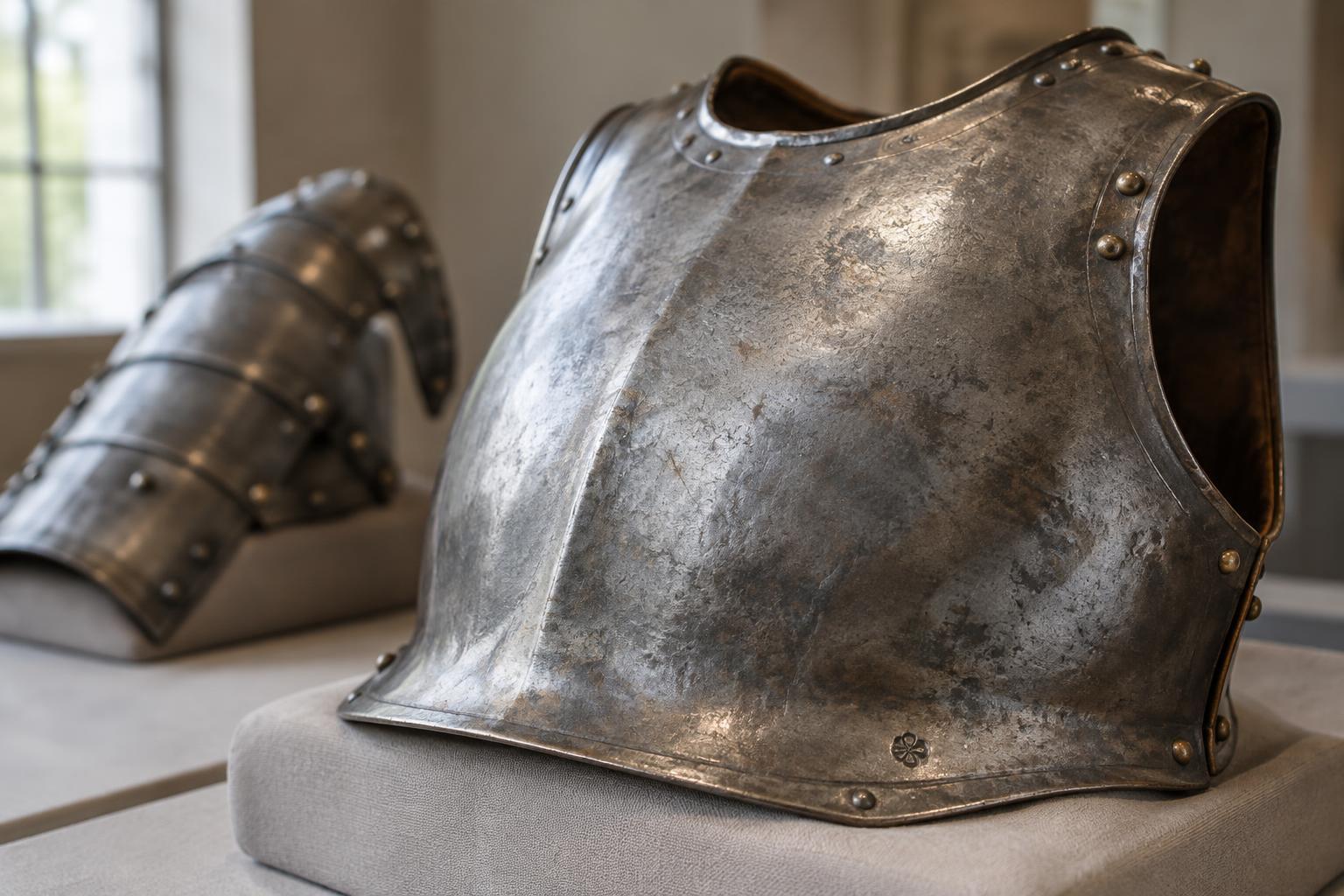
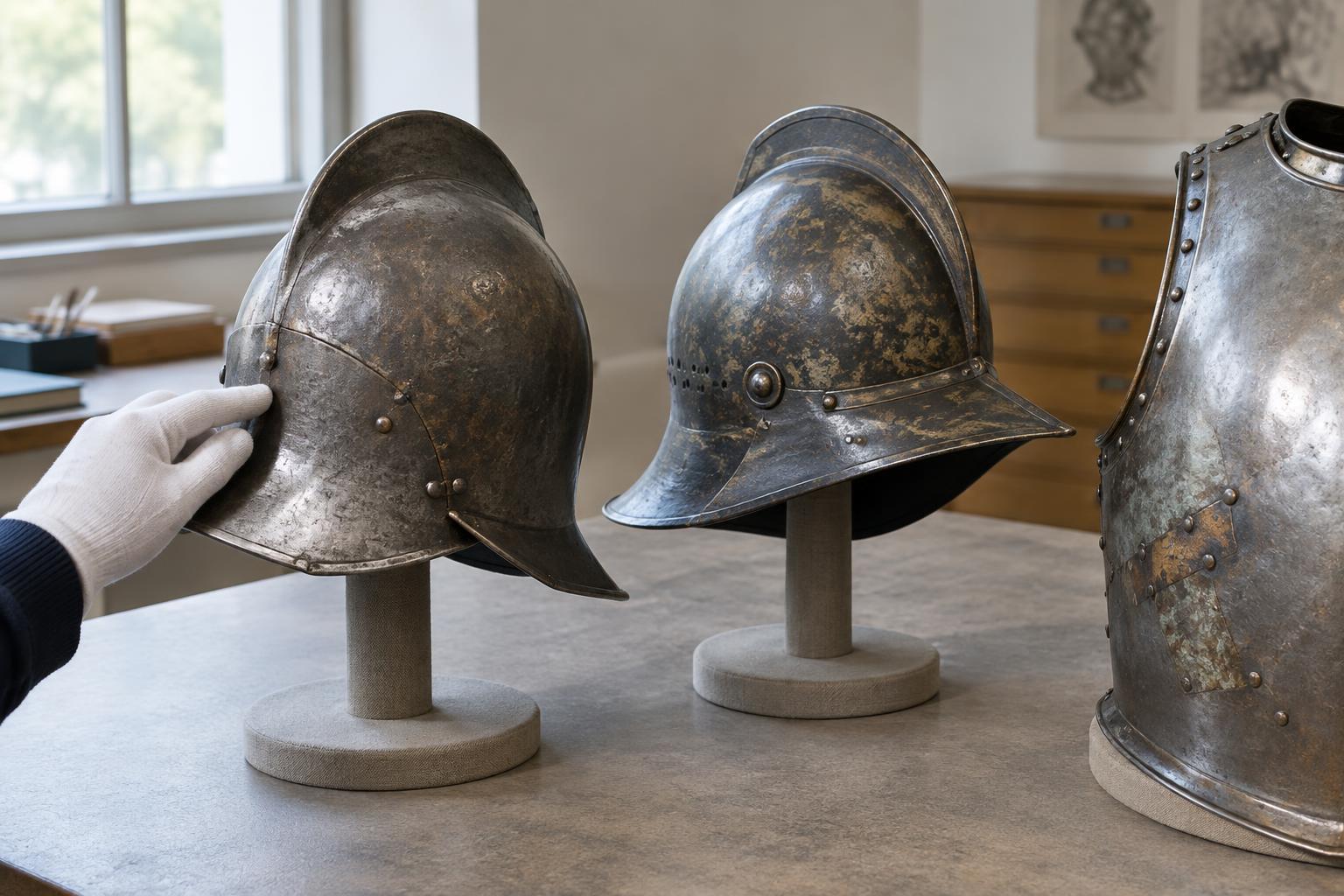
A surface also records the object’s later history. Replacement parts, old repairs, polishing, and conservation treatments may sit beside original decoration. Brightness is not a reliable measure of age, and a dull finish is not necessarily untouched. Museum labels and object records can offer useful context, but careful description remains valuable: it keeps visible evidence separate from interpretation. Etching, engraving, and gilding reward that approach because their effects overlap, yet each contributes something distinct to armour’s visual language.