Two purposes, many kinds of armour
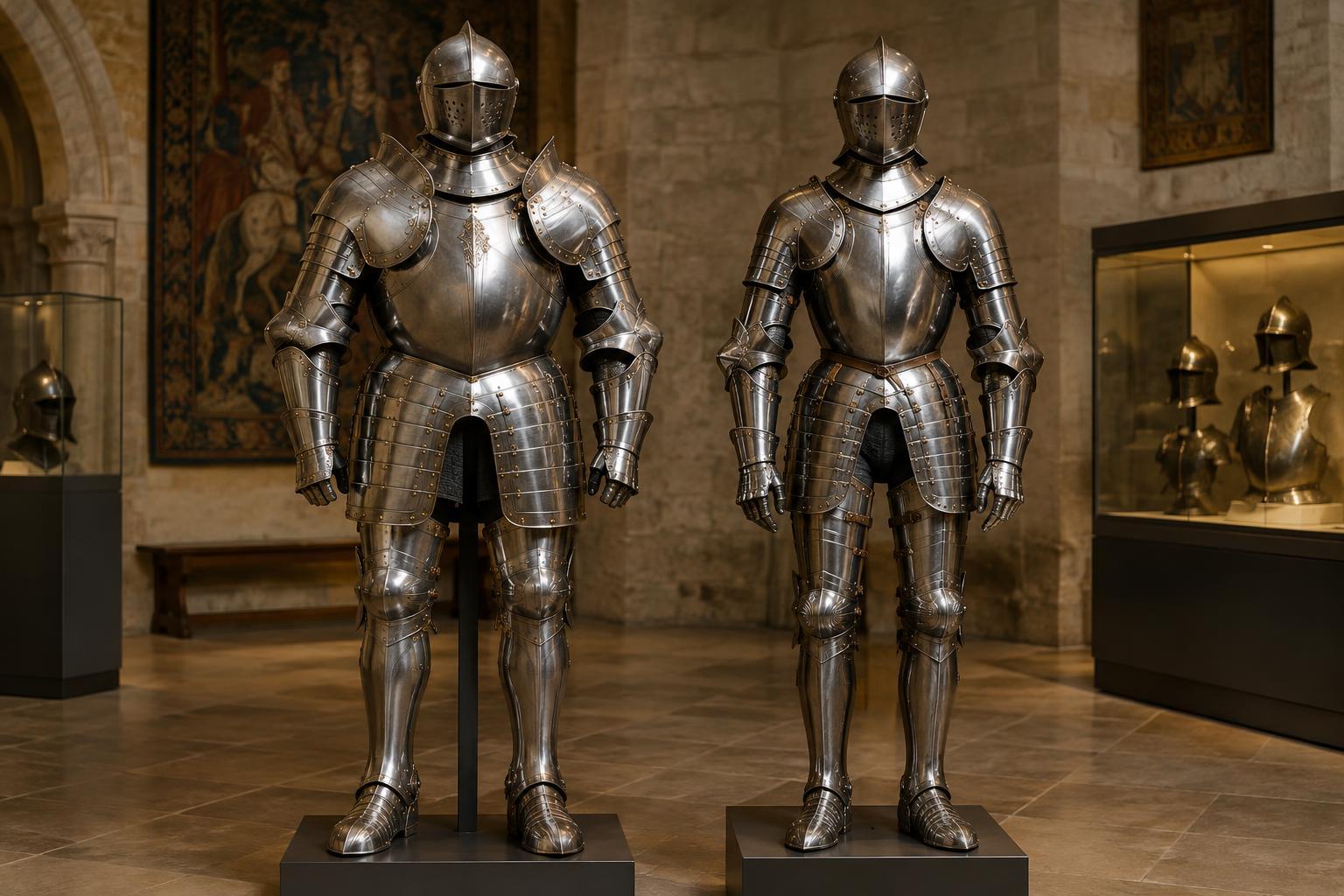
Field armour was intended for military use, where a wearer might need to ride, walk, see changing threats and remain equipped for an uncertain length of time. Tournament armour was made for organised contests with rules, equipment and forms of contact that varied by place and occasion. Neither term describes a single design. A mounted joust, a contest fought on foot and a display of horsemanship could call for very different equipment.
This distinction also changed over time. Some pieces were made chiefly for one setting, while others could serve more than one purpose. A harness might accept alternative components for a particular event, and an older piece might later be modified. Rather than asking whether tournament armour was simply heavier or more elaborate, it is more useful to ask what a particular suit was expected to do.
Coverage, movement and the expected impact
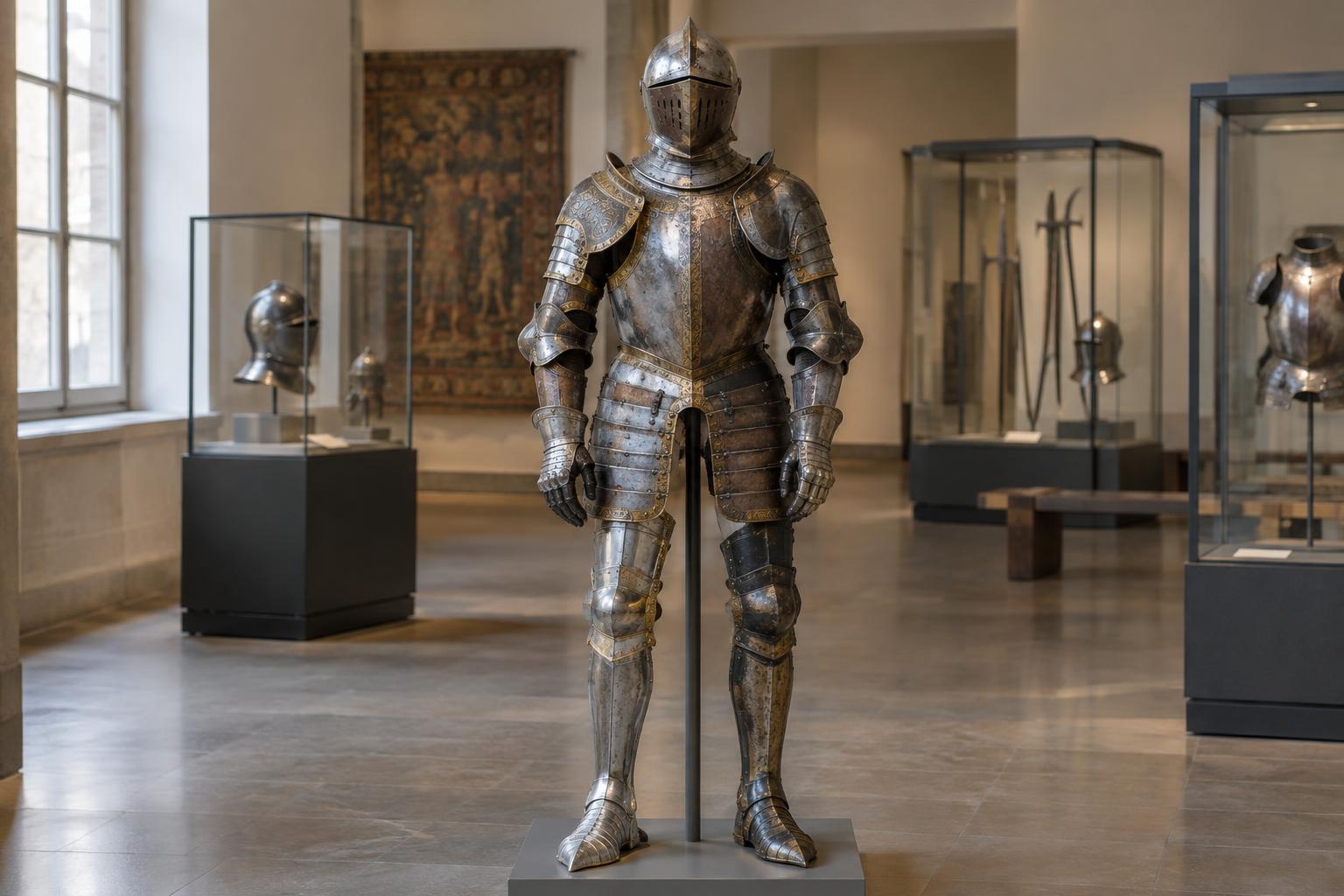
Field armour balanced protection with a broad range of movement. Its wearer needed to mount and dismount, turn the head, use the arms and manage uneven ground. Articulated plates at the shoulders, elbows, waist and knees helped make that possible. Coverage was not necessarily uniform: choices depended on the wearer’s role, resources and the equipment available.
Specialised tournament armour could make a different bargain. Where the direction or target of a blow was more predictable, a maker could reinforce exposed areas and accept restrictions that would be awkward elsewhere. Some jousting equipment, for example, emphasised protection around the head and upper body. Armour for combat on foot might instead provide protection suited to a different set of movements and permitted blows. No single description of tournament armour fits every event.
The apparent bulk of a surviving piece can therefore mislead. Thick plate or limited head movement may reflect a narrowly defined contest rather than a general preference for cumbersome armour. Conversely, a suit used in a tournament need not have been built solely for tournaments.
Fittings reveal intended use
Shape is only part of the story. Attachment points, removable plates and the way pieces fit together can be especially revealing. Extra defences could be added for a contest, while alternative parts changed how the same core harness functioned. Such arrangements allowed a patron to obtain equipment for several settings without commissioning an entirely separate suit for each one.
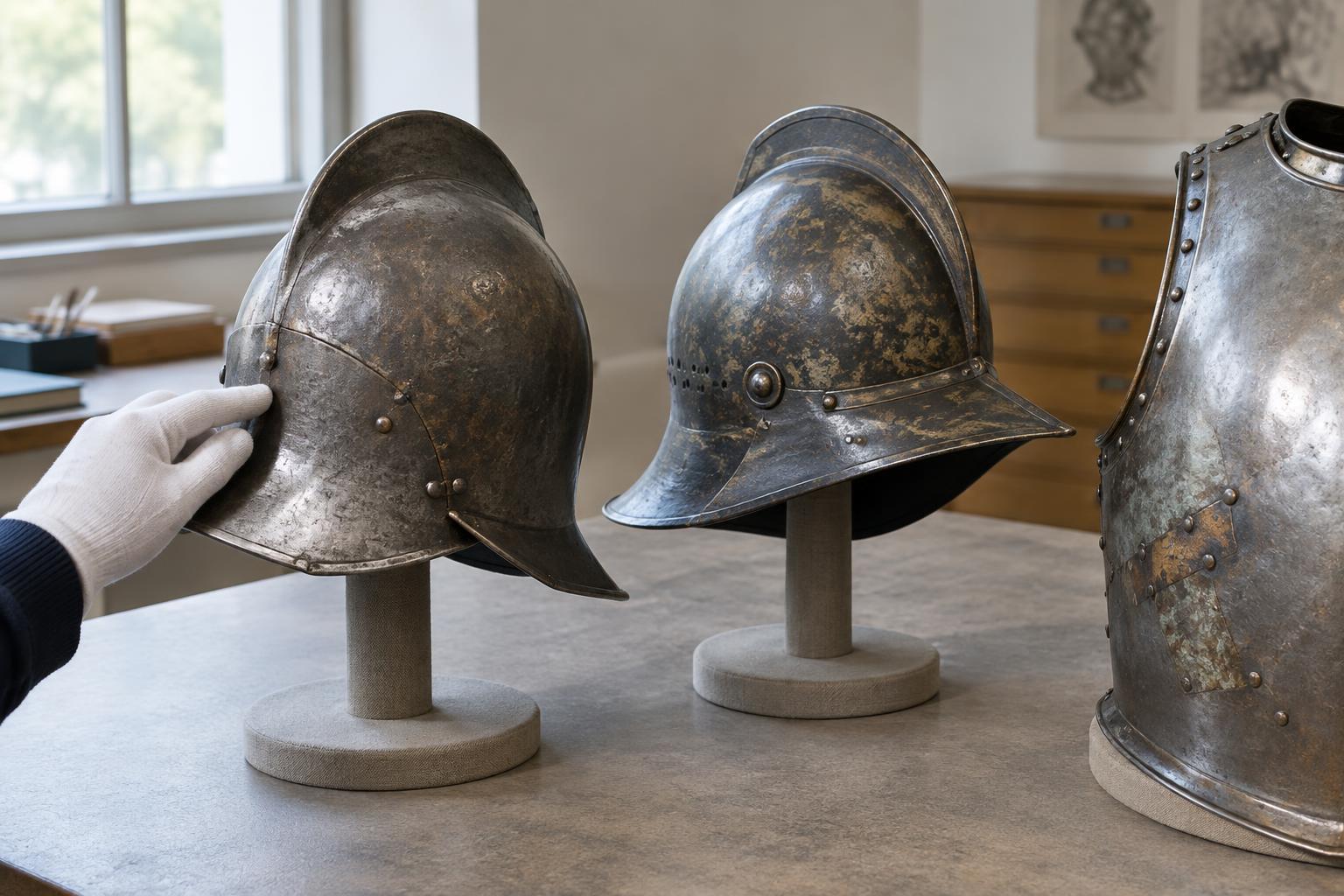
Small features should be interpreted with care. A hole or bracket may once have supported a component now lost; a mismatched plate may be a later replacement. Museum displays often present armour as a complete figure, but surviving harnesses may have been assembled from pieces with different histories. Looking closely at joins and fittings helps explain design decisions without assuming every displayed component was originally worn together.
Finish, display and status
Both field and tournament armour could be carefully finished. Smoothly worked surfaces, shaped edges and coordinated decoration demonstrated a maker’s skill as well as a patron’s means. Tournament settings offered a conspicuous audience, so visual effect could carry particular importance. Bold forms and decorative detail helped communicate identity and status at an event as well as protect the wearer.
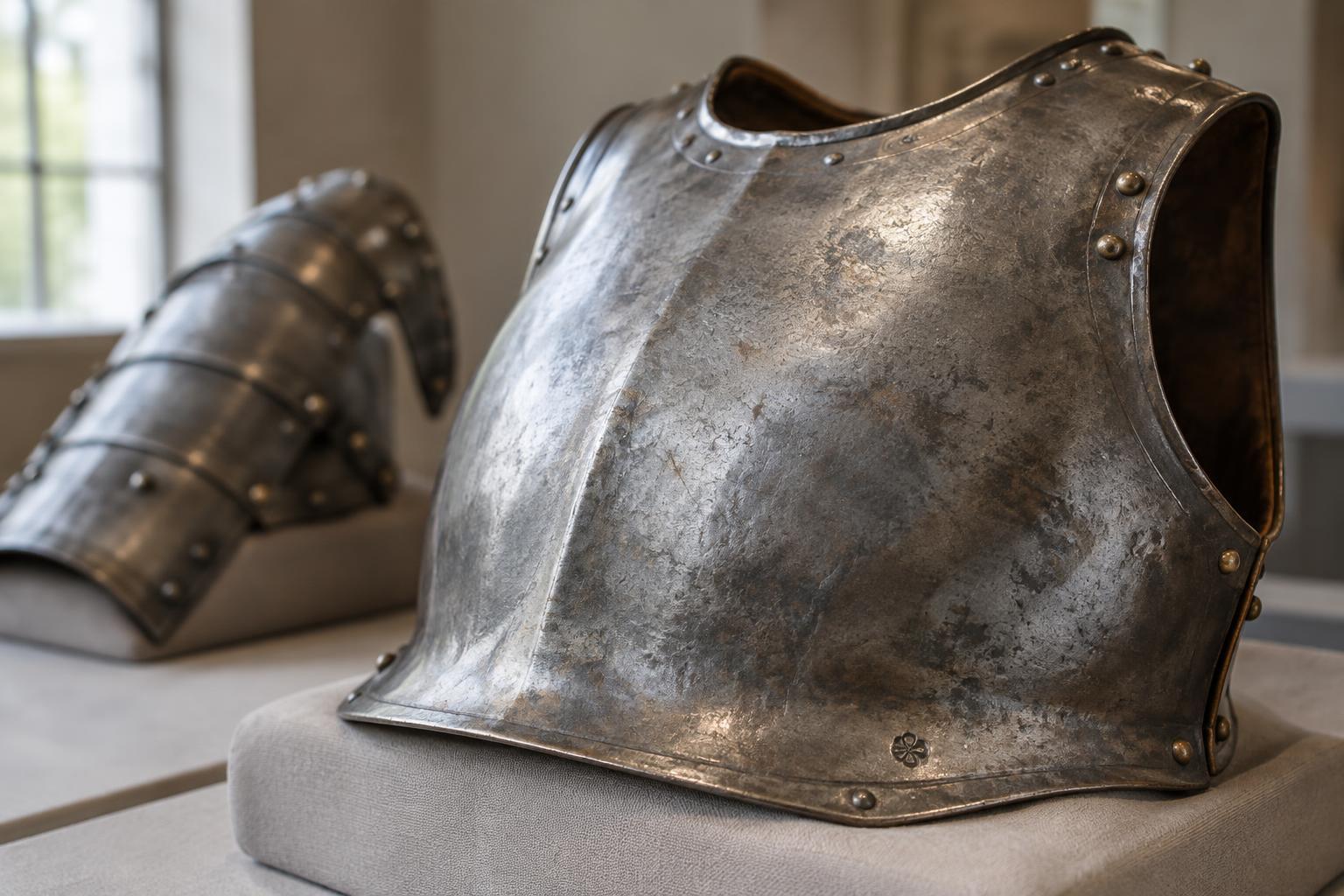
It would be a mistake, however, to treat decoration as proof of tournament use or plainness as proof of battlefield use. Field armour could also be prestigious, and tournament pieces could be comparatively restrained. Surface finishes have their own histories: wear, cleaning, corrosion and restoration may alter what a viewer sees today. A polished museum object does not necessarily show exactly how its surface appeared when it was first worn.
Reading a suit in the museum
A useful comparison begins with the whole object. How freely does the helmet seem to turn? Where are the strongest defences concentrated? Do the plates suggest interchangeable parts, and do their finish and fit appear consistent? These questions can connect craftsmanship to purpose, although appearance alone may not settle where or how a suit was used.
The clearest interpretation combines physical features with any surviving records of ownership, alteration and collection. When that evidence is incomplete, a cautious label is more informative than a confident guess. Tournament and field armour are not opposites on a simple scale from heavy to light or ornate to plain. They are responses to overlapping demands: protection, movement, display and the circumstances in which a wearer expected to be seen.