Before the armorer: iron from the furnace
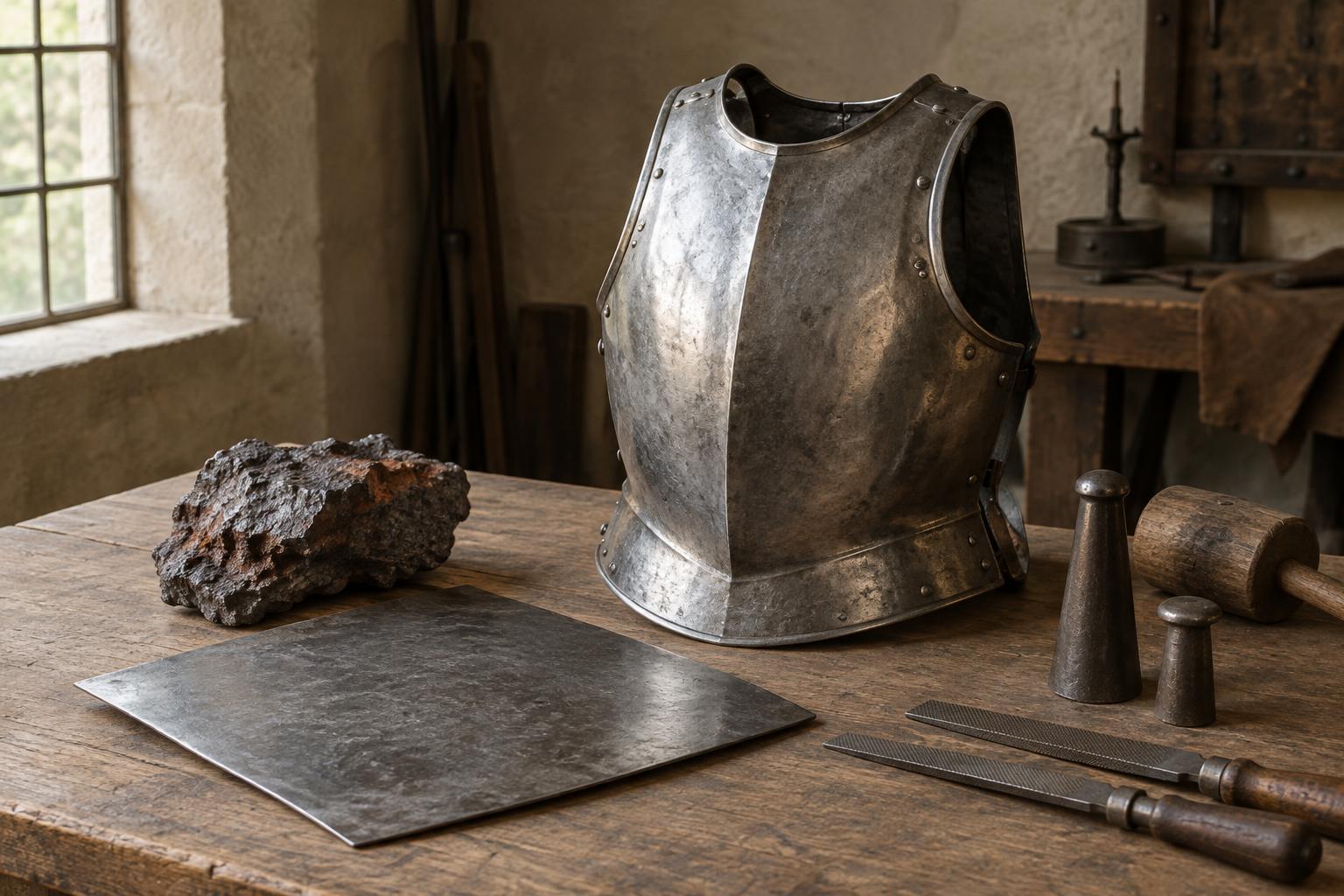
A finished breastplate can look like a single, effortless sheet of metal. Its story began with ore, fuel and furnace work. In much of medieval Europe, iron was produced in a bloomery, where heating ore with charcoal yielded a spongy mass called a bloom rather than a pool of liquid metal. Repeated working helped consolidate that bloom and remove some of the trapped slag. The resulting metal could vary considerably, even within one piece.
Iron and steel were not always sharply separated in workshop practice. Steel contains more carbon than relatively low-carbon wrought iron, but historic makers encountered a range of compositions. Materials, furnaces and methods also changed across regions and centuries. Later iron production offered armourers other sources of metal; no single route from ore to breastplate describes every surviving example.
Selecting material for the job
An armourer needed stock that could be worked into the intended form. Sheets or bars might pass through several hands before reaching the armour workshop. Their quality mattered, but so did consistency: a hidden flaw or an uneven patch of metal could complicate shaping. Historic plate armour was made from both iron and steel, and different components of one harness need not have been made from identical material.
The choice involved more than a simple preference for the hardest possible metal. A breastplate had to combine shape, thickness, manageable weight and resilience. Some steel armour could be hardened through heat treatment, but such treatment was not universal, and results depended on the metal itself as well as the skill of the workshop. Looking at an object alone, it is rarely safe to assume exactly how its metal was prepared.
Giving flat metal a human shape
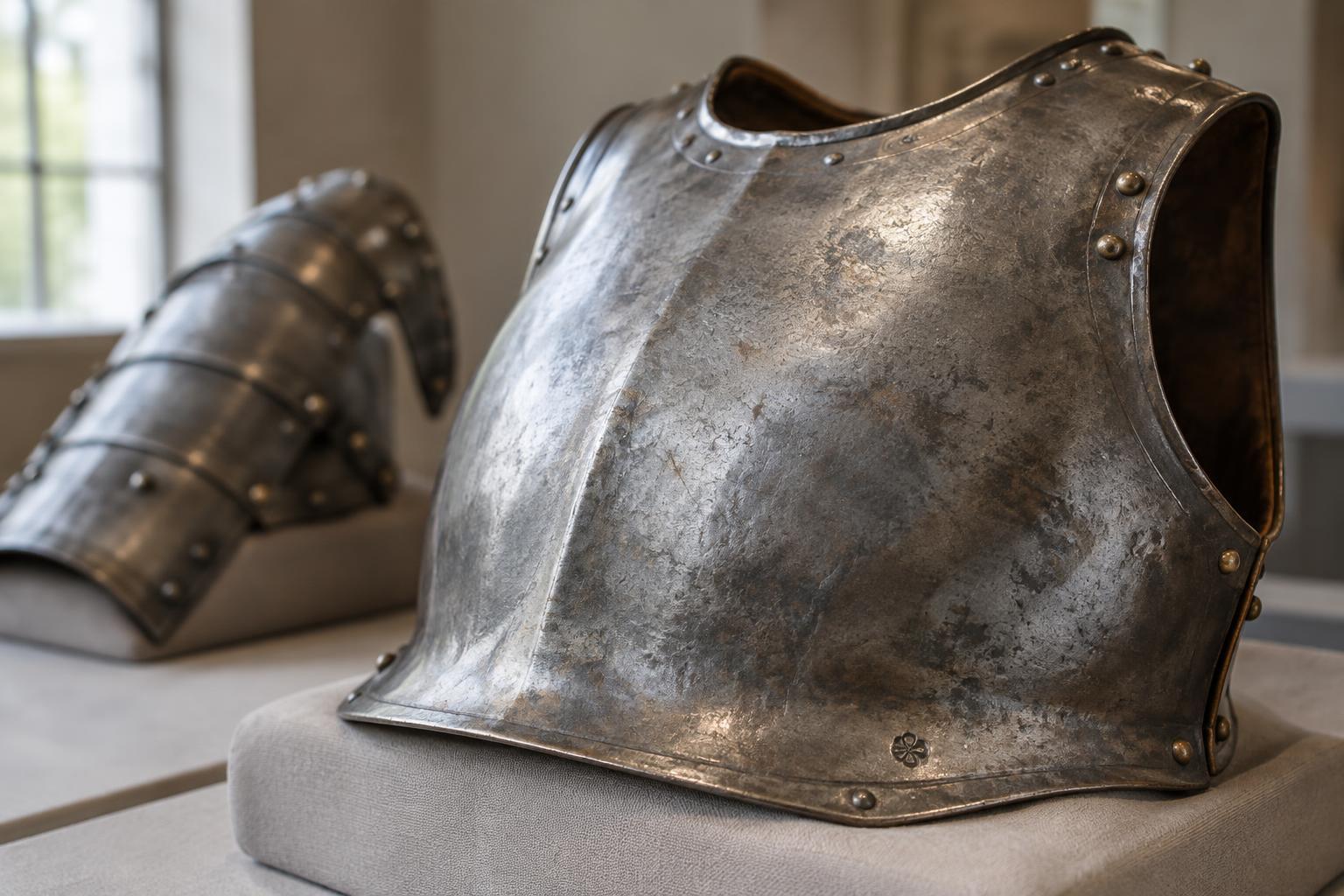
Turning metal stock into a breastplate required careful shaping rather than merely bending a sheet around a body. Armourers raised and formed plates with hammers over suitable supports, adjusting curves and edges as they worked. A chest plate’s rounded surface, its transition toward the waist and the fit of adjoining pieces all affected how it sat on a wearer. Surviving armour often shows that shape was considered across the whole body, not one plate in isolation.
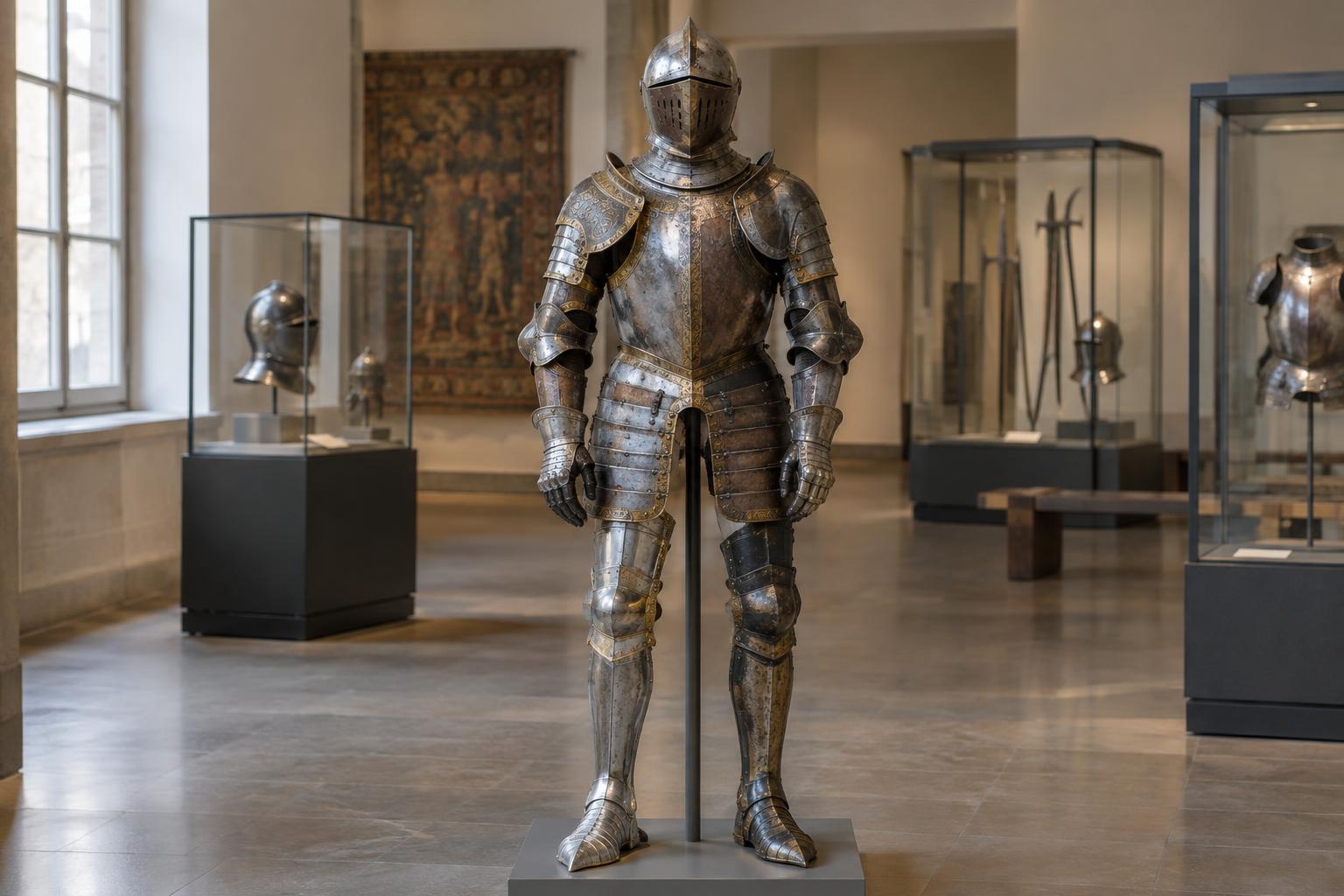
The armourer also had to plan for movement and assembly. Openings, edges and points where other components attached were part of the design from an early stage. A harness could bring together plates of different sizes and forms, joined by straps, rivets or other fittings. Its apparent unity was the product of many separate decisions, each made in relation to the wearer and the rest of the equipment.
The other trades visible in a finished harness
Metal shaping was only one part of the work. Polishers could refine surfaces; leatherworkers supplied straps; makers of buckles, rivets and other fittings contributed small but essential components. Textiles might be used for linings or points of attachment. Depending on the armour and its intended setting, engravers and other decorative specialists could add ornament. In some workshops, one craftsperson may have performed several tasks; elsewhere, the work was more divided.
These additions help explain why armour belongs to the history of dress and display as well as metalworking. A carefully finished surface could emphasize form, while decorative borders, etched designs or contrasting materials could communicate taste and status. Not every breastplate was richly ornamented. Plain surfaces deserve attention too: their contours and finish reflect demanding work, even when decoration does not draw the eye.
Reading the object without losing its history
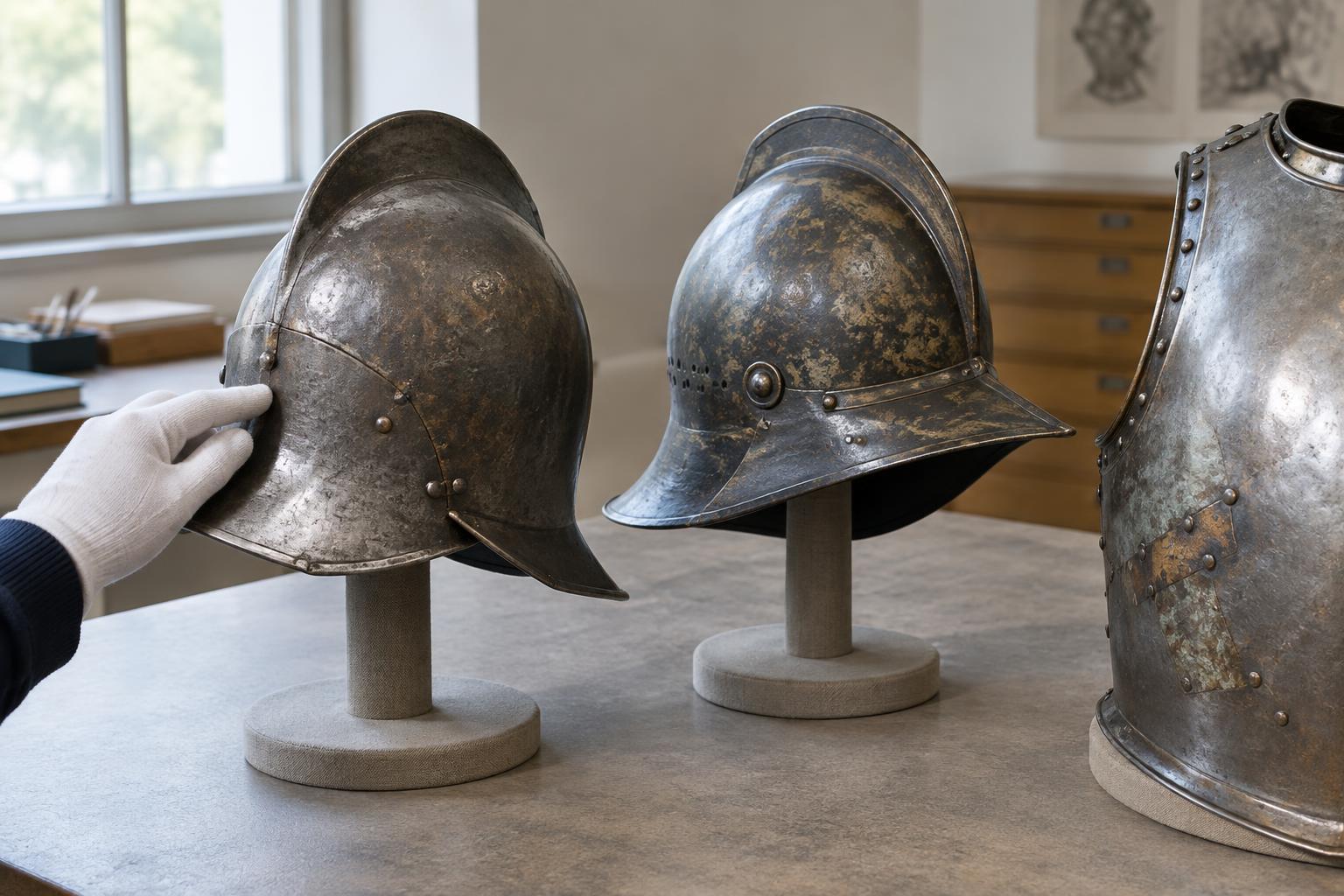
Museum collections preserve armour in varied condition. A breastplate may have lost its original straps or lining, gained replacement parts, or been polished and altered after its period of use. Such changes make it harder to picture the complete object as its maker intended. They also form part of its later history. Rivet holes, surface marks and differences between components can offer clues, though they seldom tell a complete story by themselves.
For collectors and museum visitors, the most useful question is often not simply whether a plate is iron or steel, but how its material, shape and fittings relate. Conservation generally favors careful documentation and minimal intervention over making an old object look new. Viewed this way, a breastplate is more than a feat of forging: it is evidence of linked trades, available resources and changing ideas about how skilled workmanship should appear.