What does “funerary” describe?
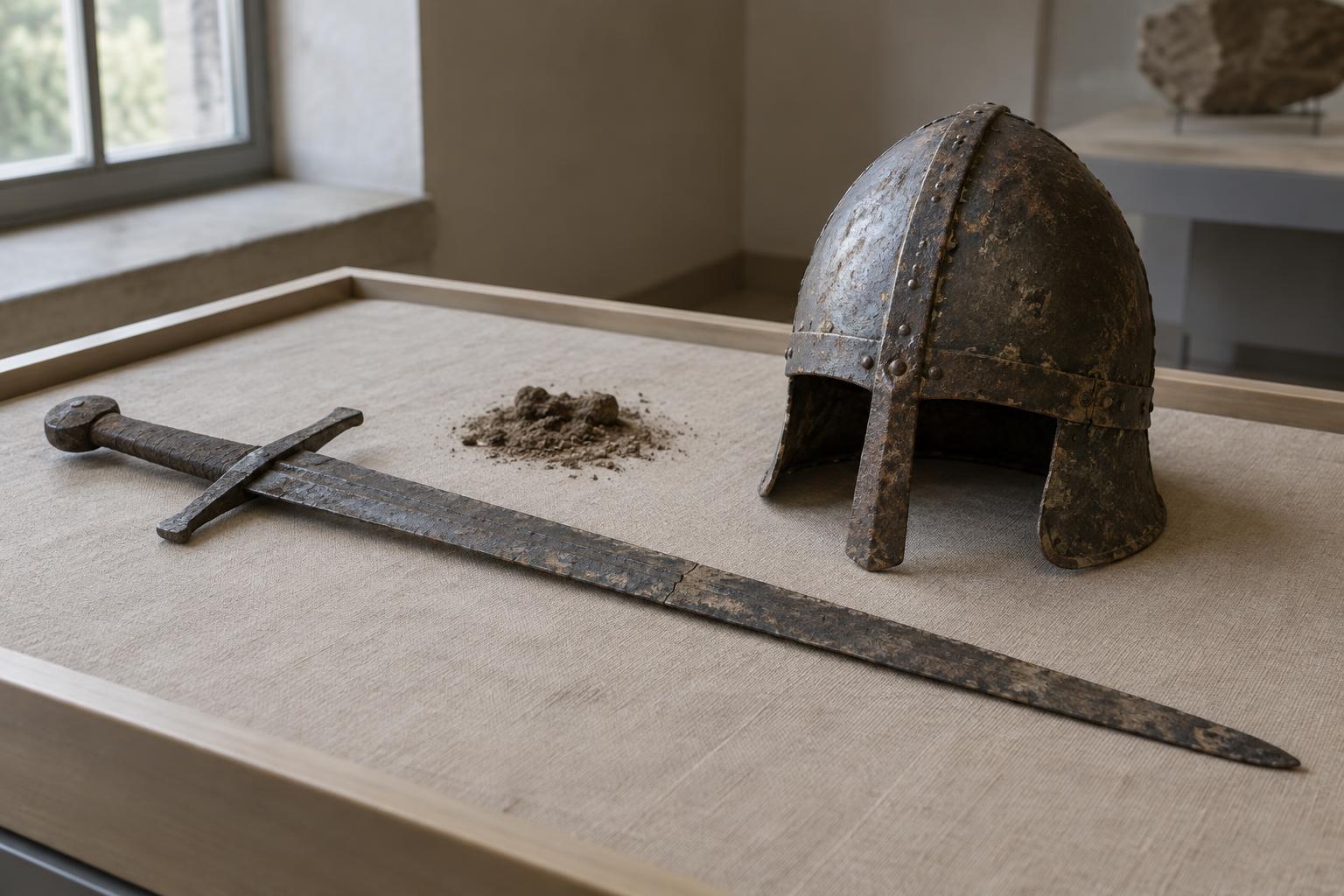
A sword found in a grave and a helmet displayed above a tomb can both be called funerary objects, but the word describes their association with remembrance, not necessarily their original purpose. A family might place a familiar possession with the dead, commission an object for a ceremony, or display equipment that had belonged to an earlier generation. An object’s role could change more than once before it entered a museum.
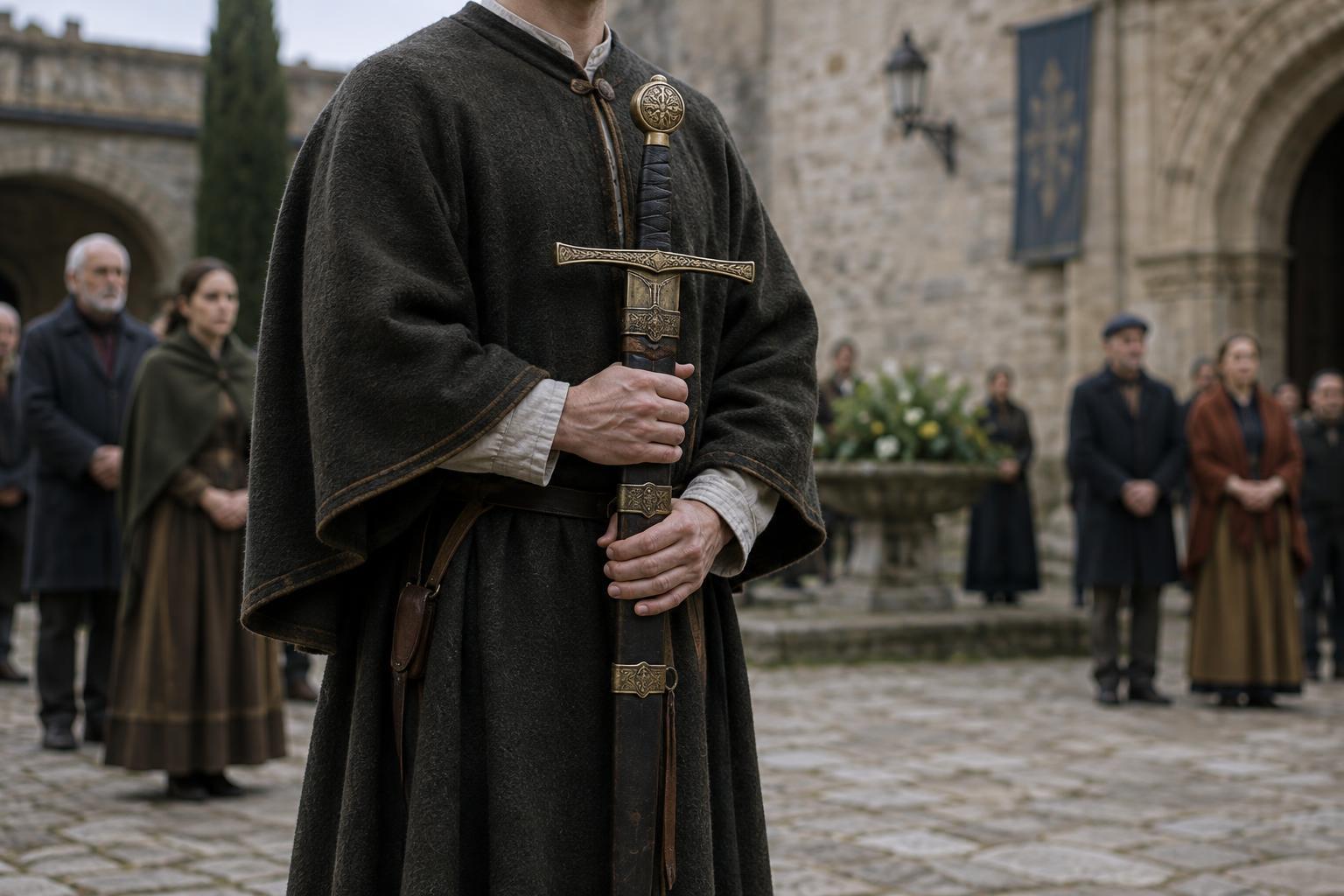
The distinction matters because funerary displays speak in symbols as well as materials. A sword might evoke authority, lineage or an ideal of service; a helmet might identify a person through heraldry or rank. Such meanings need not depend on whether the object had ever been worn. Conversely, an everyday possession can become a powerful commemorative object simply through its placement at a burial or memorial.
Start with the place, not the object
The strongest first question is where, how and when the sword or helmet entered its funerary setting. In an excavated burial, its position relative to the body, coffin and other objects may help establish whether it was part of the original arrangement. A find from disturbed soil offers less certainty: it may have been moved by later building work, an earlier opening of the grave or changes to the monument.
Objects displayed in churches or other memorial spaces present a different problem. They may have hung near a tomb for generations without being buried with the person commemorated. Repairs, relocation and changes to the building can obscure their original arrangement. Inventories, drawings and older descriptions may clarify an object’s display history, but a record of its presence at a memorial does not, by itself, prove that its owner used it in life.
What construction and wear can—and cannot—show
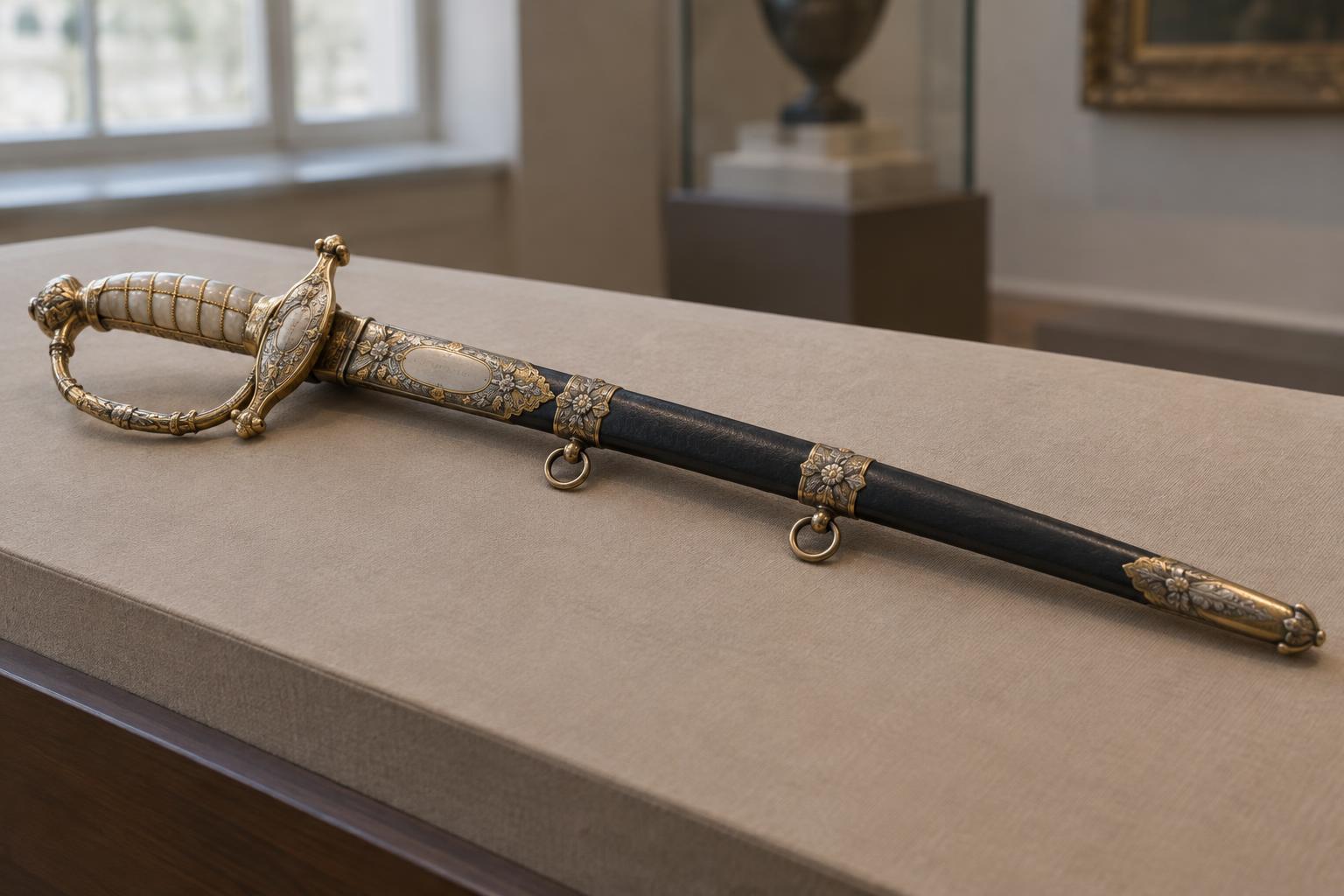
Close examination may reveal how an object was made and adapted. A helmet shaped to fit a head, with signs of adjustment or replaced components, may have had a practical life before its memorial use. A sword with a carefully finished hilt but an unusually simplified blade might invite questions about whether it was made chiefly for display. Neither observation is decisive: commemorative pieces can be finely made, while equipment once used in life can later be altered for display.
Wear requires similar care. Scratches, repairs and missing parts are evidence of an object’s history, not a straightforward diary of its use. Damage may have occurred during handling, burial, recovery or later storage. Corrosion can hide earlier surfaces, and polishing can remove clues. Comparing construction, materials and documented alterations is more useful than treating a single mark as proof. Where an object is accessible only in a photograph or behind glass, a cautious description is often the most honest conclusion.
Read symbols alongside records
Heraldic decoration, inscriptions and the arrangement of objects around a monument can explain why particular forms were chosen. A helmet bearing a crest, for example, may be part of a larger display of family identity. Its position in that display may tell us more about its commemorative purpose than its resemblance to wearable equipment. A sword represented on an effigy is another kind of evidence: it shows how a person was portrayed, not necessarily which physical sword they possessed.
Names and dates on labels or old catalogues deserve scrutiny too. Memorial objects may be attributed to a prominent individual because of their location or a longstanding tradition rather than a continuous chain of documentation. A useful account separates what is observable—the material, construction and recorded setting—from what is inferred. It also leaves room for mixed histories: an object could be made for use, inherited, modified for a funeral and preserved afterward as a family memorial.
Interpretation without erasing uncertainty
For a visitor or collector, the most rewarding question is often not “Was it real?” but “What roles did it serve?” A practical object can carry symbolic meaning, and a purpose-made memorial can embody skilled craftsmanship. Displaying both possibilities helps explain how communities remembered people through things associated with identity, status and obligation.
Conservation supports that reading by preserving evidence rather than making an object look newly finished. Cleaning, separating components or restoring a missing feature may obscure alterations that explain its passage from equipment to memorial. Burial contexts also call for respect toward the people commemorated and, where relevant, their descendants or associated communities. Careful documentation and candid labels allow swords and helmets to be understood as objects with histories, not merely as examples of a type.