A family history arranged in a shield
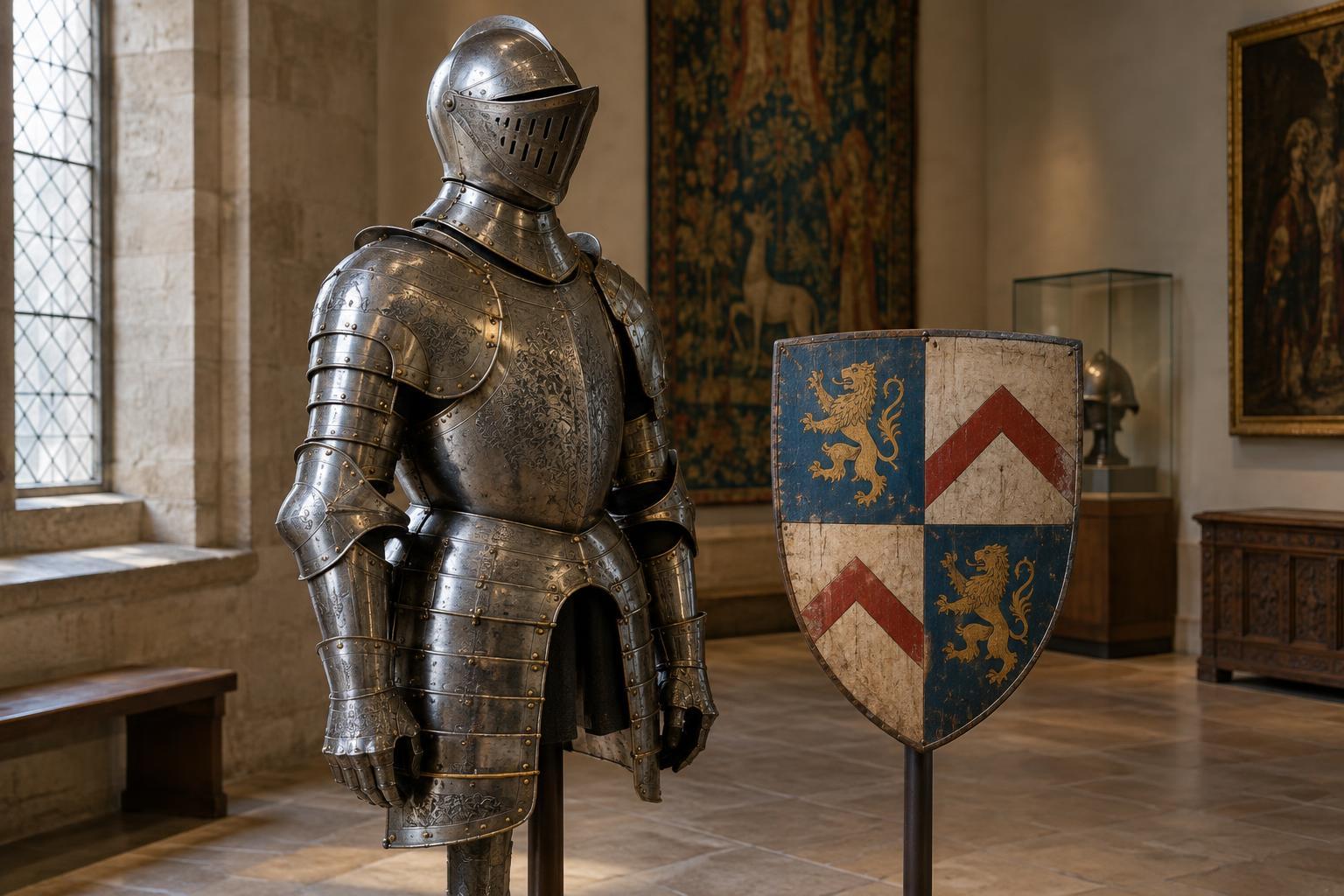
Heraldic quartering divides a coat of arms into sections that bring together different armorial designs. On historic armour, those designs might appear on a breastplate, helmet, shield or decorative fitting. They could announce identity to an audience, honour ancestors, or present a family’s standing through visible connections to other lineages. The arrangement is therefore more than ornament, although its decorative effect was often important.
A quartered design is not, by itself, a record of four marriages or four equal branches of a family. One quarter may represent an ancestral line whose arms were inherited generations earlier. Another may have been introduced through a more recent union. The number of divisions can also vary: some displays place smaller groups of quarters within a larger quarter. Reading the design begins with identifying its component arms, but explaining why they appear together requires evidence beyond the pattern alone.
How marriage could lead to quartering
Marriage joined households, property and social networks, and heraldry offered ways to show those connections. Yet a spouse’s arms were not necessarily absorbed into a family’s quartered coat. In many heraldic traditions, the right to pass arms into a descendant’s quarterings depended on inheritance through an heiress or another recognized route of descent. The details differed across places and periods, so a quarter should not be treated as automatic proof of a particular marriage.
A useful distinction is between displaying an alliance and claiming inherited arms. Two coats might be shown side by side to mark a marriage, without implying that descendants could quarter both. By contrast, an inherited quarter could remain in use long after the union that first connected the families. It might preserve the memory of a lineage whose name had changed or whose property had passed into another household. On armour made for display, such a reminder could serve a public purpose: it located the wearer within a wider network of ancestry and obligation.
Why armour complicates the picture
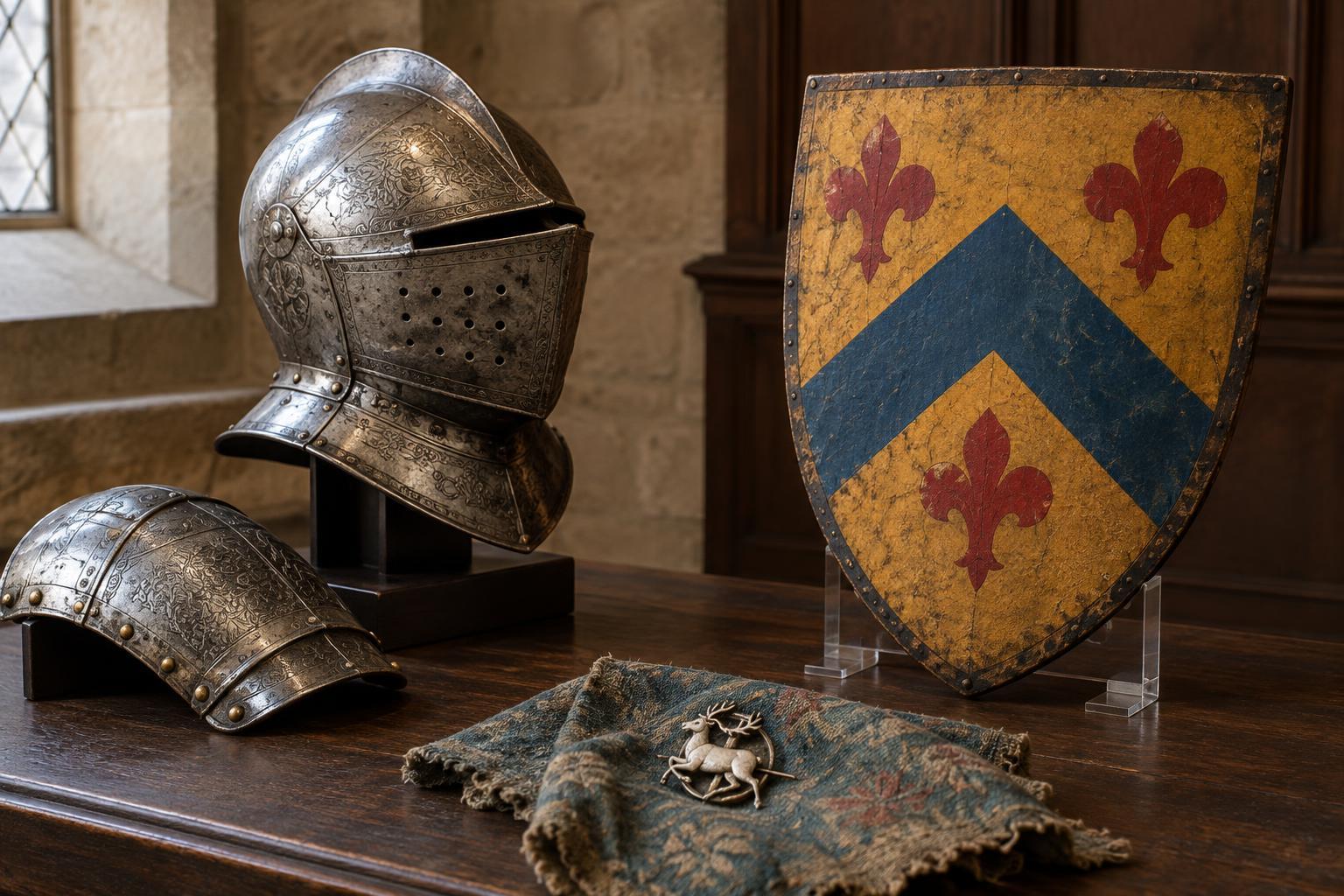
Armour was made, altered, decorated and sometimes assembled from pieces with different histories. A coat of arms on a surface need not have been applied when the metalwork was first made. It may reflect a later owner, a change in family status, or an attempt to give a group of pieces a coherent appearance. Decorative choices also affect what survives: a small engraved shield may omit details that would be clear in a painted version.
The object’s setting matters too. Quartered arms on ceremonial or tournament equipment may have been intended for recognition and display rather than for everyday use. A museum label might identify a named owner, but the heraldry alone seldom establishes who wore a particular piece. Armour could pass between relatives, be adapted for a new wearer or enter a collection under an attribution formed long after its original use. The safest reading separates what the design depicts from what the object’s history can securely demonstrate.
Reading the evidence with care
Start with the whole object. Note where the arms appear, how prominently they are placed and whether they repeat on associated pieces. Then look at the design: distinguish the main quarters from any smaller divisions, and record visible colours only where original paint, enamel or other reliable evidence remains. Heraldic identification can be difficult when surfaces are worn or when similar devices were used by different families.
Documents and physical details can strengthen an interpretation. Inventories, portraits, seals and family records may connect an armorial design to a person or lineage, while differences in engraving or finish may suggest that decoration was added later. None of these clues should be made to carry more weight than it can bear. A portrait, for example, may show how someone wished to be represented rather than prove that the surviving armour belonged to them.
For collectors and museum visitors, the most rewarding question is often not simply “Whose arms are these?” but “What relationship was this display meant to make visible?” Quartering can express claims of descent, remembrance of an inherited line and the social value attached to alliance. Read alongside the object’s craftsmanship and documented history, it offers a way to understand how families presented their past—while leaving room for what the evidence cannot resolve.