Two signs, different purposes
A painted shield, an engraved flower and an embroidered animal may all look like declarations of identity. Yet they need not say the same thing. In European heraldic traditions, a coat of arms is a recognisable design associated with a person or family and commonly displayed on a shield-shaped field. A personal badge is a distinct emblem used to signal an individual, household or affiliation. It might be an animal, plant, object or figure that can stand on its own, without a shield.
These are useful distinctions rather than rules that apply everywhere or in every century. Customs differed across regions and periods, and the word “badge” can describe several kinds of identifying sign. Both badges and arms could appear on armour, clothing, furnishings and gifts. Reading either one well means asking not just what it depicts, but where it appears and what relationship it may have marked.
What a coat of arms communicates
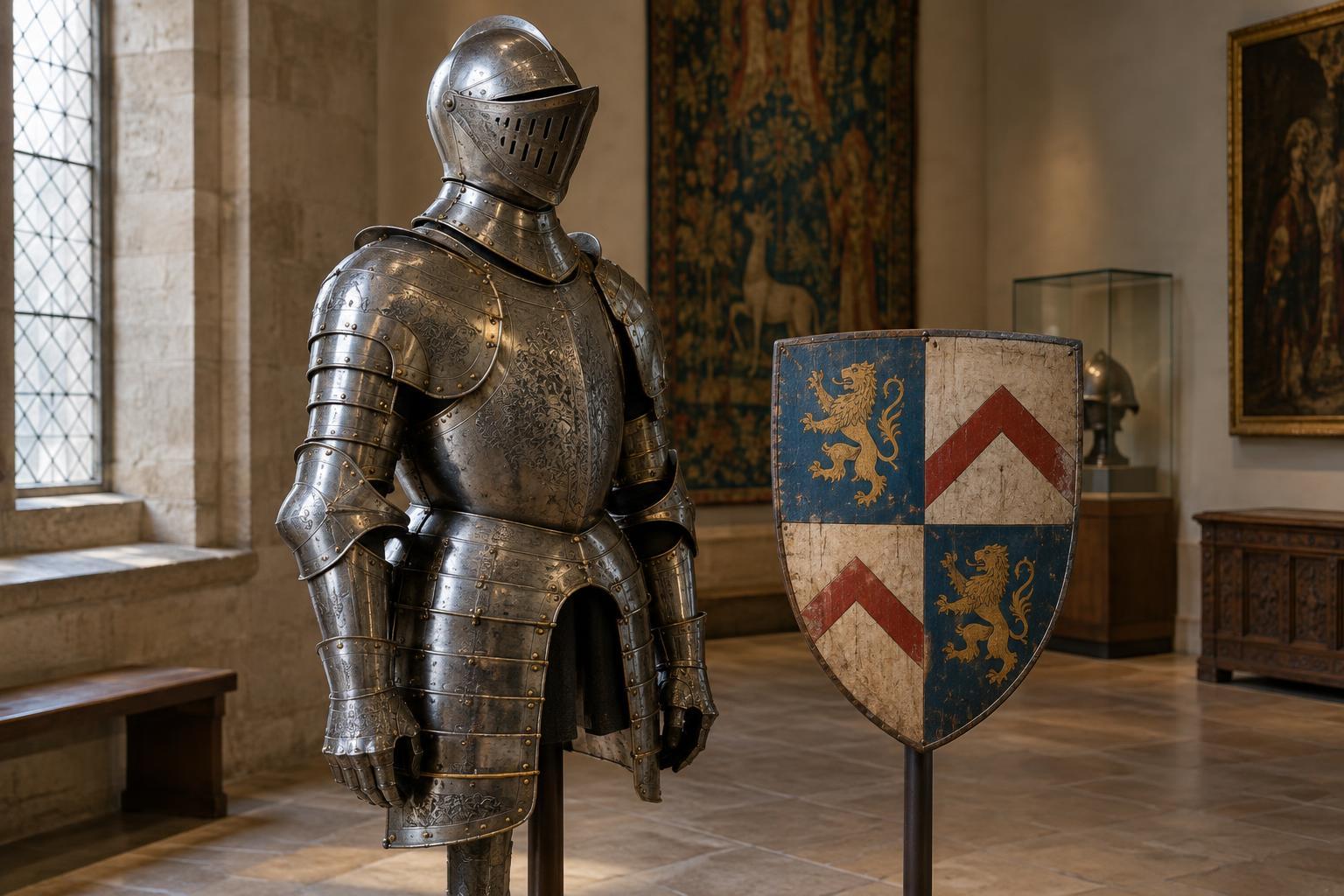
A coat of arms combines colours and figures in a design intended to remain identifiable when rendered in different materials. A carved stone relief and a painted panel, for example, can represent the same arms even though their textures and details differ. Arms often expressed lineage, inheritance or a recognised claim to an identity. Their display could also convey alliance or commemoration, especially when two sets of arms appeared together.
On a historic object, arms may point toward the person for whom it was made, a later owner, a donor or someone being honoured. Their position and method of application matter. An emblem integral to an object's original decoration raises different questions from one added on a replaceable fitting. Even a clearly identified coat of arms does not, by itself, establish that its bearer carried, wore or owned the object.
Why use a badge instead?
A badge offered a compact image that could work apart from the formal composition of a coat of arms. It could be repeated across fabric, metalwork and household objects, or worn by people connected to a patron. That flexibility made badges useful for signalling belonging as well as personal identity. An emblem seen on a follower's clothing, for instance, may indicate an association with a household rather than the wearer's own name.
Badges could also lend themselves to decorative settings where a full shield would be awkward. A small motif engraved on a fitting or worked into a border might remain recognisable without occupying the centre of a design. Some people used both arms and badges, so their presence together is not a contradiction. They could communicate different aspects of the same network of family, patronage and service.
Reading emblems on arms, armour and museum objects
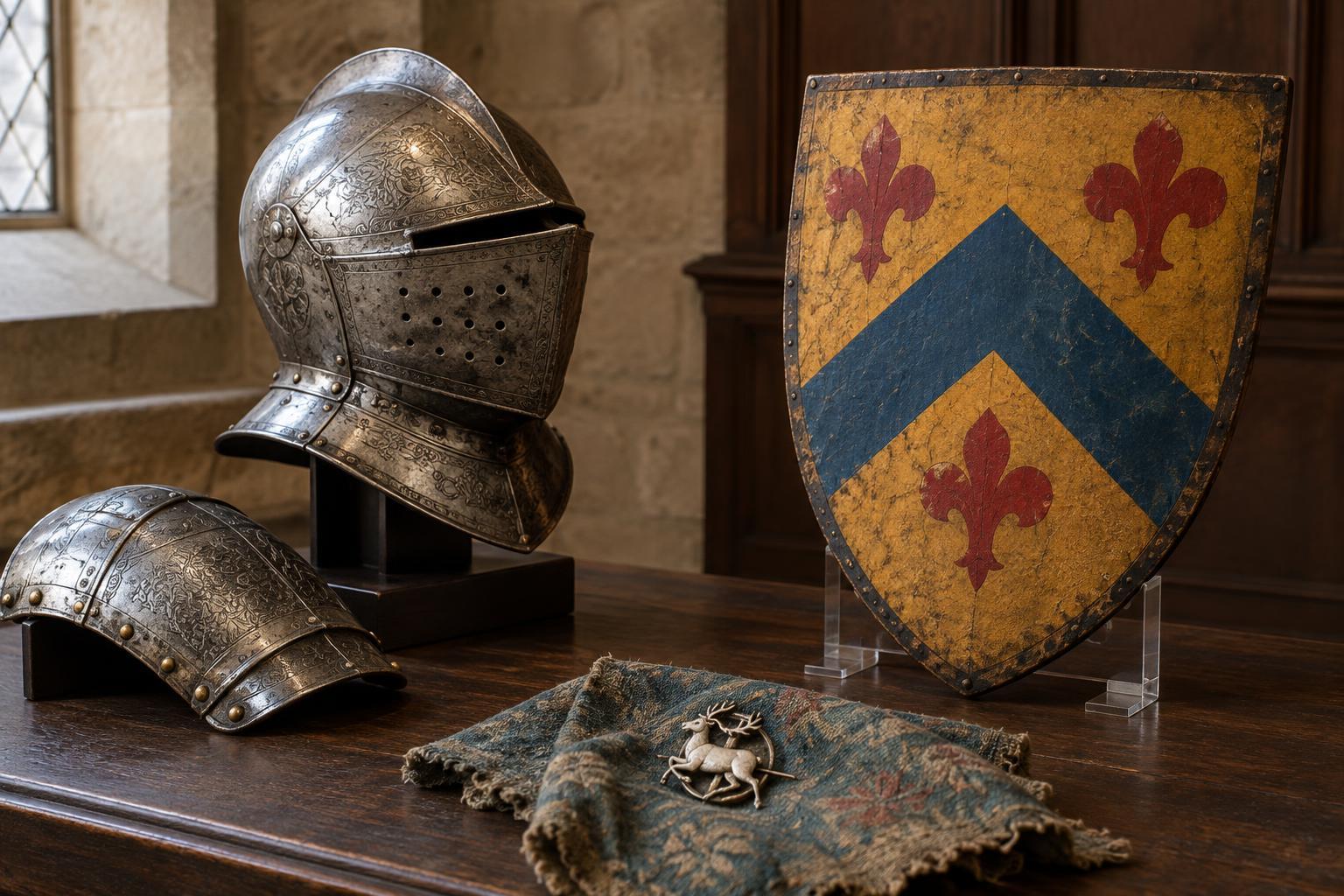
Imagine a helmet displayed beside a textile bearing an animal motif. The repeated animal may suggest a connection, but several possibilities remain: it could be a badge, a broader household emblem, an ornament or a later addition. Similarly, arms painted on a shield may identify a commission or commemorative purpose without telling us how the shield was used. Identifying the creature or colours is only the beginning of interpretation.
A careful reading compares the emblem with the rest of the object. Is it prominent or tucked into a border? Does it seem planned as part of the original design? Are there inscriptions, documented associations or other objects that help explain it? Museum labels can distinguish what is visible from what is inferred: “bears the arms of” is a narrower claim than “belonged to.” Such wording gives visitors a clearer view of both the evidence and its limits.
Identity is not the same as ownership
An emblem can survive long after the relationship it once marked has become difficult to recover. Objects were given, inherited, altered and displayed in new settings. A badge associated with one person might appear on something made for a dependent or supporter; a coat of arms might be included to honour someone other than an owner. Repeated motifs are valuable clues, not automatic signatures.
For collectors and museum visitors alike, the most rewarding question is often not “Whose is it?” but “What connection was this object meant to show?” Coats of arms tend to direct attention toward heraldic identity and lineage, while badges invite questions about personal presence, affiliation and the spread of an emblem through a household. Seen together, they reveal how historic objects could make relationships visible.