More than a picture on cloth
A military banner displayed near arms and armour can look like a straightforward label for the people who carried it. Its colours and emblems may suggest a ruler, a regiment or a place. Yet a banner could also express loyalty, honour a patron or give a group a visible presence during ceremony. Those meanings depended on who made it, who used it and where it appeared. The same design might be understood differently by its makers, its opponents and later viewers.
The first question is therefore not simply “What does the symbol mean?” but “What kind of object is this?” A banner made for a public procession may tell a different story from one associated with a military unit, even if both display similar imagery. Size, materials, construction and inscriptions can help distinguish purposes, but appearance alone may not settle the matter. A museum label that identifies an object as a standard or colour is a starting point for interpretation, not a substitute for its history.
Reading emblems without assuming a single meaning
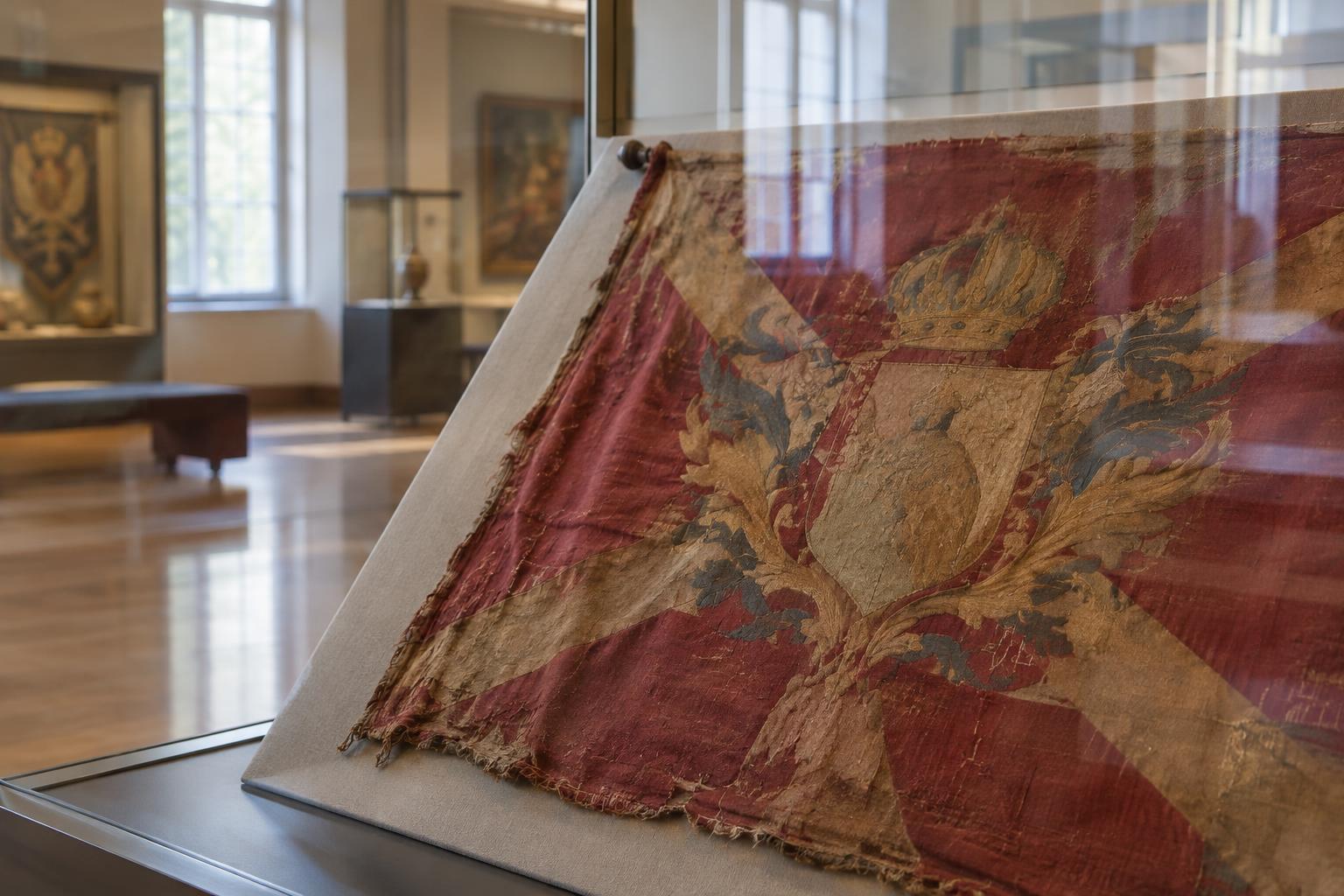
A banner’s imagery often combines several kinds of claim. An emblem may refer to a ruler or institution; a motto may express an ideal; a saint, animal or other figure may carry religious or cultural associations. Placement matters too. A central device may have been intended to be recognized at a distance, while smaller details may have addressed viewers standing close during a ceremony. Neither position guarantees that every member of the group understood the image in the same way.
Changes in ownership can complicate the reading further. A banner might be retained after an institution changed its name, brought out for commemorations or adapted for a new occasion. If a date or name appears on it, ask whether that detail belongs to the original design or was added later. Comparing the object with related records can help, but an incomplete record should leave room for uncertainty rather than invite a confident story about every motif.
What fabric and repairs can reveal
Banners are made of vulnerable materials. Light, handling, folding and earlier display can weaken fibres and alter colours. A faded area should not automatically be treated as its original shade, and a missing section should not be silently filled in by a viewer’s imagination. Stitching, painted decoration and the way a banner is assembled can reveal deliberate choices by its makers, even when parts of the design are no longer clear.
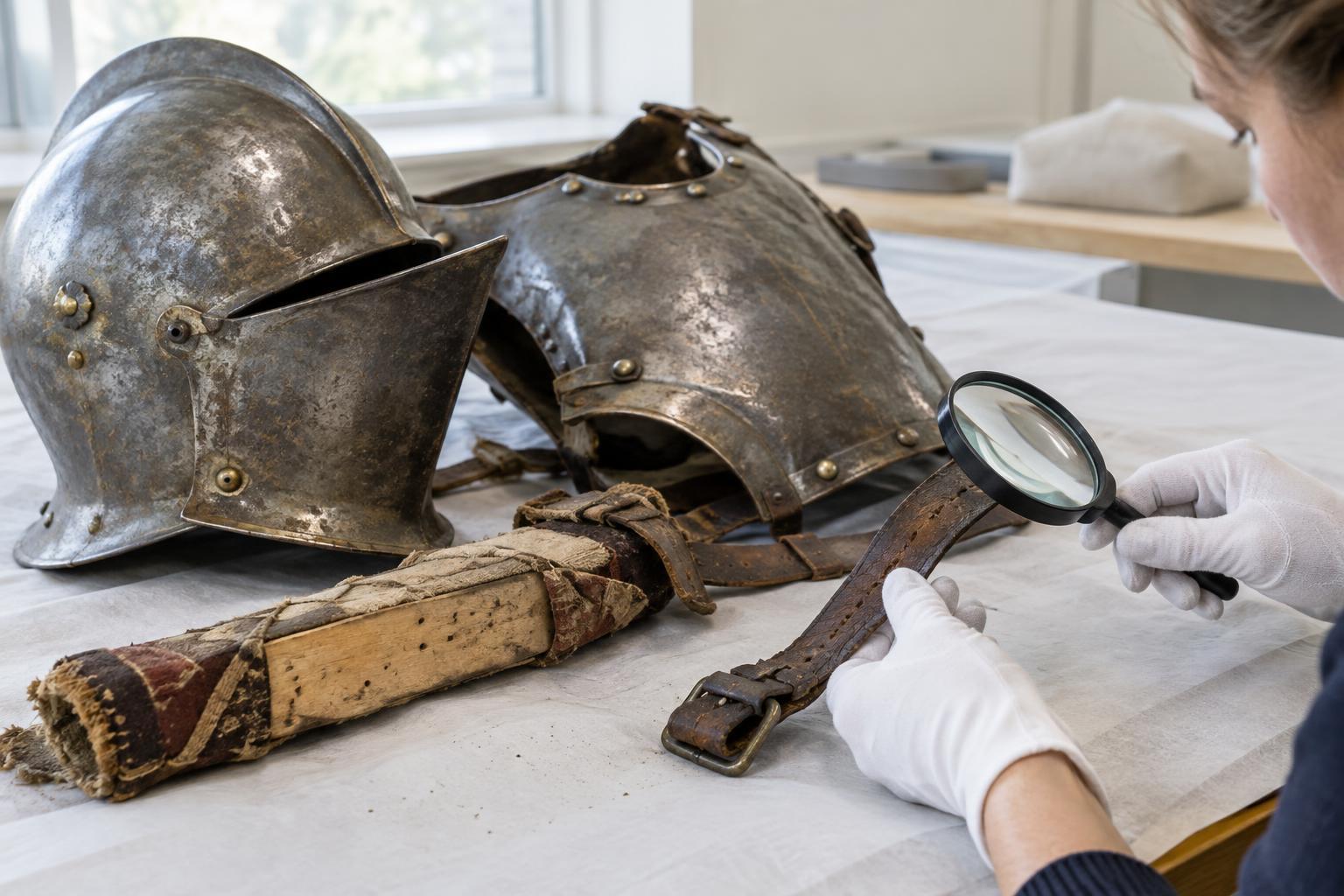
Repairs are part of the object’s history. A patch may record an effort to keep a valued banner in use, or it may belong to a later attempt to make a damaged piece presentable. Without documentation, it can be difficult to tell which. Conservators generally aim to understand and stabilize surviving material rather than make every trace of age disappear. For visitors, looking closely at seams and differences in fabric can be as rewarding as identifying the main emblem: those details show that a banner had a life beyond the moment it was made.
Why the display context matters
A banner in a museum may be shown flat, supported at an angle or represented through a reproduction when the original is too fragile for prolonged display. Each choice affects what visitors can see. A flat display makes inscriptions and construction easier to study, but it cannot fully convey how the object looked when suspended. An image of its reverse side, if available, may reveal details hidden by the chosen mounting. Display methods shape interpretation as well as protect the object.
When visiting a collection, read the banner alongside nearby objects and the label’s account of its provenance. Does the display explain who commissioned it, how it entered the collection and which parts of its story remain uncertain? Those questions can turn a striking emblem into a richer account of collective identity and remembrance. A banner is not merely decoration for a room of weapons: it is a fragile object through which people represented a group and, sometimes, chose how that group would be remembered.