Why a metal object may still be vulnerable
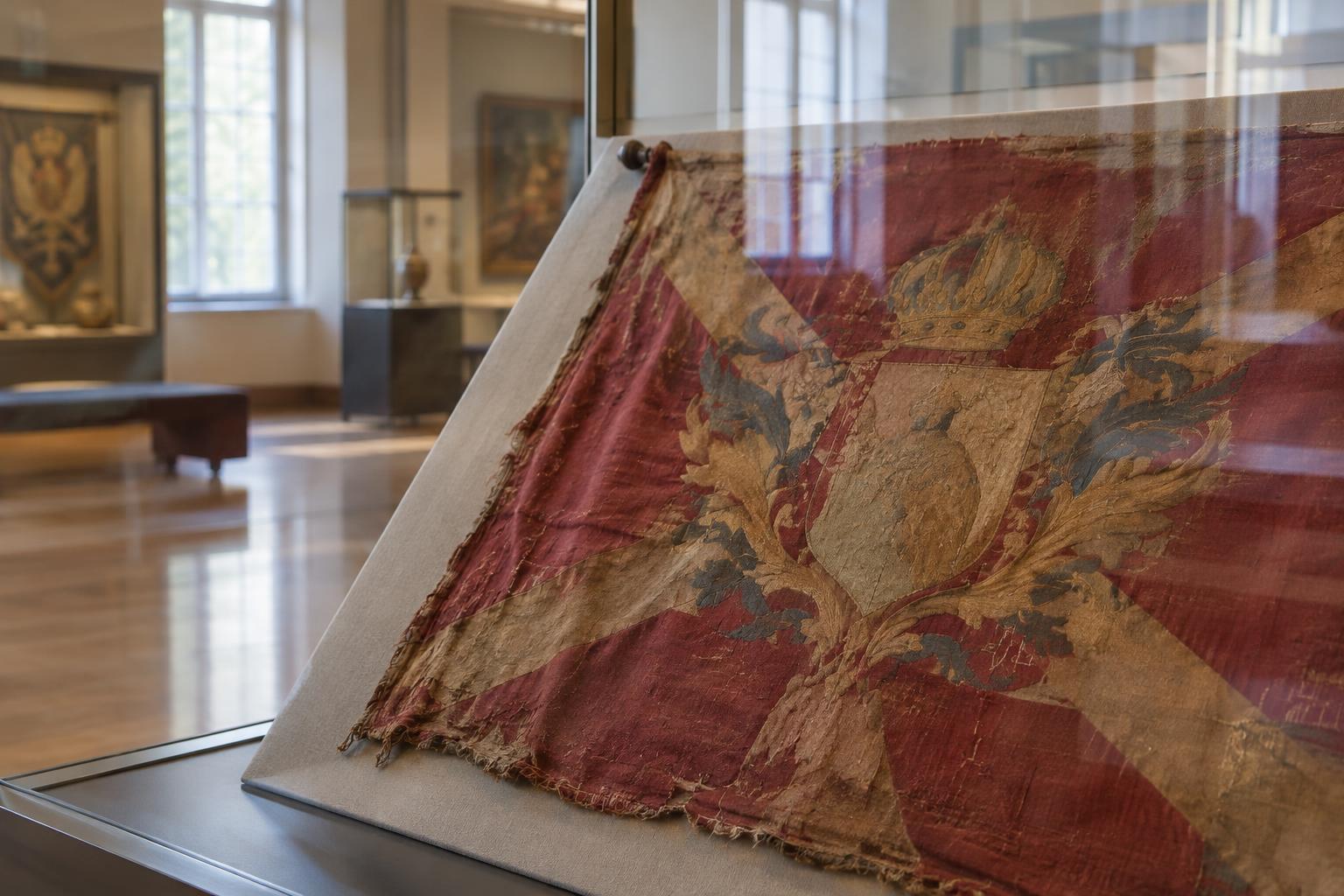
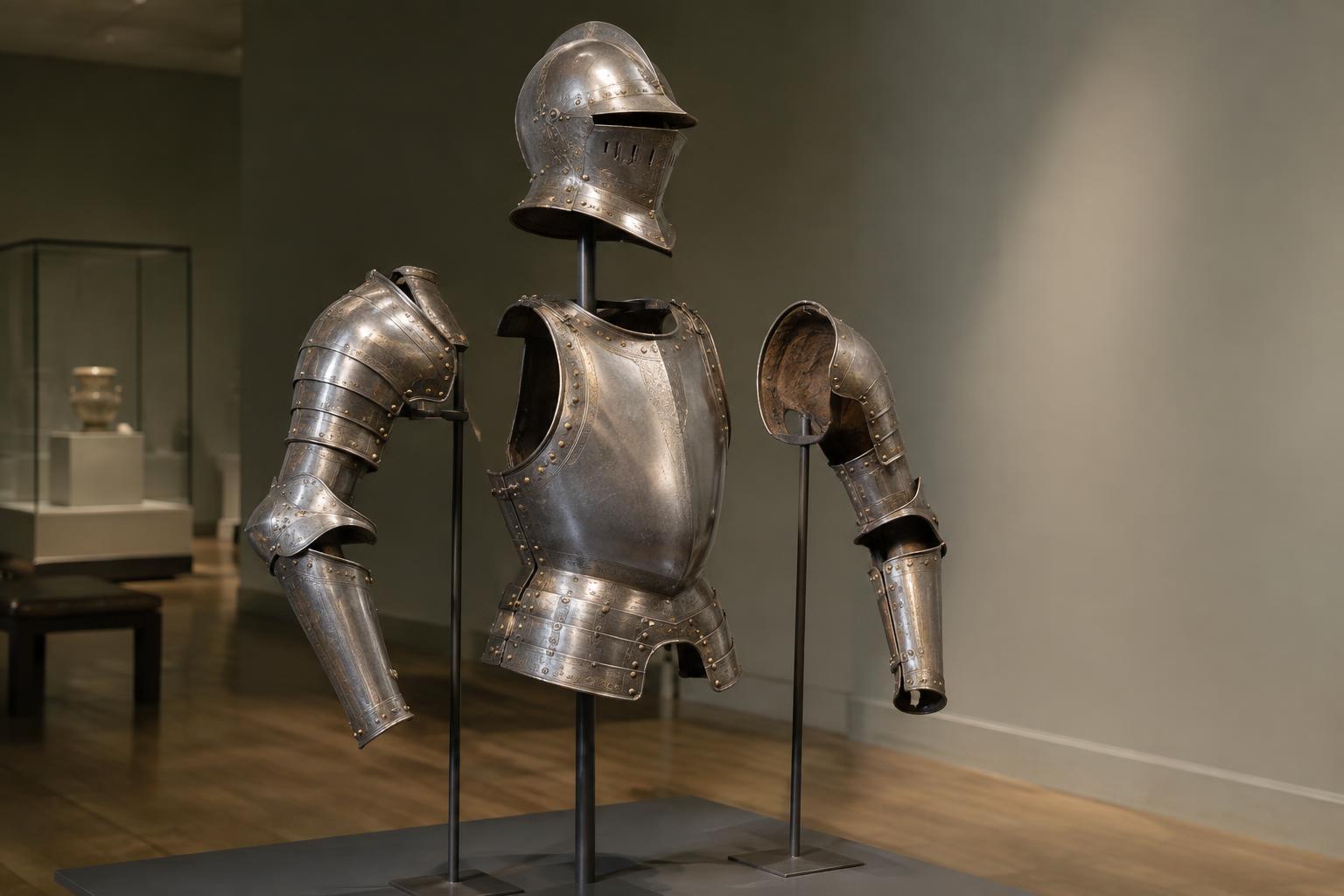
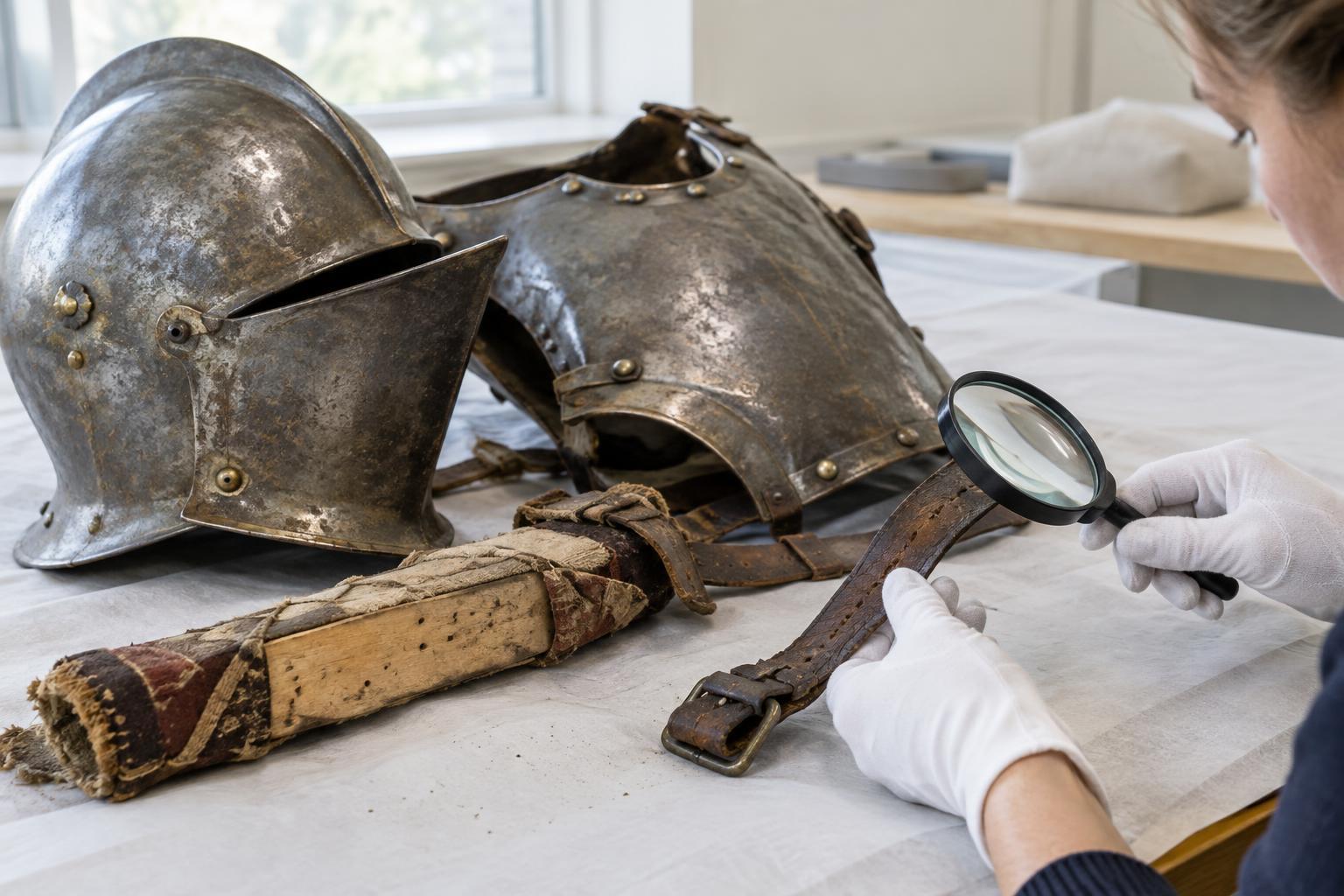
A sword, helmet or piece of armour may appear to be predominantly metal, yet its history often depends on less conspicuous materials. A grip may contain wood beneath a covering; a scabbard may combine a wooden core, leather and textile lining. Straps, padding and decorative elements can be equally important to the object’s identity. Some of these materials are vulnerable to insect damage even when the metal around them looks sound.
The first task is to notice which materials are present without pulling components apart to investigate. Look at accessible surfaces, joints and storage supports. An apparently minor change to a strap or lining deserves attention because fragile organic parts can preserve evidence of craftsmanship, repair and use. Keeping them with the object, and in their existing position, is usually more valuable than trying to obtain a closer view by force.
Read the signs cautiously
Small holes, loose powder, shed insect skins or new debris beneath an object can raise concern. None proves by itself that insects are active now. Holes may be old, and particles may come from a deteriorating material or a dusty shelf. Likewise, an insect found nearby does not automatically identify the object it came from. The useful question is whether a sign is new, recurring or changing.
Photograph the object in place before moving it, including the surrounding shelf or case and any debris. Record where the material appeared and what it looked like. If a small amount of loose debris must be moved to protect the object, keep a labelled sample separately rather than brushing everything away. A dated record makes later comparison possible without treating an uncertain observation as a diagnosis.
Protect the collection without rushing into treatment
If activity seems possible, limit unnecessary movement between storage areas. Keep the affected object away from other vulnerable materials if this can be done without stressing it, and avoid placing it in a tightly sealed enclosure without considering its condition and materials. Use a clean, supportive surface, retain its identification with it and document any change of location. Check nearby objects as well: finding nothing on one shelf does not settle what is happening elsewhere.
Resist the urge to apply household insecticides, oils or improvised treatments to the object. These can leave residues, affect historic finishes or make later examination harder. Vacuuming a fragile component directly can also remove loose historical material. If pests or fresh damage are suspected, a conservator or collection-care specialist can help assess the evidence and select an approach suited to the particular combination of materials.
Make the storage area easier to assess
Good housekeeping supports pest monitoring. Keep food and drink away from collection storage, remove ordinary clutter and inspect hard-to-see spaces such as the backs of shelves and the undersides of storage trays. Check that boxes and supports are clean and that objects can be viewed without repeatedly unpacking them. These habits improve the chances of noticing a change; they do not guarantee that insects will never appear.
A simple location plan and regular visual checks can be more useful than relying on memory. Note which objects contain exposed wood, leather, textile, horn or similar materials, and record observations in the same place each time. If monitoring traps are used in the room, their catches need careful interpretation: they can indicate that insects are present in an area, but do not establish that a particular historic object is infested.
Preserve the evidence as well as the object
An effective response begins with separating observation from assumption. Record what you can see, when you first noticed it and whether it changes on later checks. Keep earlier photographs and notes rather than replacing them with a tidier account once an explanation seems likely. Evidence of past damage, even when no longer active, may be part of an object’s history and may help explain its condition.
The aim is not to make every mark disappear. It is to prevent avoidable loss while respecting historic surfaces and components. With clear records, careful handling and appropriately qualified help when needed, a collector can respond to a possible pest problem without sacrificing the very evidence that makes an object worth preserving.