A support that also shapes a view
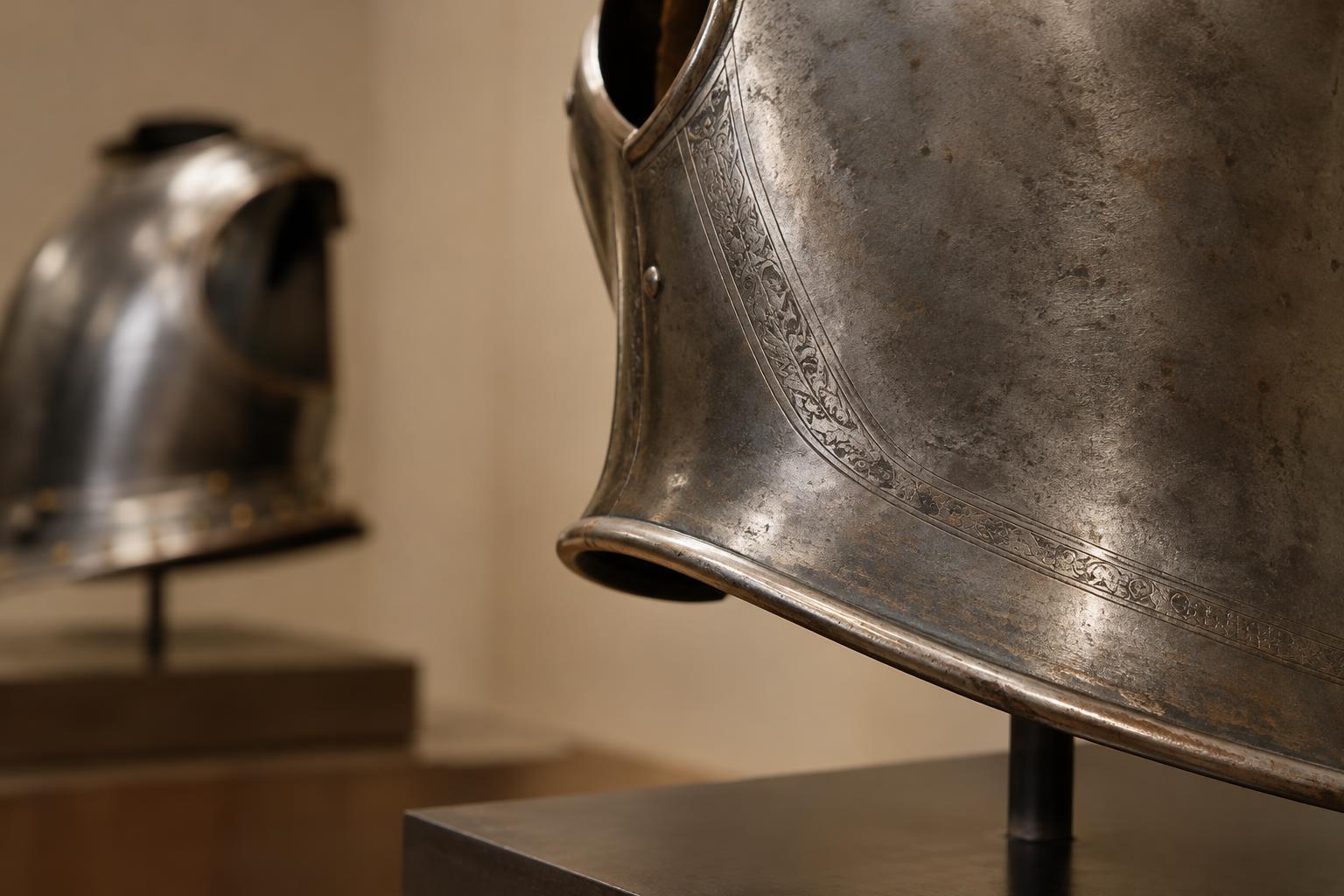
An armour display can appear effortless: a helmet sits upright, a breastplate faces the visitor and each piece seems to occupy its natural place. Behind that appearance is a series of choices about support and presentation. A mount may help carry an object’s weight, limit movement and keep vulnerable surfaces away from direct contact. It also determines the angle from which most visitors first see the object.
Consider a helmet shown at eye level. Its face opening and exterior decoration may be easy to study, while its lining or interior construction remains hidden. Tilt the same helmet, and visitors may notice different features. Neither view is automatically the complete one. The useful question is what the chosen position makes visible, and what a visitor would need another view to understand.
When separate pieces look like a complete suit
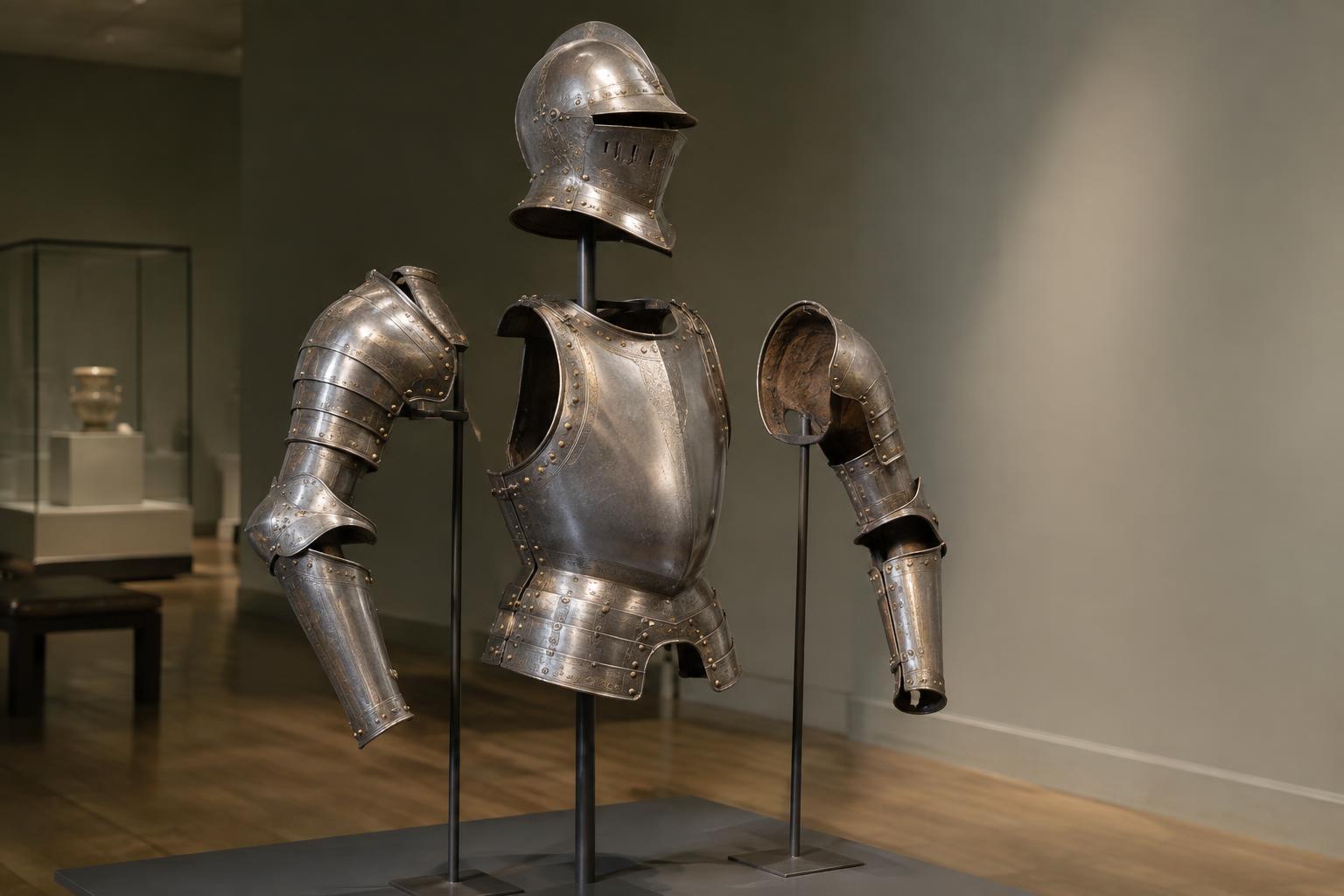
Armour is often displayed in a human shape because that arrangement helps visitors grasp scale and the relationship between parts. It can also create an impression of completeness. Pieces that appear together may have different histories, and gaps may be filled visually by the mount beneath them. A convincing silhouette does not, by itself, show that every component was made at the same time or used by one person.
Museums can address this ambiguity through labels, object records and thoughtful spacing. A display might distinguish an assembled group from a documented set, or identify later additions without making them seem like defects. Visitors can look for differences in finish, decoration or fit, but these are prompts for questions rather than proof of a particular history. The mount helps tell a coherent story; the accompanying information should make clear where that story rests on evidence and where it reflects a display decision.
Distance, lighting and hidden surfaces
The position of a mount affects how closely an object can be examined. A low case may offer a good view of a small fitting but make a tall object difficult to take in as a whole. A high wall display can make a form striking from across a room while placing inscriptions or tool marks beyond comfortable reading distance. Lighting may bring out contours and decoration, yet reflections on glass or polished surfaces can obscure the same details from another position.
Some features remain difficult to show in a gallery at all. The reverse of a shield, the inside of a gauntlet or the underside of a fitting may contain evidence of construction, repair or wear. Photographs and diagrams can offer another view without requiring the original object to be turned or handled. When visiting, it is worth checking whether a display provides those additional views, especially if the visible surface seems to tell only part of the story.
How to look past the mount
A useful first step is to separate the historic object from the modern structure holding it. Look for supports at the edges, beneath components or behind an assembled figure. Then ask which relationships the arrangement asks you to accept: do the parts clearly belong together, or are they being presented as examples of a broader type? A label may answer directly; if it does not, uncertainty is more helpful than assuming a complete original set.
Finally, change your viewing position where the gallery allows it. A side view may reveal the thickness of a plate or show that an apparently continuous form is made from several pieces. Step back to consider the overall arrangement, then move closer to examine an individual surface. For further browsing beyond this article, explore Across the Water. A museum mount deserves attention not because it diminishes the object, but because recognizing its role helps visitors see both the historical material and the choices involved in presenting it.