From flat metal to a shaped surface
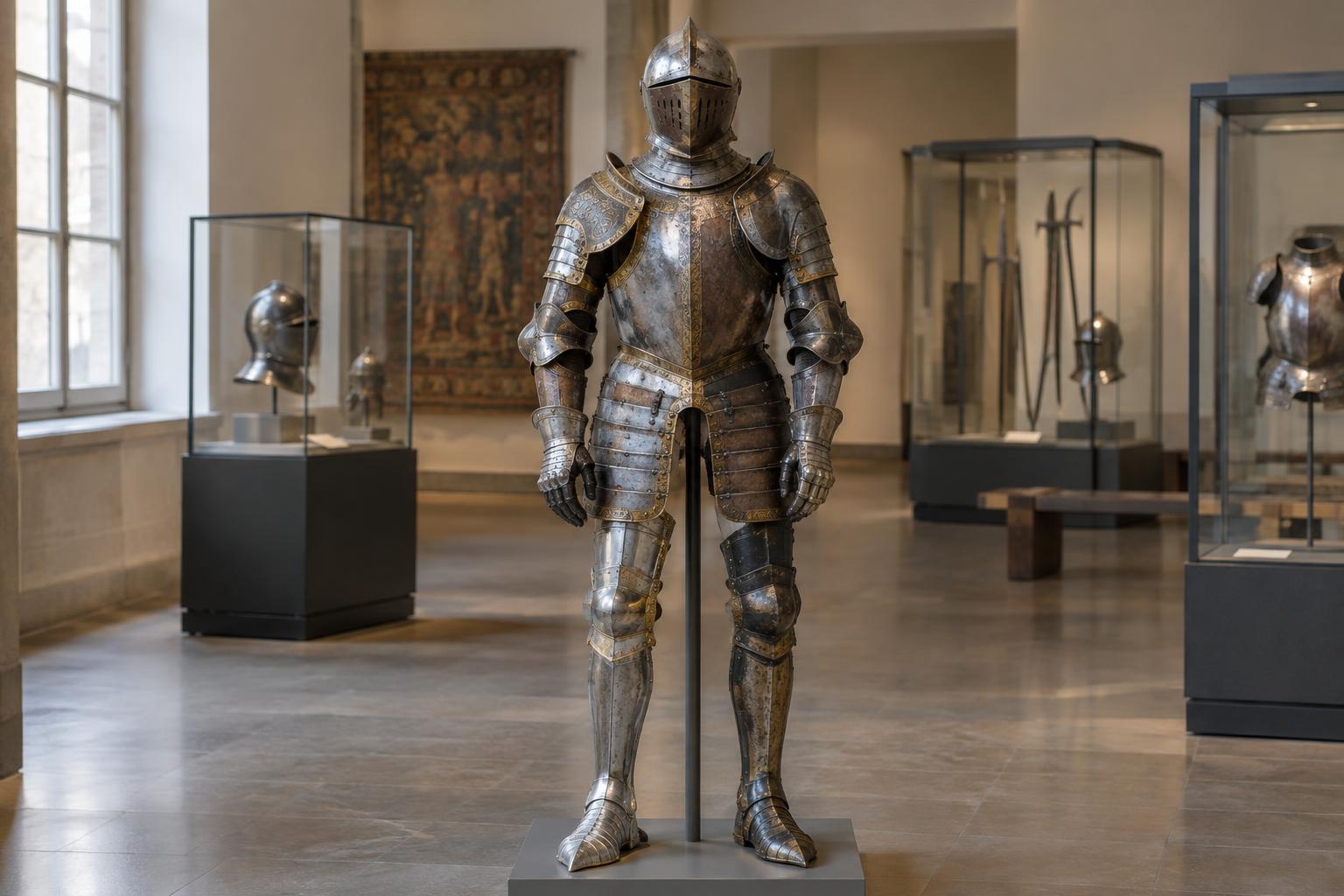
A breastplate, helmet, or shoulder defence may look like a single, effortless curve. That appearance can conceal a great deal of work. Armourers shaped metal to follow the body, create space at joints, and produce a surface suited to the intended form. The result depended not only on the outline of a plate but also on its depth, ridges, rolled edges, and relationship to neighbouring pieces.
No single method explains every surviving example. Forms varied across periods and regions, and a workshop might use several shaping techniques on one component. Raising, dishing, and planishing are useful terms because each describes a different contribution to the finished shape. They also remind us that plate armour was made through repeated judgments about form, thickness, and finish, rather than one dramatic act of hammering.
Raising: drawing the edges into a deeper form
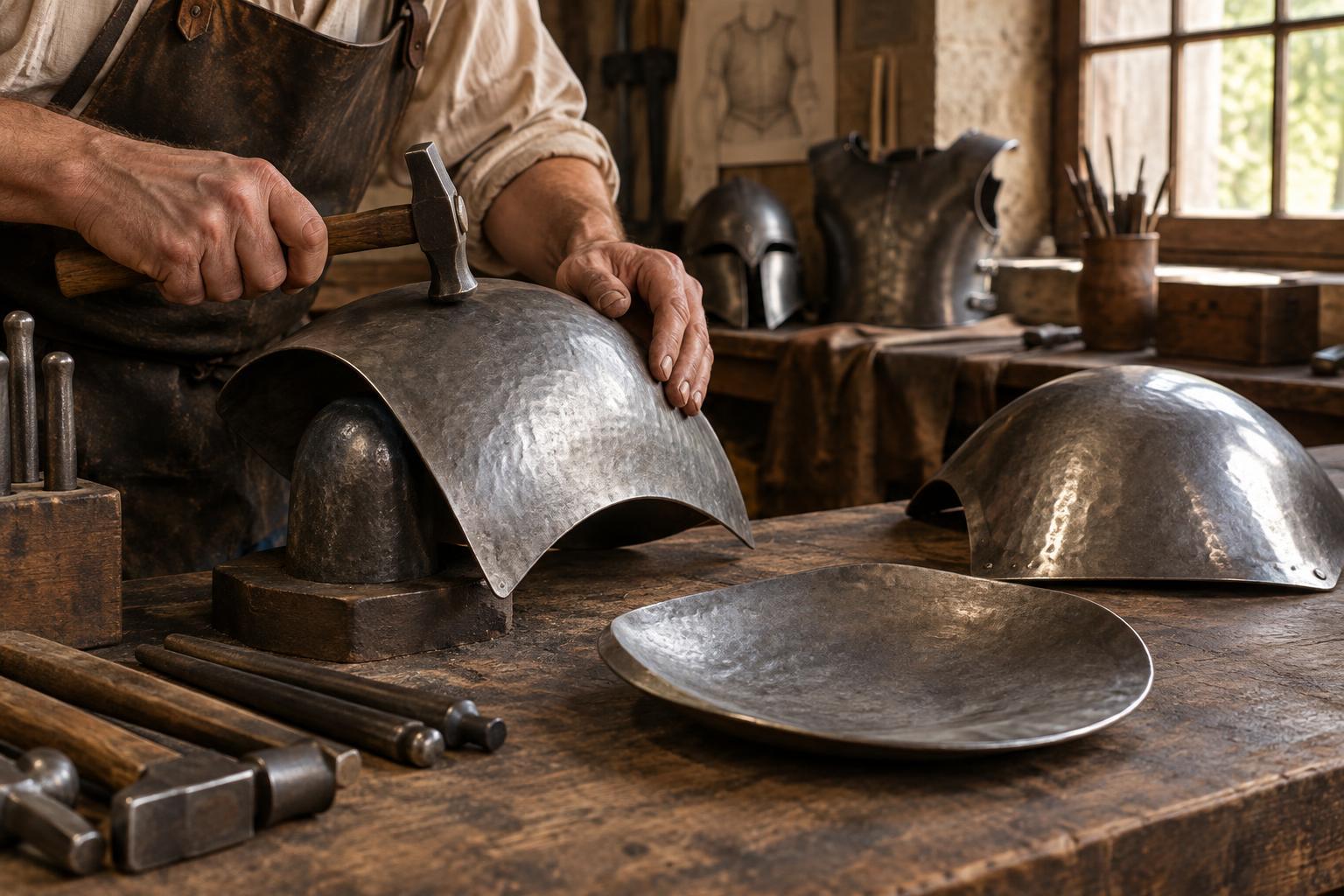
In raising, the worker develops a hollow form by working the metal so that material from its outer areas moves toward the developing curve. A helpful visual comparison is a shallow bowl becoming deeper while its rim draws inward. For an armourer, this approach could help produce a rounded form from one piece of metal, although the exact sequence of work would depend on the object and the workshop.
Raising is easy to confuse with simply pressing a dent into a sheet. Its distinctive feature is the way the shape develops through the movement of metal around the form. That matters when looking at historic armour: a smoothly swelling helmet or rounded defence is not necessarily the product of a mould, nor does every hollow surface show the same shaping method. Finished objects have often been trimmed, joined, and polished, making the original working process difficult to identify by eye alone.
Complex pieces could require attention to several curves at once. A change near an edge affects the surrounding surface, while a pronounced ridge can alter how the whole plate reads in light. Such features make raising a useful way to think about armour as sculpture as well as protection: the maker was controlling volume, silhouette, and visual emphasis.
Dishing: creating depth within the plate
Dishing creates a hollow by working an area of the plate into a concave support. Rather than drawing the perimeter inward in the same way as raising, it develops depth in a selected area. The distinction is useful, but it should not be treated as an absolute division: armourers could combine approaches or change methods as a piece took shape.
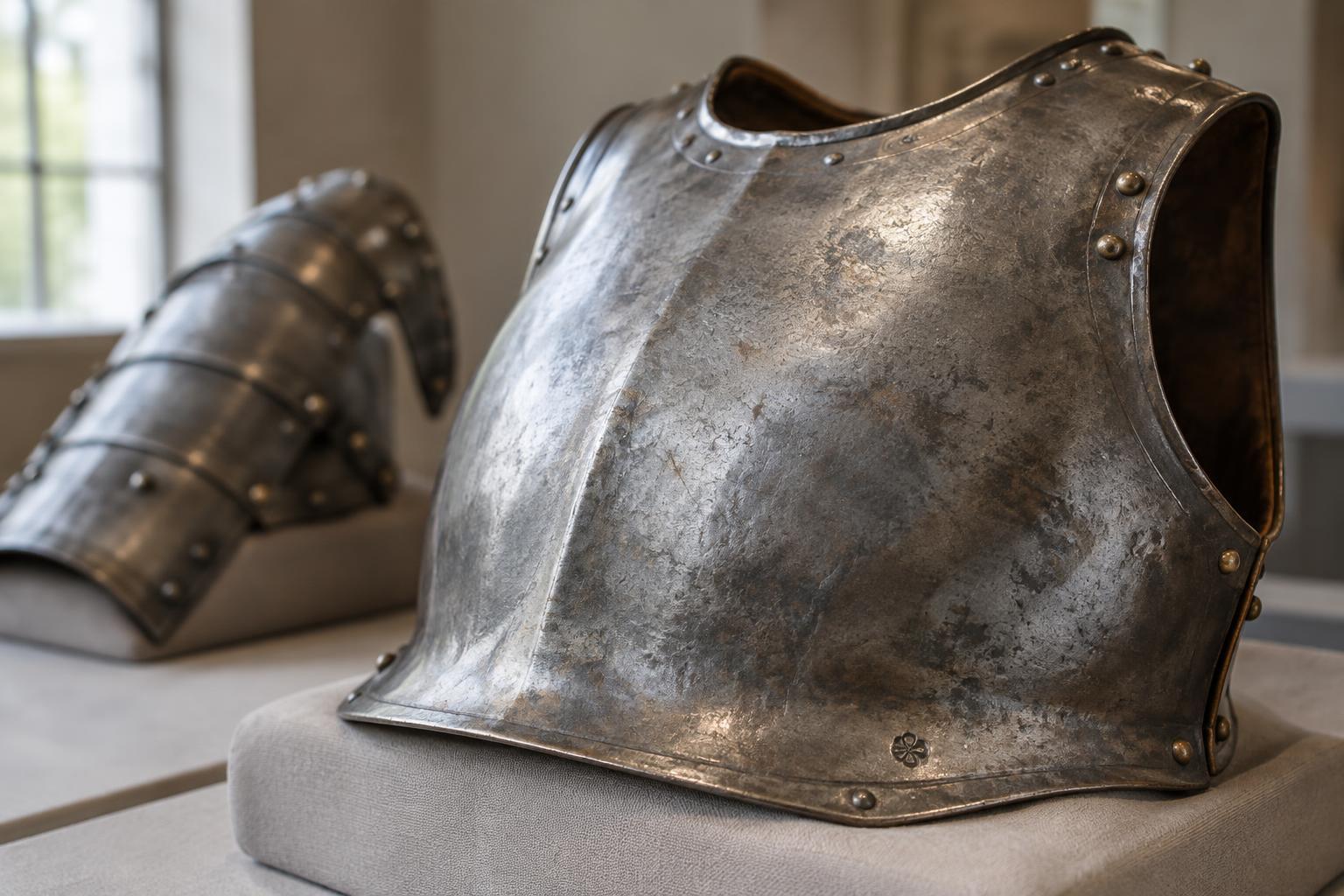
A dished area might accommodate part of the body or contribute to the rounded profile of a larger assembly. Its depth affects more than appearance. It determines how a plate sits in relation to the wearer and to adjacent components. A curve that looks subtle on a display stand may have helped establish the space and alignment needed by the complete object.
Museum displays often isolate a single plate, inviting visitors to see it as a self-contained sculpture. Looking for dished areas instead encourages a different question: what was the space behind this surface for? The answer may be uncertain, especially when straps, linings, or companion pieces are missing. Even so, the hollow can offer a clue to the armourer’s understanding of bodies, movement, and the assembled suit.
Planishing and the evidence left behind
After a plate had acquired its principal form, planishing could refine its surface through many controlled hammer blows. The aim was not necessarily to make every trace of work disappear. Depending on the object and its finish, planishing could even out irregularities, clarify contours, and prepare a surface for further finishing. Light catching a well-shaped plate can make its curves seem especially crisp.
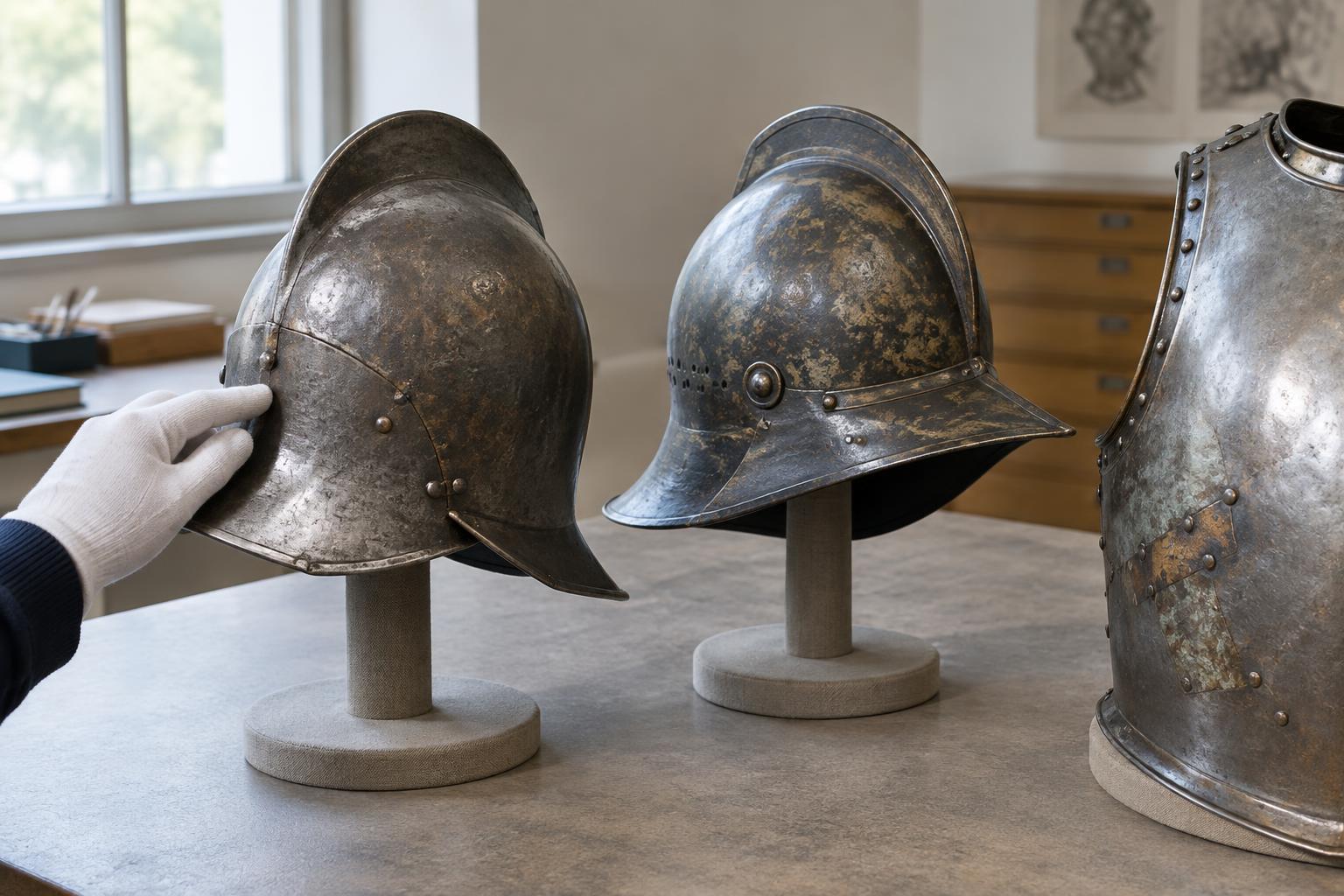
It is tempting to read every visible hammer mark as a direct record of manufacture. Caution is needed. Surfaces may have been polished, altered, corroded, restored, or repaired over time. A mark might relate to shaping, later treatment, or damage rather than one identifiable stage of work. Conservators therefore consider visible traces alongside the object’s construction, condition, and history instead of relying on surface texture alone.
Raising, dishing, and planishing give visitors a vocabulary for observing armour more closely. A deep hollow, a drawn-in edge, or a carefully refined curve can suggest how much thought went into a seemingly simple plate. The most rewarding view is often neither a hunt for a single technique nor an assumption that all marks can be decoded. It is an appreciation of how skilled shaping turned metal into an object with both practical form and expressive presence.