Start with the object, not the label
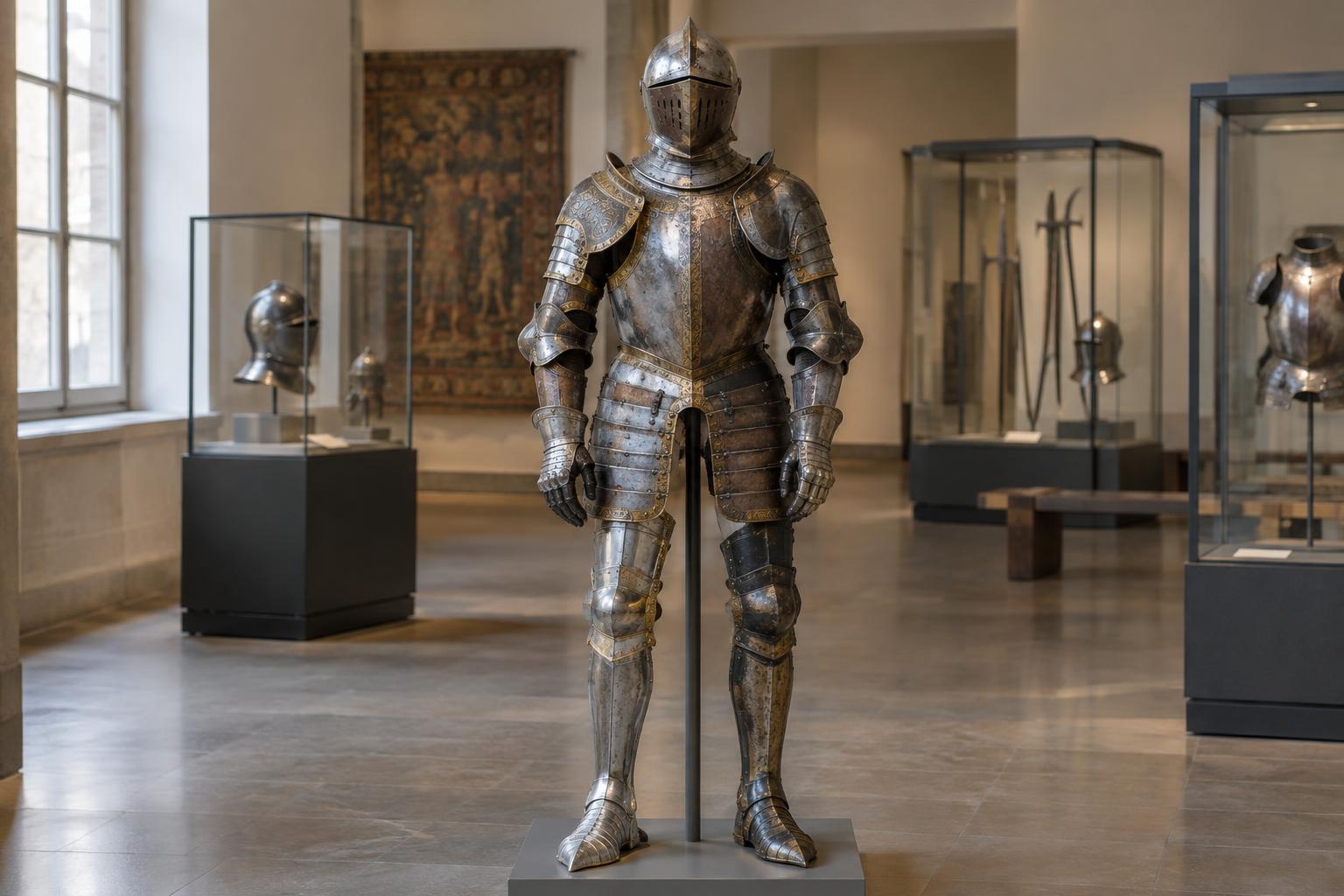
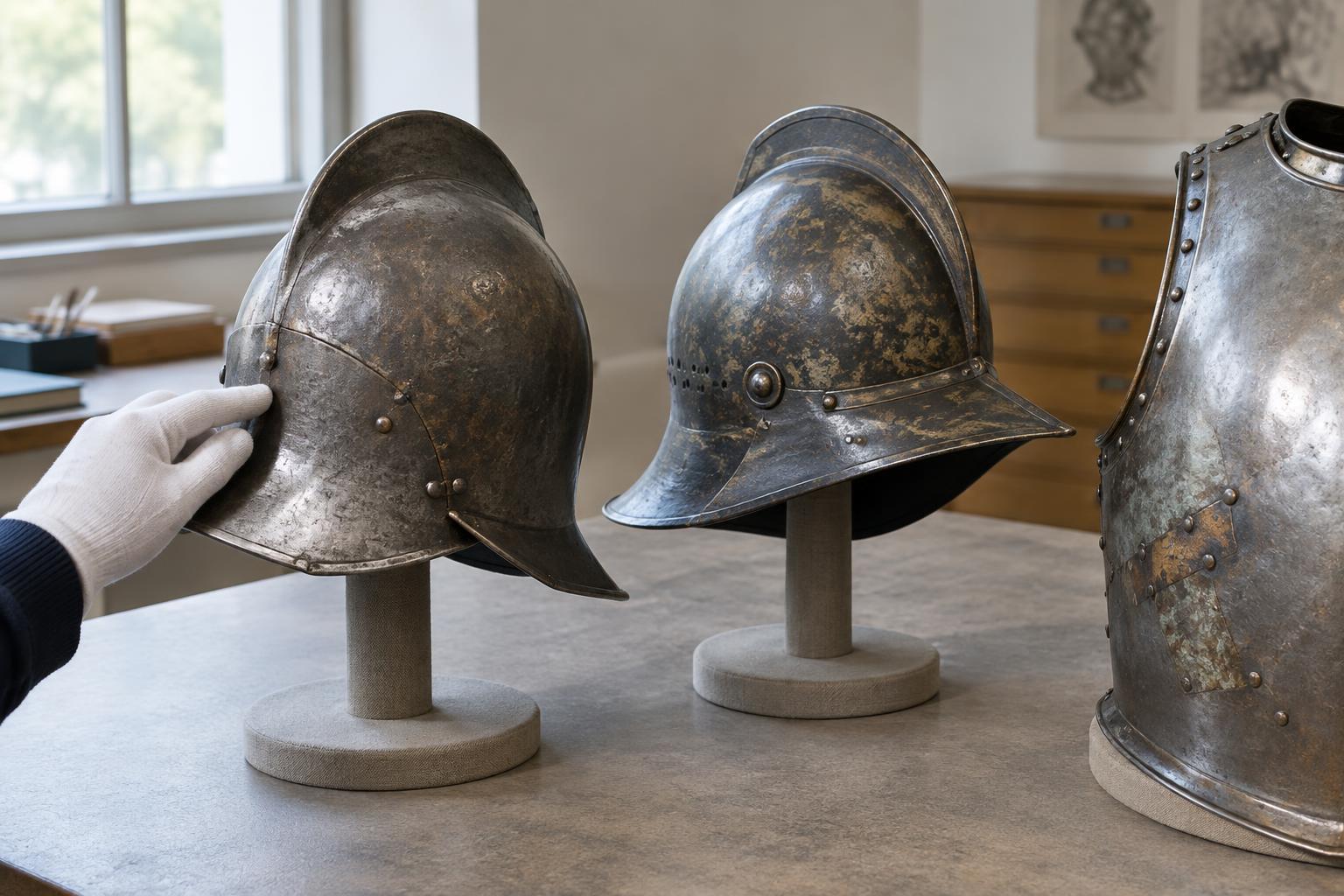
A museum label may give an armoured object a name, place, and period. Those details are useful starting points, but the object itself can tell a more complicated story. A helmet, for example, might combine an older metal shell with a later lining, replacement fittings, and a surface changed by cleaning. Historians try to distinguish these layers rather than treating every visible feature as evidence of a single moment.
The first questions are descriptive. What parts are present? Which surfaces show wear, damage, or a different finish? Do the pieces appear to belong together? Close observation cannot always answer when a change occurred or who made it. It can, however, identify details worth comparing with other objects and with any surviving records. This is why an object’s physical condition matters to its history, not merely to its appearance.
Materials offer clues, not automatic dates
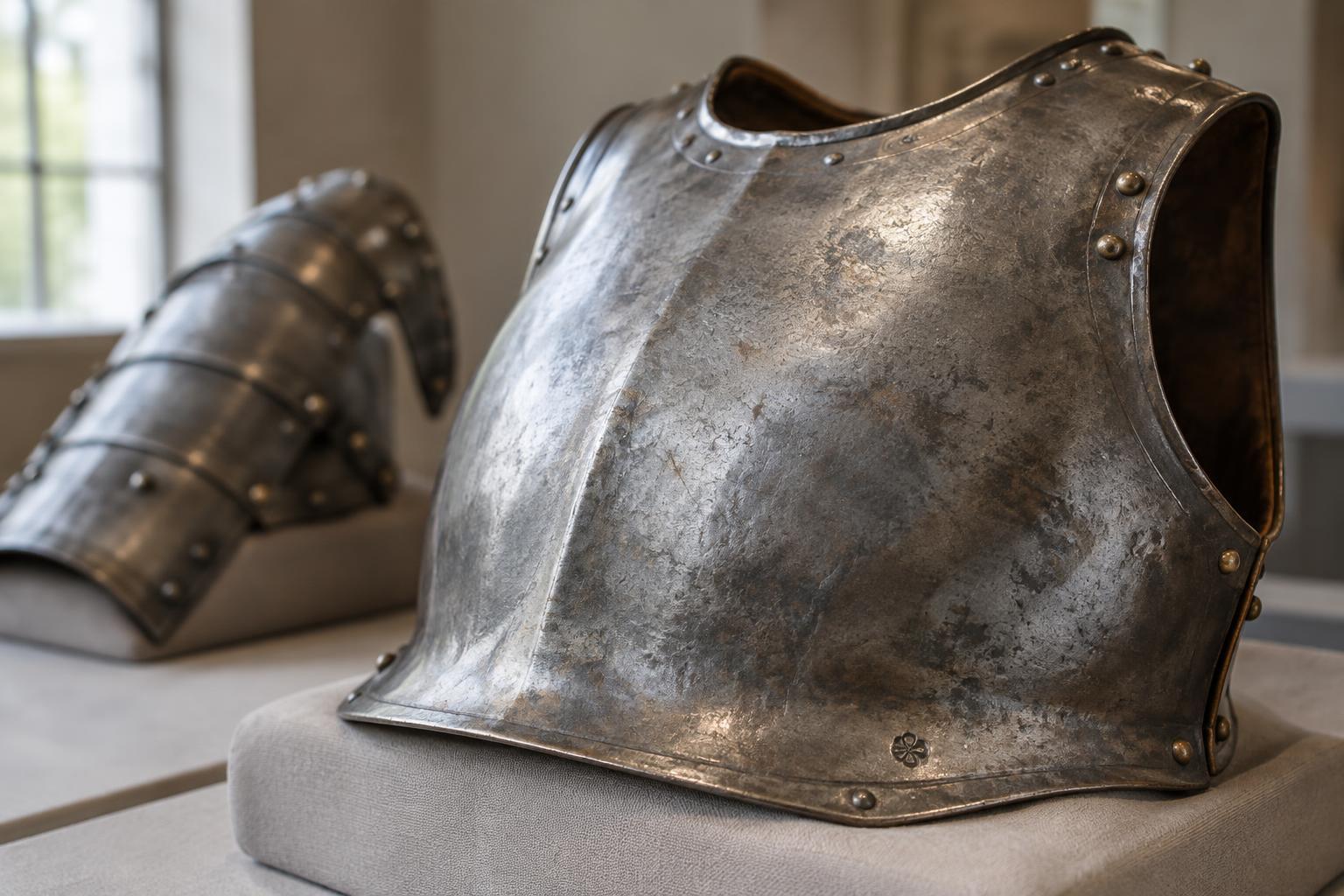
Historic armour may bring together metal, leather, textile, wood, and decorative materials. Each can contribute to an object’s appearance and history. A textile remnant might indicate how a piece was once lined or presented, while a different metal finish on one component may suggest replacement. Such observations need care: a contrast visible today could reflect original design, later work, or uneven preservation.
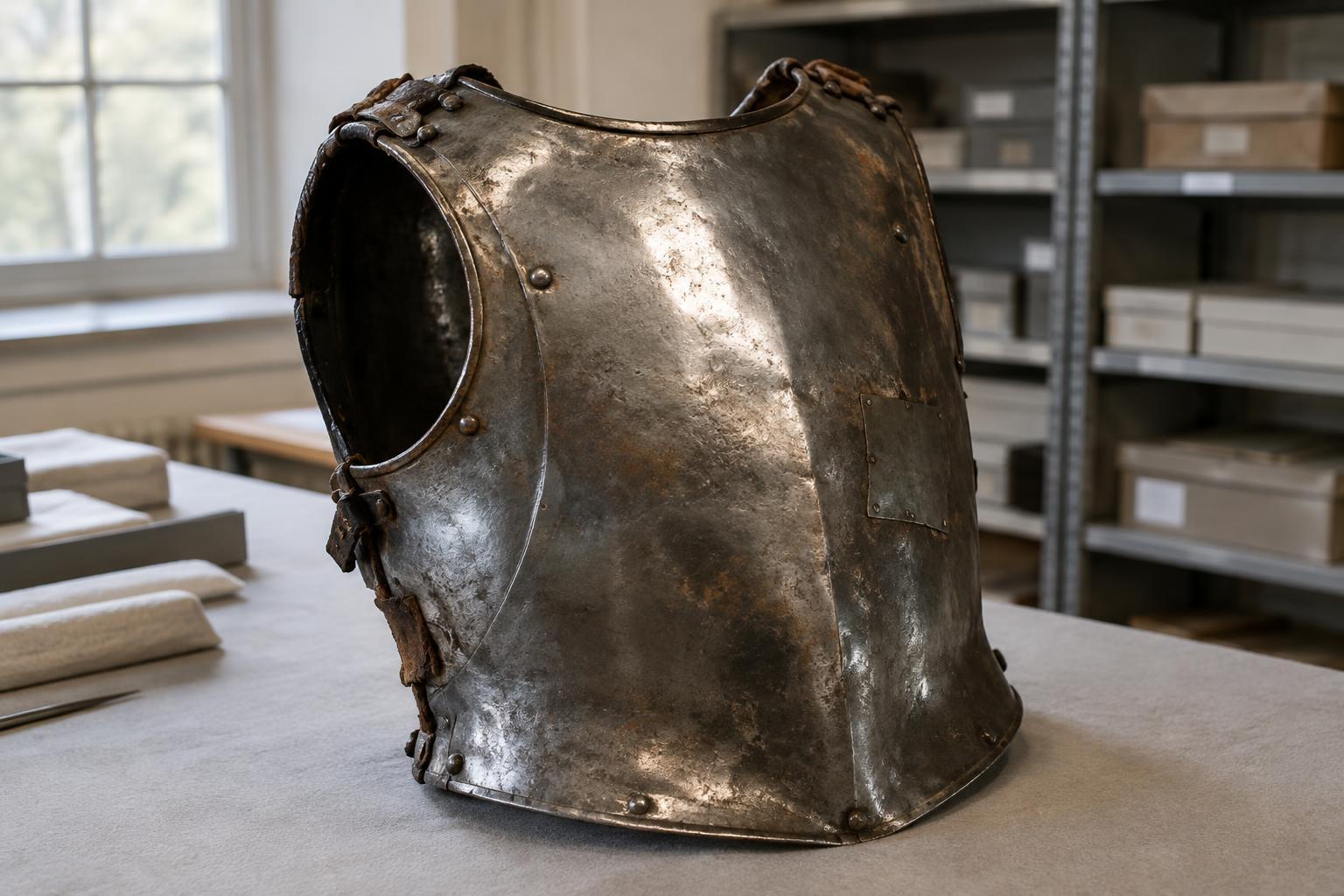
Materials can also reveal what has been lost. Straps, linings, and other less durable components may survive less completely than metal plates. An apparently bare object may therefore look quite different from the assemblage people once handled or displayed. Historians avoid filling every gap with certainty. Instead, they separate what remains visible from what is inferred through comparison, documentation, or evidence of missing attachments.
Construction shows choices and relationships
How parts relate to one another is often as informative as the parts themselves. Edges, seams, rivets, hinges, and decorative borders can show how an object was assembled and where its maker devoted attention. A border that continues neatly across adjoining pieces may support the idea that they were made as a group. A mismatch might prompt questions about replacement, adaptation, or an incorrect pairing made long afterward.
No single construction detail is a universal signature of a workshop or period. Similar solutions could appear in different places, and individual objects could change over time. Historians therefore look for a pattern of evidence: materials, shaping, surface treatment, proportions, and the relationships between components. They also ask what comparison objects can reasonably establish. Resemblance is valuable, but it is not the same as a documented connection.
Later alterations are part of the history
Repair, reuse, collecting, and display can all leave marks on armour. A replacement fitting may reflect a practical need during an object’s earlier life, while a later mount may have been added to make it easier to exhibit. Pieces may also have been assembled from separate objects to create a more complete-looking display. These changes can complicate an attribution, but they are not simply obstacles to be ignored.
A useful interpretation asks when an alteration might have occurred and what purpose it might have served. The answer is not always visible. A changed attachment could be historic, or it could belong to a much later restoration. Inventories, photographs, accession files, and older descriptions may help establish when a feature was already present. Where that evidence is absent, describing an alteration without assigning it a firm date is often the more accurate choice.
Interpretation depends on honest uncertainty
The strongest account connects physical evidence to cultural context without asking the object to prove more than it can. Decoration may point toward taste, patronage, ceremony, or identity, but its meaning depends on where and how it appears. Signs of wear may invite questions about handling or use, yet their cause may remain unclear. Historians can present these possibilities while distinguishing a visible feature from an explanation proposed for it.
Conservation supports this work by helping preserve both the object and the evidence on its surfaces. Treatment decisions are best left to trained specialists, especially when an old repair or fragile remnant might contain information. For readers and visitors, the aim is not to find one hidden answer. It is to see an armoured object as a layered record: made by craftspeople, changed by later hands, and interpreted through evidence that is sometimes incomplete.