Arrival Is Not the Same as Accession
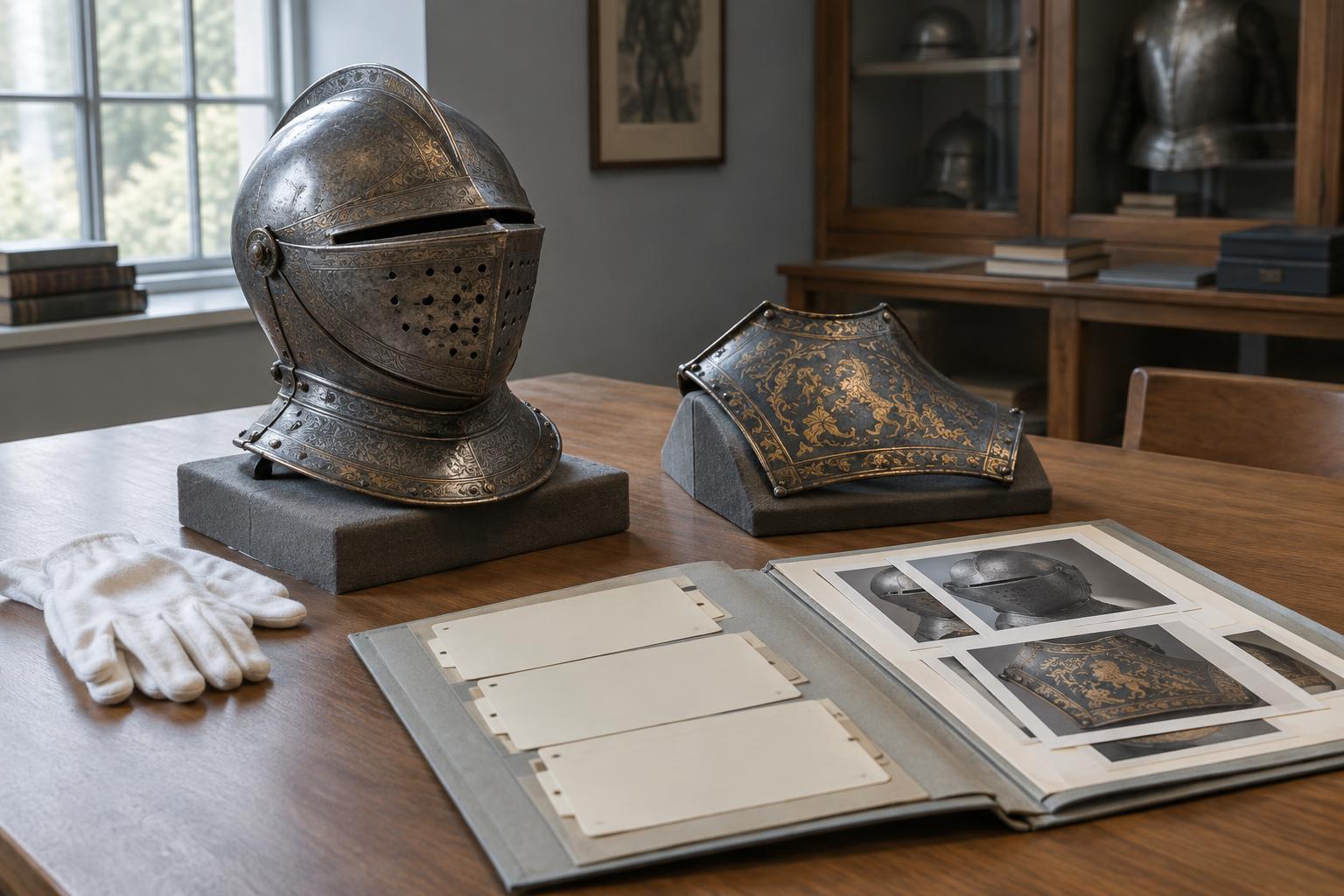
A museum may receive a sword for examination, borrow a helmet for an exhibition or hold a group of armour pieces while a proposed gift is considered. None of these arrangements necessarily makes the objects part of its permanent collection. They may be in the building, photographed by staff and even displayed while ownership and long-term responsibility remain elsewhere.
Accessioning is the formal step through which a museum accepts an object into its permanent collection under its own policies. The precise point varies by institution: approval, completion of transfer documents and entry into the collections record may form distinct stages. The important distinction is between physical custody and a documented, authorised acquisition.
Deciding Whether an Object Belongs
Before accepting an arms object, staff consider how it fits the museum’s collecting purpose. A regional museum might value a modest militia sword with a well-documented local history more than a visually impressive blade with little known about its past. A specialist collection may instead seek an example that fills a gap in its account of armour-making or ceremonial practice. Condition matters, but so do historical context and the ability to interpret the object responsibly.
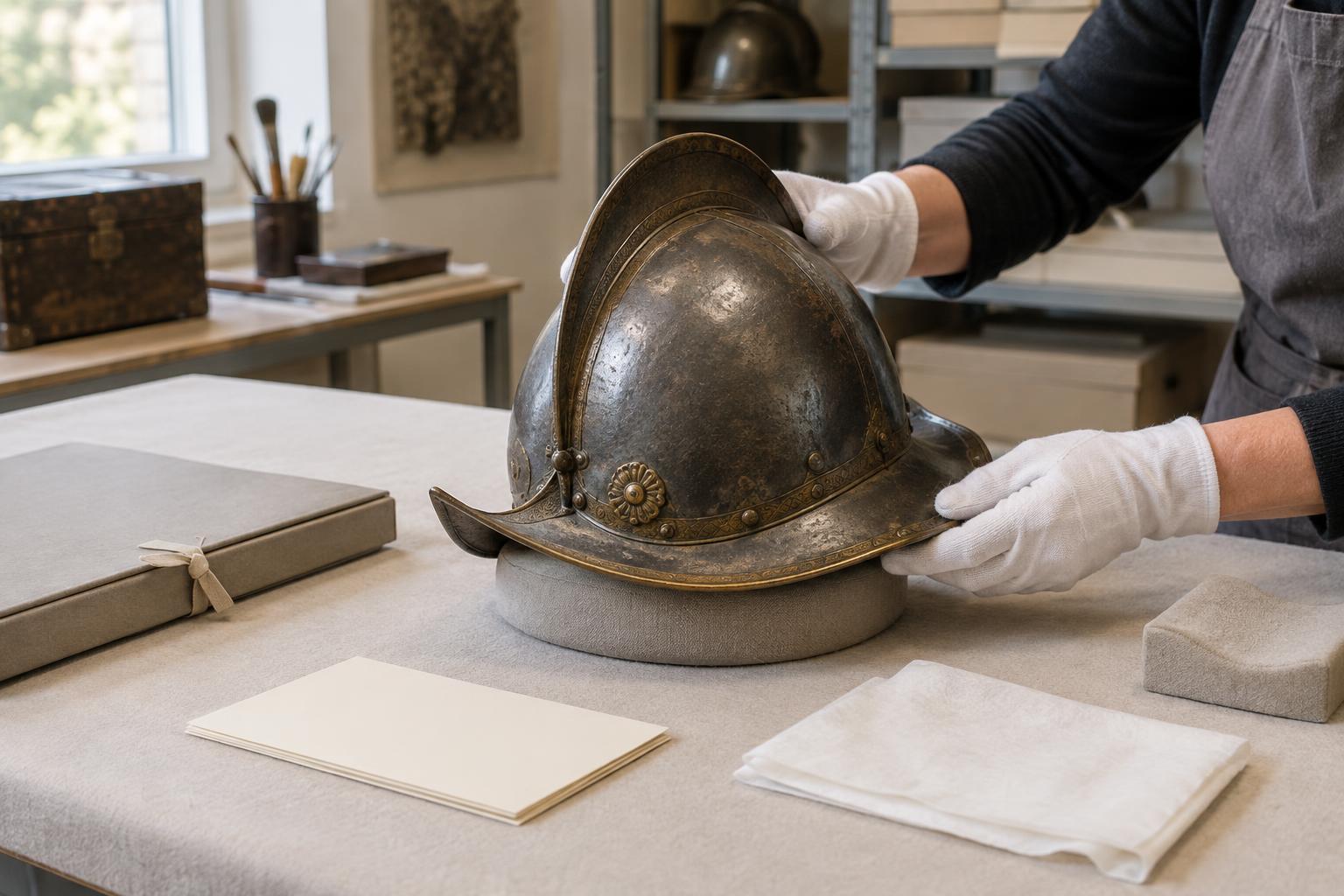
The museum also considers what caring for the object will require. A suit of armour may need substantial storage space and support to prevent strain. A composite object containing metal, leather, wood and textile may need monitoring because its materials respond differently to their surroundings. Accepting an object is therefore a commitment, not just an opportunity to add it to a display.
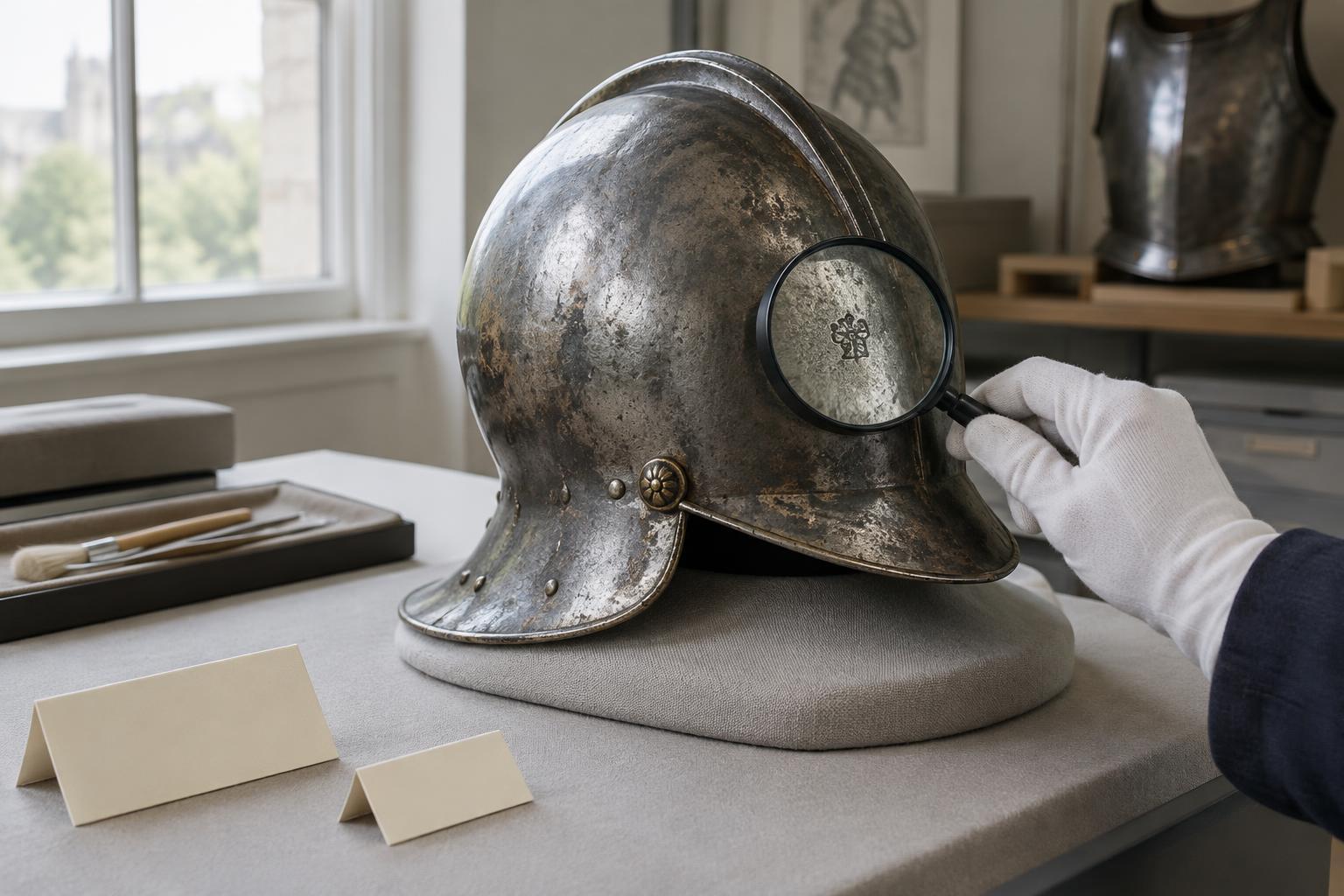
Provenance is another central question. Staff may review records of previous ownership, earlier sales, inscriptions and associated documents, while noting gaps they cannot resolve. They must also consider whether the proposed transfer meets their ethical and legal obligations. These checks can be especially important when an object’s history involves conflict, colonial collecting or uncertain removal from an earlier setting.
From Approval to a Permanent Record
Once the museum has decided to acquire an object, it needs a clear record of the decision and the terms of transfer. A gift, purchase and bequest can each bring different paperwork. Collection procedures differ, but staff generally seek to establish who is transferring the object, what is included and what information accompanies it. A scabbard, helmet lining or later replacement part should not disappear into a vague description of the main object.
An accession number then links the object to its permanent record. The number is an identifier, not a statement of authenticity or importance. Staff record identifying features such as materials, dimensions, marks, inscriptions and visible alterations, often alongside photographs and a condition assessment. With arms and armour, careful wording matters: “described as seventeenth century” preserves a distinction between an earlier attribution and a conclusion the museum can support.
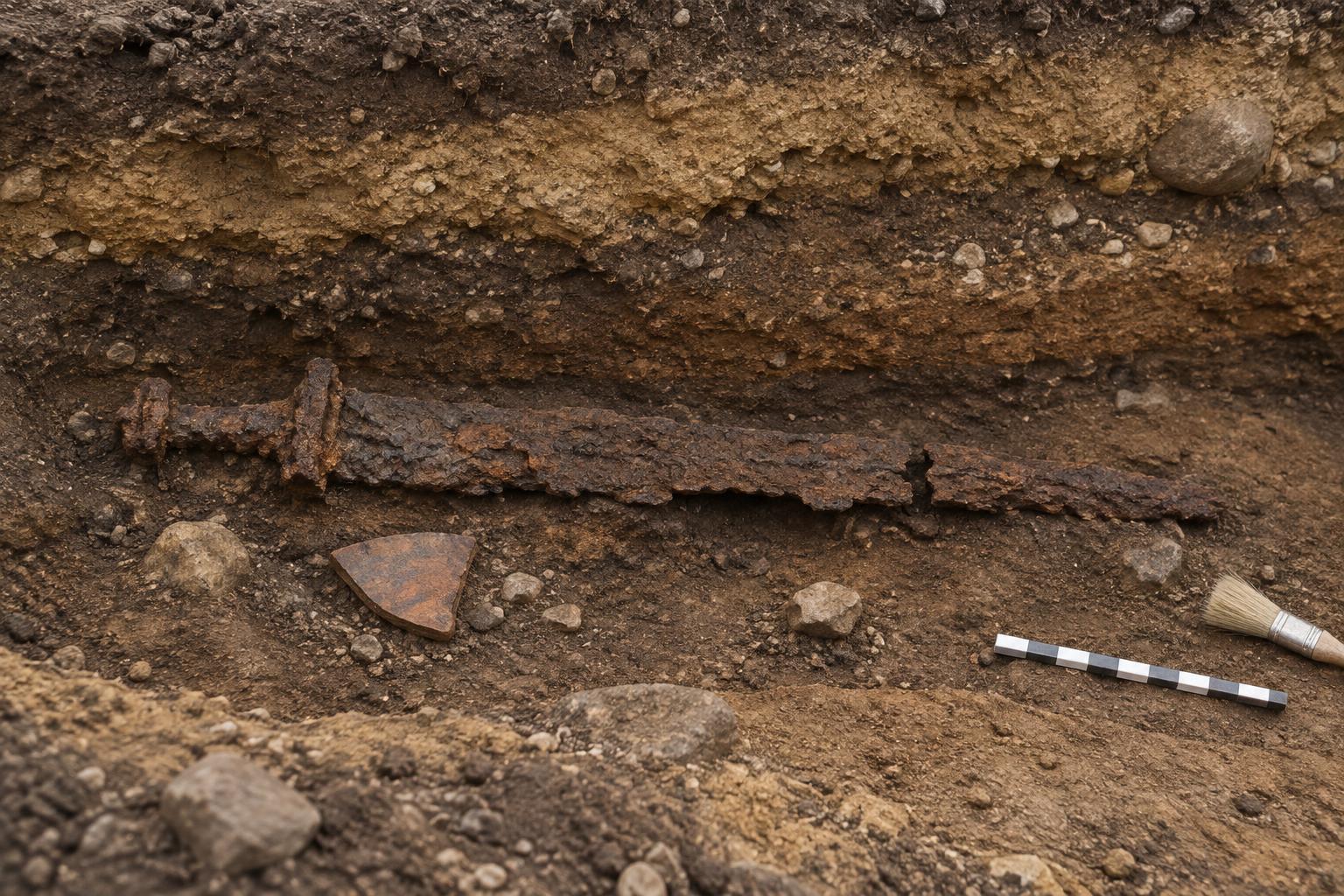
Records may be expanded as research continues. A blade once catalogued as belonging to one period might later be identified as a reproduction or as a piece assembled from components of different dates. Accessioning does not end that inquiry; it creates a stable record in which changing interpretations can be documented.
Why the Paper Trail Matters
An accession record helps future staff connect an object to its history even when labels, storage locations or curatorial opinions change. It can show whether an inscription was present on arrival, whether a detached component was acquired with the object, and which claims came from a donor rather than from later examination. Without that context, an object’s appearance can invite confident but misleading stories.
The same record supports responsible interpretation for visitors. A museum can explain why a sword was commissioned, worn, exchanged or preserved without treating every mark as proof of a dramatic event. It can also acknowledge uncertainty openly. For historic arms, whose later owners may have valued them as heirlooms, trophies, artworks or symbols, the history of collecting is often part of the story.
Permanent Collection, Continuing Care
Accessioning brings an object into a system of ongoing care. Staff can use its record to track location, document condition changes and plan appropriate storage or display. Conservation decisions should take account of the object’s materials and historical evidence: polishing away corrosion, for example, may also remove traces that help explain how an object was made or used.
“Permanent” describes the museum’s intention to hold the object for the long term, not a promise that its interpretation will never change. New documentation, closer examination or conversations with communities connected to an object may reshape how it is understood. The accession record gives those changes a traceable foundation. For a historic arm or piece of armour, becoming part of a museum collection means gaining more than a place on a shelf: it gains an accountable history of how the museum came to hold it and how that understanding develops.