An object is only part of the evidence
A sword in a display case invites close attention to its shape, materials and decoration. Those features can suggest how it was made and how its appearance may have changed over time. They cannot, by themselves, explain why it ended up in the ground. Archaeological find context supplies another part of the story: where the object was found, what surrounded it and how those relationships were recorded.
A blade recovered from a burial, a settlement deposit or a river may raise different questions, even if the blades look similar. One setting might prompt discussion of funerary choices; another might point toward everyday activity or later disposal. None of these interpretations follows automatically from the location alone. Context gives curators and archaeologists evidence to weigh, not a ready-made account of an owner or an event.
Location and layers establish relationships
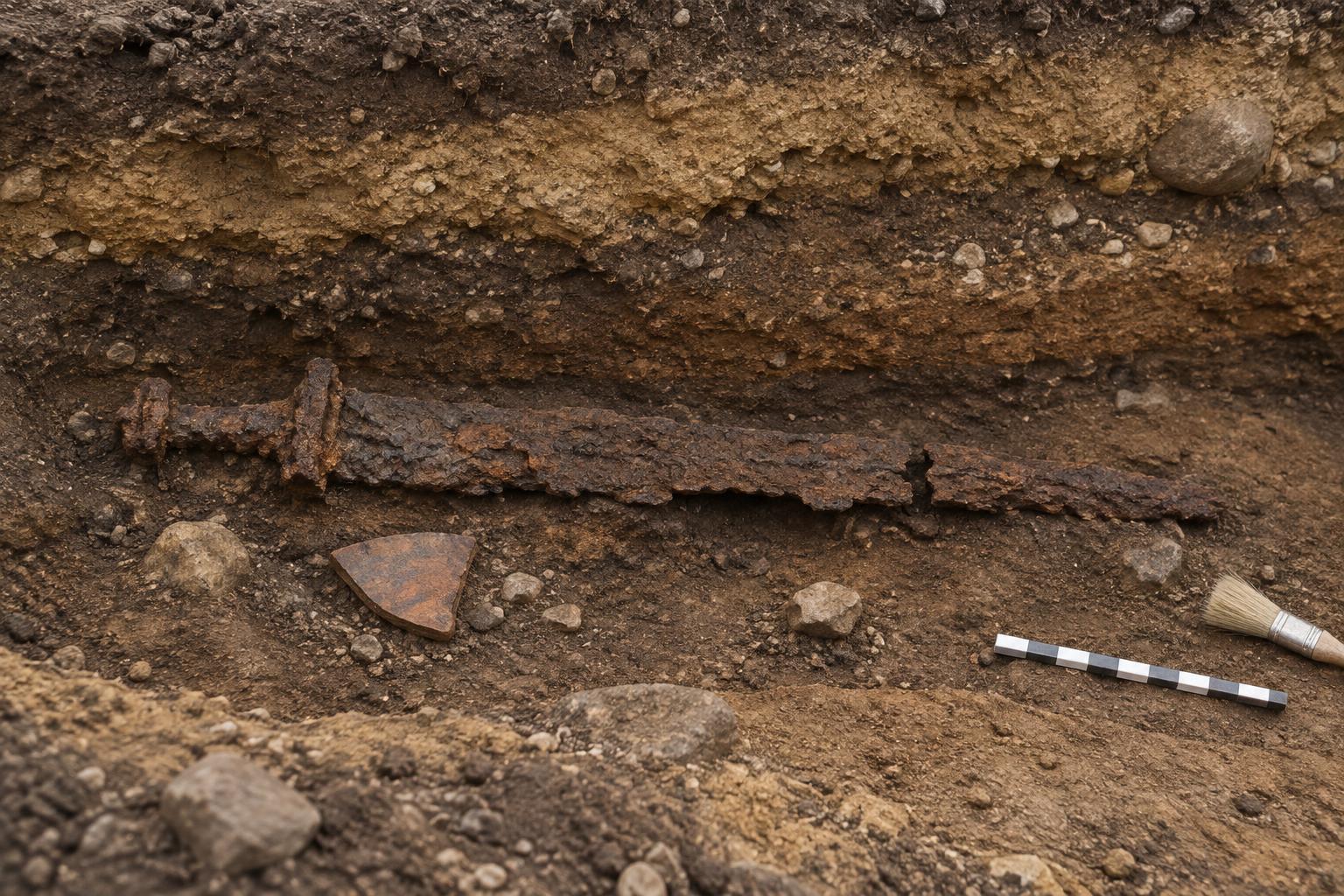
A precise findspot is more informative than a broad place name. Knowing whether an armour fragment came from a floor, a ditch fill or a disturbed layer can help researchers ask whether it was left where it was used, moved during later activity or deposited for another reason. Stratigraphy—the relationship between layers and features—can also help establish a sequence. If one deposit lies beneath another undisturbed deposit, their order matters even when an exact date remains uncertain.
That sequence can be difficult to recover once an object has been removed without documentation. A museum may retain an impressive piece but lose the evidence that connected it to a particular feature or group of finds. Labels such as “found near a fort” may be useful starting points, yet they are less precise than excavation records that describe the object's position and the condition of the surrounding deposit. Good interpretation makes that difference in certainty visible.
Associated finds can change the question
Nearby objects and materials can broaden the interpretation of arms and armour. An item found with personal ornaments, tools or animal remains may belong to a deposit assembled for reasons that cannot be inferred from the weapon alone. In a burial, its position in relation to the body and other grave goods may matter as much as its design. In a workshop area, unfinished pieces or manufacturing debris could direct attention toward craft rather than combat.
Association does not necessarily mean that everything in a deposit was used together or belonged to one person. Objects can be reused, collected, inherited or moved by later disturbances. Soil conditions and excavation methods also affect what survives and what is noticed. A careful account therefore distinguishes observations—such as two objects recorded in the same feature—from interpretations about why they were placed there.
Deposits reflect choices and later change
The condition of an object can be revealing, but damage requires cautious reading. A bent blade or incomplete helmet might reflect deliberate treatment before deposition, breakage during use, later reuse or damage after burial. Its context can help narrow the possibilities: the location of fragments, their relationship to other finds and signs of disturbance may all matter. A striking appearance alone cannot establish an ancient intention.
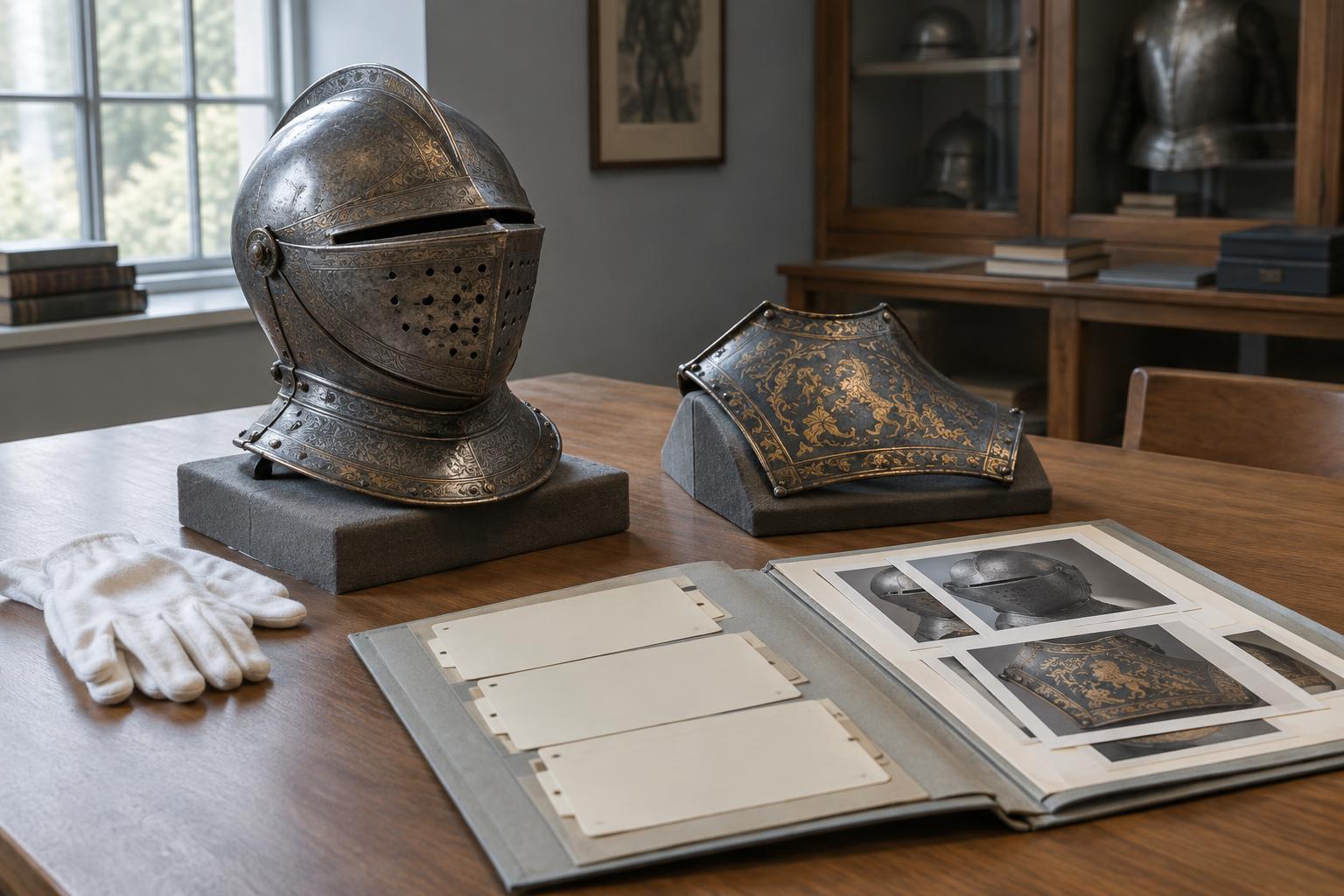
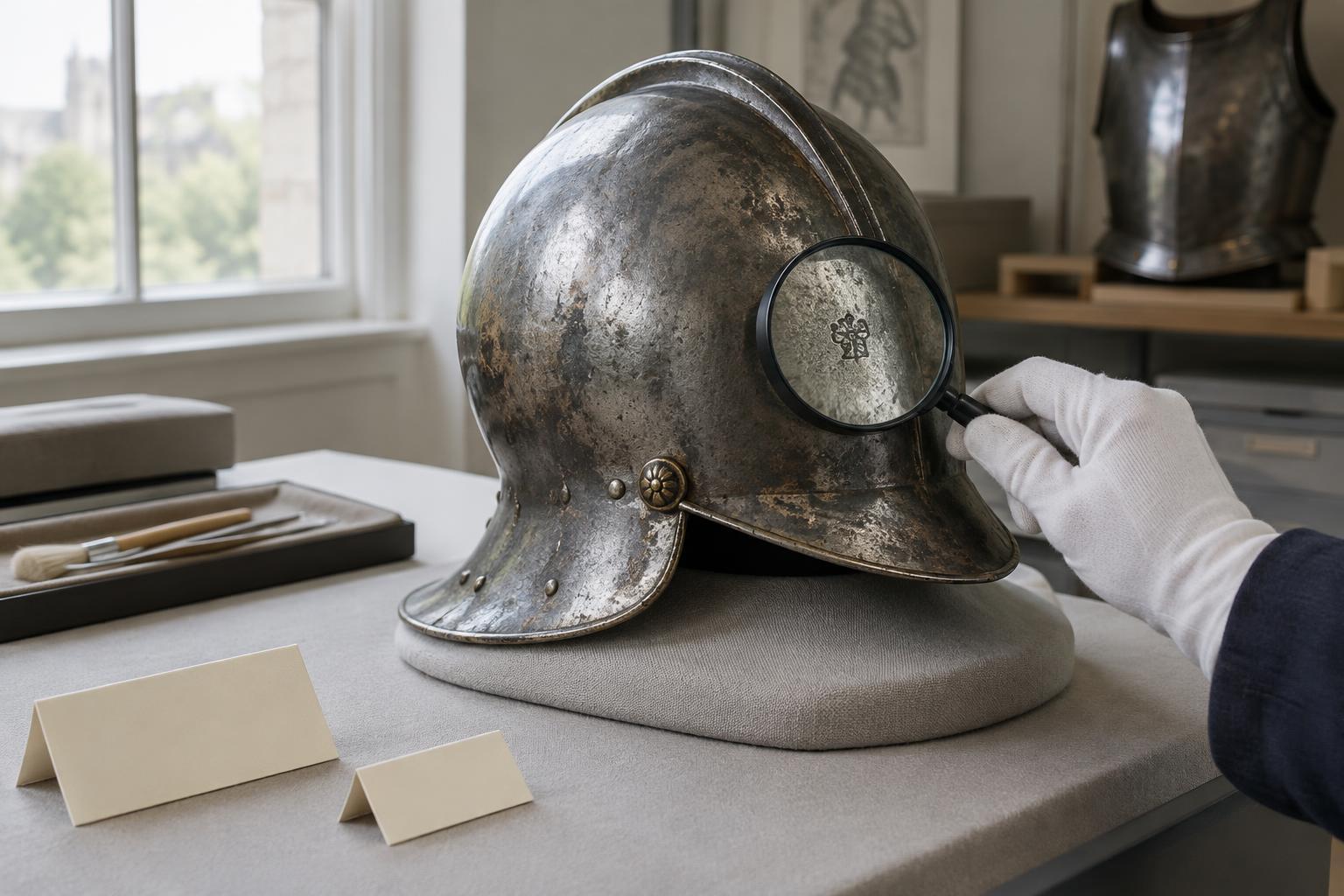
After deposition, water, pressure, corrosion, animals and human activity can alter both an object and its surroundings. Conservation may reveal details obscured by corrosion, while also requiring decisions about how much fragile material to expose or retain. Photographs, plans, excavation notes and conservation records preserve evidence that a cleaned and mounted object cannot display on its own.
What museums can explain—and what they cannot
Museum interpretation is strongest when it connects the object to the quality of its evidence. A well-documented find may support a detailed explanation of its setting and associations. An older collection item with only a vague provenance may be discussed through its craftsmanship and comparable forms, while its original setting remains unknown. Both objects can be worth displaying, provided the label does not give uncertain conclusions the weight of recorded facts.
Visitors can look for simple clues in a label: Does it name a specific archaeological feature or only a region? Does it separate what was found from what is inferred? Does it acknowledge disturbance or gaps in the record? These questions make room for a richer view of historic arms and armour. Rather than treating them only as isolated examples of skill or status, context helps reveal how people made, kept, altered, deposited and later encountered them.