Start with the object, not the label
A catalogue entry can look deceptively definite: a title, a date, a place, and a list of materials. Yet those short fields often compress years of observation and interpretation. When reading about a helmet, sword, shield, or piece of armour, begin with the parts that describe what can be examined directly. Materials, dimensions, construction, decoration, and condition give you a foundation before you consider who made the object or when.
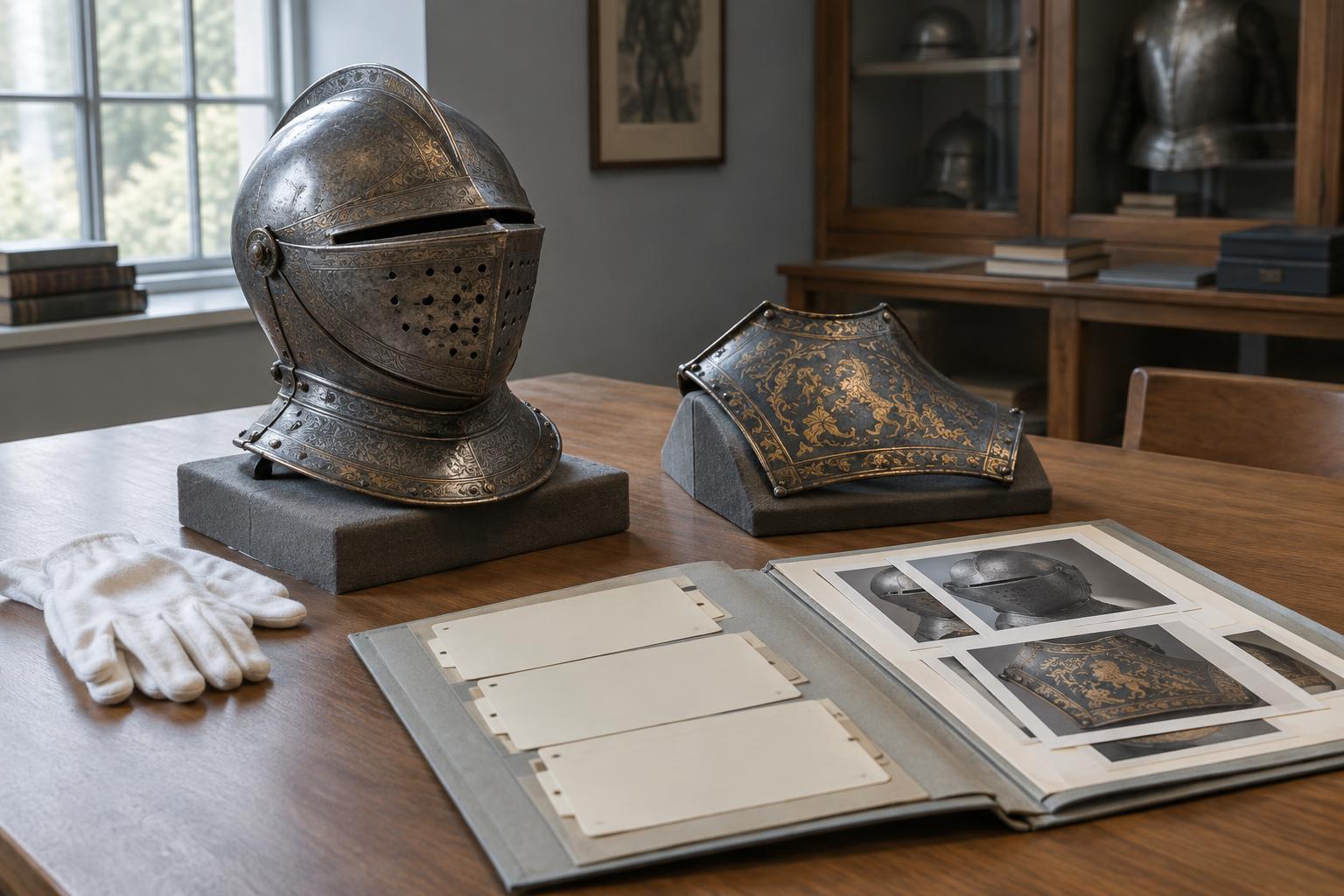
Even apparently simple titles deserve a second look. A museum may use a familiar name to help visitors find an object, while the catalogue text explains that its original name or purpose is uncertain. Likewise, a photograph presents only selected views. It may show a polished exterior more clearly than repairs, internal fittings, or marks hidden beneath later additions. Read the entry as an account of available evidence, not as a complete substitute for the object.
Understand what attribution identifies
An attribution proposes an origin, maker, workshop, or cultural setting. The wording signals how strongly the catalogue supports that proposal. “By” generally expresses more confidence than “attributed to,” while “workshop of,” “school of,” and “in the style of” describe different relationships to a named maker or tradition. These phrases are not interchangeable: an object in a maker’s style need not have passed through that maker’s workshop.
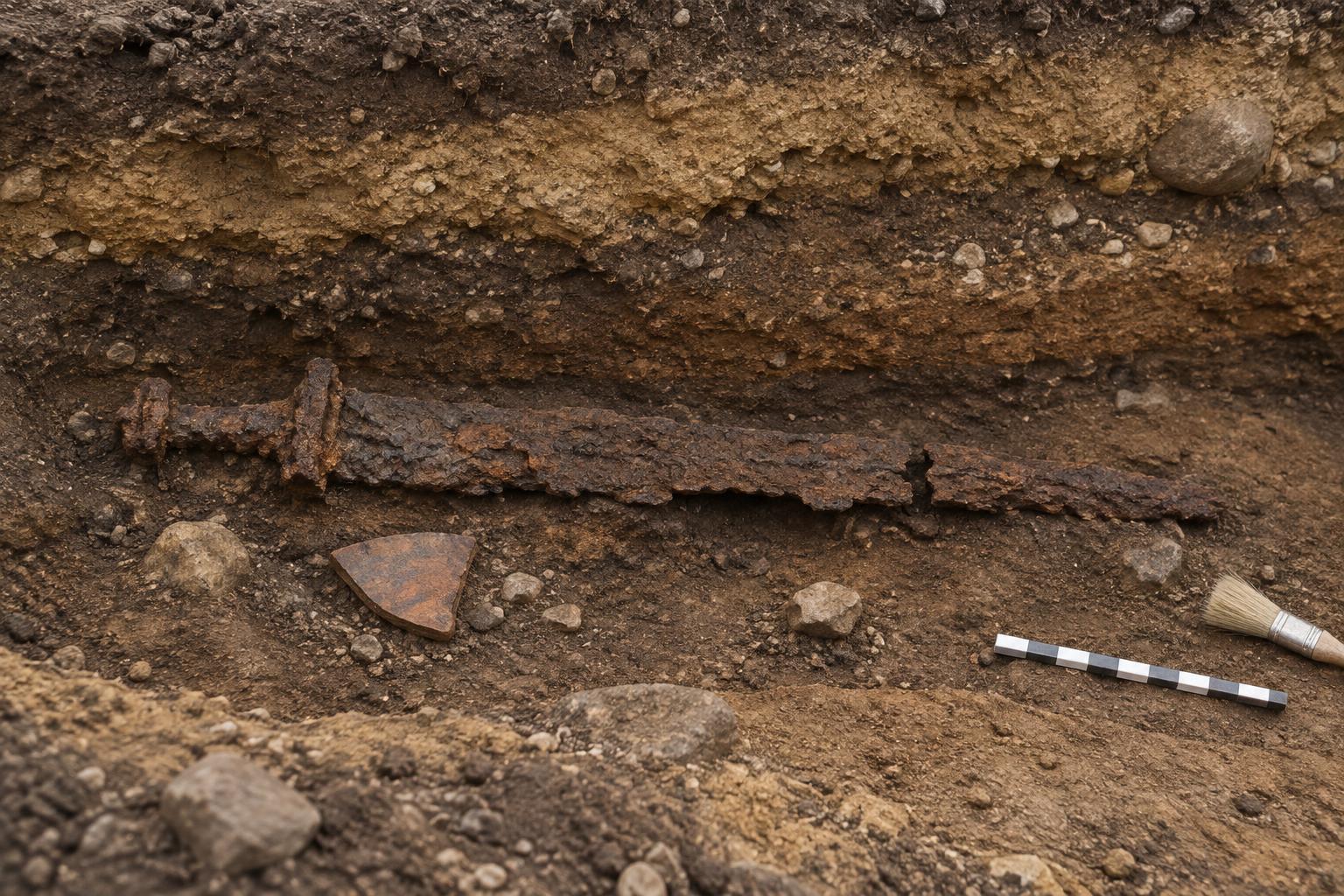
For historic arms and armour, attribution may draw on form, decorative patterns, construction, inscriptions, or comparison with related objects. Each kind of evidence has limits. A distinctive motif might have been copied far from its point of origin, and a marked component may have been fitted to another piece later. Ask whether the proposed place refers to manufacture, decoration, use, or discovery. An object can have a history in several locations without all its parts having been made in one of them.
Read dates as ranges of evidence
A date such as “late 16th century” is usually an estimate, not a record of a single moment of manufacture. Museums may date an object through its shape, techniques, decoration, associated documents, or comparison with securely dated examples. A broad range can be the most honest description when the evidence does not support greater precision.
Dating also becomes complicated when an object has changed. Armour could be altered to fit a new wearer, while a weapon might acquire a replacement hilt, scabbard, or decorative mount. An entry may give separate dates for components or distinguish an original core from later additions. If its title offers one date but the detailed description offers several, the detail is worth reading: it may explain the object’s life rather than contradict the heading.
Notice the language of uncertainty
Words such as “probably,” “possibly,” “believed to be,” and “traditionally associated with” are useful clues. They do not necessarily indicate a poor catalogue. They show where an interpretation rests on incomplete evidence. A traditional association, for example, may be part of an object’s collecting history without proving that it belonged to the person named in that tradition.
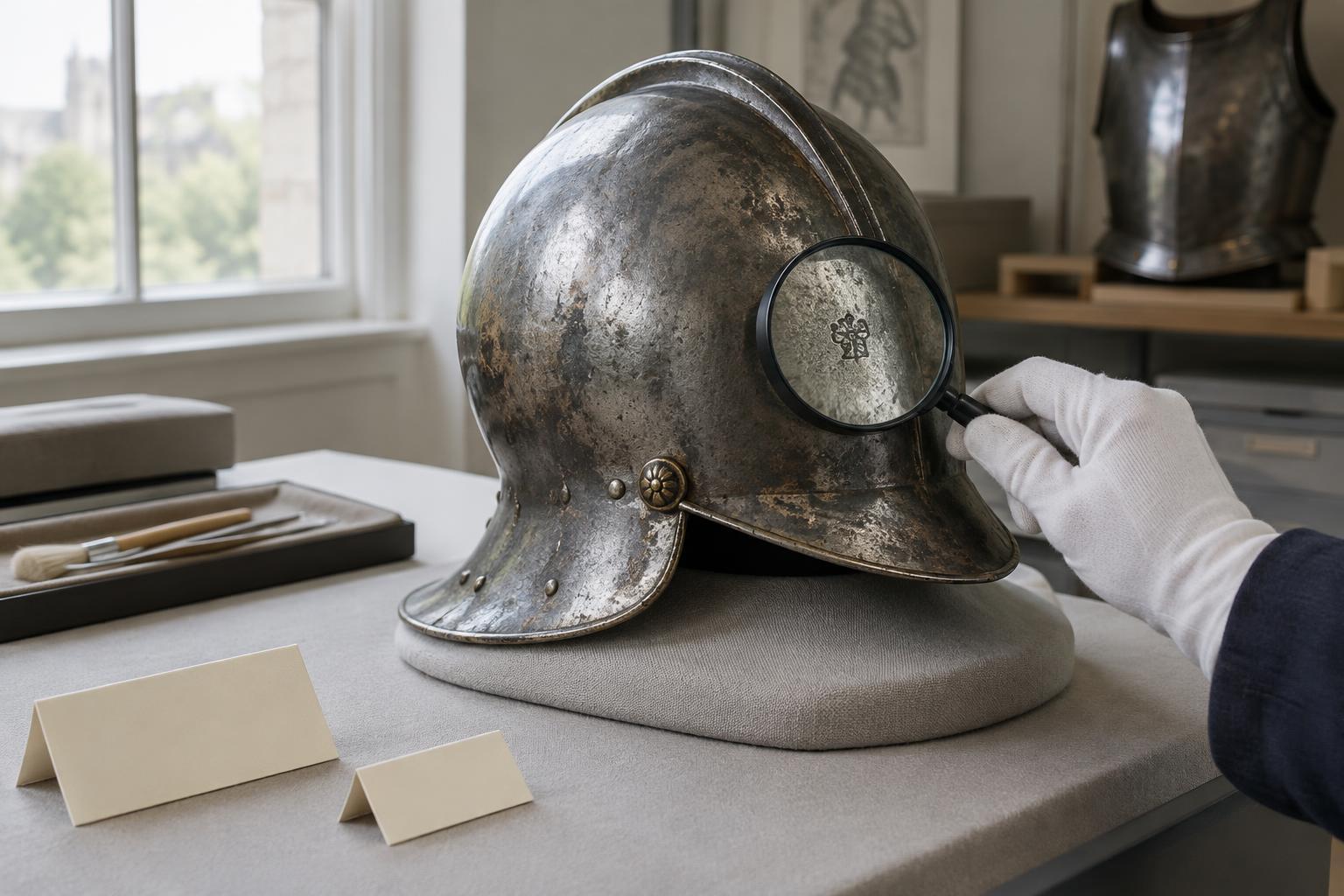
Pay attention to the difference between observation and interpretation. “The surface bears an engraved emblem” describes a visible feature; identifying that emblem with a particular owner may require further support. Older identifications can also remain in records because they help explain past displays or publications. If a catalogue distinguishes an earlier label from its present attribution, it is showing how understanding has developed. Where uncertainty remains, resist turning a plausible suggestion into an established fact.
Use provenance and condition to complete the picture
Provenance records an object’s known history of ownership or custody. It is not the same as the place where the object was made. A gap in provenance does not, by itself, establish where an object was during that period; it tells you what the available record does not currently document. Exhibition history and references to earlier catalogues may show how an identification gained acceptance, but repetition alone is not independent proof.
Condition notes matter just as much for interpretation. Corrosion, restoration, missing parts, and modern mounts can affect what can be seen and how confidently features can be identified. An object assembled from components may still be historically revealing, provided its catalogue explains those components clearly. The most rewarding way to read an entry is to hold its fields together: compare the title with the detailed description, check what supports the date and attribution, and keep the stated uncertainties intact. That approach makes the catalogue a guide to questions as well as answers.