A catalogue entry is a starting point
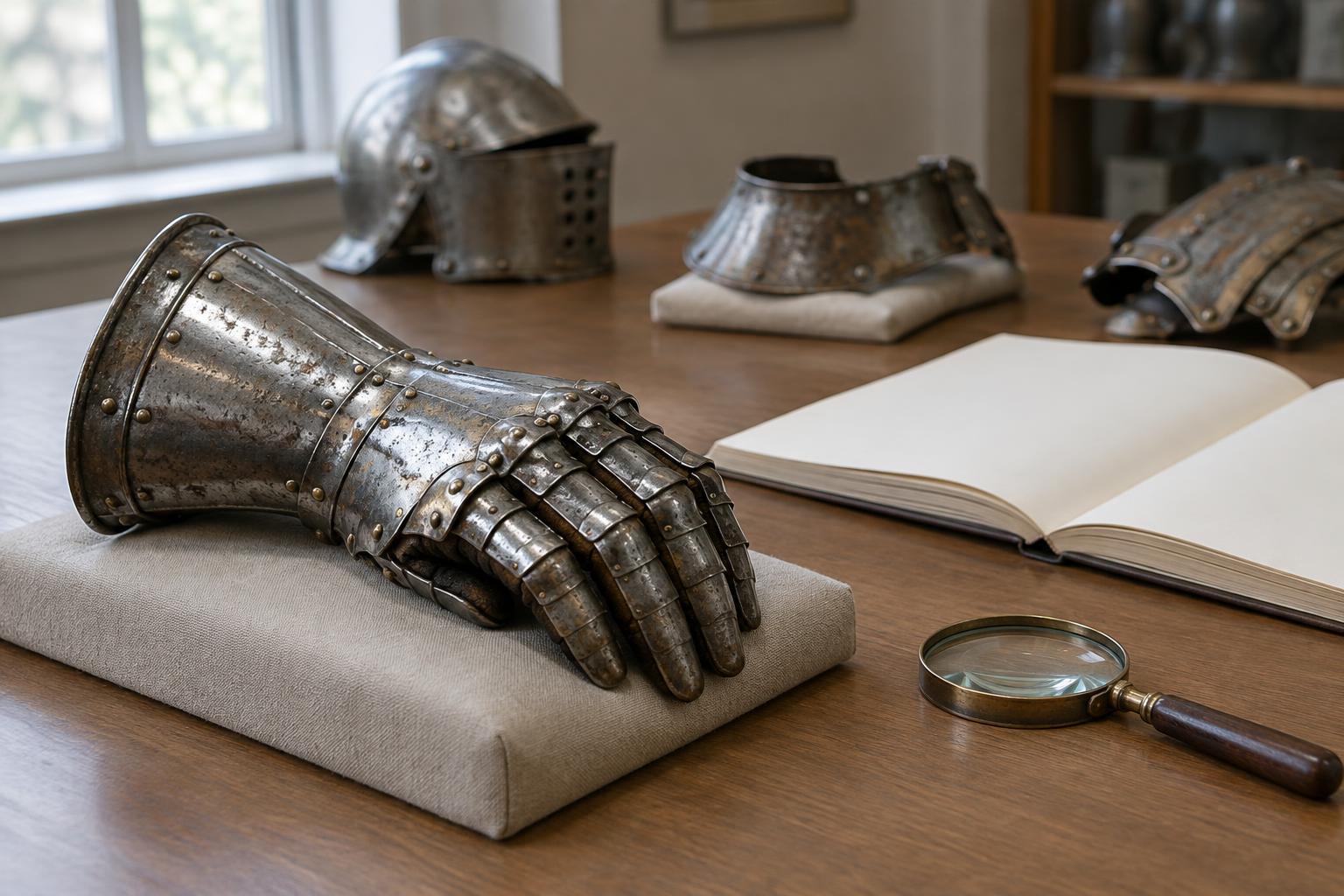
A public collection record gives an object a place in a museum’s catalogue. For a piece of armour, it may list a name, materials, measurements, an estimated place and period of manufacture, an accession number and one or more photographs. These details make objects easier to find and compare. They can also open questions: why is a helmet dated broadly while a nearby example has a narrower date? Why does one entry name a maker and another say only “attributed to”?
The entry is not the object itself, nor is it a complete account of everything the museum knows. It is a structured description assembled from surviving evidence and earlier documentation. Some fields support routine collection management; others are written for visitors. Reading it well means noticing both what it states and how confidently it states it.
Names, dates and materials are interpretations
Object names can make unfamiliar things searchable, but they may reflect modern museum vocabulary rather than a term used by the people who made or owned the object. A sword, shield or breastplate might have acquired several names as it passed between languages, collections and cataloguing systems. When a record supplies an alternative title or an older classification, that difference may reveal a change in interpretation rather than a change in the object.
Dates and places also deserve careful reading. A style, inscription or documented ownership history may support an attribution without proving every stage of an object’s manufacture. Armour could be altered, repaired or assembled from parts made at different times. Likewise, a brief materials field such as “steel and leather” may not describe every lining, fastening or later replacement. Words including “probably,” “possibly” and “attributed to” are useful signals of uncertainty, not flaws to be ignored.
Provenance is often uneven
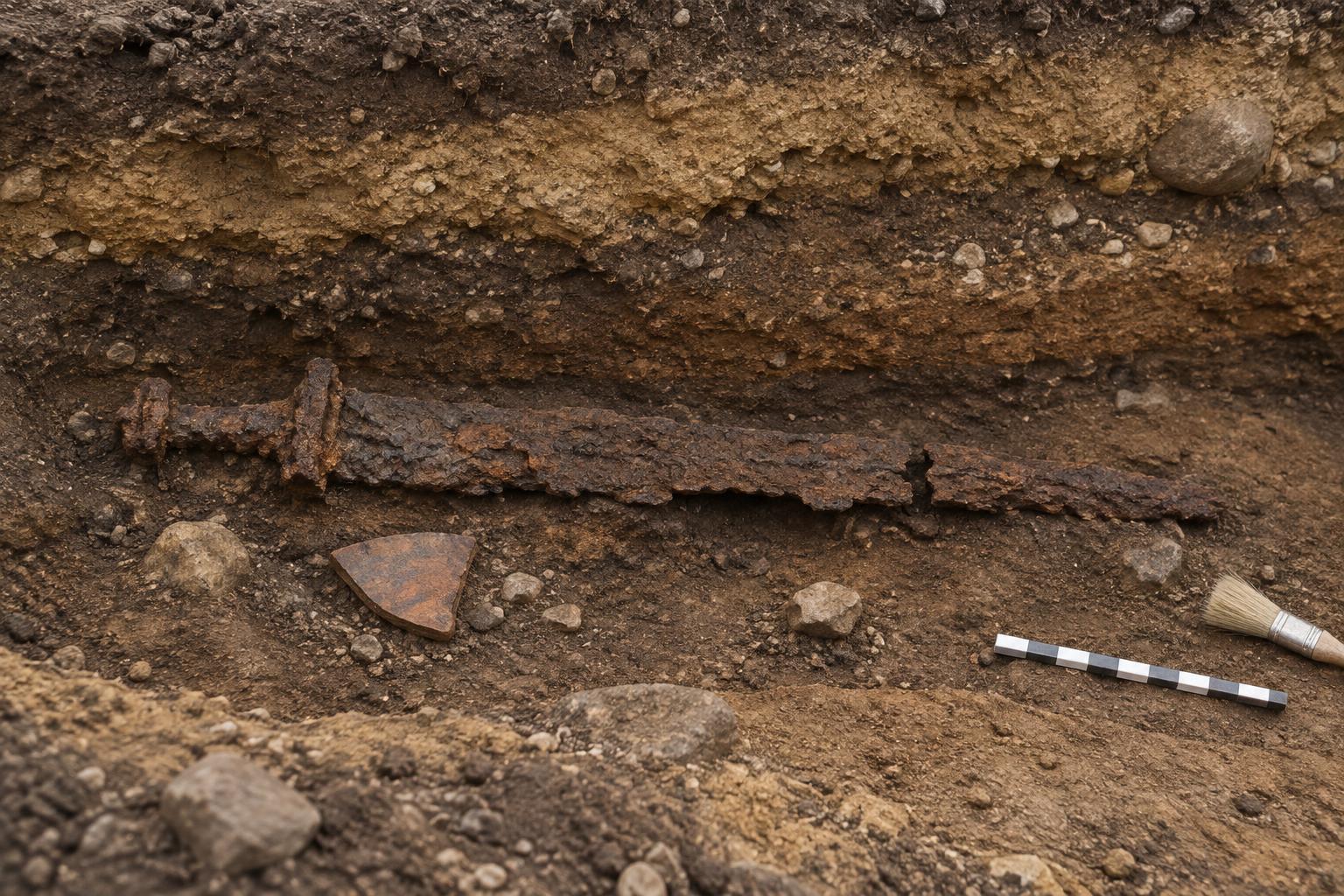
Provenance describes an object’s known history of ownership or custody. A public record might name a donor and the year an item entered a museum while saying little about the centuries before that. A long blank interval does not by itself establish what happened during those years. Equally, a familiar collector’s name should not be mistaken for a complete account of how the object reached that collection.
This matters when considering historic arms and armour, which may have been inherited, traded, excavated, displayed or reworked. An entry may distinguish documented facts from traditions attached to an object, such as a claimed connection to a particular person or event. If it does not, readers should treat a dramatic association cautiously. Accession numbers, bibliography fields and links to related objects can help place a claim in context, but they do not automatically settle it.
Images show surfaces, not the whole story
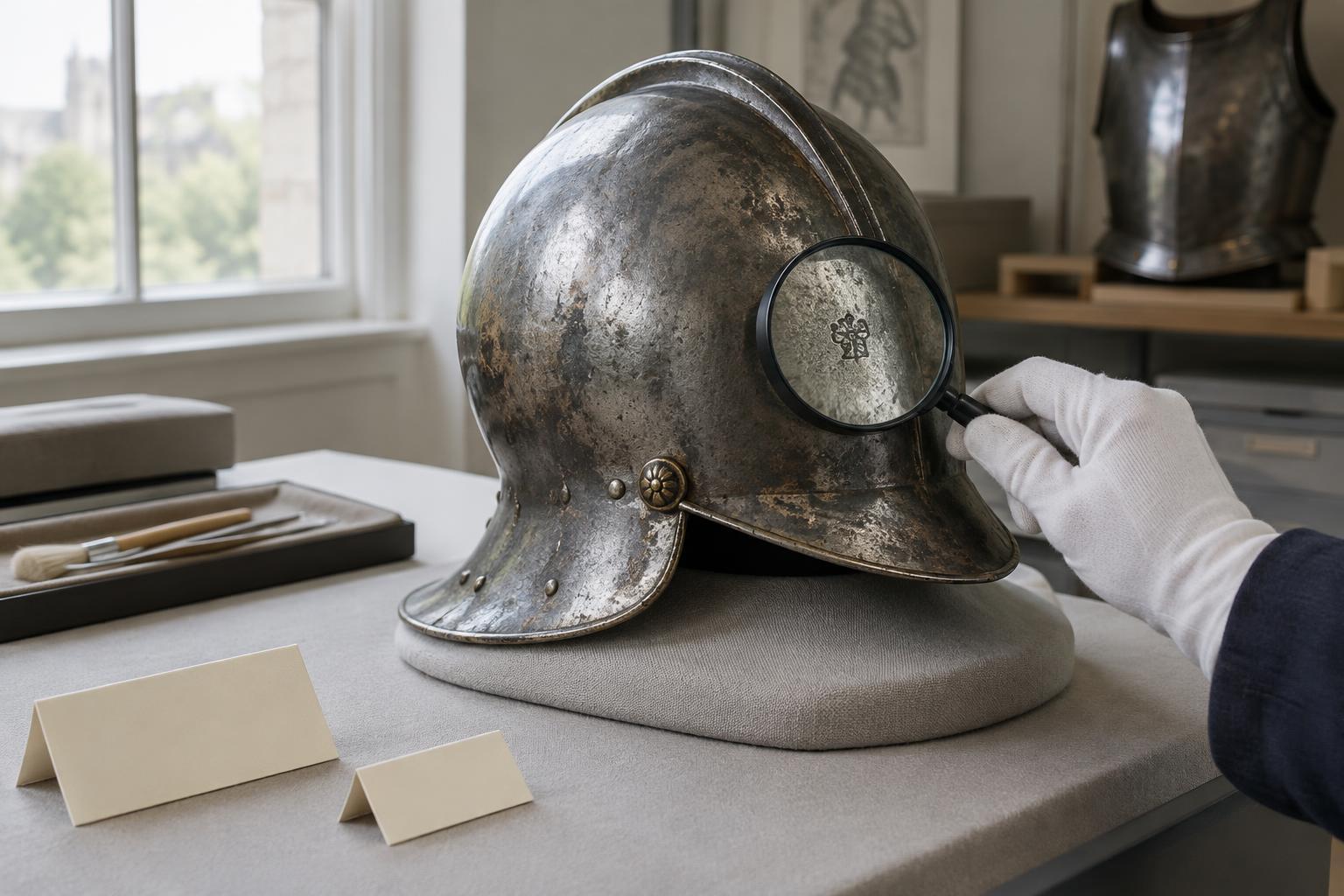
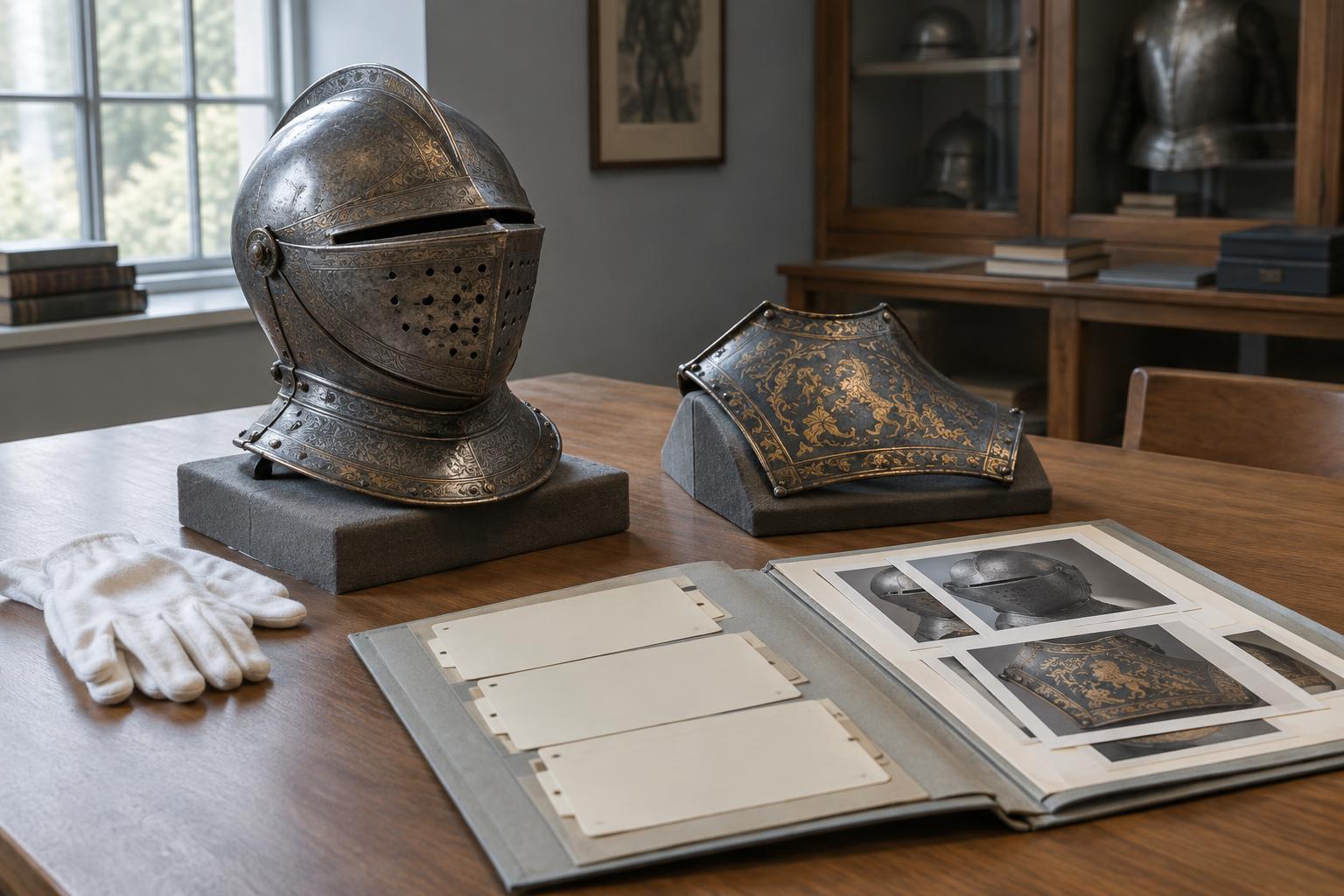
Photographs are among the most inviting parts of an online record. They can reveal decoration, wear, inscriptions and the relationship between components. Yet lighting and camera angle affect the appearance of colour and finish. A single frontal view may conceal the interior of a helmet, the back of a shield or the joins in a composite object. An image also cannot always show which surfaces are original and which have been cleaned, restored or replaced.
Conservation notes, when published, add another layer of understanding. They may explain how condition affects what can be seen or why an object is displayed in a particular way. Their absence from a public page does not mean no examination has occurred: detailed condition information may be kept in separate records. For a visitor, the soundest approach is to describe visible features precisely while reserving judgment about features the images cannot establish.
Read across the record—and beyond its fields
A useful reading habit is to compare an entry’s title, description, dating, images and provenance rather than relying on one field. Look for distinctions between an object’s place of manufacture, its place of use and the place where it was collected. Notice whether decorative symbols are identified or merely described. A motif may be visible without its meaning being certain, especially when the original setting or audience is unknown.
Public databases are valuable precisely because they make collections discoverable. Their limits are also worth respecting. Records may be revised as staff examine objects, reconcile older terminology or find new documentation; some contextual material may sit in exhibition labels, publications or archives instead. Treating a catalogue entry as a map of the available evidence, rather than a final verdict, leaves room for the craftsmanship, cultural context and unresolved histories that make museum objects worth studying.