What an original group can tell us
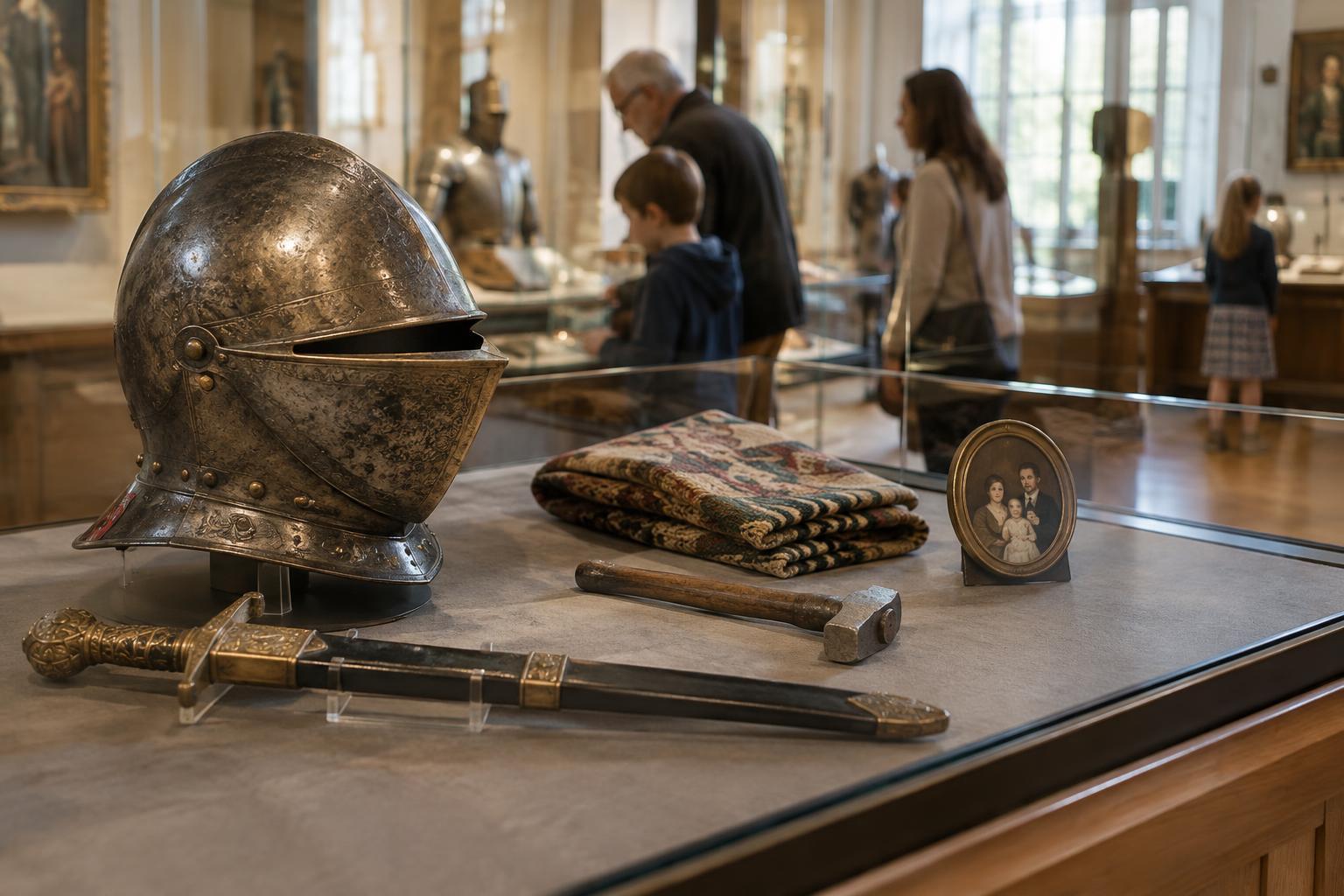
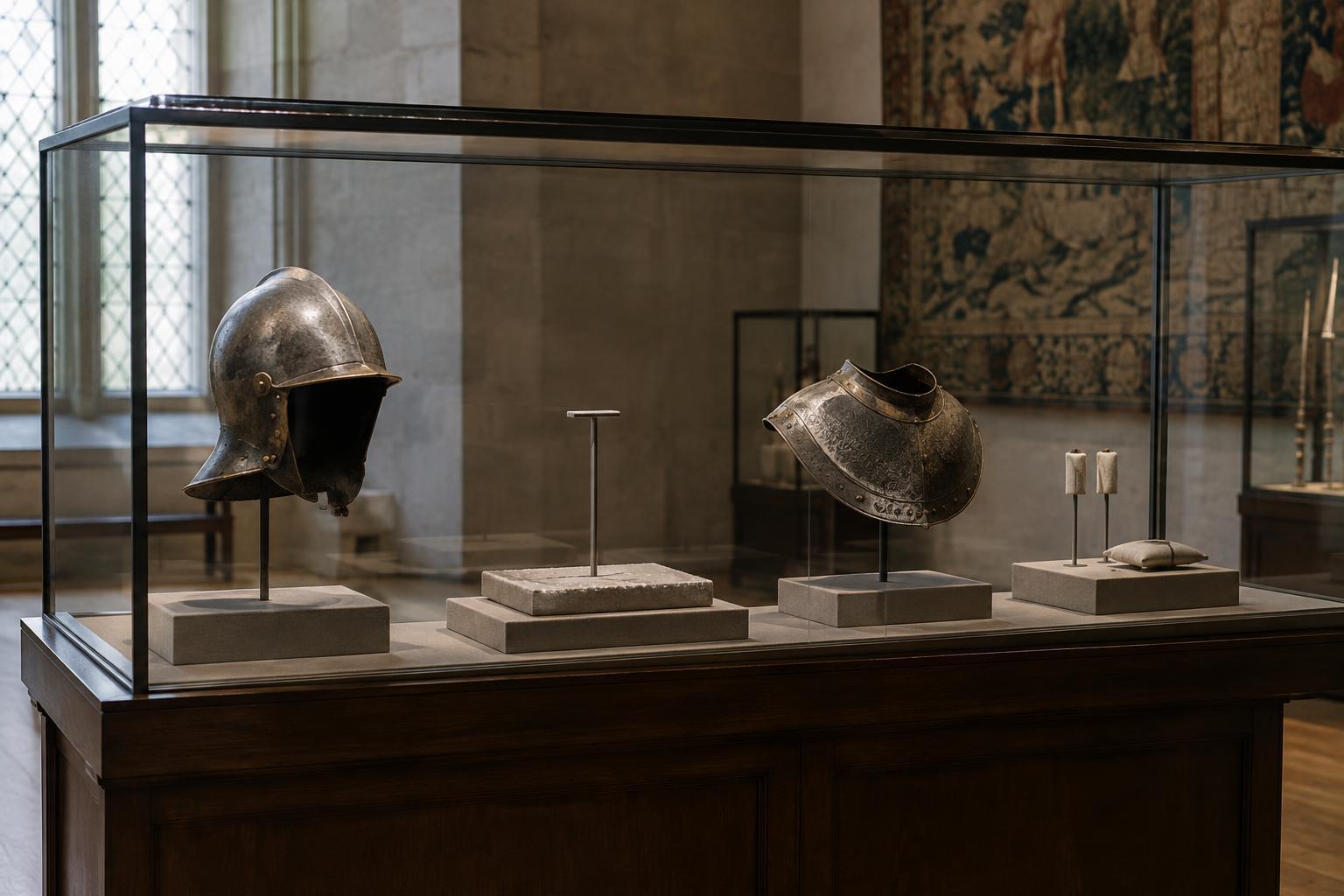
Historic arms and armour often entered collections as groups rather than isolated objects. A suit of armour might have included interchangeable pieces, while ceremonial weapons could have been kept with cases, mounts or other objects made for the same setting. When those items are separated, a visitor may see only a single helmet or sword, with little indication of how it once belonged to a larger whole.
Separation can happen at many points in an object’s history: during inheritance, sale, storage, repair or a museum’s reorganisation. Museums use inventories to investigate such changes. These records can preserve an earlier arrangement, record where an item was kept or describe companions that are no longer nearby. They offer a way to ask not only “What is this object?” but also “What was it understood to belong with?”
Reading an inventory as a historical record
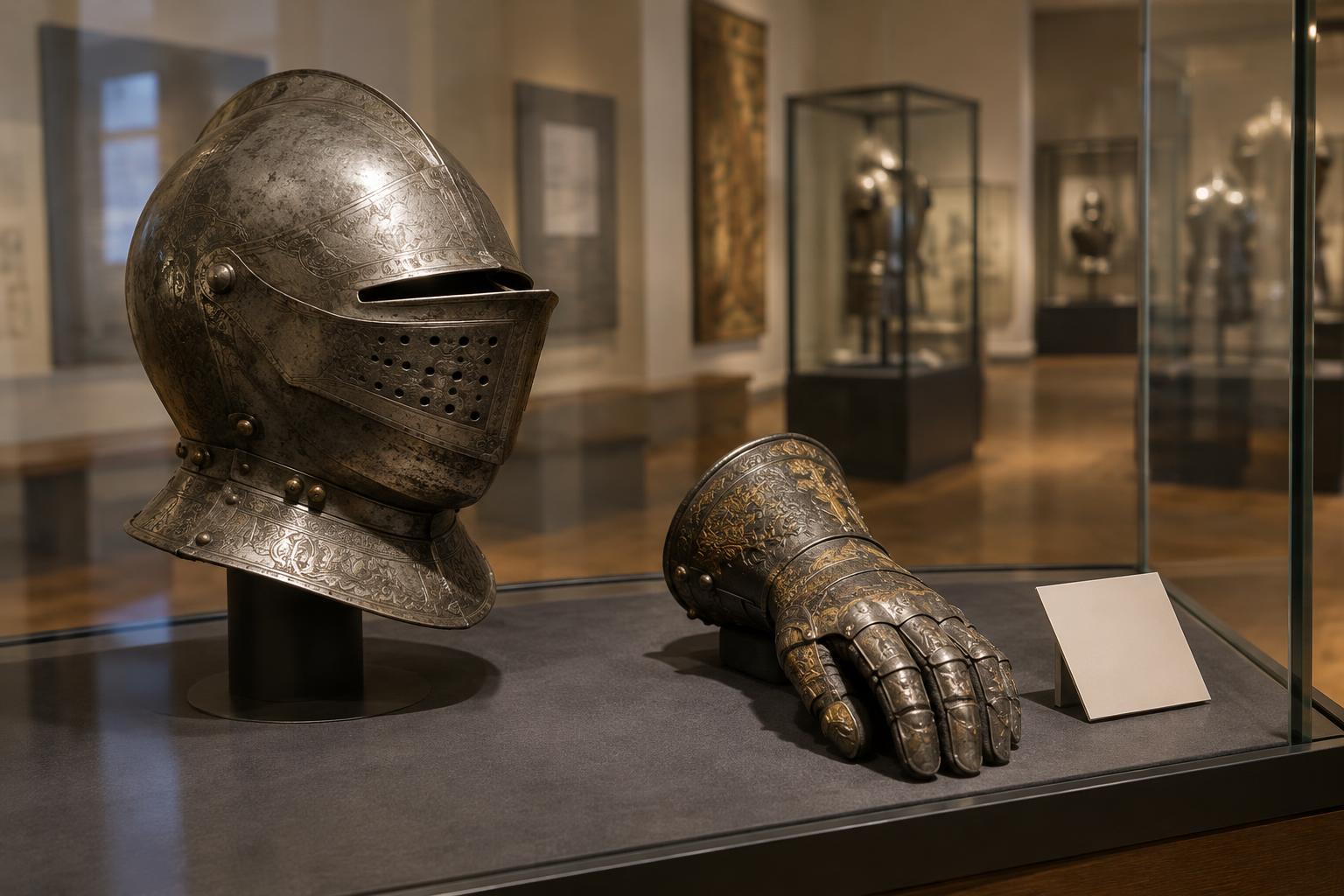
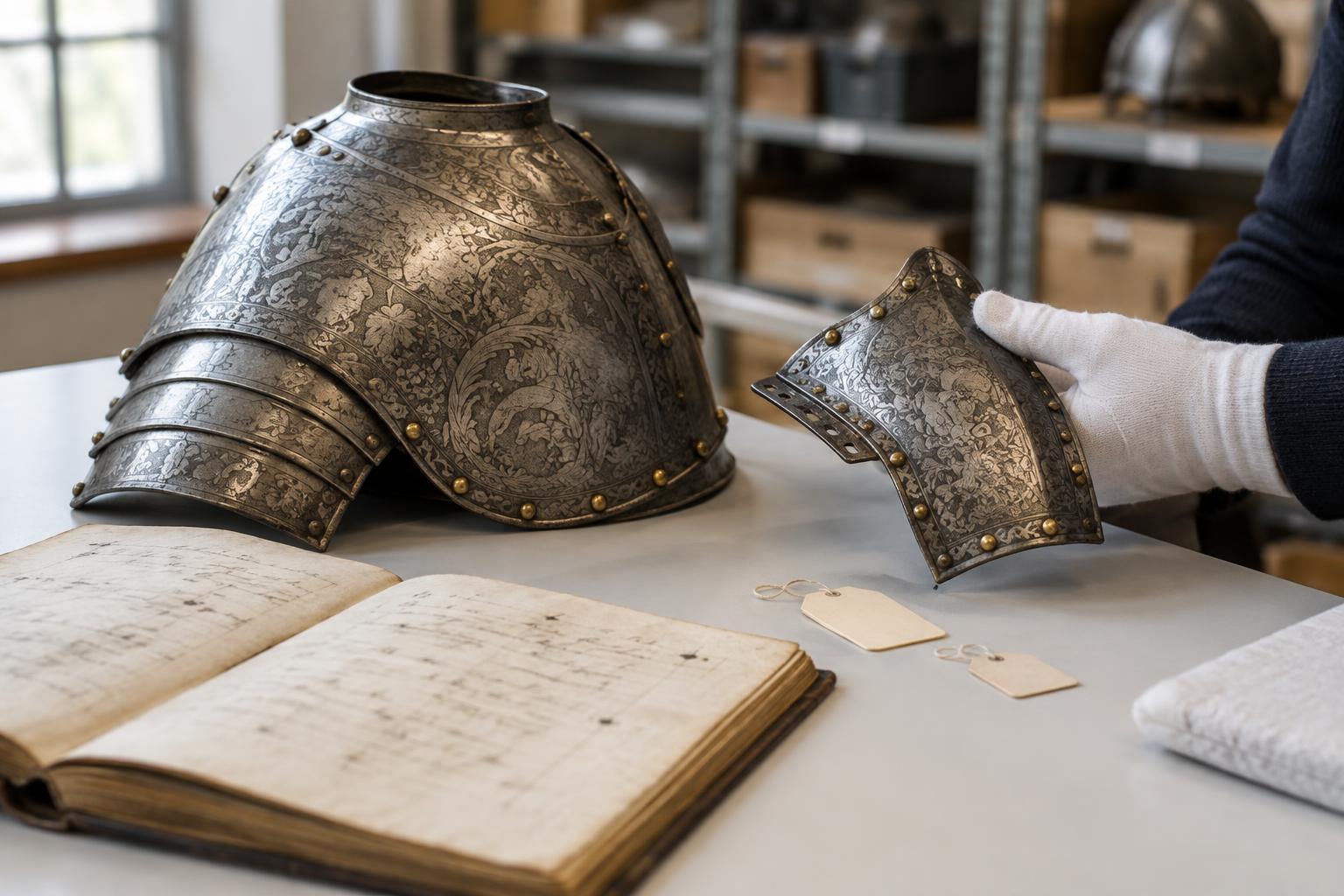
An inventory may be a handwritten list, an accession register, a stock book or a later catalogue. It may describe an object by material, decoration, size, location or association with a person. Each detail can help establish a connection, especially when several details agree. A note describing a decorated helmet stored beside matching arm pieces, for example, may prompt a curator to compare objects now held in different stores or institutions.
Inventory language needs careful reading. A historical description may be broad, inconsistent or based on what its writer could see at the time. Terms for armour components and weapons can change, and a short entry may omit features a modern curator would consider distinctive. The order of entries may suggest a relationship, but it does not always prove one. The inventory is evidence of how someone recorded a collection, not a complete account of every object’s origin.
Following numbers, labels and descriptions
Museums can compare inventory entries with numbers painted or attached to objects, old labels, storage tags and references in later catalogues. A number that appears in more than one record may help trace an object through changes in ownership or museum organisation. Curators also look for descriptions of distinctive features, such as an unusual crest, a repeated decorative motif or a particular type of fitting.
No single identifier is automatically decisive. Numbers can be copied incorrectly, reused or added long after an object was made. Labels can become detached or be placed on the wrong piece. For that reason, a proposed match is stronger when the written trail agrees with the object itself. The aim is to build a chain of evidence whose parts can be checked, rather than to make an attractive story fit a catalogue entry.
Testing a proposed reunion against the objects
Physical examination can support or challenge a link suggested by an inventory. Curators may compare proportions, materials, workmanship, decoration and signs of alteration. On armour, the placement of fastenings or the continuation of an ornamental design can be particularly informative. Differences matter too: pieces that look alike in a photograph may prove to have incompatible dimensions or construction when examined closely.
A visual match is not necessarily an original match. Workshops could repeat designs, and pieces might have been assembled into a group after their manufacture. Repairs and replacement parts can further complicate the picture. Museums therefore distinguish between objects made together, objects used together and objects merely listed together at one point. Each is a meaningful connection, but each answers a different historical question.
Making uncertainty visible to visitors
When an inventory helps identify separated objects, museums may update catalogue records, link digital entries or bring pieces together in an exhibition. They need not claim a complete reunion to make the finding useful. Even a partial connection can clarify how a collection was displayed, valued or passed on, and can reveal why an object’s current appearance differs from an earlier description.
Good interpretation explains how secure the connection is. A label might state that an inventory appears to describe a particular object, then identify the matching details and any unresolved conflicts. Keeping that uncertainty visible respects both the objects and their history. Inventories are powerful because they preserve traces of earlier groups; they are most useful when read alongside the physical evidence, not in place of it.