Start with what the object shows
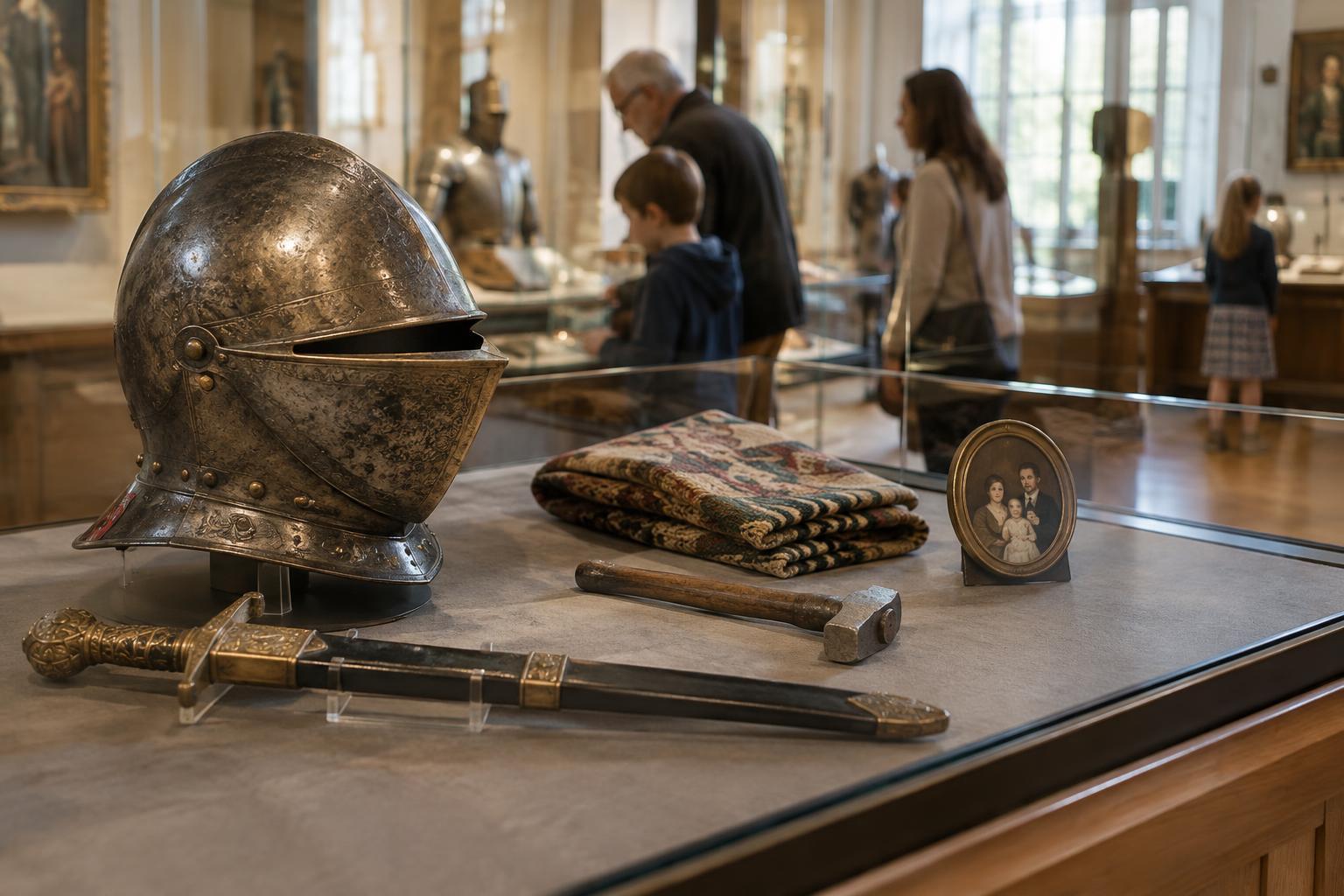
An exhibition label often looks like a compact statement of fact. Beside a helmet, it might give a name, place, date, material and account of who wore it. Those details do not all rest on the same kind of evidence. A visitor can begin by asking a simple question: which statements describe features visible on the object, and which explain what those features mean?
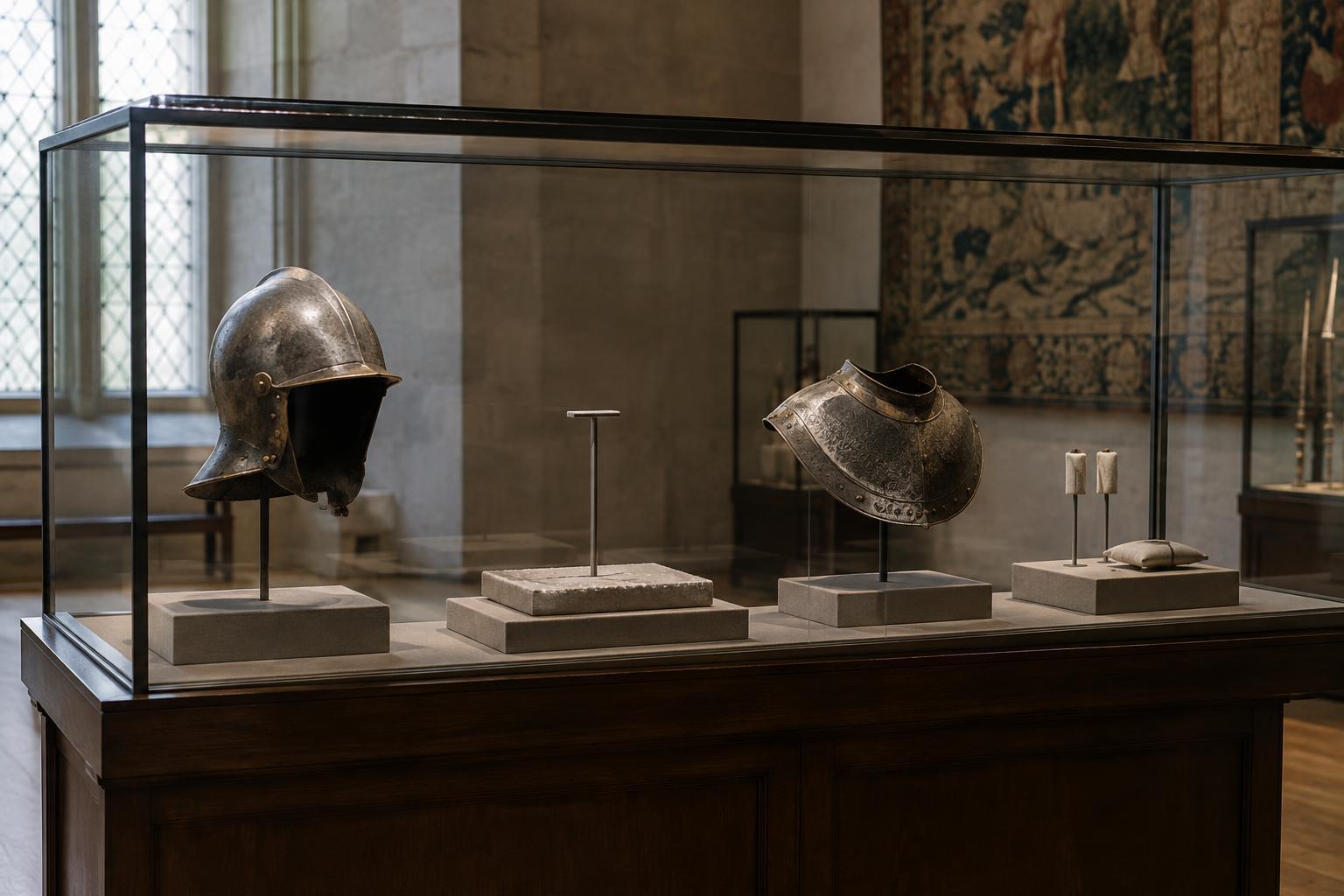
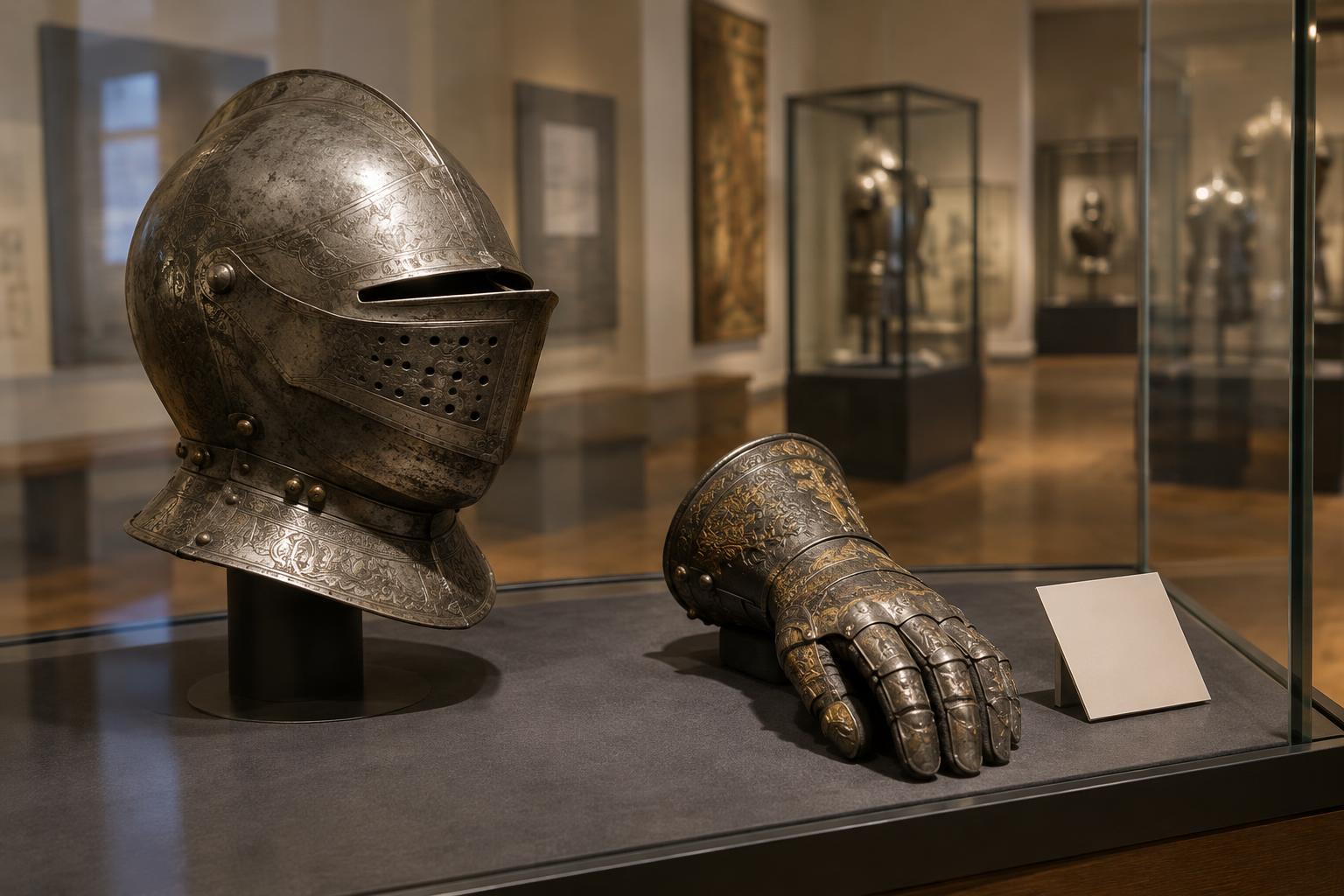
Shape, construction, decoration, wear and surviving marks are forms of physical evidence. A label might note a raised crest, engraved ornament or a maker’s mark. Even here, care is useful: a mark may be plainly present, while its identification as the mark of a particular workshop may depend on comparison with other objects. Look at the object first, then return to the label. This small pause makes it easier to see where description ends and interpretation begins.
Notice how names and dates are assigned
Object names are helpful, but they are not always names used by the people who made or owned the objects. A museum may use a familiar modern term to help visitors find their bearings. In some cases, the label’s title identifies a type of object; in others, it reflects a proposed use or association. A question mark or a phrase such as “traditionally identified as” signals that the identification deserves a closer look.
Dates and places of production also vary in precision. An inscription may offer a direct clue, but an estimated date may instead come from style, construction or comparison with better-documented examples. “Made in Italy” conveys a different degree of certainty from “possibly made in northern Italy.” Neither phrasing makes the object less interesting. It tells the reader how closely the evidence supports the proposed attribution.
Separate an object's history from its original purpose
Labels often describe both an object’s intended role and its later life. A decorated sword, for example, may be discussed as a ceremonial object, a symbol of office or a family possession. Those possibilities may be informed by its form and ornament, written records or comparisons with similar pieces. Decoration alone, however, may not establish exactly how one particular object was used. A useful question is: what evidence links this interpretation to this object, rather than to its general type?
The history of an object after its making is a separate thread. A recorded owner, a later inscription, a repair or an old inventory entry may reveal how it was valued across generations. A famous attribution might concern one part of that history without proving who originally commissioned it. Reading a label this way allows several histories to coexist: manufacture, use, alteration, collection and display.
Read the gaps in the record
Some labels include a provenance: an account of an object’s known ownership or custody. Provenance can clarify how a piece reached a museum, but it may begin long after the object was made. “Acquired from a private collection” describes one stage of a journey, not the entire journey. If the label does not identify an early owner or original setting, that absence should not be filled with a plausible-sounding story.
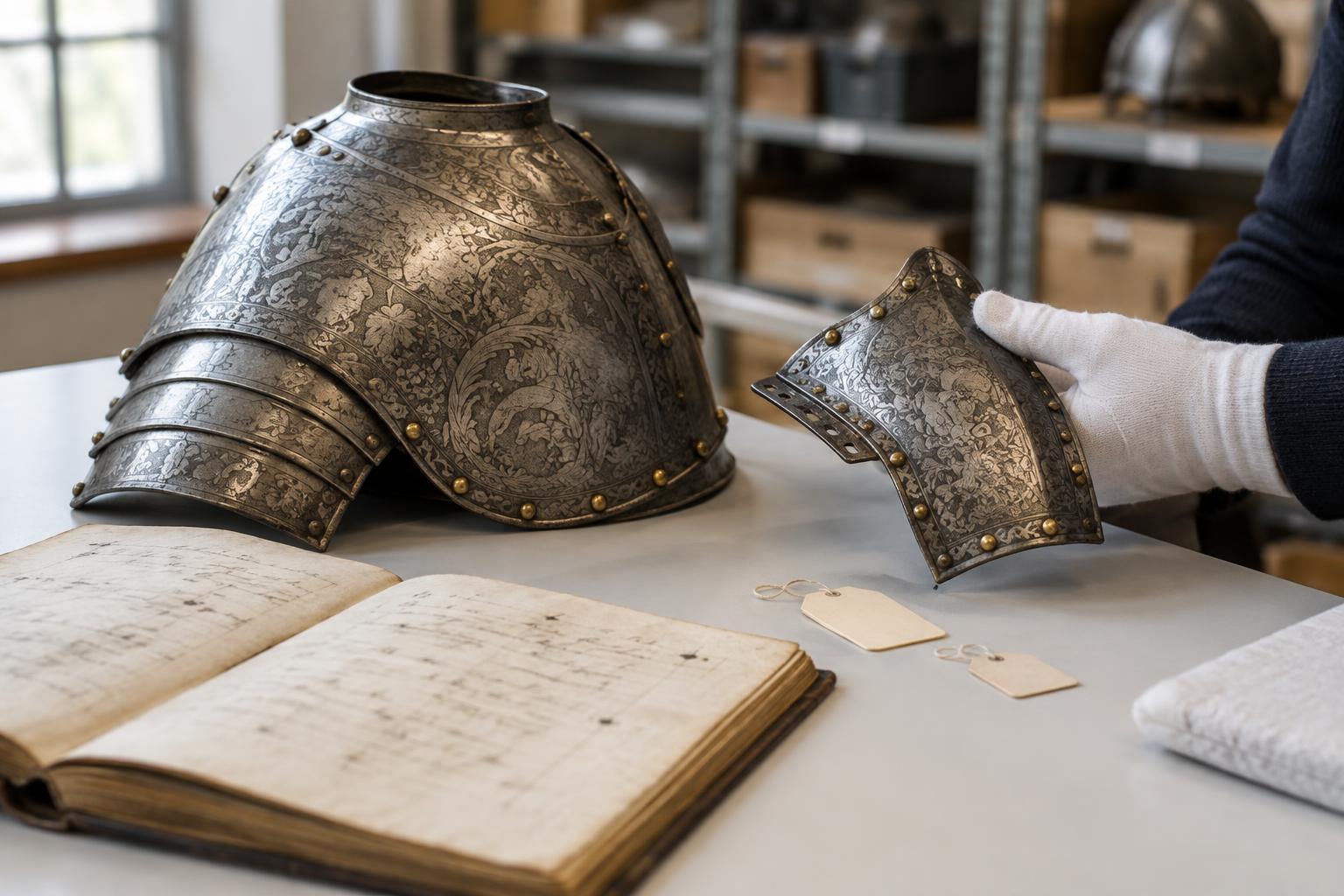
Physical changes can create gaps too. Armour may have been assembled from surviving parts, adapted for a later wearer or altered for display. Conservation and close examination can help distinguish materials and phases of work, although questions may remain. When a label says “probably,” “attributed to” or “later addition,” it is making those limits visible. Such words invite curiosity rather than distrust: they show where an account is well supported and where it remains open.
Use the label as a starting point
A short label cannot contain every comparison or curatorial decision behind a display. It is also written for visitors with different levels of familiarity with the subject. After reading it, try forming three lists in your mind: what you can observe, what the museum reports from records, and what it proposes as an interpretation. If a longer panel, catalogue entry or accessible image is available, it may explain a choice that the brief label could only summarize.
Finally, consider what the display asks you to notice. Lighting may emphasize craftsmanship; placement beside related objects may highlight a shared tradition; a historical account may connect an object to power or identity. These choices can illuminate an artefact without exhausting its meaning. Reading attentively does not require rejecting the label. It means treating the object and the museum’s explanation as partners in a conversation about what survives, what is known and what can reasonably be inferred.