Start with what the report actually covers
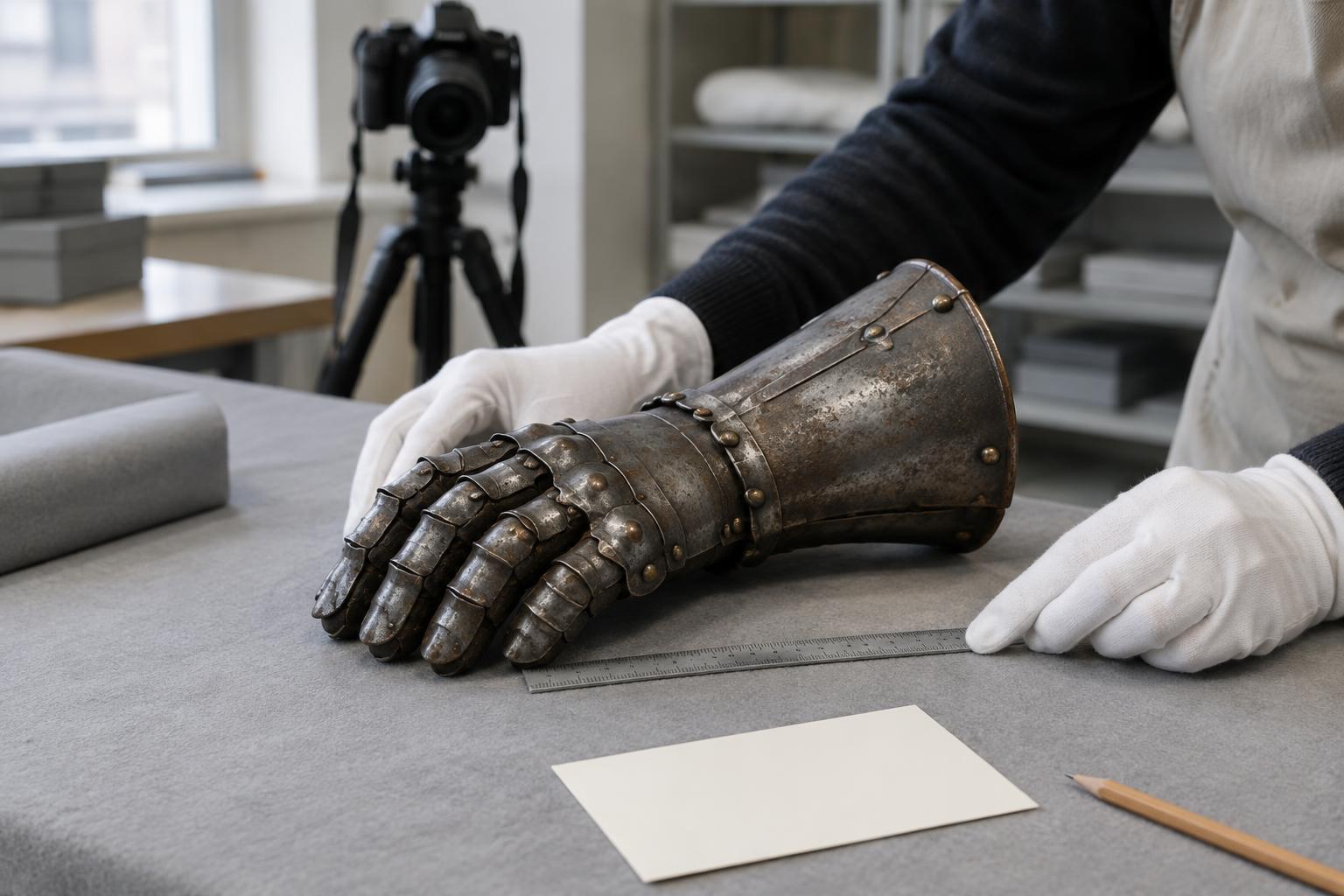
A condition report records an object’s observed state at a particular time. It is not automatically a statement of authenticity, completeness or suitability for display. Before reading its findings, check which object and components were examined, when the examination took place, and whether the writer saw the armour in person. A report based on photographs may be useful, but it cannot answer every question about construction, hidden surfaces or the stability of an old repair.
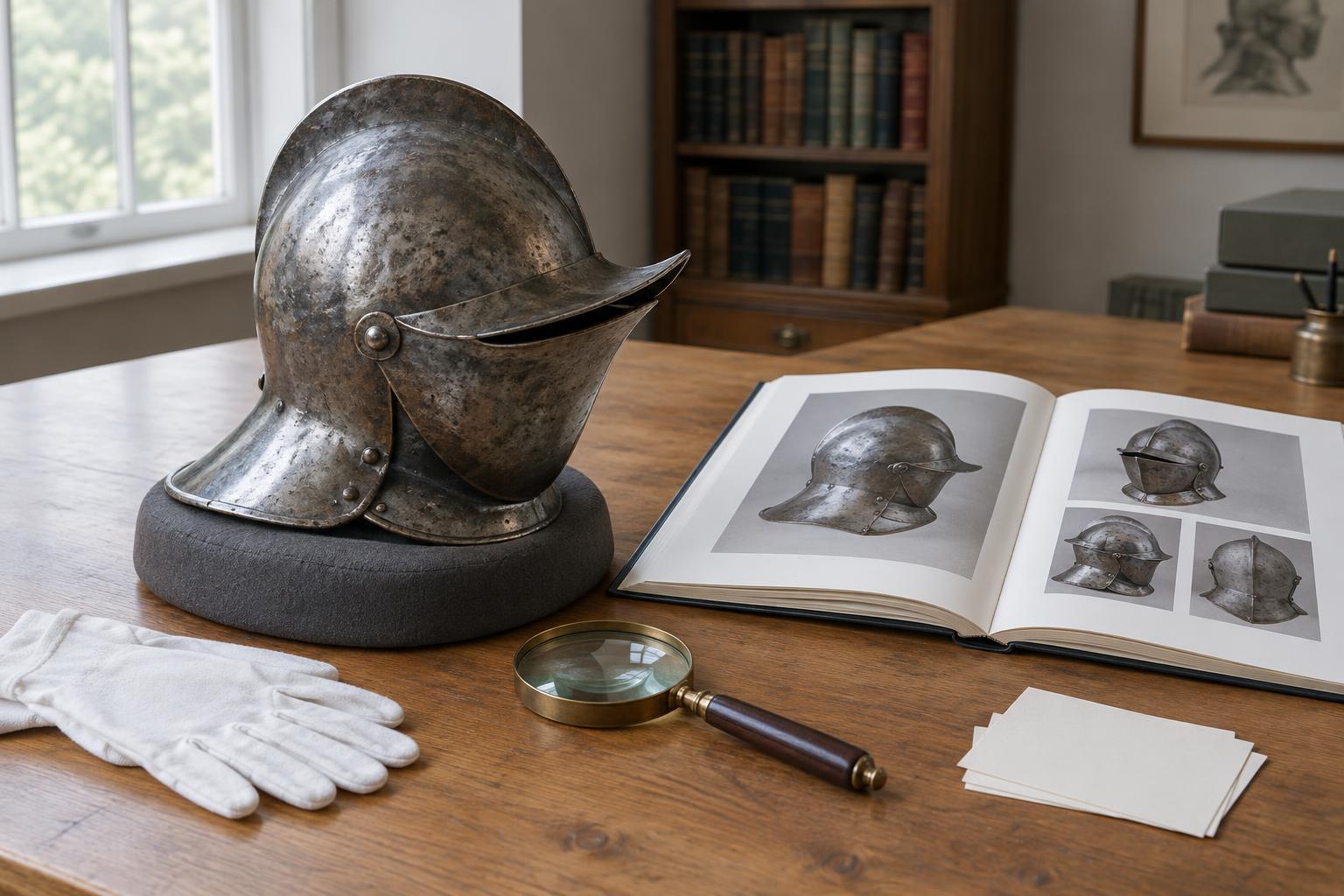
Historic armour is often made up of multiple plates, straps, fastenings and later supports. A helmet and breastplate presented together, for example, need not have begun their lives as a matching set. Look for an inventory of the parts included in the proposed acquisition and any limits on access: were linings, interiors and areas beneath a display mount visible? If a report describes only the most prominent surfaces, ask what remains unexamined.
Separate historical wear from active problems
Condition language becomes more useful when read in context. Scratches, old dents and uneven surfaces may be evidence of manufacture, use, alteration or long storage. They are not interchangeable with recent damage. Likewise, an aged dark finish is not necessarily a defect to remove. A good report describes where a feature appears and, where possible, distinguishes an observation from an interpretation.
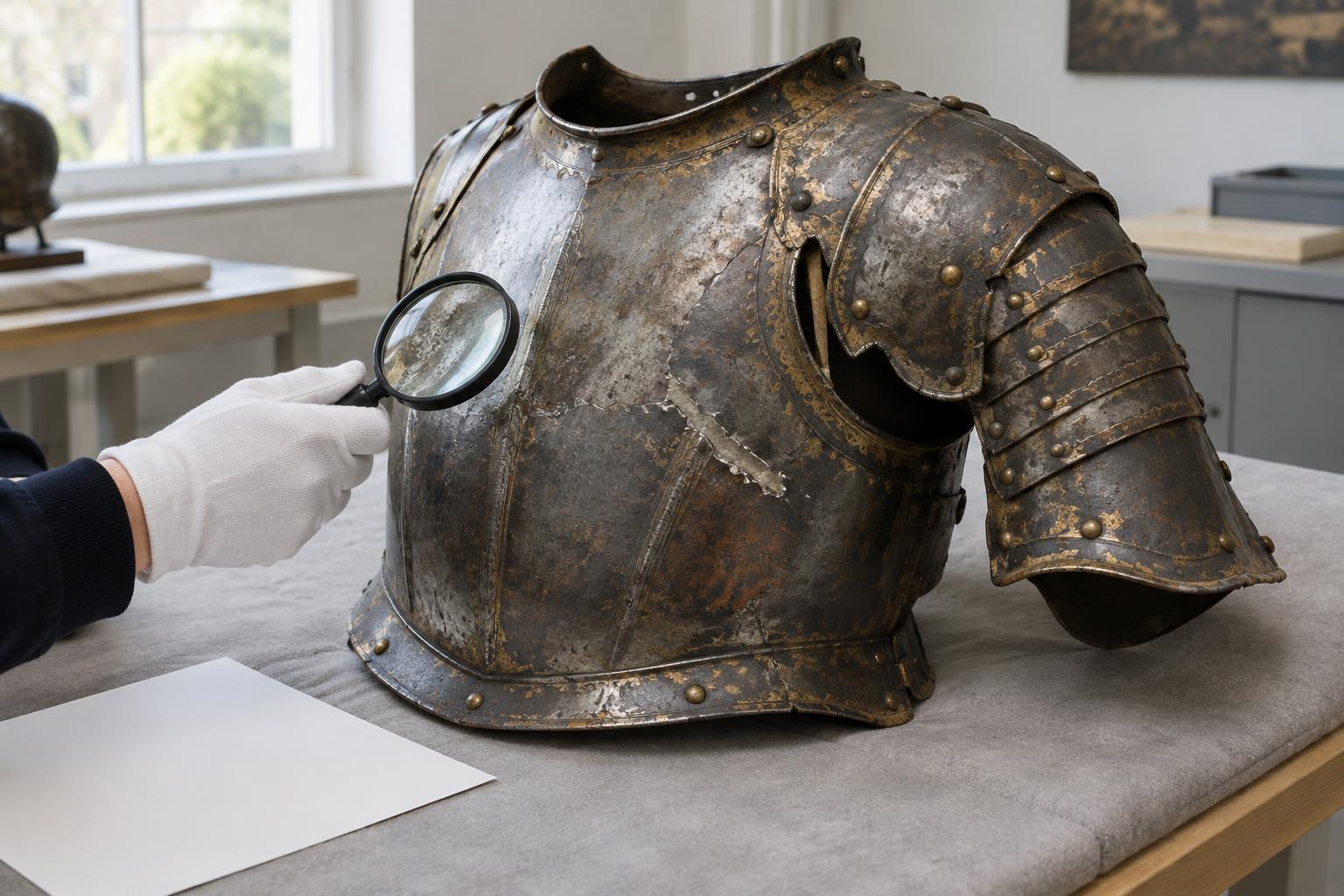
Pay closer attention to words that suggest change or instability, such as flaking, lifting, cracking or loose attachments. Corrosion deserves a precise description rather than a single label: its location, extent and relationship to seams or decorated areas matter. If the report calls an area “stable” without explaining what was examined, seek clarification about the basis for that judgment and whether earlier photographs or reports allow comparison.
Read repairs as part of the object’s history
Armour may have been repaired during its working life, modified for ceremonial display, assembled for a collection or restored for exhibition. Those interventions can affect both how it looks and how its history is understood. A replaced strap, a modern rivet and a plate added to complete a suit raise different questions; none should be hidden beneath the general word “restoration.”
Check whether the report identifies replacement materials, added finishes, filled losses, adhesives and areas of reconstruction. Ask how confidently each intervention has been identified. Visible differences in colour or workmanship can provide clues, but appearances alone may not establish a date. Documentation of earlier treatments is especially helpful because a tidy surface can conceal extensive work. The aim is not to demand an untouched object, but to understand what survives, what has changed and what evidence supports those conclusions.
Notice gaps between condition, identity and provenance
A condition report can describe a component accurately without proving who made it or where it came from. Keep its physical observations separate from catalogue attributions and ownership history. If an object is described as belonging to a particular period or region, look for the supporting documentation and note any qualifications. Uncertainty is preferable to a confident label that cannot be explained.
Compare the report with the photographs, measurements and component list supplied elsewhere. Do decorated details shown in images appear in the written description? Are missing pieces, mismatched elements or inaccessible surfaces acknowledged? An omission does not necessarily indicate a problem, but it gives you a focused question to ask. Written answers and clear images of relevant areas make later comparisons easier than relying on memory or broad assurances.
Use the report to plan responsible care
The report should help you consider the object’s needs after acquisition, not just its appearance on the day of inspection. Note whether plates or fittings require support, whether a mount places pressure on vulnerable areas, and whether fragile surfaces could be disturbed by routine handling. Armour can combine metal with leather, textile, wood or coatings, so care that suits one material may not suit another.
Before making a decision, gather unresolved questions into a short list: which parts were inspected, which features may be later, whether any condition concerns appear to be changing, and what display or storage support is recommended. For significant uncertainties, an independent assessment by a qualified conservator or relevant specialist may be worthwhile. A useful condition report does not eliminate doubt; it makes the object’s known features, limitations and care needs legible enough for a considered decision.