A catalogue is an introduction, not an object file
An auction catalogue brings an object into view for people who may never see it in person. It can provide a useful combination of measurements, materials, photographs, inscriptions, condition notes and ownership history. These details help a reader place an object within a broader tradition of craftsmanship and collecting.
Yet a catalogue entry has a narrower purpose than a museum record or a conservation report. Its descriptions are usually concise, and the depth of information varies from lot to lot. An entry may identify an object as a particular type without explaining how that identification was reached. Treat it as a set of claims and observations to examine, rather than as a complete biography of the object.
Read attributions as degrees of confidence
Small differences in wording matter. A description that names a maker or workshop makes a stronger claim than one that says “attributed to,” “school of” or “in the style of.” These phrases may signal different levels of confidence, but their use is not always consistent. Look for the evidence offered alongside an attribution: a legible mark, distinctive workmanship, comparable documented pieces or an established ownership record.
Dates and places of origin deserve similar care. Arms and armour could be repaired, adapted, decorated or assembled from components made at different times. A date assigned to the overall object may therefore simplify a more complicated history. If an entry gives a broad range or uses a term such as “possibly,” preserve that uncertainty in your own notes rather than turning it into a firm conclusion.
Separate provenance from tradition
Provenance is the documented history of an object’s ownership or custody. A catalogue might name a previous collection, exhibition or publication. Each reference offers a potential way to trace the object, but a list of names alone does not necessarily establish an unbroken chain. Check whether the supporting records identify the same object through distinctive features, measurements or images.
An association with a notable person, event or military unit can make an object compelling, but it calls for especially close attention to the wording. “Said to have belonged to” records a tradition; it does not, by itself, prove ownership. Even a plausible story may have been attached to an object long after its manufacture. Reading these histories carefully can be rewarding without requiring every tradition to be accepted as fact.
Use photographs and condition notes together
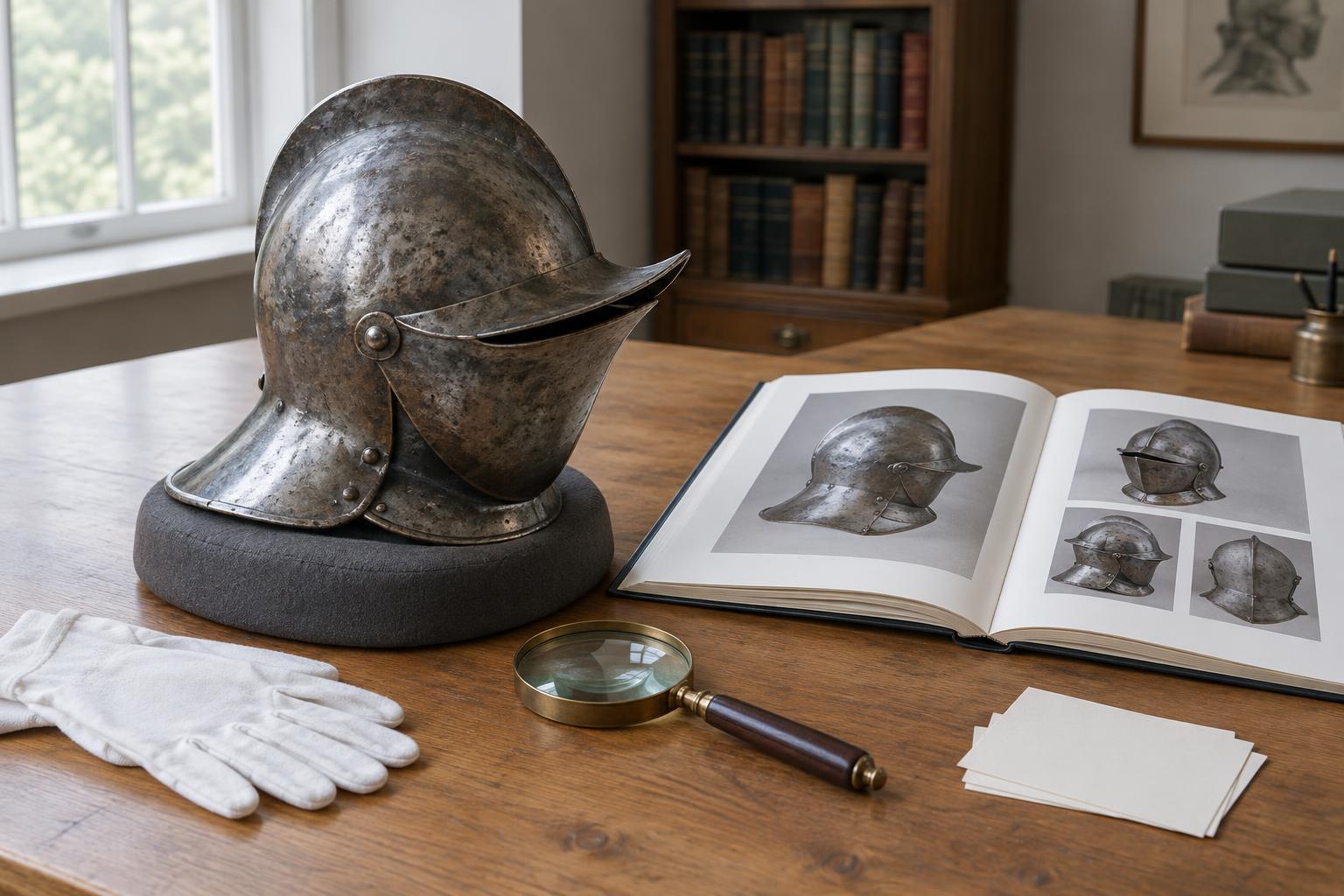
Catalogue photographs can reveal form, decoration, marks and visible wear. They can also conceal important details through lighting, scale, cropping or the choice of views. A polished surface may look different under close examination, while a photograph of an assembled object may not make later replacements apparent. Dimensions help, but they cannot convey weight, surface texture or the relationship between joined components.
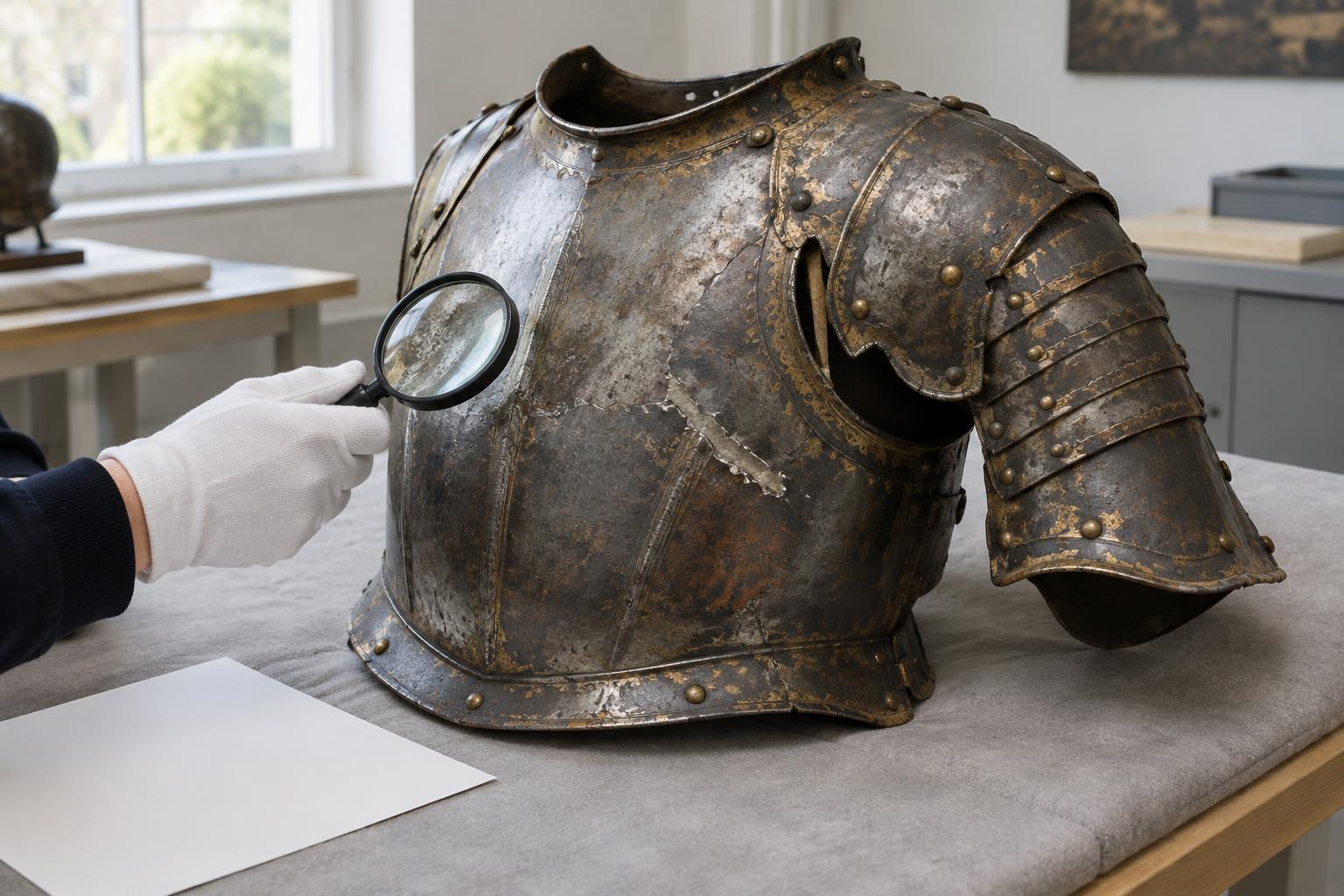
Condition language also needs interpretation. Terms such as “old repair,” “restored” or “later fitting” may describe significant parts of an object’s history, yet a brief note may not show their extent. From a conservation perspective, change is not automatically a flaw: a repair can document past use or collecting practice. The important question is what appears original, what has changed, and how confidently those distinctions can be made. Where available, additional views or a detailed condition report can help clarify the entry.
Build a record of what remains unknown
A useful way to read a catalogue is to sort its contents into three groups: observable features, interpretations and open questions. An inscription visible in a photograph is an observable feature; identifying its meaning may be an interpretation. A missing view of the reverse, an unexplained repair or a gap in provenance becomes a question for further study.
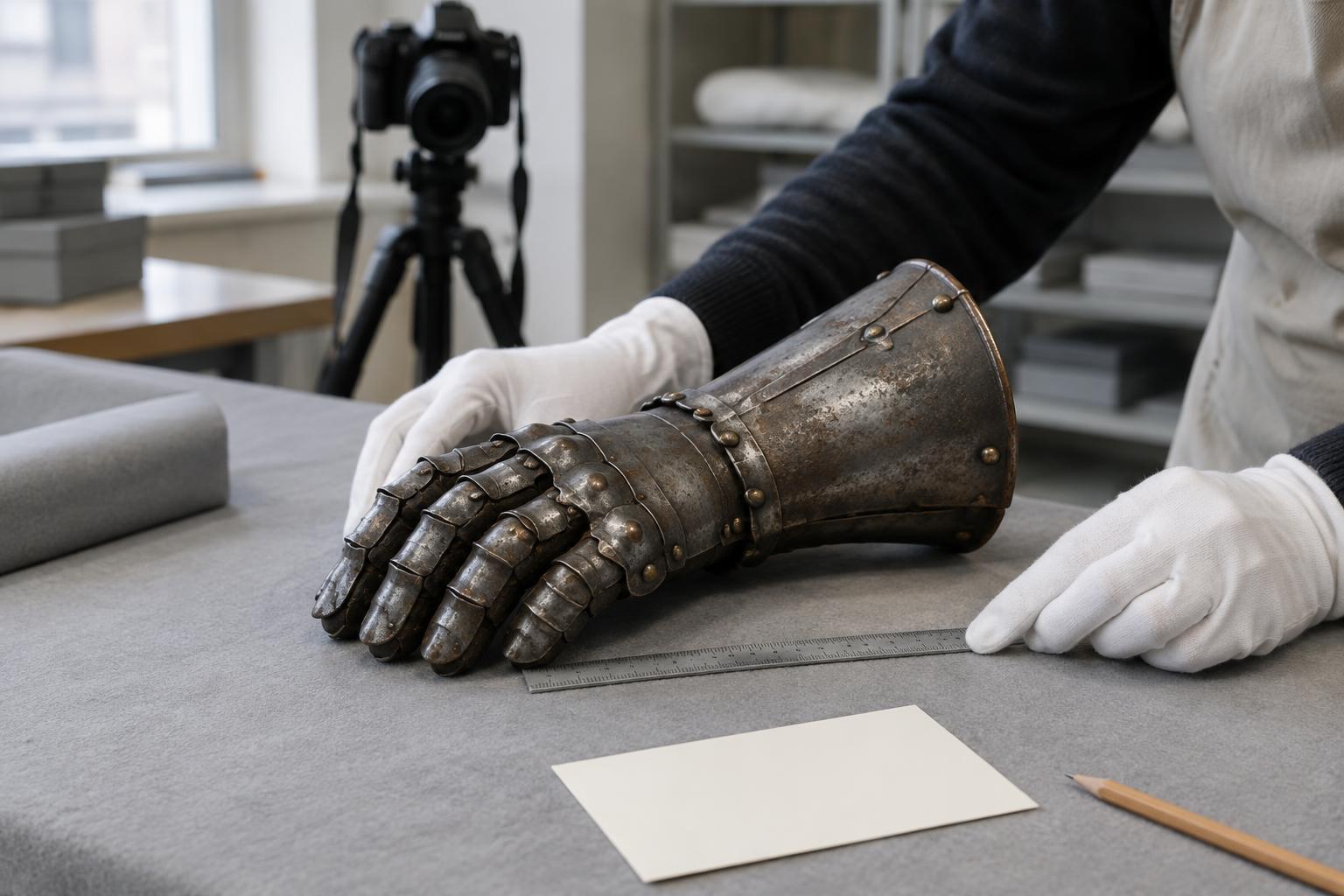
Keep the catalogue description, images and any later correspondence together, noting where information came from. If you can examine the object, follow the institution’s or seller’s handling rules and focus on careful observation rather than intervention. Avoid cleaning or altering a historic surface simply to make a mark easier to read; surface evidence can be fragile and informative.
The most valuable catalogue entry is not always the one that sounds most certain. It is the one that gives readers enough detail to understand an object’s cultural setting, craftsmanship and documented history while making its uncertainties visible. Read in that spirit, an auction catalogue becomes a starting point for responsible inquiry rather than the final word.