A metal object is rarely just metal
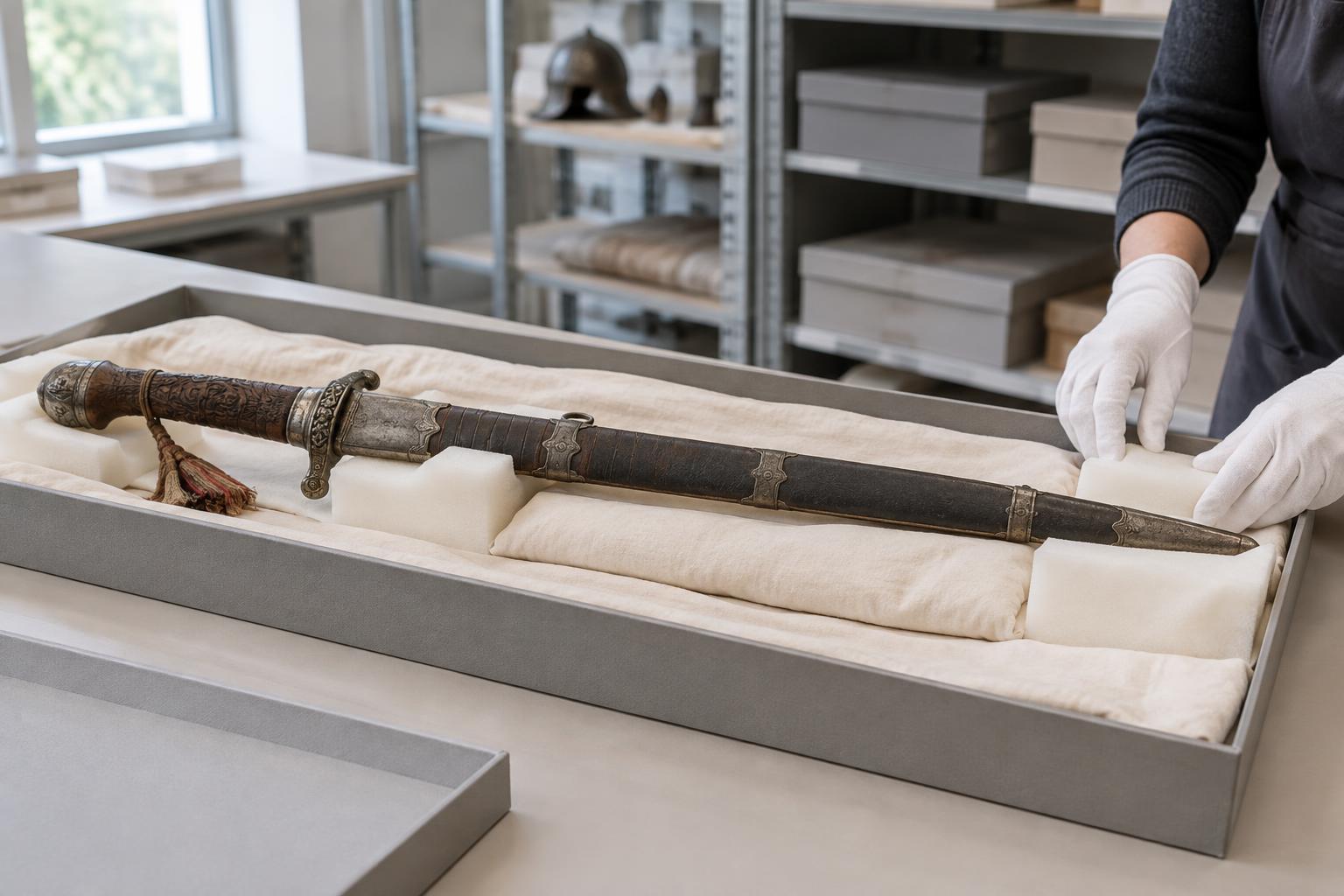
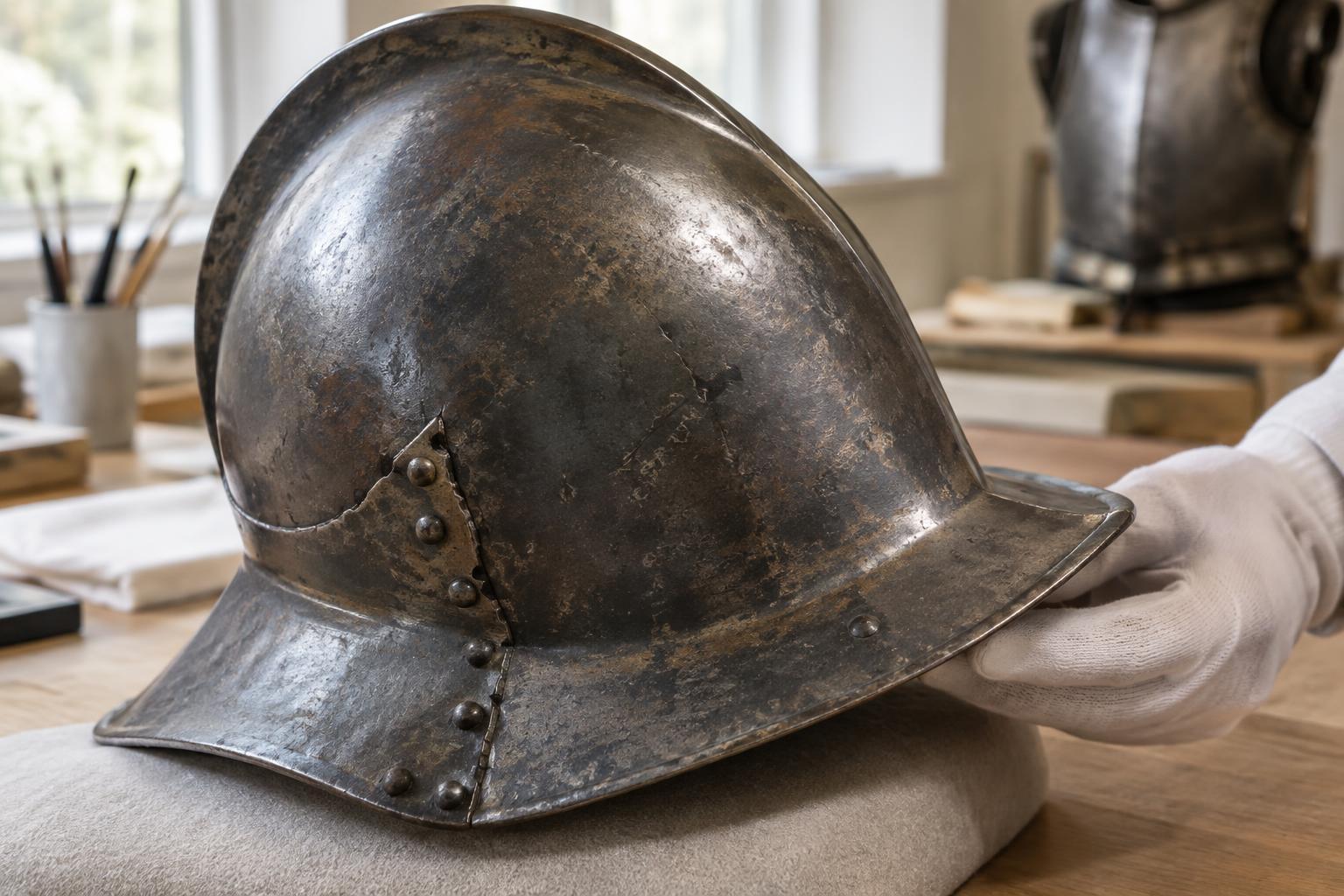
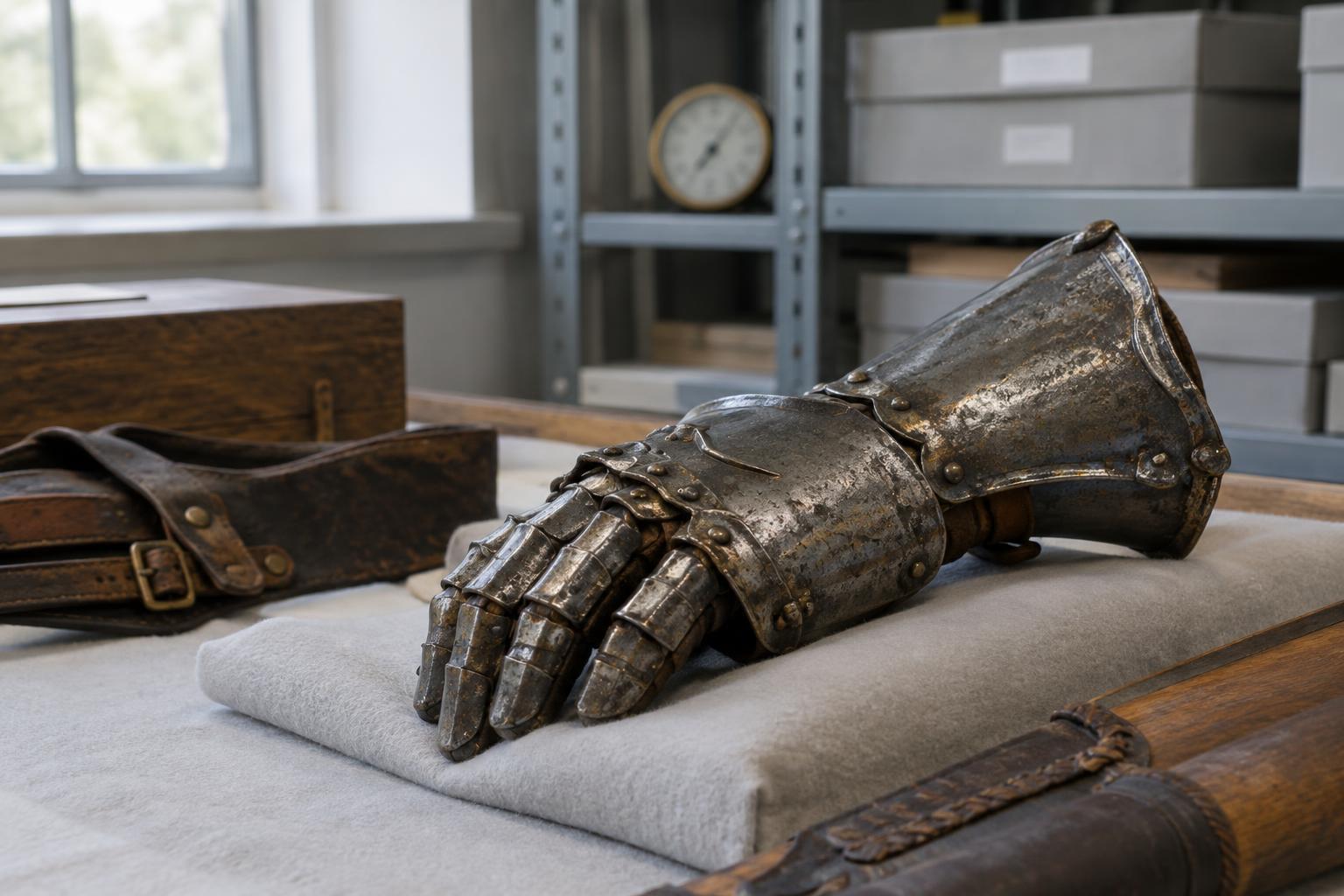
A sword, helmet or suit of armour may appear to be a durable piece of metalwork. Look more closely, however, and it may include a wooden grip, leather straps, textile lining, adhesives, decorative finishes or older repairs. Each material responds differently to moisture in the air. Wood and leather can swell or shrink as conditions change; metal surfaces may corrode when enough moisture is present. A storage or display environment that seems comfortable to a visitor may still be hard on an object.
This is why humidity is a collection-wide concern rather than a problem reserved for visibly rusty pieces. A fitting loosened by movement in a wooden component, or a lining weakened by damp conditions, can affect how an object is supported and understood. Care begins with seeing the whole object, including parts that are hidden or easily overlooked.
What moisture can do to historic surfaces
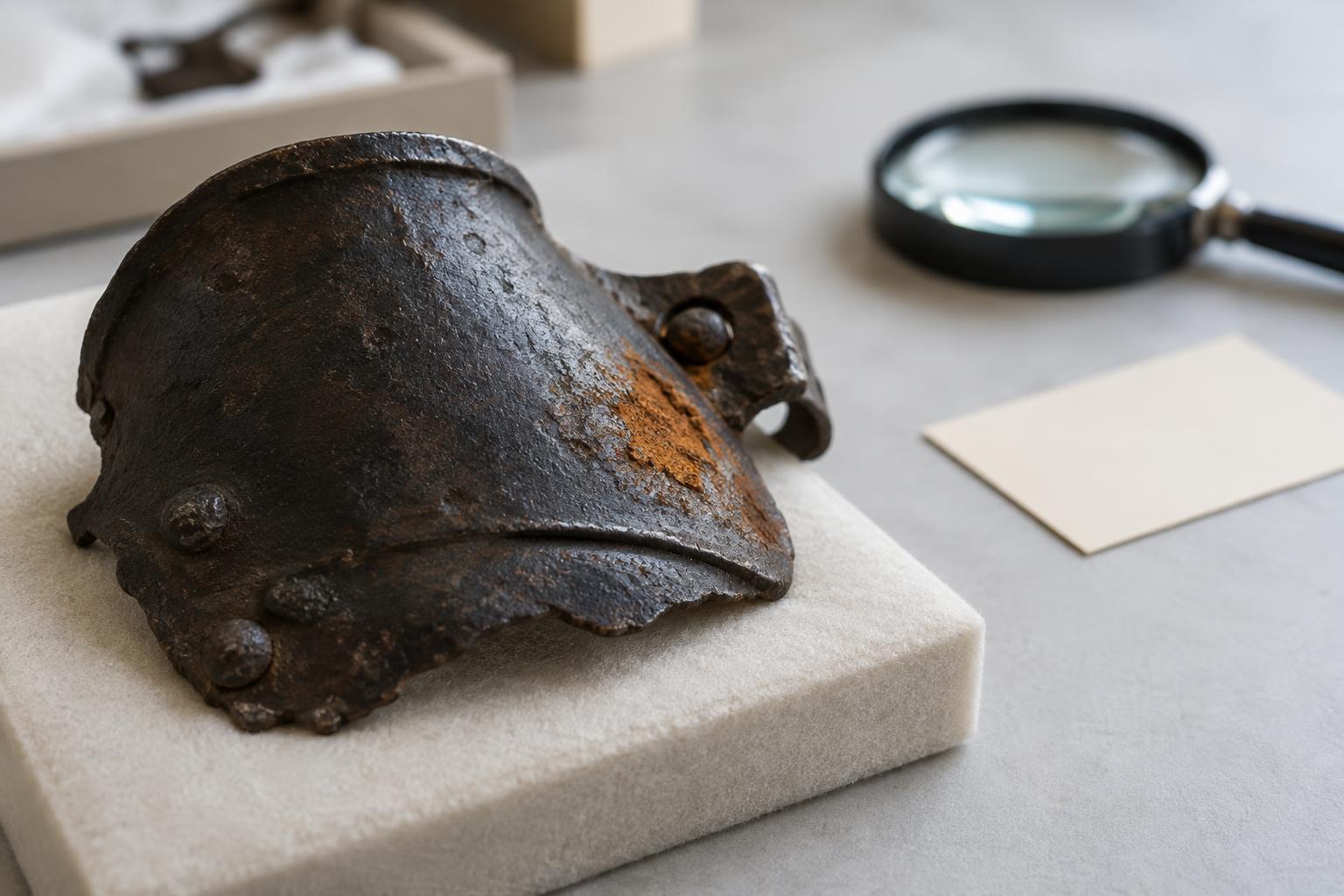
Humidity describes moisture in the air, but damage is not determined by one reading alone. The metal, its surface condition, previous treatment and nearby materials all matter. Iron and steel can develop new corrosion when moisture reaches a vulnerable surface. Copper alloys may show changes in their corrosion layers, while silver can tarnish through reactions involving substances in its surroundings. Salts left from past use, burial or handling can make some objects especially sensitive to damp air.
Not every darkened patch is evidence of a new problem. Historic surfaces can carry patina, tool marks and traces of age that are central to an object's interpretation. The useful question is whether a change is active: for example, whether fresh powder, flaking or staining appears or spreads. Photographing an object in consistent light and noting what has changed is more informative than trying to make every surface look clean.
Why steadiness helps
A sudden rise in humidity can encourage condensation on a cool object, particularly when it is moved between spaces with different conditions. Repeated swings can also make associated wood, leather and textiles expand and contract. Over time, that movement may strain joints, mounts and fragile decorative details. Stable conditions reduce these stresses and make it easier to recognize an unusual change.
There is no single humidity setting that suits every historic metal object. An archaeological iron find with retained salts may have different needs from a polished ceremonial object with a textile lining. Rather than choosing a number without knowing the collection, start by limiting avoidable extremes and rapid fluctuations. Keep objects away from known sources of damp, such as leaks and poorly ventilated storage areas, and consider whether a display position exposes them to condensation or frequent environmental changes.
Monitoring without overreacting
A simple record of conditions can reveal patterns that a single measurement misses. A humidity monitor placed near stored or displayed objects can help show whether conditions vary with the seasons, heating or ventilation. Note where the monitor sits: a reading across the room may not reflect conditions inside a closed case or cabinet. Check the object as well as the numbers, looking for new staining, loose material, changes to leather or wood, and signs of moisture around the storage area.
Avoid responding to one unusual reading with an abrupt change in conditions. First check that the monitor is working, look for an obvious cause and observe whether the reading persists. For a mixed collection, gradual, well-considered adjustments are generally more useful than moving objects repeatedly between very different spaces. Records of both conditions and visible changes can also help a conservator assess an emerging concern.
Storage choices and the value of restraint
Good storage protects objects from more than damp air. Supports should keep a piece stable without putting pressure on a weak handle, hinge or lining. Cabinets and cases should be checked for leaks, trapped moisture and materials that might affect sensitive surfaces. Handling with clean, dry hands or suitable gloves, depending on the object, helps limit deposits on metal. Before enclosing an item tightly, make sure its condition and storage environment have been assessed; an enclosure can also trap an existing moisture problem.
If you see fresh corrosion, do not assume that polishing, oiling or scraping is the safest response. Such actions can remove historic surface information or complicate later treatment. Isolate the object from an obvious source of moisture, document what you see and seek advice from a qualified conservator, especially for archaeological finds, complex armour or pieces with original organic components. The aim is not to make an old object look new, but to preserve the evidence it carries.