Why color alone is a poor guide
Historic iron rarely presents a uniform surface. An object may show a dark finish, old wear, earlier repairs, compact corrosion, and more recent rust in adjoining areas. Age and use can leave traces that are valuable to understanding how it was made and cared for. A dark patch, by itself, does not establish that corrosion is active; nor does a bright patch prove that the metal is sound.
Collectors may be tempted to make every surface look even. That can erase evidence, including tool marks, decoration, remnants of a finish, or the boundary between an original part and a later replacement. A better first question is not “How do I remove this?” but “What can I observe without changing it?”
What active corrosion may look like
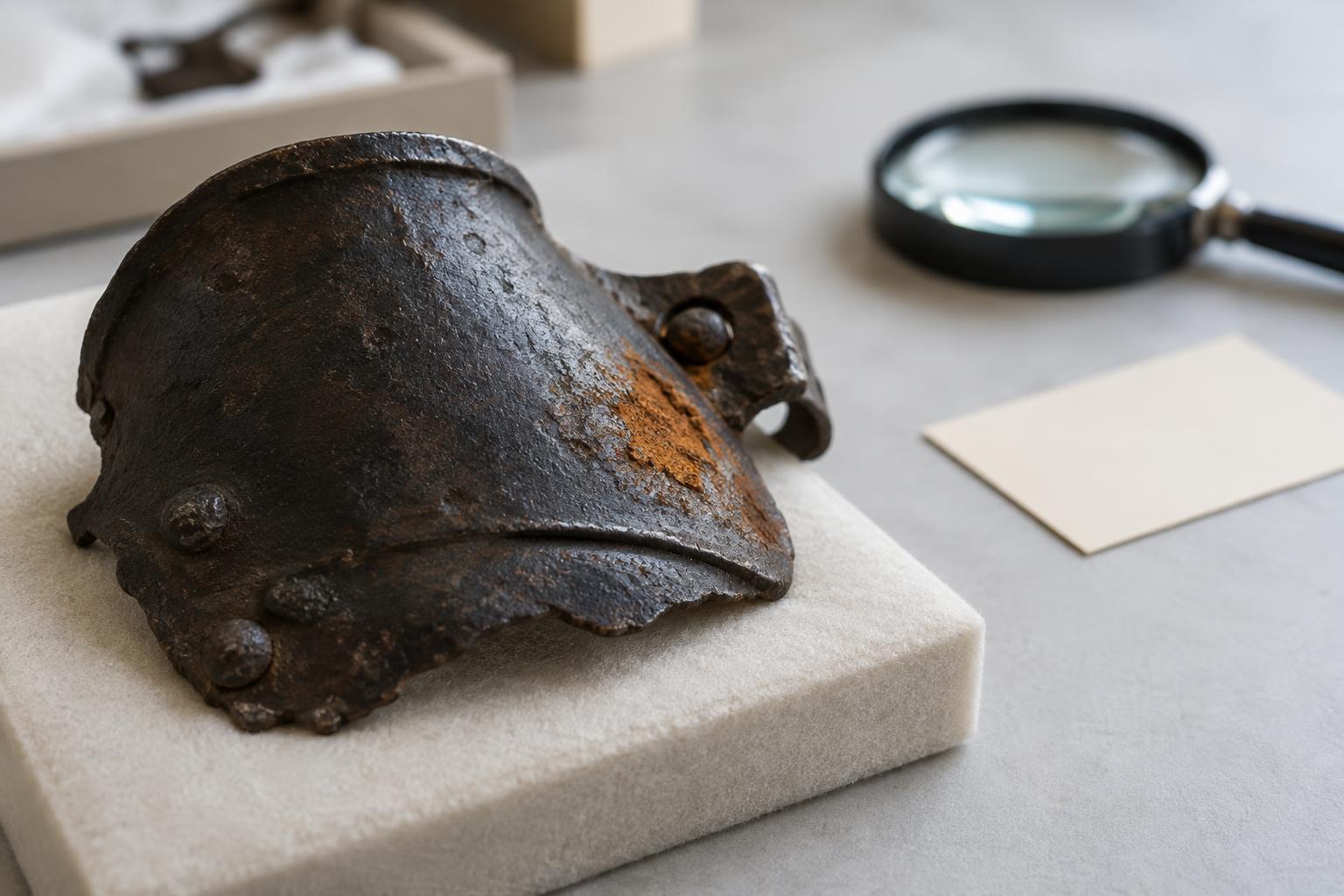
Active corrosion means deterioration is continuing, not merely that corrosion occurred in the past. On iron, warning signs can include new orange or reddish-brown powder, fresh-looking spots that spread, or loose flakes appearing beneath an object. A change at a seam, around a fastener, or under a display support may be easier to recognize than a change across a large surface. These signs are reasons for closer assessment, not a diagnosis on their own.
Texture can help, but it must be interpreted cautiously. A compact, firmly attached dark layer may have remained much the same for years, while a powdery deposit may be recent. Yet old corrosion can also be rough, and dust from a case or shelf can resemble loose material. Note exactly where a deposit appears and whether there is a corresponding change on the object before drawing conclusions.
Dark surfaces have different histories
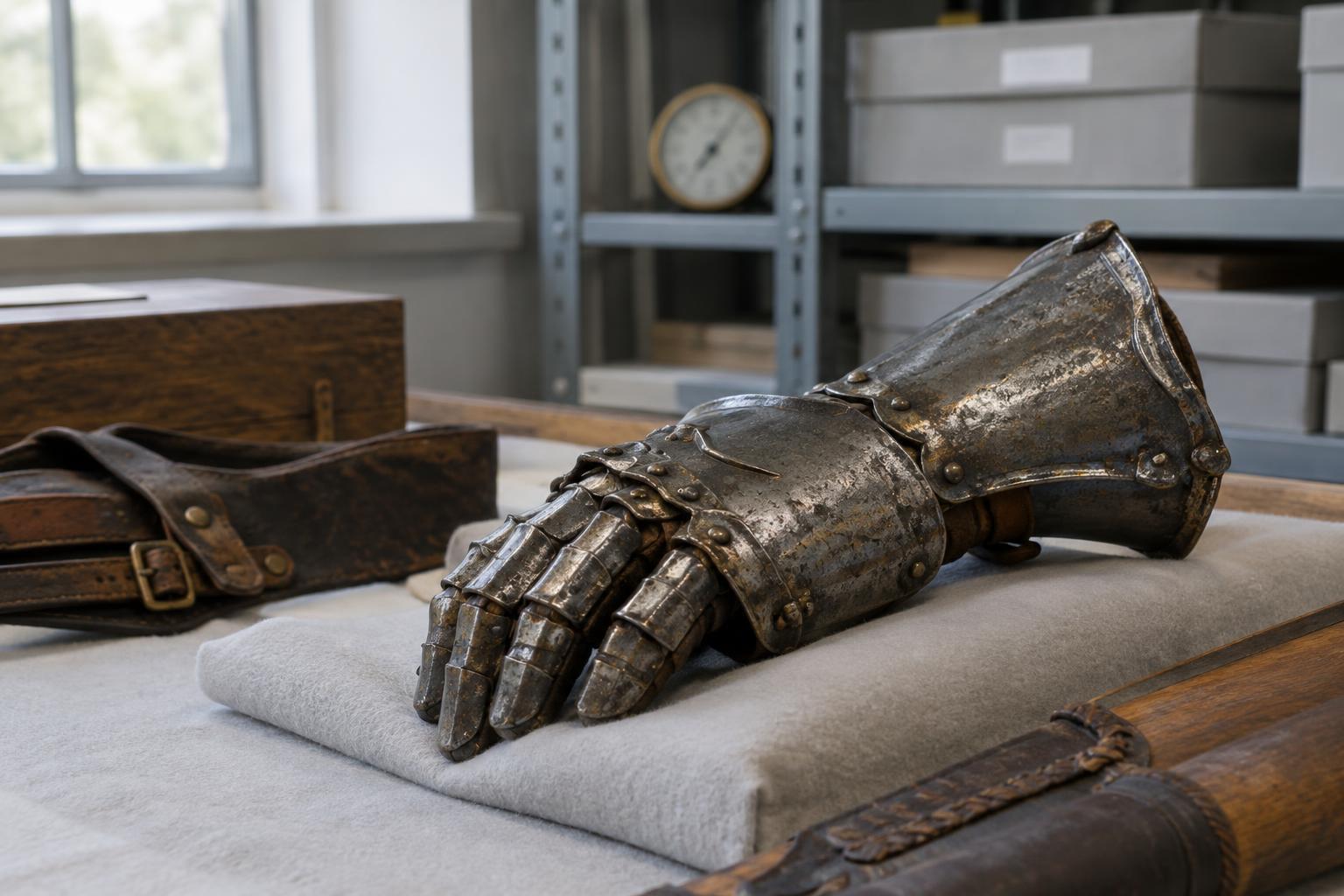
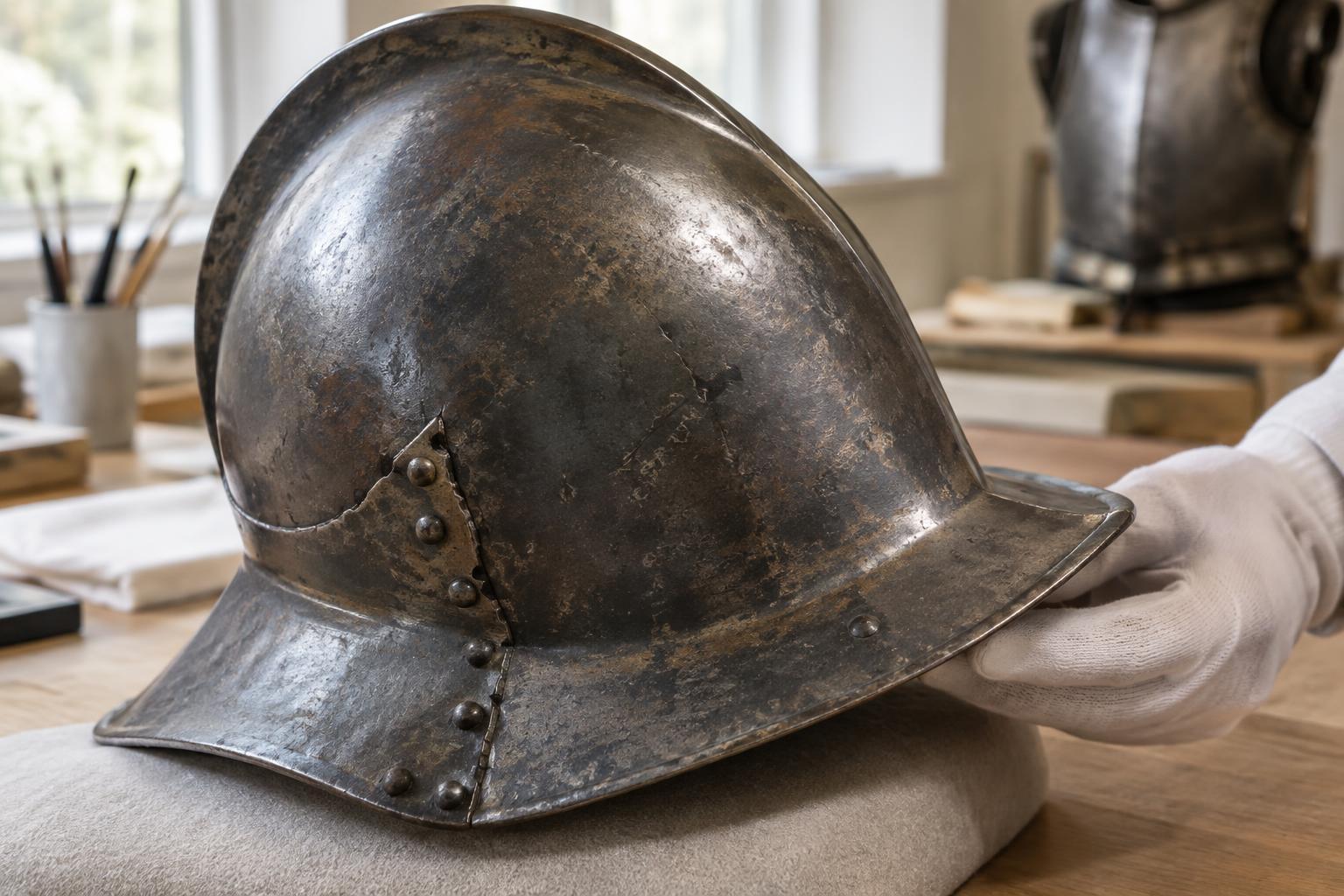
A dark area might be an intentional finish, a result of long-term exposure, or a coating applied during past care. Soot, dirt, and handling residues can also affect appearance. On an assembled object, different components may have aged differently because they were made, finished, repaired, or stored in different ways. A dark surface is therefore part of a question about the whole object, not an isolated color to classify.
Look for relationships between the surface and the object’s features. Does the dark layer continue across decorative details, or does it sit within recesses? Are worn high points different from protected areas? Does an old photograph show the same pattern? Such comparisons may help establish what has changed, but they do not always reveal how a surface formed. Resist scratching, polishing, or applying a test substance to settle the question.
Make a record before making a judgment
Consistent observation is more useful than a single dramatic inspection. Photograph the whole object and then the area of concern, with a scale and lighting that you can reproduce later. Record the date, location of the mark, and any visible deposits nearby. Keep earlier photographs: even imperfect images may show whether a feature was already present. Avoid repeatedly touching a suspect area to see whether it rubs off.
Reviewing images taken under comparable conditions can reveal a pattern of change or show that a mark has remained stable. Be alert to misleading differences caused by angle, reflections, or camera settings. If an object is displayed or stored with other materials, record where supports and contact points meet the iron. This documentation gives a conservator a better starting point if assessment becomes necessary.
Respond with restraint
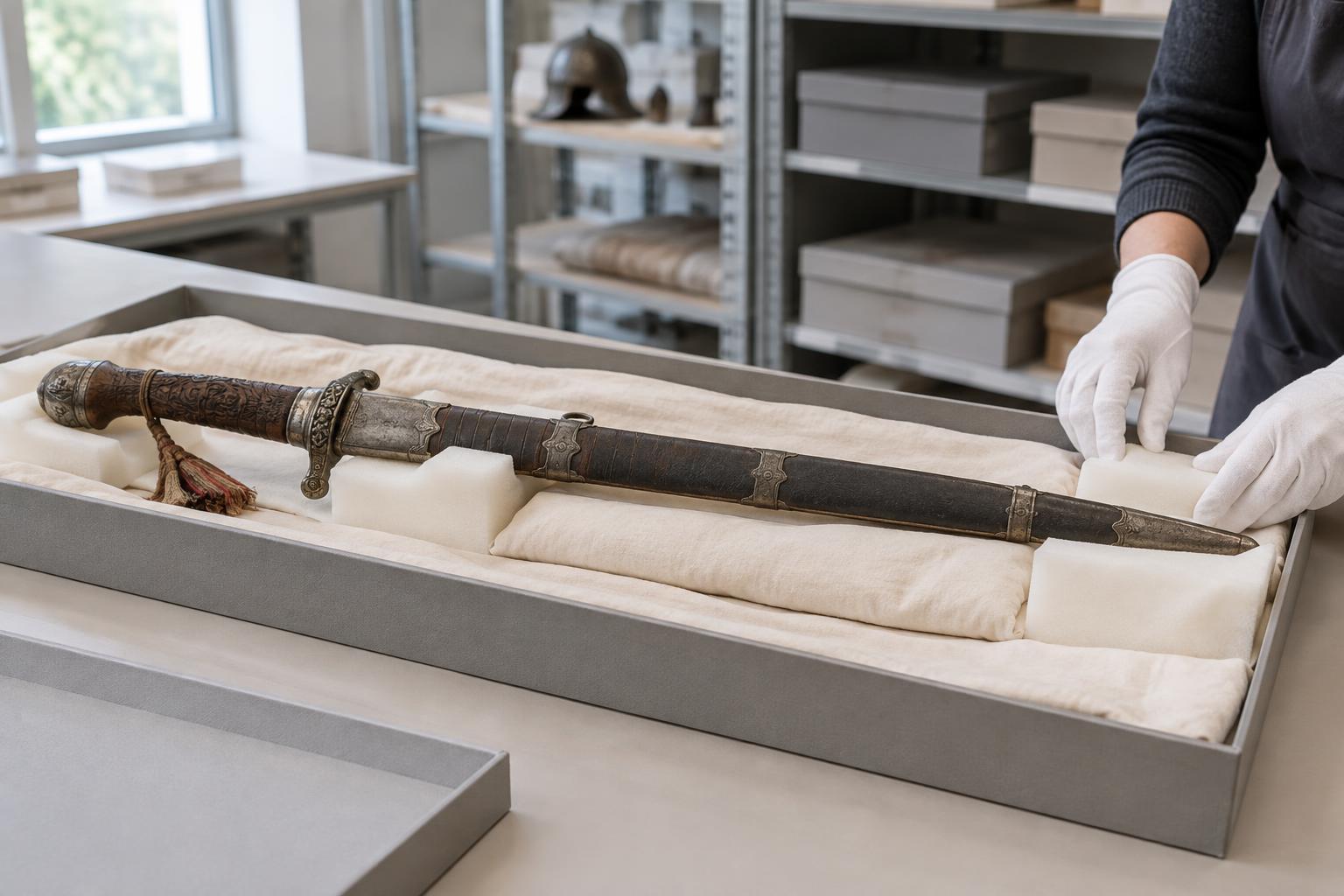
If you suspect active corrosion, protect the object from avoidable moisture and sudden environmental changes while you seek appropriate conservation advice. Check for leaks, condensation, damp packing materials, and contact with materials that may hold moisture. Handle the object as little as practical, and use clean, dry hands or suitable gloves where these can be used safely. Keep any detached flakes with the object and record where they were found.
Do not treat uncertain corrosion as an invitation to wire-brush, sand, oil, or coat the surface. Such actions may obscure evidence, move loose material, or complicate later care. A qualified objects conservator can examine the surface in context and recommend a response proportionate to its condition and significance. For a historic iron object, careful observation and a stable setting often do more good than an immediate attempt to make the surface look new.