Why one object can have several storage needs
A historic helmet with a leather lining, a sword with a wooden grip, or a scabbard with metal fittings is more than one material in close contact. Metal may corrode when moisture is present, while wood and leather can change shape as the surrounding air becomes wetter or drier. Textiles can crease, fade, or weaken under pressure and light. A condition that seems harmless to one component may be less suitable for another.
The most useful goal is therefore balance. Rather than trying to make storage exceptionally dry or tightly sealed, aim for reasonably stable conditions and protection from obvious hazards: leaks, direct sunlight, dust, pests, and repeated handling. Keep each object’s parts together when doing so is safe, but do not force a fragile component back into position merely to make the object look complete.
Choose a stable place before choosing a container
An interior cupboard or dedicated storage area is generally preferable to a damp basement, a hot attic, or a position beside a radiator or exterior wall. Rapid changes in temperature and moisture can be especially hard on joined materials. Check the area for water pipes, condensation, signs of insects, and anything that might fall onto the collection. Storage should also leave enough room to retrieve an object without scraping it against its neighbours.
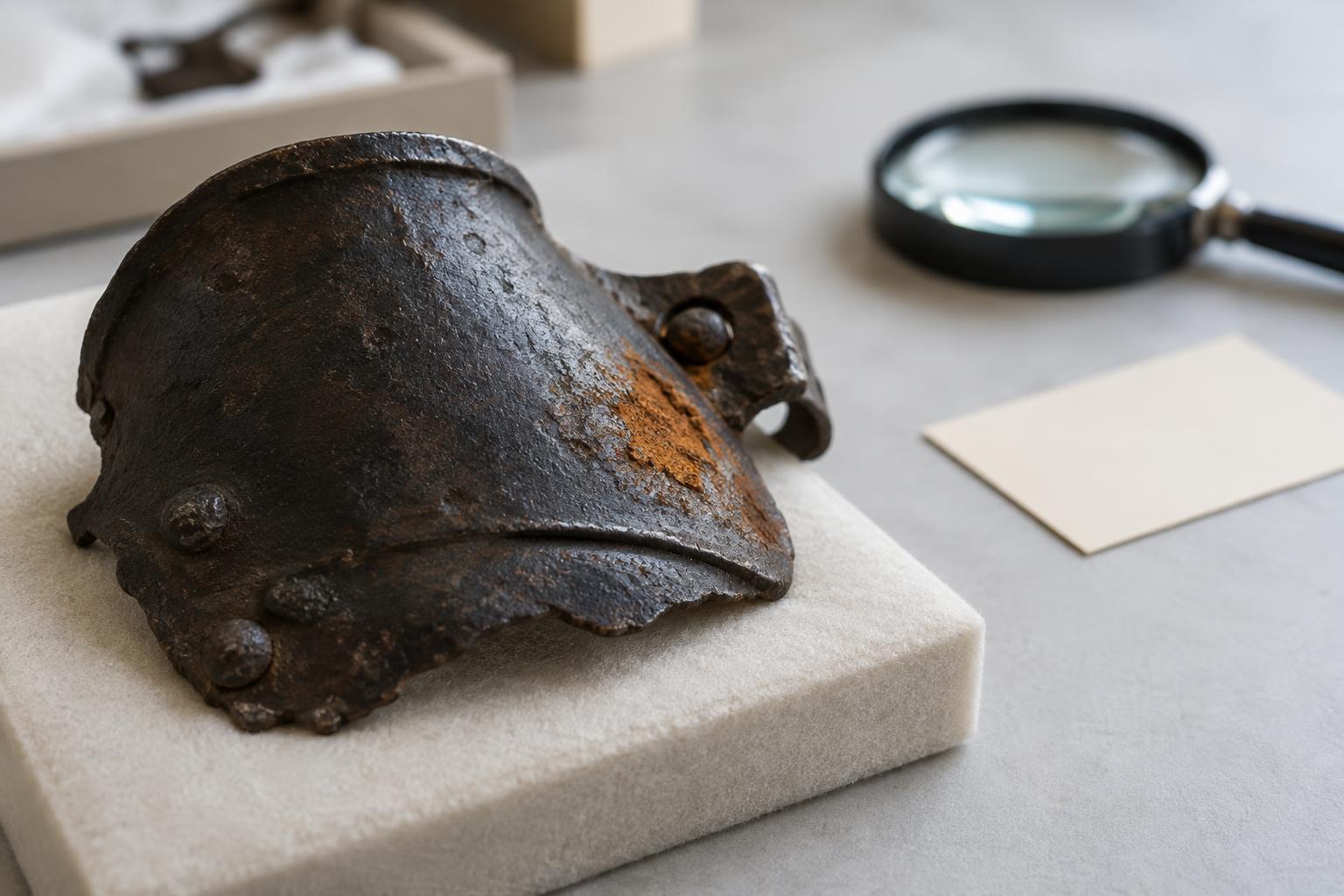
Clean, well-fitting cabinets or boxes help shield objects from dust and accidental contact. Choose storage materials intended for collections use where possible, and avoid placing historic surfaces directly against ordinary cardboard, adhesive tape, foam of unknown composition, or freshly finished wood. A lining or support can provide a barrier, but it should be easy to remove and inspect. If an object already has active corrosion, mould, or a strong musty smell, isolate it from other pieces and seek advice from a qualified conservator.
Support the whole object, not just its strongest part
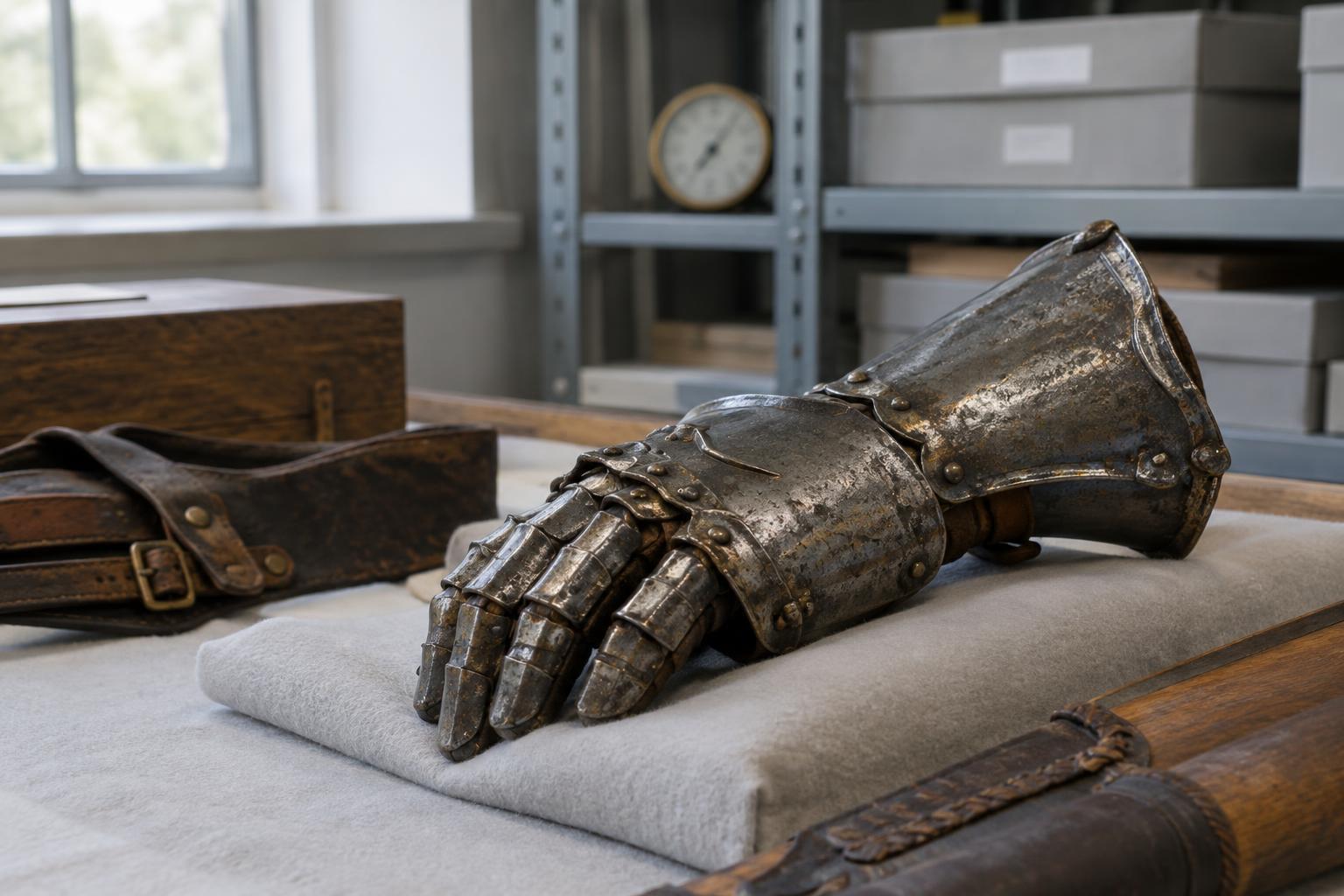
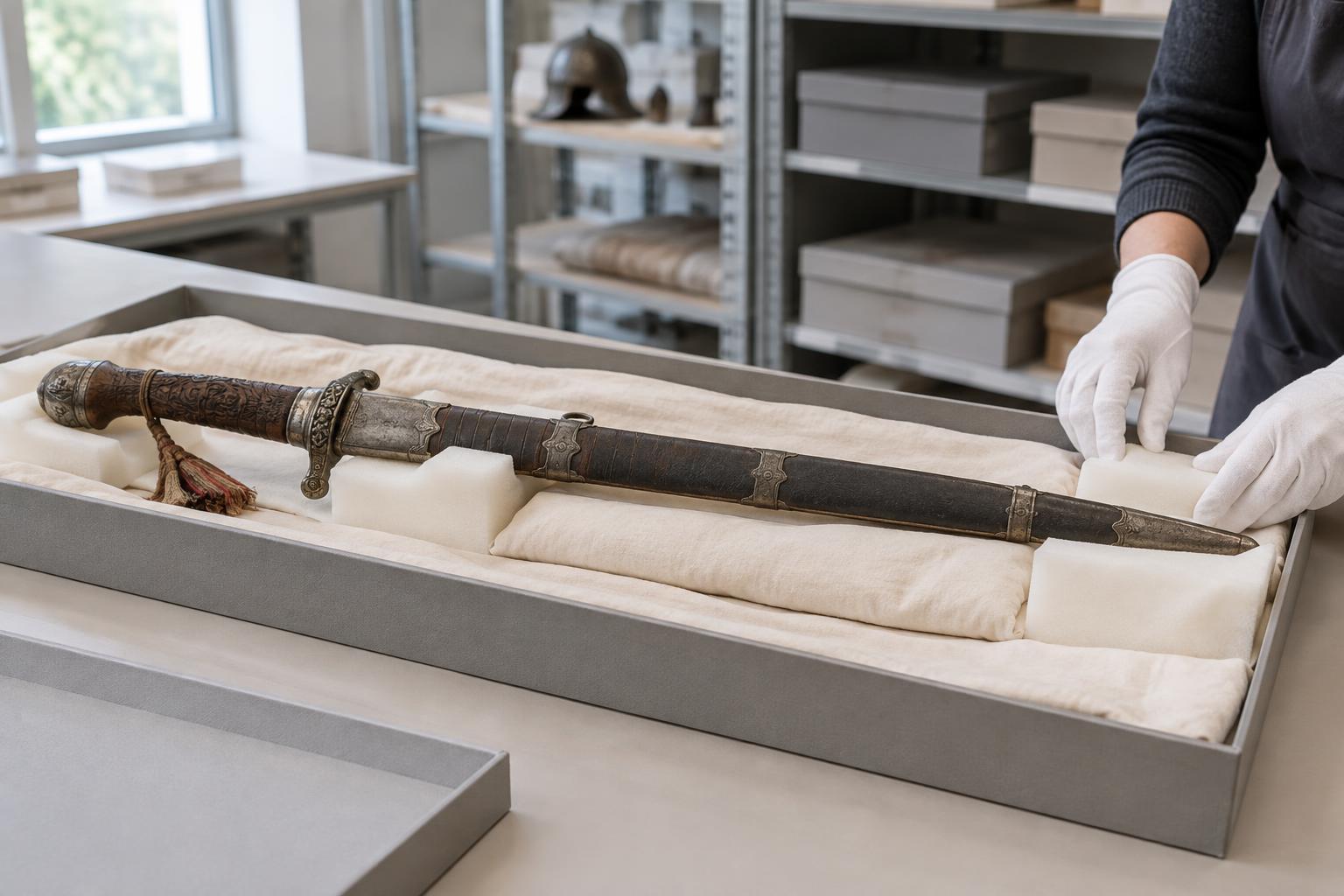
Mixed-material objects often fail at their joins. A heavy metal fitting can pull on a weakened strap; a rigid mount can press into an old wooden grip. Store an object so its weight is spread across sound areas rather than concentrated on a buckle, seam, rivet, or decorative projection. Soft, shaped supports made from suitable inert materials can reduce strain. The aim is to hold the object steady without bending it into a new shape.
Flat storage may suit a fragile textile attachment or a scabbard whose straps cannot safely bear weight. Other objects may need a shallow cradle that supports their contours. Avoid tightly wrapping leather or textiles around metal: compression can leave permanent creases, and close contact can make changes in condition harder to see. Keep detached fragments in a labelled, separate enclosure associated with the parent object rather than leaving them loose in the same box.
Handle and inspect with restraint
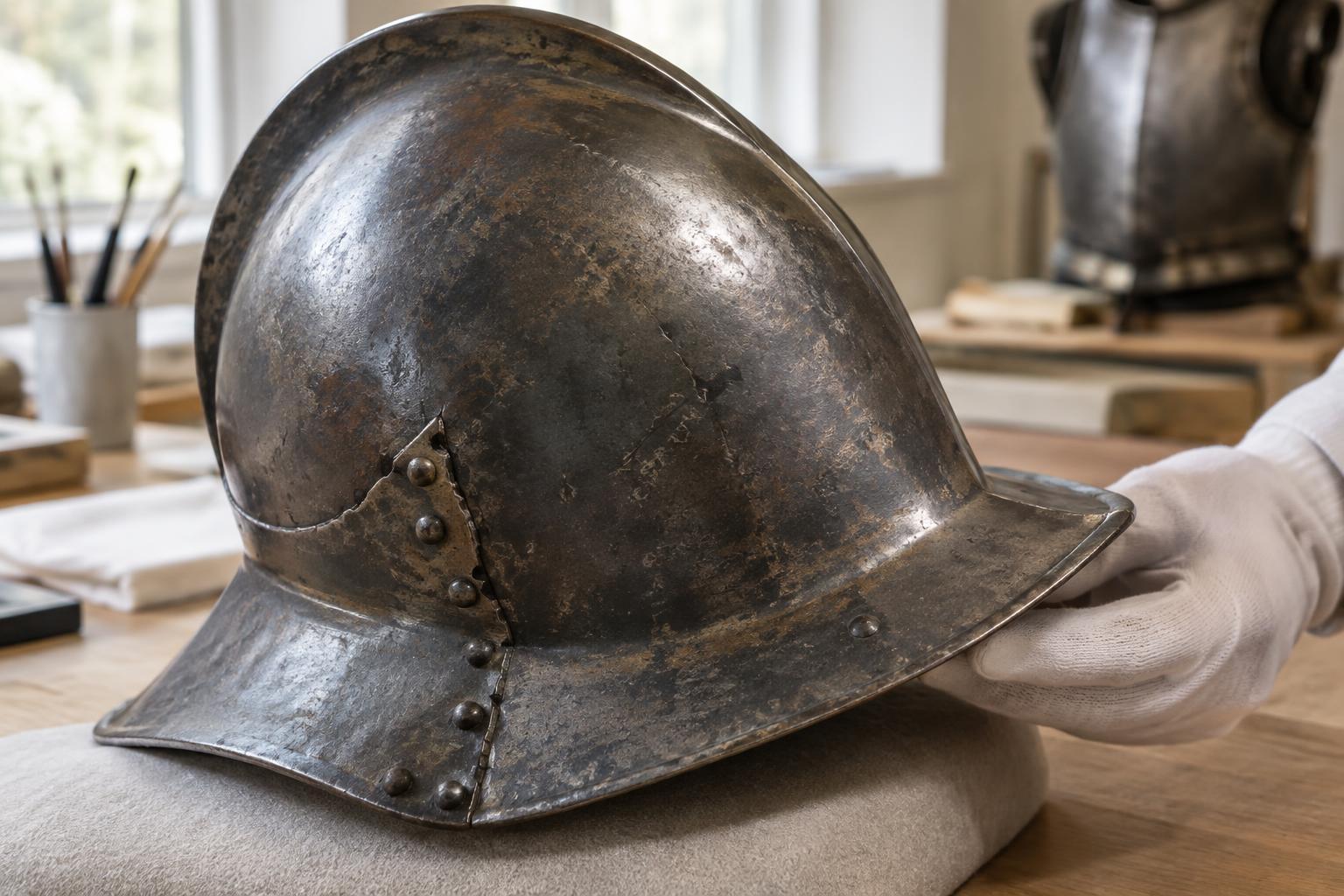
Before moving an object, clear a surface and plan where it will go. Lift from secure, well-supported areas, using two hands or a tray when appropriate; never assume an old handle or strap can carry the object’s weight. Clean hands are important, though suitable gloves may help protect some surfaces. Whatever the handling method, a firm, controlled grip matters more than a rule applied to every material.
A brief condition record makes gradual change easier to notice. Photograph the object in consistent light and note existing cracks, loose attachments, corrosion, staining, or insect damage. During periodic checks, look for new powdery deposits, movement at joins, fresh splits, or changes to leather and textile surfaces. Do not scrape away deposits or apply household cleaners, oils, or dressings as a precaution. Treatments that improve the appearance of one material can stain or damage another, and may obscure evidence of the object’s history.
Make storage part of the object’s history
A label should identify the object without being tied directly to a vulnerable surface. Keep associated information—such as provenance, earlier repairs, and the original arrangement of detached parts—with its record. Photographing how an object sits in its support can also help the next person return it safely after examination.
Good storage is not invisible work. It preserves tool marks, wear, stitching, repairs, and other details that reveal how an object was made, used, and later cared for. Because mixed-material pieces vary widely in age and condition, there is no universal enclosure or treatment. A stable setting, thoughtful support, and a clear record provide a sound starting point; complex damage calls for an assessment by a conservator familiar with the materials involved.