A material with more than one role
Leather appears in the history of armour in many forms, but the phrase “leather armour” can obscure more than it reveals. A flexible lining inside a metal helmet, a strap joining plates, a padded garment faced with leather and a rigid piece shaped from hide are different objects with different purposes. They should not be treated as interchangeable examples of a single armour type.
Its appeal to makers was practical. Depending on its preparation and thickness, leather could bend, hold a shape, provide a firm surface for stitching or help distribute the weight of another material. It could also be cut and replaced when worn. Those qualities made it useful both as a visible component and as part of an armour piece’s less visible structure. The best way to understand its role is to ask what a particular piece needed to do, rather than to assume that every piece of leather was intended to stop a blow.
The structure behind the surface
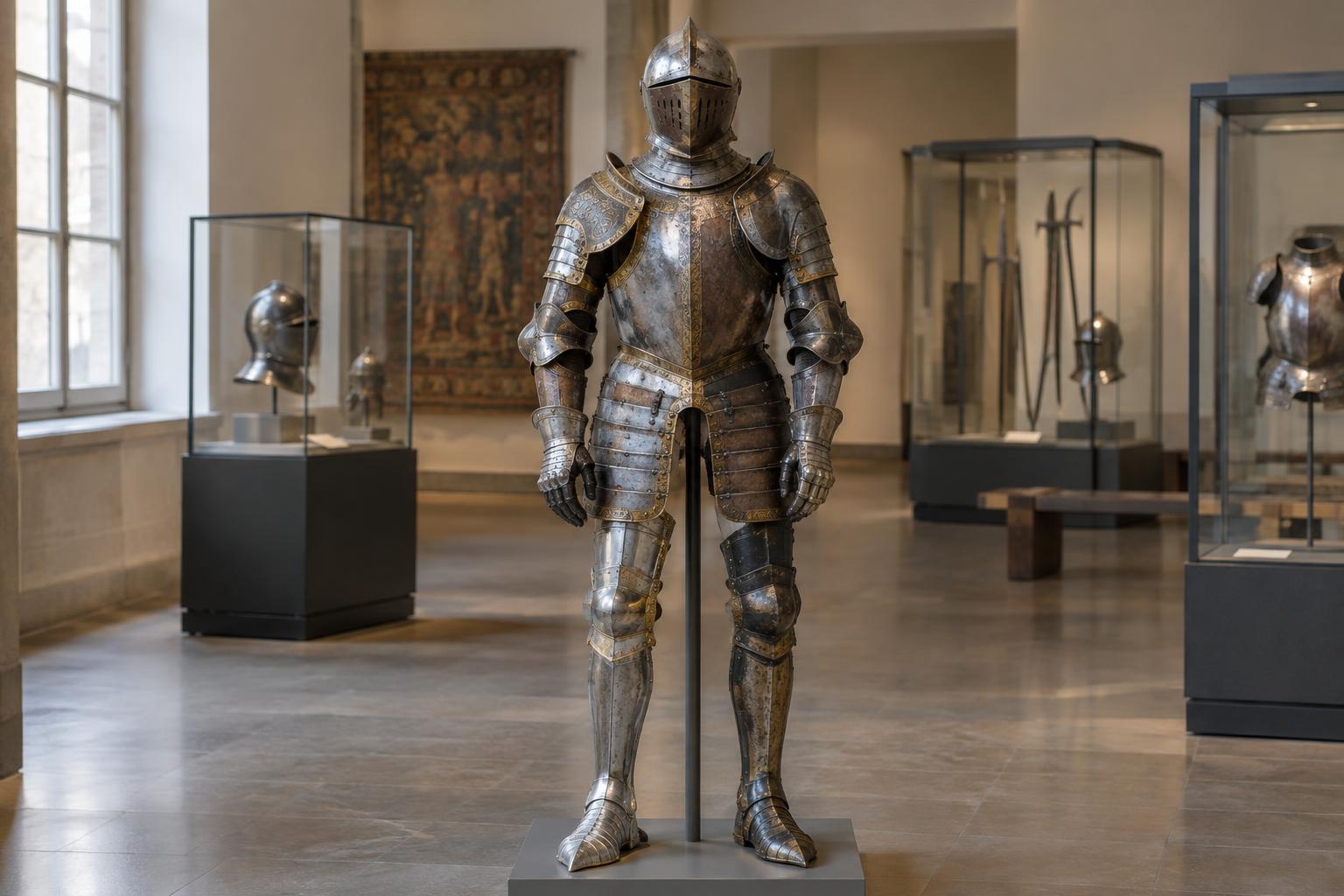
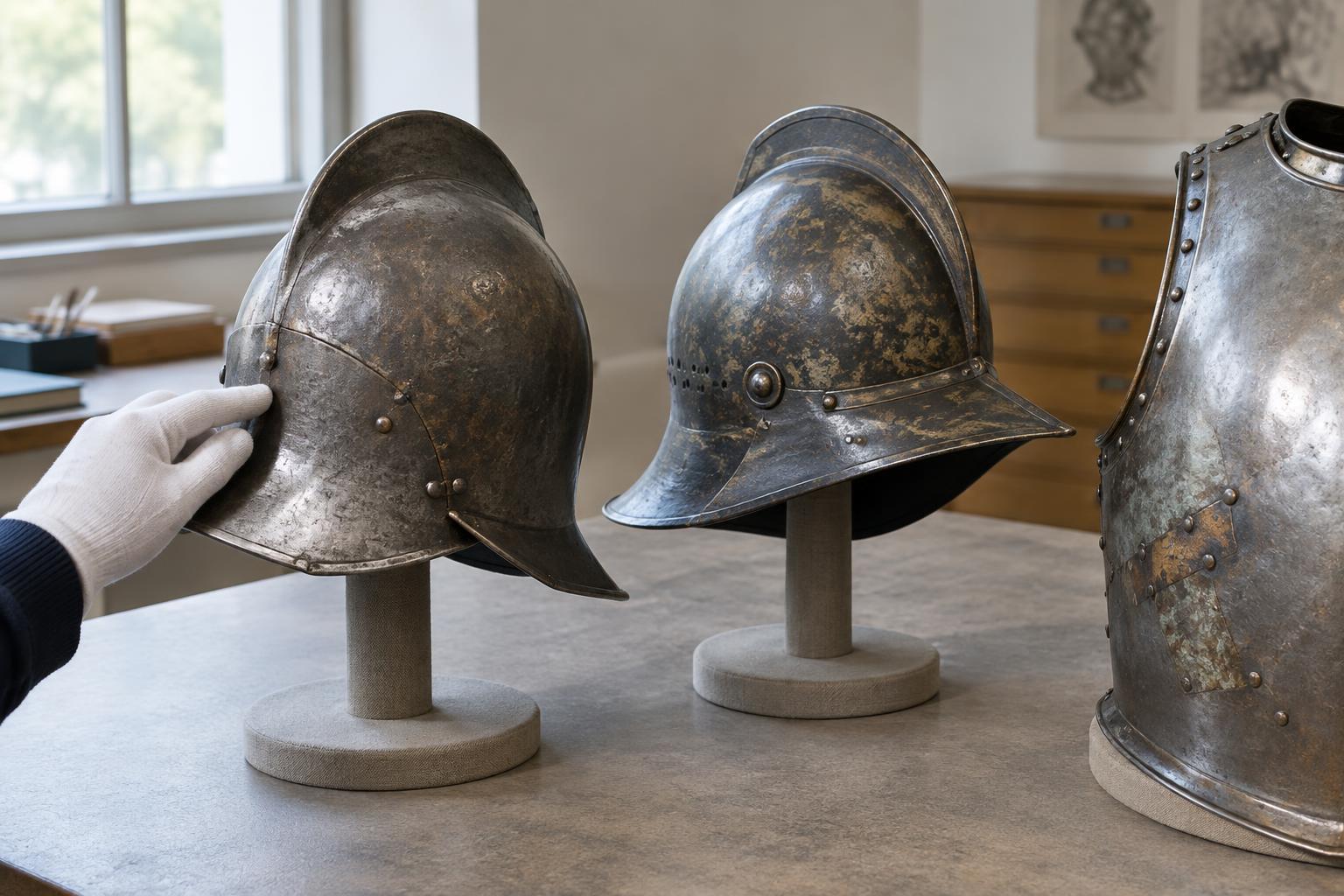
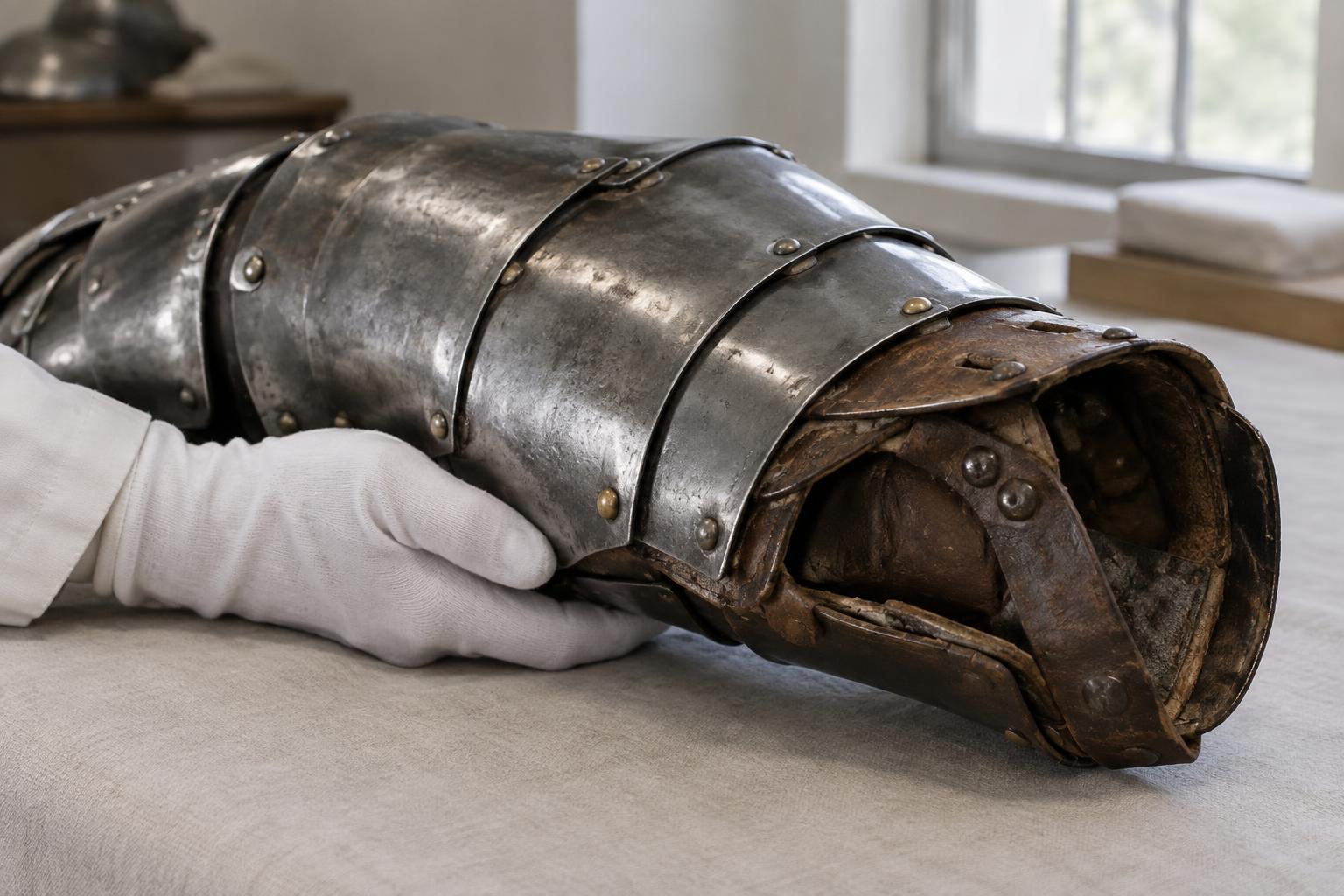
Many metal defences depended on organic materials to make them wearable. Leather straps and buckles could help hold components in position, while leather edging, tabs or internal attachments connected parts that needed to move with the body. Helmet linings and suspension arrangements helped separate the head from the hard shell. In such cases, the metal may dominate a museum display, yet the original fit depended heavily on materials that are easier to overlook.
Leather could also serve as a backing for small plates or scales, or as one layer in a composite object. The exact arrangement varied across places, periods and workshops. A surviving metal plate with holes along its edge may suggest an attachment method, but the missing backing is not always recoverable with certainty. Curators and researchers therefore distinguish between what an object preserves and what comparison with other objects makes plausible.
When leather itself provided protection
Some historic protective clothing relied substantially on leather. Sturdy leather garments, including certain coats worn in military settings, could offer coverage without resembling a rigid breastplate. Other traditions used shaped or layered hide as part of a more structured defence. What counted as useful protection depended on the equipment worn with it, the wearer’s circumstances and the kinds of hazards anticipated.
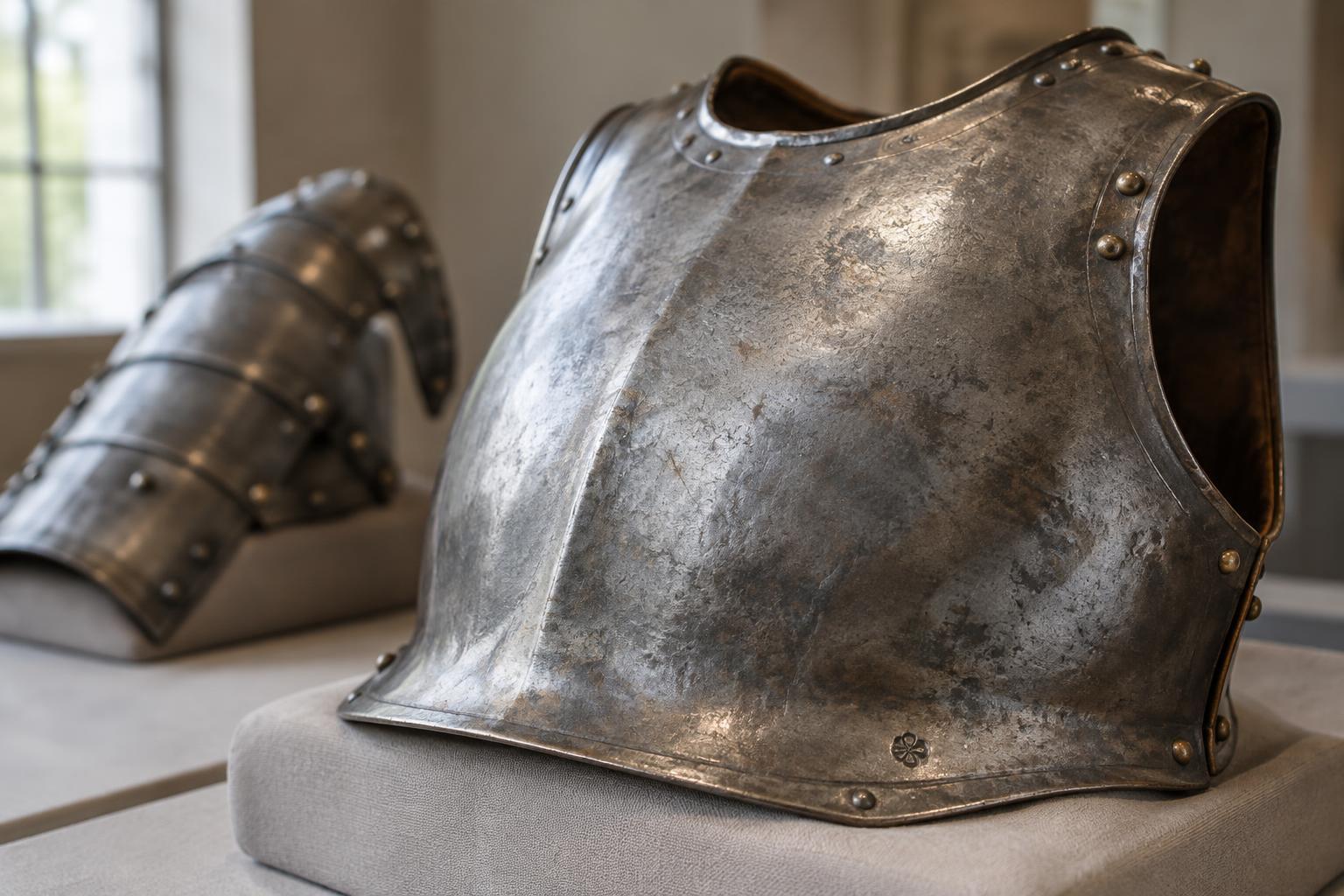
The term “cuir bouilli” is often used for hardened leather, but it should not be taken as a universal recipe or a guarantee of how every surviving object was made. Historic descriptions can be imprecise, and leather changes as it ages. A rigid appearance today does not, by itself, reveal the original treatment. Nor does the presence of hardened leather mean that it performed exactly like metal. Material, thickness, shape and support all matter when interpreting an armour piece.
Why familiar images can mislead
Popular depictions often present leather as the standard lightweight alternative to metal armour. That tidy contrast leaves out textiles, which played important protective and supporting roles, as well as armour that combined several materials. It also overlooks the considerable variation within leatherwork: a soft strap, a thick hide panel and a stiffened shaped component cannot be judged as though they were the same material in use.
Another misconception is that anything brown and flexible on an old armour piece must be original leather. Parts were repaired, replaced and altered during their working lives and sometimes after they entered collections. Modern reconstructions can be valuable for showing how an object might have been worn, but their fresh straps and linings are not necessarily evidence of what survives from the past. Exhibition labels are most helpful when they make that distinction clear.
Reading and caring for surviving objects
Leather presents particular challenges for interpretation because it can shrink, stiffen, crack or disappear while adjacent metal remains recognizable. An armour piece displayed without its original organic fittings may look incomplete compared with its historical working state. Conversely, a well-preserved leather component can draw attention away from the less visible joints and supports that explain how the whole assembly functioned.
For collectors and museum visitors, close observation is more useful than a quick label. Look for stitching, attachment holes, wear around fastenings and differences between original material and later repairs. Record uncertainty rather than filling gaps with a familiar story. Preservation calls for similar restraint: aged leather may be vulnerable to handling and changes in its surroundings, and attempted cleaning or softening can cause harm. Leather’s historical importance lies not only in whether it formed a defensive surface, but also in the craftsmanship that made complex armour fit together and remain wearable.