A voice from the past, not a complete record
A letter can make a distant conflict feel immediate. Its writer may describe a meal, ask after a relative, complain about the weather or mention a friend. Such details show how someone chose to communicate amid military life. They can also reveal relationships, expectations and the concerns that remained important far from home. A letter is valuable because it is a personal act, not because it offers an unfiltered account of everything its writer experienced.
The question to ask is not simply “Was this soldier telling the truth?” A more useful question is “What was this person trying to tell this recipient, at this moment?” A reassuring note to a parent might differ from one sent to a fellow veteran. Neither should automatically be dismissed as insincere. Each was written for an audience and served a purpose.
What letters can show
Letters can illuminate the texture of daily life that official records often compress. They may show what a writer noticed about clothing, food, religious observance, fatigue or the handling of familiar possessions. Repeated correspondence can trace changes in mood or relationships over time, although a shift in tone may have several explanations. Even ordinary requests for news from home can show how people maintained a sense of belonging during a period of separation.
They can also help historians examine the language people used to understand events. A writer might describe service in terms of duty, adventure, fear, boredom or obligation, sometimes within the same letter. Those words offer evidence of how one person framed an experience for a particular reader. They do not establish that everyone in the same unit, campaign or society felt alike.
Why silence matters
A missing subject is not proof that it was unimportant. Writers might avoid distressing family members, lack time or energy, assume a shared understanding, or be unable to describe an experience clearly. Military rules, censorship and the possibility that a letter could be read by someone other than its intended recipient could also shape what appeared on the page. The importance of each factor depends on the circumstances; it should not be assumed without evidence.
Survival creates another kind of silence. Many letters were lost, discarded or never preserved in the first place. Collections may favour people whose families had the means and inclination to keep correspondence. A neatly ordered group of letters can therefore give an impression of continuity that the writer did not experience. A gap in the sequence may mark a lost letter rather than a pause in writing, and an unanswered question may remain unanswered.
Reading a letter alongside other evidence
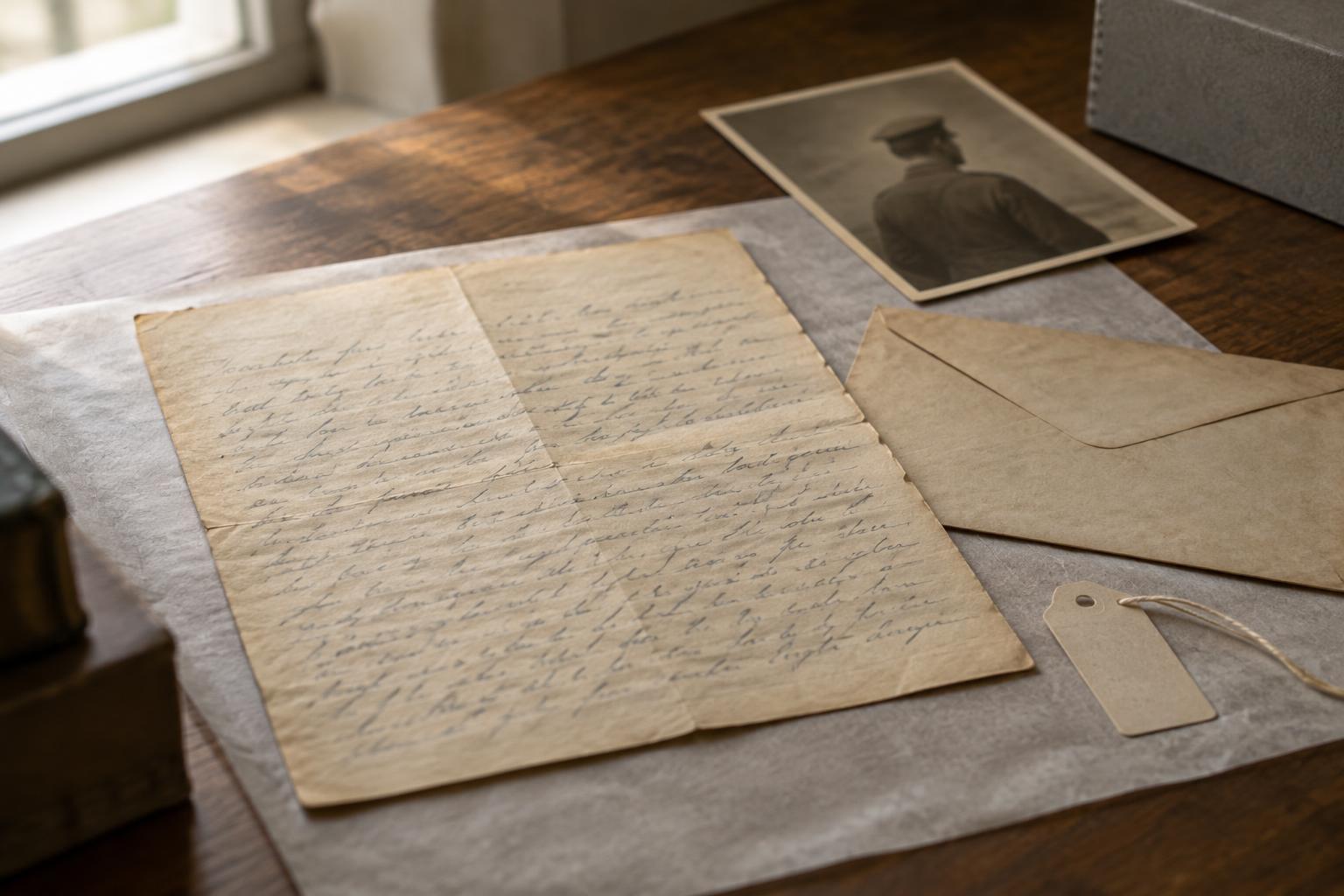
Begin with what can be established about the object itself. Who wrote it, who received it, and how was it dated? Is it the original page, a later copy or a published extract? Envelopes, postmarks, handwriting, added notes and signs of alteration can help explain its journey. A transcript makes the words easier to read, but it may not preserve crossings-out, spacing or uncertain readings that matter to interpretation.
Then compare the account with other material where possible: further letters, diaries, unit records, photographs, maps or objects associated with the writer. This is not solely a test of whether the writer got every detail right. A difference between a private letter and an official account may reveal what each source was designed to record. Context can clarify a reference while leaving room for uncertainty about what the writer knew, remembered or intended.
Presenting personal testimony with care
In a museum display or collecting publication, a short quotation can give an object a human connection. It can also strip away the context that makes the words intelligible. Identifying the writer and recipient, explaining the circumstances as far as they are known, and noting whether text has been omitted help readers judge what they are seeing. Transcriptions should distinguish an unclear word from a confident reading rather than quietly resolving every doubt.
Letters may contain intimate details about people who did not expect a broad audience. They may also express prejudice or repeat rumours. Responsible interpretation neither treats such passages as a transparent portrait of an entire period nor hides them when they are relevant to understanding the source. The strongest use of a soldier’s letter preserves its particularity: one person addressing another, leaving evidence of a life within history but never speaking for every life around it.