A memorial is a record of a choice
War memorials often appear to offer a straightforward list of people who served or died. Yet every memorial reflects decisions about purpose, eligibility, wording and location. A monument raised by a town may follow different rules from one commissioned by a regiment, workplace, school or religious congregation. Some honour the dead; others name everyone who served. The inscription is therefore evidence not only of wartime experience, but also of how a particular group chose to remember it.
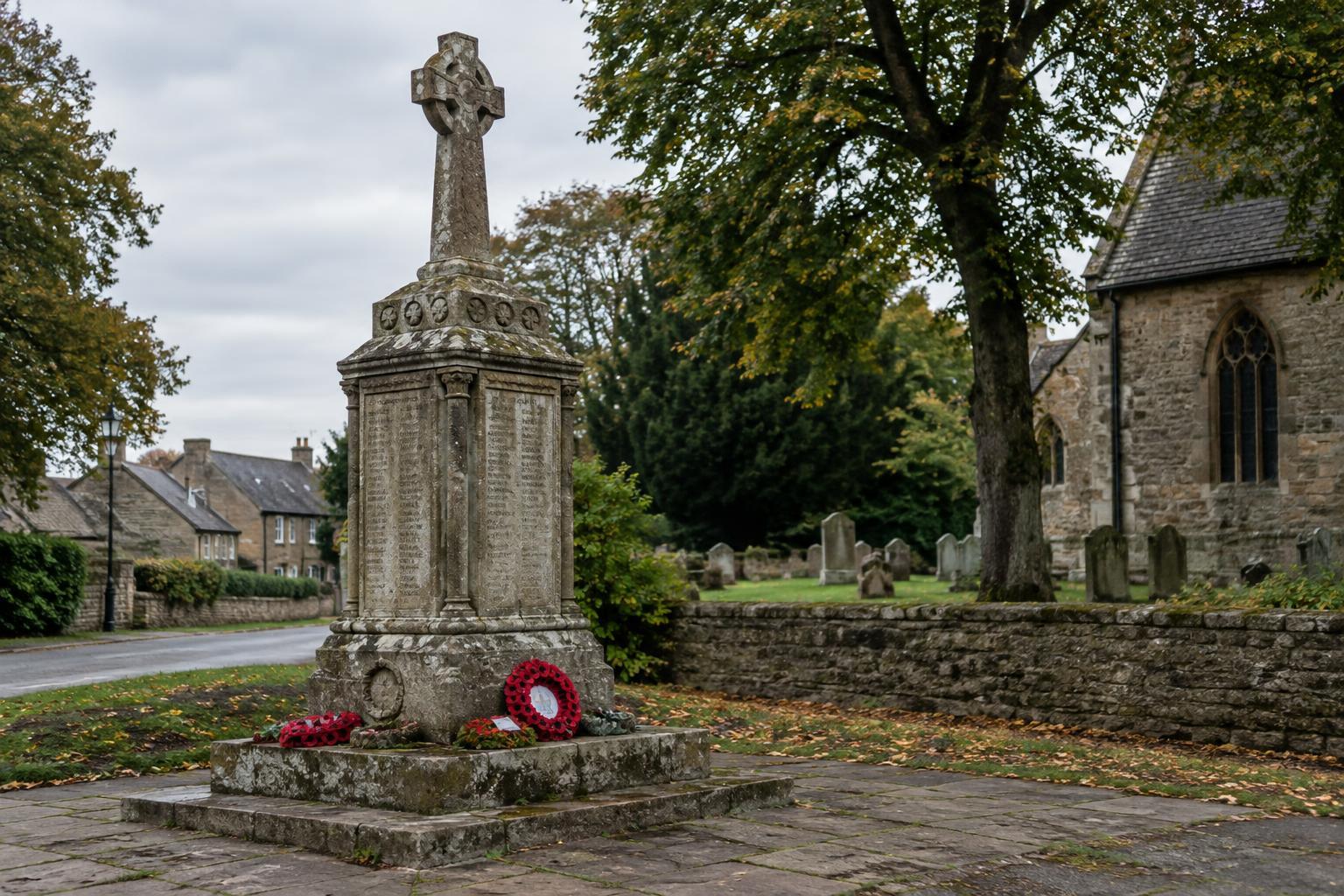
Start by reading the memorial as an object. Who commissioned it, if that is known? Where was it placed, and who would have encountered it? A monument in a public square speaks to a different audience from a plaque inside a workshop. Its material, scale and imagery may signal permanence, sacrifice, faith or civic pride. These features cannot tell us what every viewer believed, but they help establish the message its sponsors intended to make visible.
What a list of names can—and cannot—show
Names are valuable starting points for studying individuals and communities. A memorial may preserve a person's connection to a place that is less obvious in other records. Rank, unit or date, where included, can help distinguish people with similar names. Even the order of names matters: an alphabetical list presents service differently from one arranged by rank, unit or date of death. Such choices suggest what the organisers considered most appropriate to emphasise.
A missing name needs more cautious interpretation. A person may have lived elsewhere when the list was compiled, belonged to another institution or fallen outside a stated definition of service. Names can also be misspelled or added later. Absence from a memorial does not, by itself, prove that someone was forgotten deliberately or did not serve. Likewise, a name on a plaque does not explain the whole of that person's wartime experience.
Whose service is easier to see?
The wording of a dedication sets the boundaries of its story. A memorial to those who “fell” may leave living veterans unnamed. One devoted to members of a particular unit will not necessarily represent everyone from the surrounding area. Military personnel may be prominent while the work of nurses, transport staff, industrial workers or others who supported a war appears separately—or not at all. These differences make it important to ask what kind of service the memorial was designed to recognise.
Visibility may also depend on social ties. A school plaque records people connected to that school; a workplace memorial reflects its workforce and whatever criteria its organisers used. Families, employers and local committees could each have had different understandings of who belonged. Rather than assuming that any single memorial represents a whole community, consider the institution behind it and look for other memorials nearby. Together, they may reveal overlapping—and sometimes uneven—circles of remembrance.
Checking the memorial against other evidence
A useful investigation begins with a careful transcription. Record the exact dedication, names and identifying details, keeping original spelling separate from any later corrections. Note panels or additions that appear to belong to different phases, while avoiding firm conclusions about their dates from appearance alone. If access permits, observe where the memorial sits in relation to entrances, gathering spaces or other commemorative objects. These details can be lost when a memorial is viewed only as a list of names.
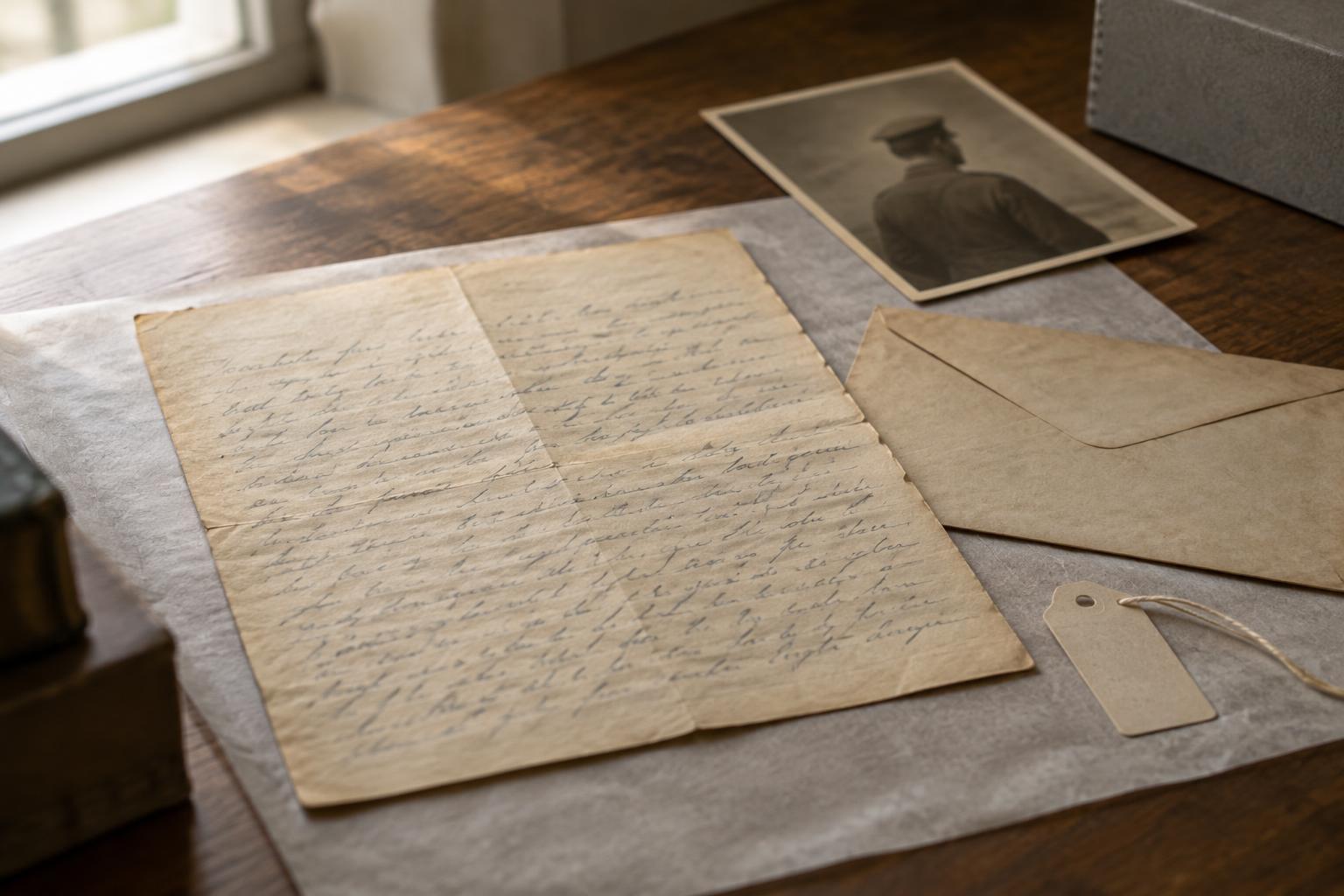
Then compare its information with sources created for other purposes, such as local directories, institutional records, service documents, newspapers or family papers where available. Each source has its own limits. A directory may miss a recent arrival; a newspaper account may repeat an error. Disagreements are worth recording rather than smoothing away. They can expose changes in residence, differing name forms or uncertainty about eligibility, and they make the eventual account more precise.
Remembrance changes over time
Memorials can acquire new meanings after their first dedication. Additional names, later plaques, repairs and relocation may reflect changes in the community as well as concern for the object's survival. Ceremonies and everyday use also shape how a site is understood. A viewer today may ask questions about representation that the original organisers did not address. Holding those perspectives together requires care: neither the founders' intentions nor present-day concerns should be treated as the memorial's only history.
The strongest reading treats a war memorial as both testimony and a selective record. It can identify people, express grief and show what a group wanted future generations to remember. It cannot speak for every person touched by conflict. By attending to its language, setting and omissions—and checking its details against other evidence—we can respect its commemorative purpose while asking clearer historical questions about whose service became public memory.