Care Began Wherever People Were
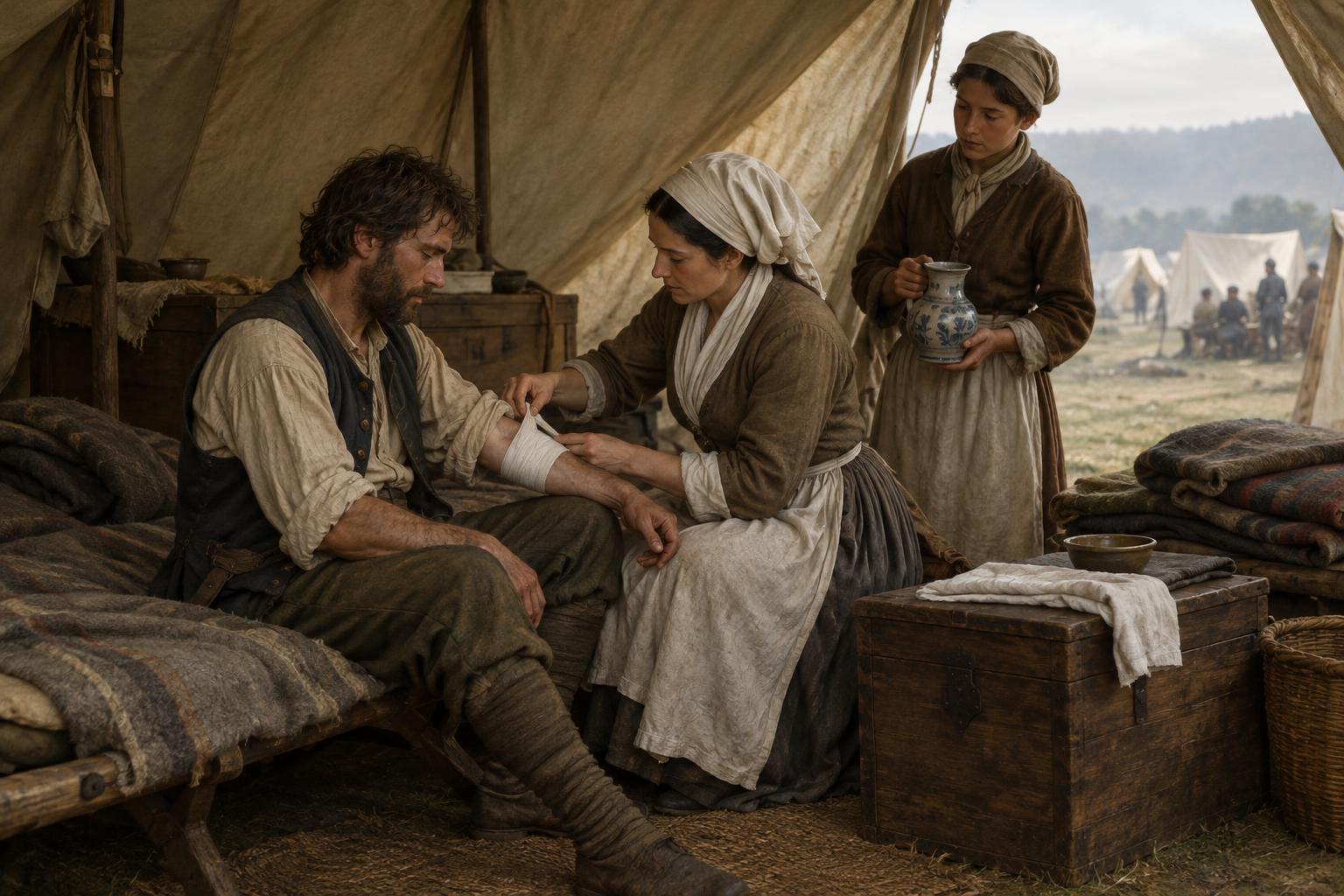
The phrase “before modern hospitals” does not mean that earlier armies had no organized care. Hospitals and places of refuge existed in many societies, but their purpose, staffing, and connection to armies varied. A wounded person might first be helped by a companion, a camp follower, or someone assigned to attend the sick. Later care could take place in a tent, a private home, a religious house, or a building set aside by military authorities. There was no single path from battlefield to recovery.
Nor was battle injury the only concern. Illness, exposure, poor food, and the strain of travel could disrupt an army even when no fighting occurred. The sick needed shelter, water, food, and someone willing to look after them. These ordinary demands help explain why medical care was also a matter of transport, supplies, and responsibility: who could be moved, where they could stay, and who would provide for them.
Access was uneven. Rank, resources, proximity to help, and the circumstances of a campaign could shape what happened next. A commander might be able to summon a practitioner, while another person depended on companions or local residents. Accounts of prominent officers are therefore valuable but cannot stand for the experience of an entire army.
Practitioners, Households, and Institutions
Historical sources may name surgeons, physicians, barbers, apothecaries, nurses, or attendants, but these labels did not carry identical meanings in every place or period. Some practitioners travelled with armed forces; others were called upon locally. Knowledge could come from formal study, apprenticeship, or experience. A title alone tells us little about what a particular person could do, what materials were available, or whether a patient received sustained attention.
Care also depended on people who are less visible in official accounts. Someone had to wash bedding, prepare meals, carry water, tend a fire, and remain with a person who could not move unaided. Households, religious communities, and people attached to camps might perform this work. Their contributions are easy to miss when a surviving document records an officer’s payment to a named practitioner but not the daily labour around a patient.
Institutions offered possibilities, not guarantees. A designated place for the sick might provide shelter and a degree of oversight, yet its capacity could be limited by crowding, shortages, or the movement of the army. It is more useful to ask how a particular arrangement worked than to treat every early hospital as a direct predecessor of today’s wards.
What the Records Can and Cannot Tell Us
Military medicine appears in many kinds of records: pay accounts, supply lists, correspondence, petitions, regulations, burial records, and personal narratives. Each was created for a purpose. An account noting money for dressings or transport may show that an authority paid for care, but not whether it was timely or effective. A rule about attending the wounded may reveal an expectation without proving that it was followed.
Individual stories can bring suffering and recovery into focus, but they require similar care. A letter might describe one person’s condition at a particular moment; a later memoir might present events through memory and reputation. Silence is difficult to interpret. People who could not write, whose words were not recorded, or whose documents did not survive may be largely absent from the evidence.
Reading these sources together can narrow the gaps. A supply entry, a request for assistance, and a burial record may each illuminate a different part of one campaign’s experience. They still cannot yield a complete count of everyone who needed help. Good historical interpretation makes that boundary clear rather than turning fragmentary records into a seamless story.
Objects and the Limits of Interpretation
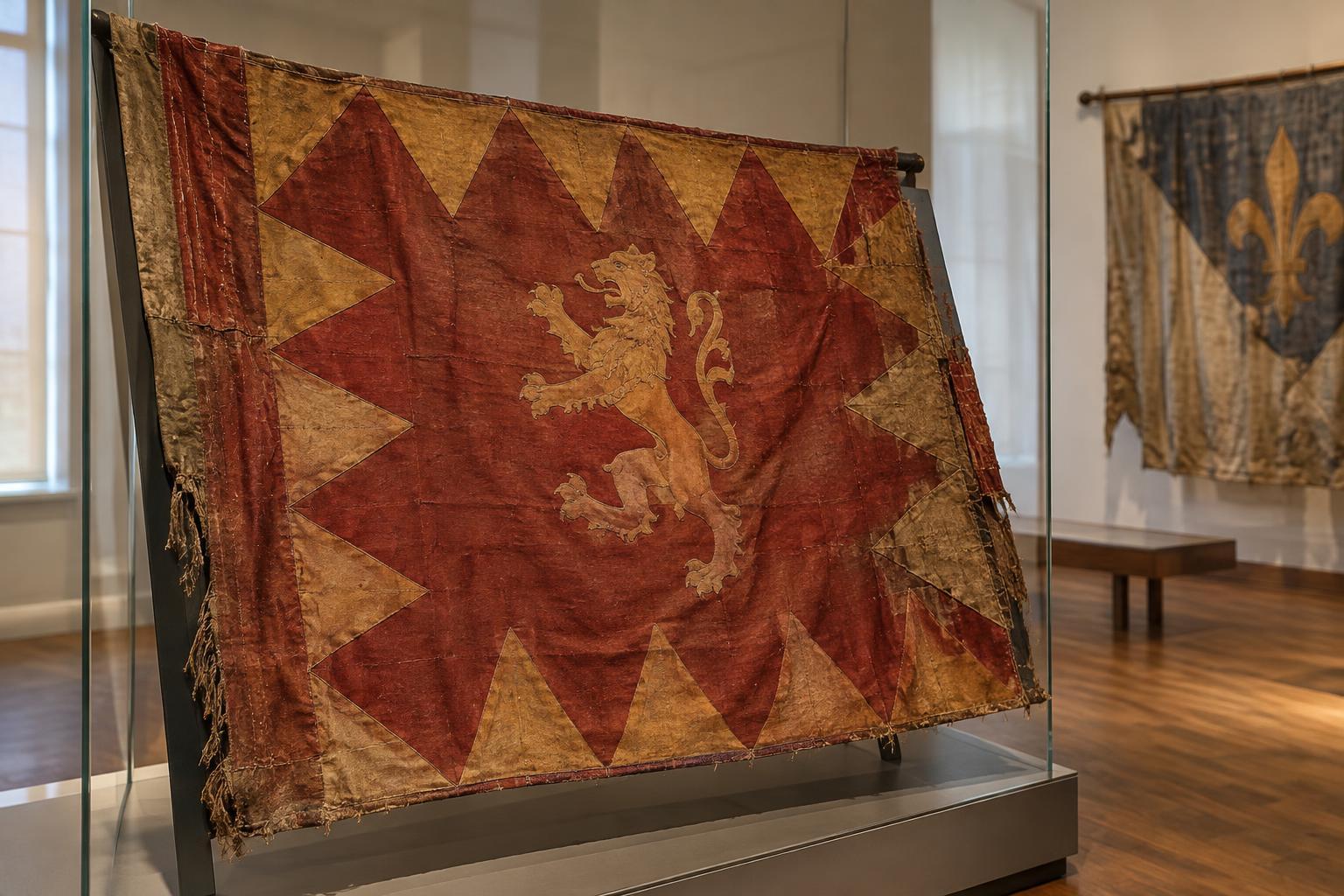
Medical instruments, containers, textiles, and personal belongings can connect museum visitors to the material side of care. They may show what someone owned or what a unit acquired. They do not, by themselves, establish how often an object was used, by whom, or with what result. A carefully made instrument can speak to craftsmanship and intended use without proving that treatment was available to everyone.
The limits of earlier care were not simply failures to possess later knowledge. Distance, weather, disrupted supply lines, uncertain responsibilities, and the difficulty of supporting a recovering person could all matter. Looking at care, records, and objects together restores those conditions to view. It also keeps the people behind the evidence visible: those who needed help, those who gave it, and those whose experiences left little trace.